
The meaning behind the beautiful Arabic phrases Muslims say every single day.



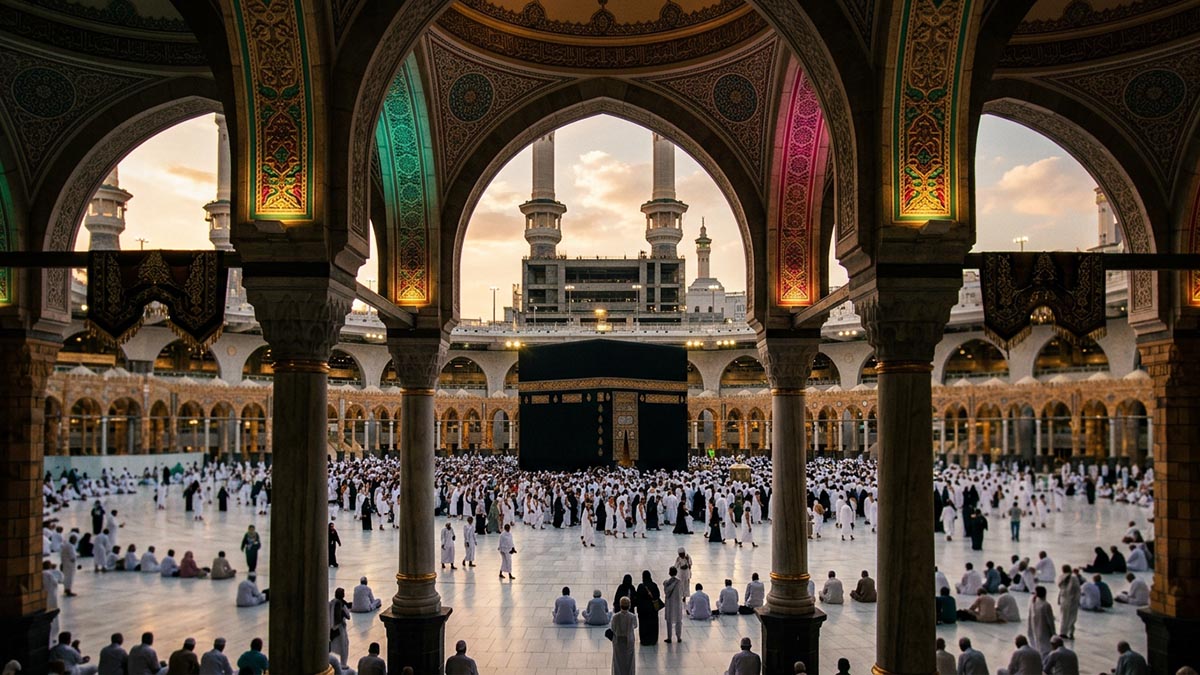

Islamic Expressions: The Meaning Behind the Phrases Muslims Say Every Day
Islamic Expressions are the short Arabic phrases woven through a Muslim’s day — the words said on beginning and finishing, on meeting and parting, in joy, in grief, and in the small pauses in between. Say Bismillah before a meal, Alhamdulillah when it is done, InshaAllah about tomorrow, and you have already turned an ordinary day into a conversation with Allah.
Yet many of these phrases are so familiar that they are spoken without a thought. This section slows them down. Each of the 49 Islamic Expressions gathered here gets its own guide: what the phrase means, where it comes from, how it is broken down word by word, and exactly when a believer says it. Below, you will find the whole collection sorted into six families — start anywhere, or begin with the phrase you say most.
What Are Islamic Expressions?
Islamic Expressions are the set phrases Muslims use to name Allah in the middle of everyday life. Some are verses lifted straight from the Quran. Some are the words the Prophet (pbuh) taught his companions. Others grew up in Muslim cultures over centuries and are now said from Morocco to Malaysia. What unites them is direction: each one turns the speaker’s heart, for a moment, back toward God.
That is what makes them more than politeness. A greeting becomes a prayer for peace; a compliment becomes praise of the Creator; a plan becomes an admission that the future belongs to Allah. Learned properly, these phrases work like the 99 Names of Allah — small doors into who God is, opened dozens of times a day. Many are drawn word for word from the Holy Quran itself.
Bismillah opens 113 of the Quran’s 114 chapters — a phrase at the very heart of the Book.
Islamic Greetings: The Words That Open Every Meeting
Every meeting between Muslims opens with peace. As-Salamu Alaikum, “peace be upon you,” is answered with Wa Alaikum Assalam, “and upon you be peace” — a greeting the Quran describes as the very speech of the people of Paradise, and a prayer that echoes the divine name As-Salam, the Source of Peace.
Once peace is exchanged, warmth follows. Ahlan wa Sahlan tells a guest they have come among family, and Marhaban throws the door wide with a friendly “welcome.” Together they form the art of greeting people in Islam — a small courtesy the Prophet (pbuh) turned into a means of building love.
The Prophet (pbuh) taught that spreading the salam builds love between believers.
Daily Expressions: Remembering Allah Through the Day
This is the largest family of Islamic Expressions, and the one most often on the tongue. Bismillah begins things; Alhamdulillah thanks Allah for them; SubhanAllah glorifies Him in wonder; and Allahu Akbar declares Him greater than every worry. Alongside them stands the testimony of faith itself, La ilaha illallah — “there is no god but Allah.”
Blessings are met with MashaAllah and TabarakAllah; the future is handed over with InshaAllah; mistakes are answered with Astaghfirullah; and the limits of knowledge are admitted with Allahu A’lam. Partings are softened by Allah Hafiz and Fi Amanillah, while hardship is carried with Hasbunallahu wa ni’mal Wakeel, La hawla wa la quwwata illa billah and Tawakkaltu ’ala Allah. And when the heart simply needs to reach for God, it calls Ya Allah or Ya Rabb.
Said with attention, these are not filler words but dhikr — the remembrance that keeps a believer’s day tethered to Allah, in the spirit of the gratitude the Quran so often praises. Two of them, Bismillah and Alhamdulillah, even open Surah Al-Fatihah, the chapter recited in every prayer.
SubhanAllah, Alhamdulillah and Allahu Akbar the three great words of daily remembrance.
Supplications: Short Prayers Muslims Say for One Another
Some Islamic Expressions are prayers offered on someone else’s behalf. JazakAllahu Khayran thanks a person by asking Allah to reward them; BarakAllahu Feek and Allahumma Barik ask Him to bless and protect them; and Allahumma Salli Ala Muhammad sends blessings upon the Prophet (pbuh).
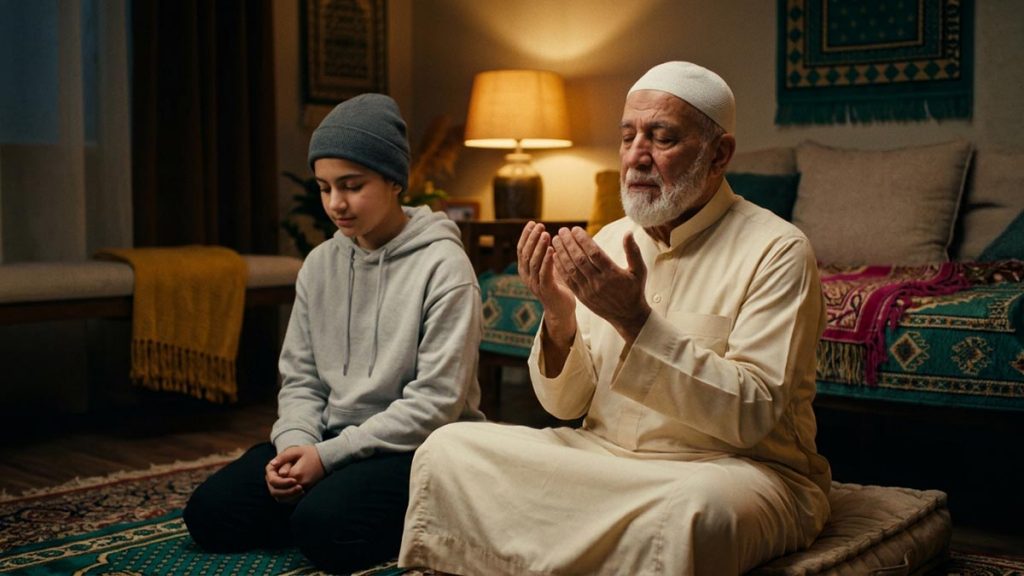
Others are the words that seal a prayer or lift a need: Ameen and Allahumma Ameen close a supplication by asking Allah to accept it, while the Quran’s own Rabbana Atina fid-Dunya Hasanah asks for good in both worlds and Rabbi Zidni Ilma asks simply to be taught more. Each is a reminder that in Islam, prayer is never far from speech.
Praise and Honorifics: Honouring the Prophet (pbuh) and the Righteous
A striking feature of Muslim speech is that certain names are never said plainly. The Prophet Muhammad’s name is followed by Sallallahu Alayhi wa Sallam, and the other prophets by Alayhis Salam, “peace be upon him.”
The companions are honoured with Radiyallahu Anhu, Radiyallahu Anha and Radiyallahu Anhum, asking Allah’s pleasure upon them; Karramallahu Wajhah is reserved for Ali. Departed scholars and the righteous receive Rahimahullah, “may Allah have mercy on him,” while the living are given Hafizahullah, “may Allah preserve him.”
Every honorific is a prayer: to say Radiyallahu Anhu is to ask Allah’s pleasure for a companion.
Celebrations: Greetings for Eid, Ramadan and the Sacred Journeys
Joy has its own vocabulary. Eid Mubarak, “blessed Eid,” rings out on both Eid al-Fitr and Eid al-Adha, while Ramadan Mubarak and Ramadan Kareem welcome the holy month of Ramadan and its nights of Laylatul Qadr. Each week, Jummah Mubarak greets the blessed day of Jummah.
The pilgrim is wished Hajj Mubarak on the journey of Hajj and Umrah Mubarak for Umrah, both answered on the road to the Kaaba with the stirring Talbiyah, Labbaik Allahumma Labbaik — “here I am, O Allah, here I am.” And a newly married couple is blessed with Barakallahu Lakuma at their nikah.
Condolences: Gentle Words for Times of Grief
Islam does not leave the grieving without words. Inna Lillahi wa Inna Ilayhi Raji’un — “indeed, we belong to Allah, and to Him we shall return” — is the believer’s response to any loss, spoken at the janaza and whenever sorrow strikes.
To the bereaved, a Muslim offers A’zamallahu Ajrak, asking Allah to magnify their reward. Of the one who has passed, they pray Allah Yarhamuh or Allah Yarhamha — “may Allah have mercy on him,” “on her” — leaning on Ar-Raheem, the Most Merciful. These are the phrases of patience in its hardest hour.
Why Islamic Expressions Matter
It would be easy to treat these as habits of speech, said out of custom. But a phrase repeated with meaning shapes the person who says it. Someone who truly means Alhamdulillah becomes grateful. Someone who means InshaAllah becomes humble about tomorrow. Someone who greets a stranger with peace finds it harder to hold a grudge.
That is why these Islamic Expressions are worth learning slowly. They are a training in gratitude, in forgiveness, in trust and in righteous speech — a whole way of seeing, carried in a handful of words. Explore the full collection above, and see how much of your faith you already speak every day.
These 49 Islamic Expressions turn ordinary moments into remembrance of Allah.
If this deepened your love for the words you already say every day, come and learn with us. Follow It’s About Islam on YouTube, Instagram and Threads for daily reminders, Quran reflections and the beautiful meanings behind the phrases every Muslim knows by heart.
Islamic Expressions: Your Questions Answered
Islamic Expressions are the short Arabic phrases Muslims say in everyday life — such as Bismillah, Alhamdulillah, MashaAllah and InshaAllah. Some come from the Quran, some from the teaching of the Prophet (pbuh), and some from Muslim culture. Each one turns an ordinary moment into remembrance of Allah.
The most frequently heard are Bismillah (“in the name of Allah”), Alhamdulillah (“all praise is due to Allah”), SubhanAllah (“glory be to Allah”), Allahu Akbar (“Allah is the Greatest”), MashaAllah, InshaAllah, and the greeting As-Salamu Alaikum.
Some are verses word for word — Bismillah, Inna Lillahi wa Inna Ilayhi Raji’un, Rabbana Atina fid-Dunya Hasanah, Rabbi Zidni Ilma and Hasbunallahu wa ni’mal Wakeel all appear in the Quran. Others come from the Sunnah of the Prophet (pbuh), and a few grew up in Muslim cultures, though their meanings are rooted in the Quran’s teaching.
No. Muslims everywhere use these Arabic phrases whatever language they speak, because the words carry a meaning that translation alone does not. Learning what each phrase means — which is what this section is for — is what turns a habit of speech into an act of remembrance.
InshaAllah means “if Allah wills” and is said about the future, when making a plan or a promise. MashaAllah means “what Allah has willed” and is said about a blessing that has already happened, giving the credit for it to Allah.
Out of love and respect. The full phrase is Sallallahu Alayhi wa Sallam, “may Allah’s blessings and peace be upon him,” and saying it is a small prayer for the Prophet (pbuh). Other prophets are honoured with Alayhis Salam, and the companions with Radiyallahu Anhu.