
What Does Labbaik Allahumma Labbaik Mean?
Labbaik Allahumma Labbaik is the stirring chant of the pilgrim — the answering call raised by millions on their way to the sacred house of Allah. Known as the Talbiyah, it means “here I am, O Allah, here I am.” But what does this call truly mean, where does it come from, and when is it said? This guide explains.
Answering the Call of Allah
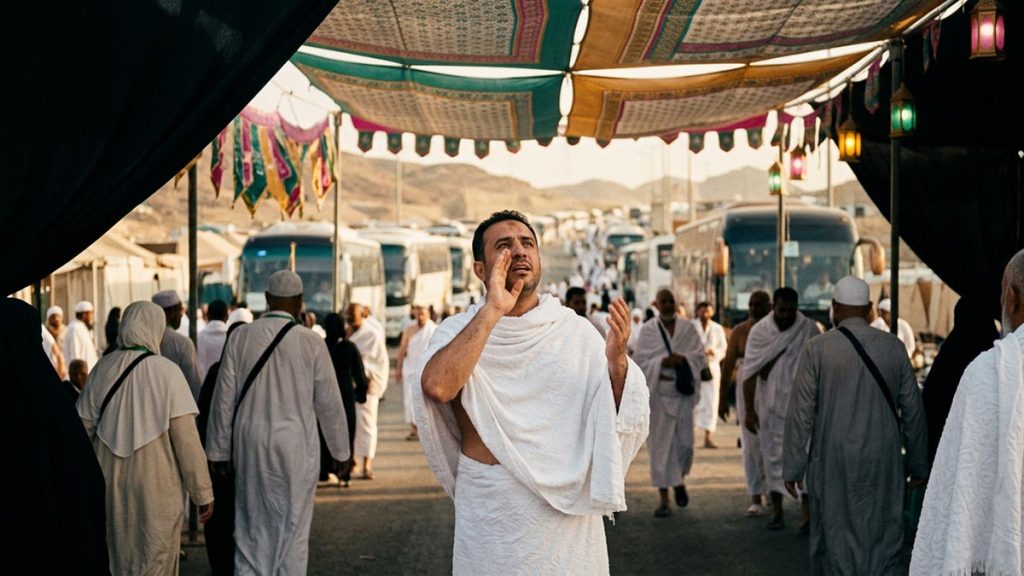
The phrase Labbaik Allahumma Labbaik (لَبَّيْكَ اللَّهُمَّ لَبَّيْك) means “here I am, O Allah, here I am.” It is the pilgrim’s answer to Allah’s ancient call to visit His house — a declaration of readiness, obedience, and love.
The word labbaik carries the sense of “I respond to You, again and again, staying firmly at Your service.” To chant it is to say: You called, my Lord, and I have come — wholly present, wholly Yours.
It is the pilgrim’s answer to Allah’s ancient call — You called, my Lord, and I have come.
Breaking Down Labbaik Allahumma Labbaik
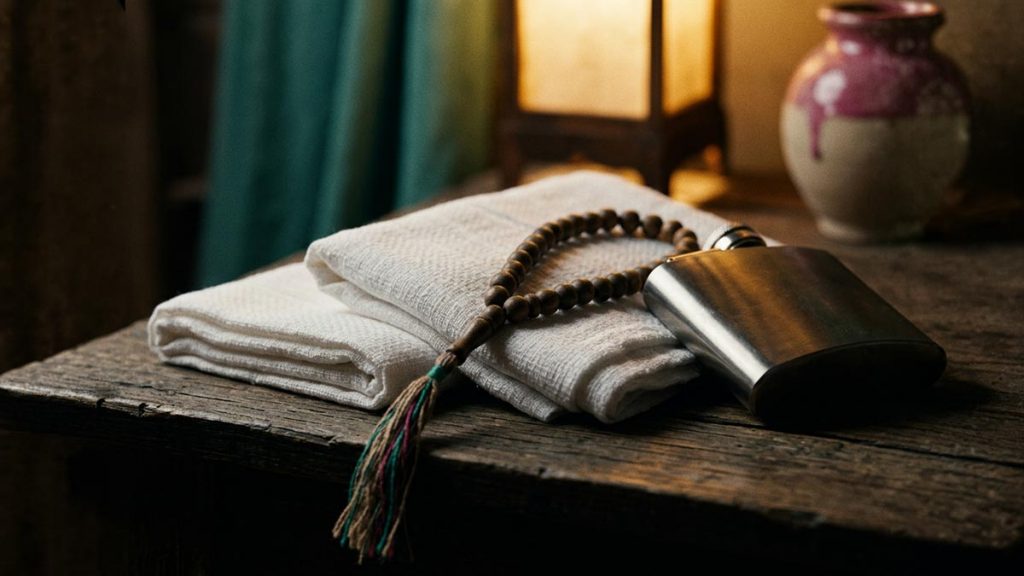
To feel the full weight of the phrase, it helps to unpack it word by word:
- Labbaik — لَبَّيْكَ — “here I am at Your service,” a response of readiness, repeated for emphasis.
- Allahumma — اللَّهُمَّ — “O Allah,” the One being answered.
- Labbaik — لَبَّيْك — “here I am” once more — I answer, and keep answering, Your call.
Together the words are the pilgrim’s reply to Allah — the Talbiyah that fills the roads to the Kaaba during Hajj.
Labbaik means here I am at Your service, Allahumma O Allah.
The Answer to Ibrahim’s Call
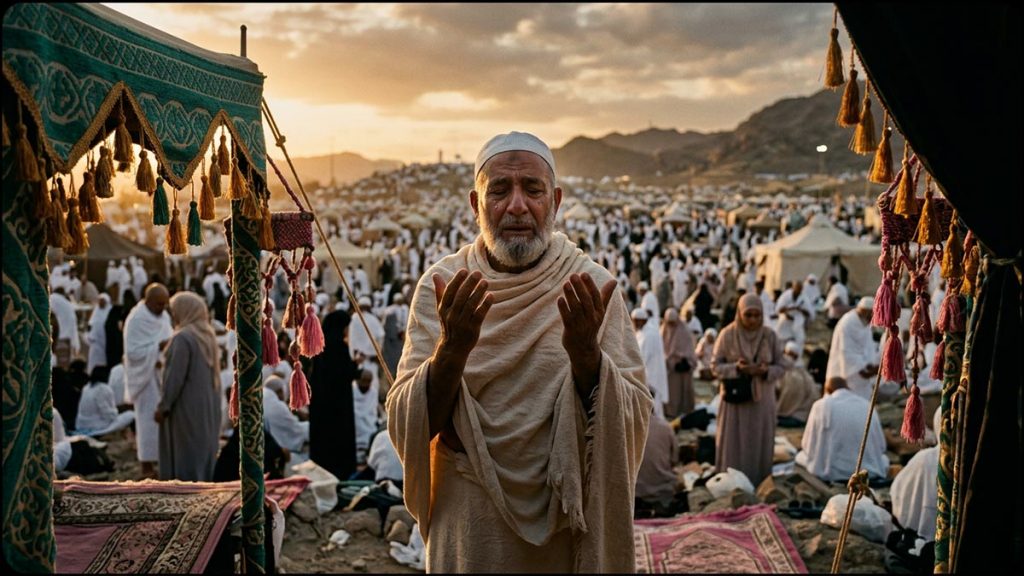
The Talbiyah answers a call that is thousands of years old. When Prophet Ibrahim (pbuh) built the sacred house, Allah commanded him to proclaim the pilgrimage to all people — and ever since, pilgrims have answered that call with “here I am.”
The full Talbiyah goes on: “here I am, You have no partner, here I am; surely all praise, grace, and dominion are Yours, You have no partner.” Chanted aloud by pilgrims in Ihram from the moment they begin, it is the very sound of Hajj and Umrah — a river of voices answering Allah as one.
Allah told Ibrahim (pbuh) to proclaim the pilgrimage — and pilgrims still answer.
When Do Muslims Say Labbaik Allahumma Labbaik?
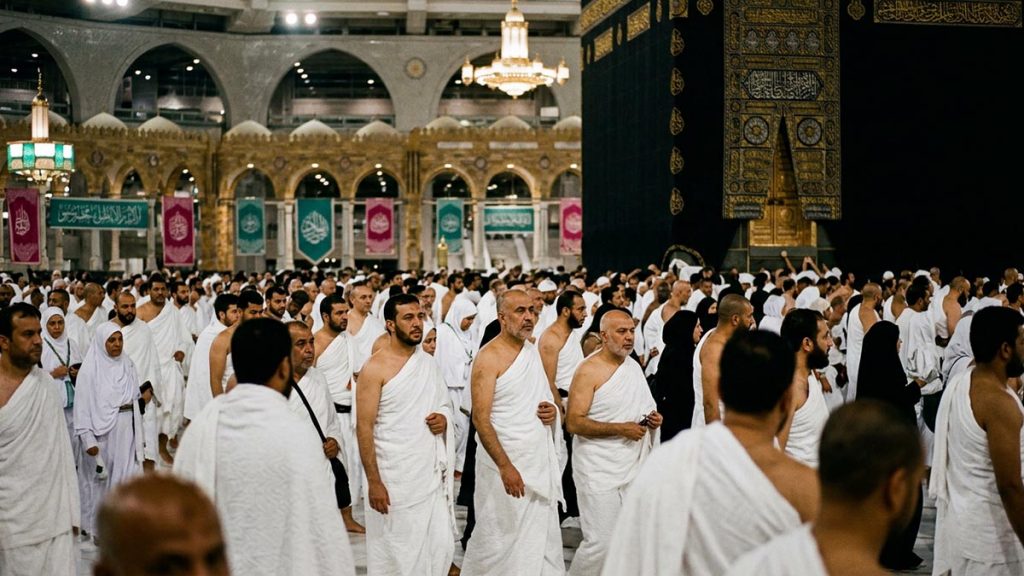
The Talbiyah belongs to the pilgrimage. A pilgrim begins chanting it the moment they enter the state of ihram for Hajj or Umrah, and continues raising it along the journey to Makkah.
Men call it aloud and women say it softly, and it echoes across the sacred sites until the rites begin. Wherever pilgrims are answering Allah’s call to His house, this is the chant on their lips.
Chanted from the moment of ihram all the way to Makkah by millions as one.
5 Sacred Things to Know About the Talbiyah
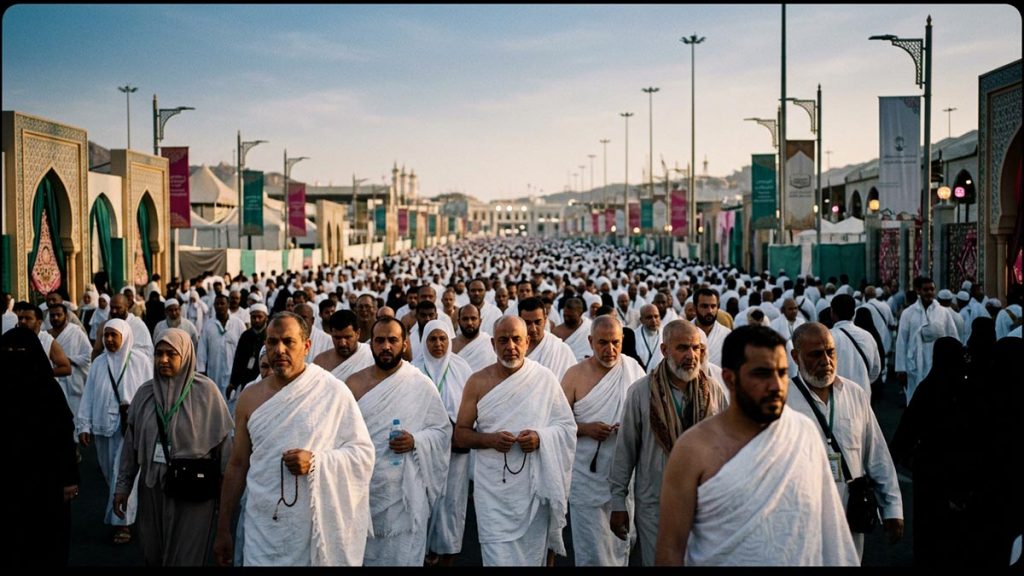
The Talbiyah is rich with meaning. Here are five things worth knowing:
- It means “here I am.” The pilgrim answers Allah’s call with readiness and love.
- It answers Ibrahim’s call. It responds to the proclamation of Hajj that Allah commanded him to make.
- It declares Allah’s oneness. The full Talbiyah repeats “You have no partner,” affirming tawhid.
- It begins with ihram. Pilgrims start chanting it the moment they enter the sacred state of Ihram.
- It unites the pilgrims. Millions of voices raise it together on the way to the Kaaba.
For so few words, the Talbiyah holds the whole heart of pilgrimage — a servant answering, with love, the call of their Lord.
Complete surrender to Allah in three beautiful words.
Labbaik Allahumma Labbaik and Related Phrases
It is the chant behind the greetings Hajj Mubarak, “blessed Hajj,” and Umrah Mubarak, “blessed Umrah” — the sound of the very journeys those greetings celebrate.
As an answering call to Allah, it shares its heart with Ya Allah, “O Allah,” and is sealed, like every supplication, with Allahumma Ameen, “O Allah, accept.”
Why This Call Matters
A journey could begin with ordinary words. The Talbiyah makes the start of pilgrimage something profound, turning the pilgrim’s first steps into a declaration that they have dropped everything to answer their Lord.
In chanting “here I am,” a believer lives out the heart of faith: complete surrender to Allah. It is a call that has echoed for thousands of years — and joins each pilgrim to every believer who ever answered the same summons with love.
If this stirred your heart toward the sacred journey, come and learn with us. Follow It’s About Islam on YouTube, Instagram and LinkedIn for daily reminders, Quran reflections and the beautiful meanings behind the phrases every Muslim knows by heart.
It means “here I am, O Allah, here I am.” It is the pilgrim’s answer to Allah’s call to visit His sacred house, a declaration of readiness and love.
The Talbiyah is this call, Labbaik Allahumma Labbaik, chanted by pilgrims during Hajj and Umrah. Its full form adds “You have no partner… all praise and dominion are Yours.”
From the moment a pilgrim enters the state of ihram for Hajj or Umrah, and continuously along the journey to Makkah until the rites begin.
It answers the call Allah commanded Prophet Ibrahim (pbuh) to make, proclaiming the pilgrimage to all people. Pilgrims have answered “here I am” ever since, following the Prophet Muhammad’s (pbuh) example.
The Talbiyah is drawn from the Sunnah — the practice of the Prophet (pbuh) — while the call to pilgrimage it answers is commanded in the Quran, which tells Ibrahim (pbuh) to proclaim the Hajj to humankind.