
What Is Ihram and Why Is It Worn for Hajj and Umrah?
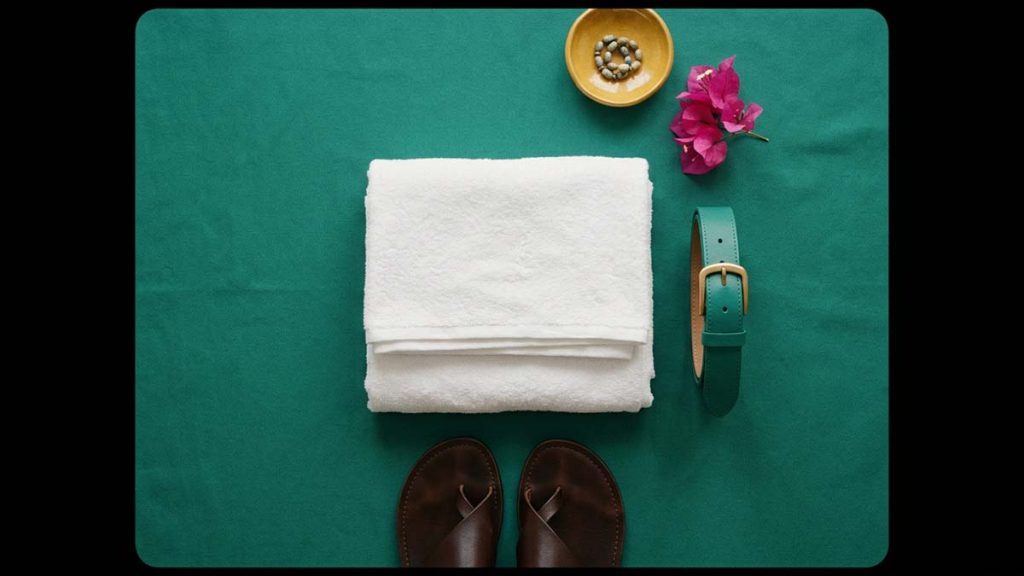
Ihram is the sacred state of spiritual consecration that a Muslim enters before performing Hajj or Umrah, and it is also the name given to the simple white garments worn during it. Entering this state, the pilgrim sets aside worldly comforts and certain everyday actions, dedicating themselves wholly to the worship of Allah. Clad in plain white cloth and humbled before their Lord, every pilgrim looks alike, rich and poor, king and worker, united in devotion. For this reason ihram is one of the most powerful and moving features of the pilgrimage.
Both the inner state and the outer garments carry deep meaning, symbolising purity, equality, humility and total devotion to Allah. Putting on the white cloth and making the intention marks the beginning of a sacred journey unlike any other. In this guide we explain what ihram is, six things to know about it, Hajj and Umrah in Islam, the white garments, entering the state, its rules and restrictions, its meaning of equality and purity, and tips for wearing it comfortably.
وَأَتِمُّوا الْحَجَّ وَالْعُمْرَةَ لِلَّهِ
“And complete the Hajj and Umrah for Allah.”
What Is Ihram?
Ihram refers to two connected things: the sacred state a pilgrim enters for Hajj or Umrah, and the special clothing worn while in that state. The word itself comes from a root meaning to make forbidden, because on entering this state certain ordinarily permissible things become temporarily prohibited, marking the pilgrim’s complete focus on worship.
For men, the garments are two pieces of plain, unstitched white cloth, one wrapped around the lower body and the other draped over the upper body. Women do not have a fixed uniform but wear simple, modest clothing, usually plain and often white, with the face and hands left uncovered during the rites.
A pilgrim enters this state by making the intention and reciting the talbiyah, the call announcing their response to Allah. From that moment they are bound by the rules of ihram until the rites are complete, a journey explored in our Hajj section.
6 Things to Know
A few key points help make sense of this sacred state. Here are six important things to know about it.
- It is both a spiritual state and a set of garments
- Men wear two plain, unstitched white cloths
- Women wear simple, modest clothing of their choice
- It begins with the intention and the talbiyah
- Certain everyday actions become temporarily forbidden
- It symbolises purity, humility and equality
Hajj and Umrah in Islam
Hajj and Umrah are the great pilgrimages to the sacred city of Makkah. Hajj, the fifth pillar of Islam, is an obligation once in a lifetime for every Muslim who is able, performed in the appointed days, while Umrah is a shorter, voluntary pilgrimage that can be done at any time of year, as explored in our Umrah section.

Both journeys are acts of immense devotion, drawing millions to circle the Kaaba, walk between Safa and Marwah, and stand in worship before their Lord. The rewards are vast, and the experience is among the most profound moments in the life of a believer.
It is for these sacred journeys that ihram is worn. Entering the consecrated state is the gateway to the rites, the moment a pilgrim leaves the ordinary world behind and steps into a time set apart entirely for Allah.
An accepted pilgrimage sincere and pure has no reward less than Paradise for the faithful servant
The White Garments of Ihram
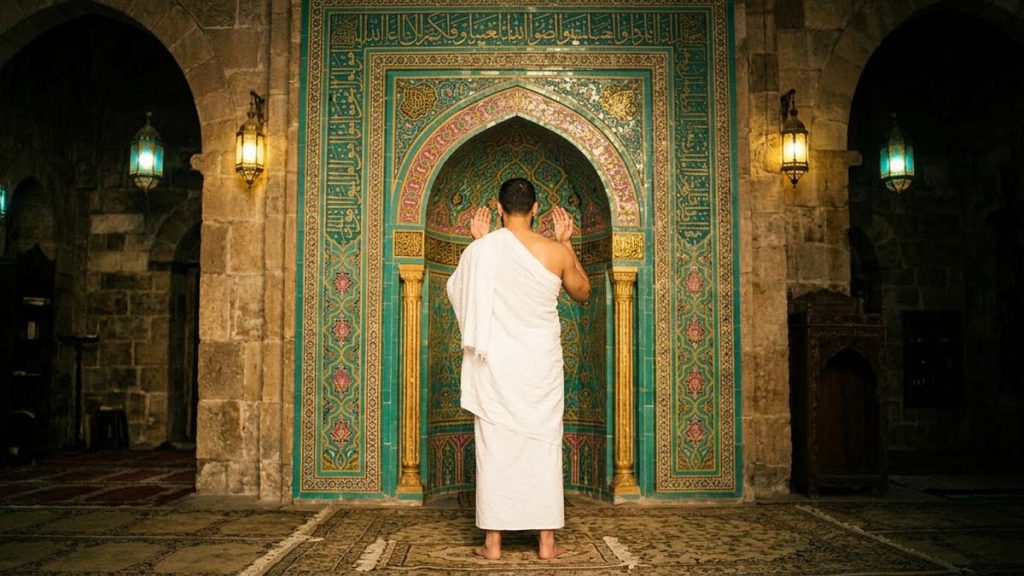
The white garments of ihram are perhaps the most recognisable feature of the pilgrimage. For men they consist of two pieces of unstitched white cloth, free of any sewing, pockets or decoration, worn plainly so that all men appear the same before Allah. This deliberate simplicity strips away every sign of wealth and status.
White is chosen for its beauty and meaning. It is clean, humble and pure, and the Prophet Muhammad (pbuh) loved white clothing and encouraged the believers to wear it, describing it as among the purest and best of garments, which makes it especially fitting for this sacred state.
For women, modesty rather than a fixed cut is the rule. They wear ordinary modest dress, often plain and white, covering the body as usual while leaving the face and hands uncovered during the rites, so that they too stand simple and humble before their Lord.
Wear white garments for they are the purest and most pleasing of clothing
Entering the State of Ihram
A pilgrim enters this sacred state at a fixed point on the way to Makkah, known as the miqat. Before crossing it, they wash, put on the white garments, and most importantly form the sincere intention in the heart to begin Hajj or Umrah, then recite the talbiyah to announce their answer to the call of their Lord.
From that moment, the pilgrim is consecrated and bound by the rules of ihram until the rites are completed. The talbiyah, repeated often along the way, fills the journey with the constant remembrance that one has come solely for the worship of Allah.
This entering is a deeply moving moment. Shedding everyday clothes for the simple white cloth, the pilgrim leaves behind the cares of the world and turns wholly towards their Lord, Al-Quddus, the Most Pure, ready to begin the sacred rites at the Kaaba.
The Rules and Restrictions
While in ihram, the pilgrim observes a number of restrictions that deepen their focus on worship. These include refraining from cutting the hair or nails, using perfume, hunting, and from marital relations, along with avoiding arguments, bad language and any sinful behaviour.
These rules are not burdens but a gentle discipline. By setting aside ordinary comforts and habits, the pilgrim’s whole attention is turned towards Allah, and the temporary simplicity of life mirrors the humility and devotion the pilgrimage is meant to cultivate.
The reward for observing them sincerely is immense. The Prophet Muhammad (pbuh) taught that whoever performs the pilgrimage without obscenity or wrongdoing returns cleansed of sin, as pure as the day they were born, which makes the discipline of these days truly precious.
Whoever performs the pilgrimage free of sin and wrongdoing returns pure as a newborn child cleansed by his Lord
The Meaning of Equality and Purity
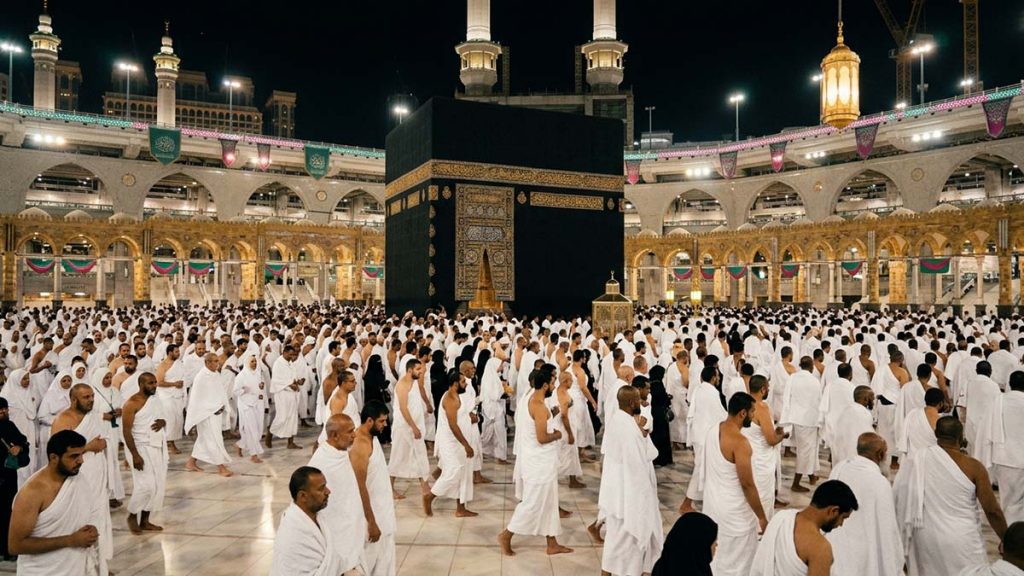
Beyond its practical role, ihram carries profound spiritual meaning. When millions of pilgrims stand together in identical plain white cloth, every mark of wealth, rank and nationality disappears, and all are revealed as equal servants before their Creator, a breathtaking living lesson in human equality.
This echoes a central truth of Islam, that nobility lies not in riches or birth but in righteousness and the state of the heart. The Quran teaches that the most honoured before Allah are simply those most mindful of Him, and the sea of white-clad pilgrims makes this truth visible to the eye.
The white also speaks of purity and even of mortality, recalling the simple shroud in which a person is one day buried. In this way the garments gently remind the pilgrim of the life to come, urging sincerity, humility and devotion in the sacred days of the pilgrimage.
The most noble of you in the sight of your Lord is the most righteous in heart whatever your station
Tips for Wearing It Comfortably

A little preparation helps the garments of ihram feel comfortable through the demanding days of pilgrimage. Choosing good quality cloth of the right size, practising wrapping it beforehand, and keeping a spare set clean and ready all make the experience smoother. Many pilgrims pair the garments with a discreet Hajj and Umrah belt to keep valuables safe.
Comfort in the heat matters too. Lightweight, breathable cotton helps in the warm climate of Makkah, and pilgrims often carry a small bag for sandals, use safety pins or a belt to keep the cloth secure, and bring a clean towel, since the garments must be kept pure for prayer.
Above all, the focus stays on the spirit of the state rather than the cloth itself. The simple garments are a means to humility and devotion, helping the pilgrim turn wholly to Allah as they complete the sacred rites and later drink the blessed Zamzam water.
Two simple white cloths unstitched and plain worn by every pilgrim alike rich and poor as one
The sight of millions in white, equal before their Lord, is deeply moving, and we share more on Hajj and Umrah across our channels. Find us on YouTube, Instagram and LinkedIn.
Frequently Asked Questions
Ihram is the sacred state of consecration a Muslim enters for Hajj or Umrah, and the name of the white garments worn during it. In this state certain everyday actions become temporarily forbidden as the pilgrim focuses wholly on worship.
Men wear two pieces of plain, unstitched white cloth, one around the lower body and one over the upper. Women wear simple, modest clothing of their choice, often plain and white, with the face and hands left uncovered during the rites.
At a fixed point called the miqat, the pilgrim washes, puts on the white garments, forms the sincere intention to begin Hajj or Umrah, and recites the talbiyah, the call announcing their response to Allah, entering the sacred state.
While consecrated, a pilgrim refrains from cutting hair or nails, using perfume, hunting and marital relations, and avoids arguments, bad language and sin. These restrictions deepen the focus on worship during the pilgrimage.
White is clean, humble and pure, and the Prophet (pbuh) loved white clothing and praised it as among the best. Identical white cloth also makes all pilgrims equal before Allah and gently recalls the simple shroud of burial.
It symbolises purity, humility and equality. With every pilgrim in identical plain white, all signs of wealth and rank vanish, revealing the believers as equal servants before their Creator, mindful that nobility lies in righteousness.