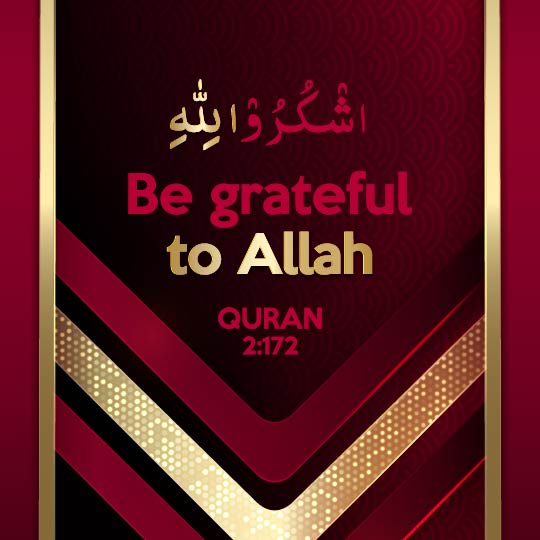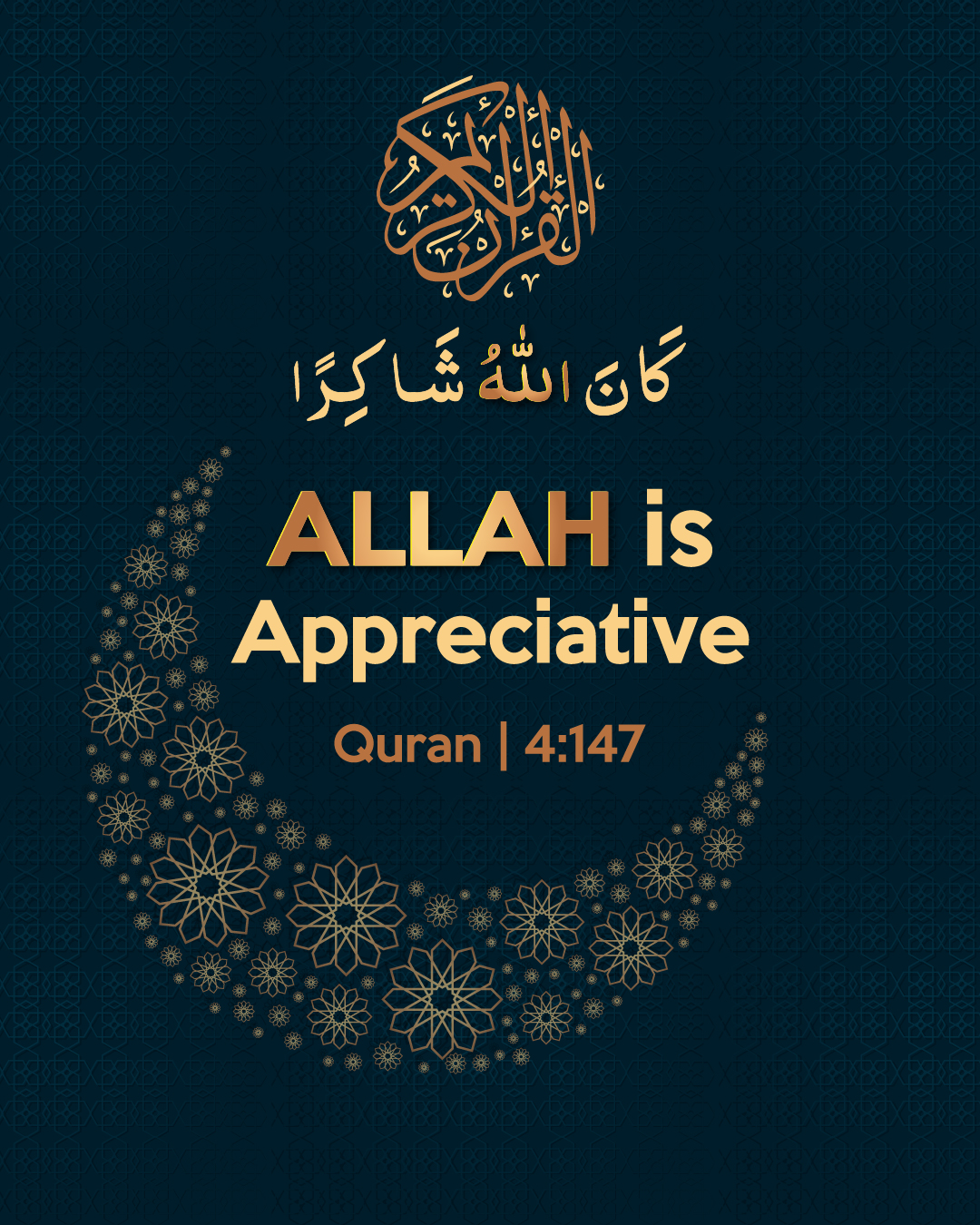
Allah asks in Quran 4:147 why He would punish those who are grateful and believe. In Quran 14:7, He promises to increase favour for those who are grateful.
Yes. Allah explicitly promises in Quran 14:7 that gratitude leads to increase. This is a divine principle — recognising blessings opens the door to receiving more.
Ash-Shakur means The Most Appreciative. It is one of Allah’s names, indicating that He recognises and rewards every act of gratitude, no matter how small.



The Quran Says About Gratitude in Islam
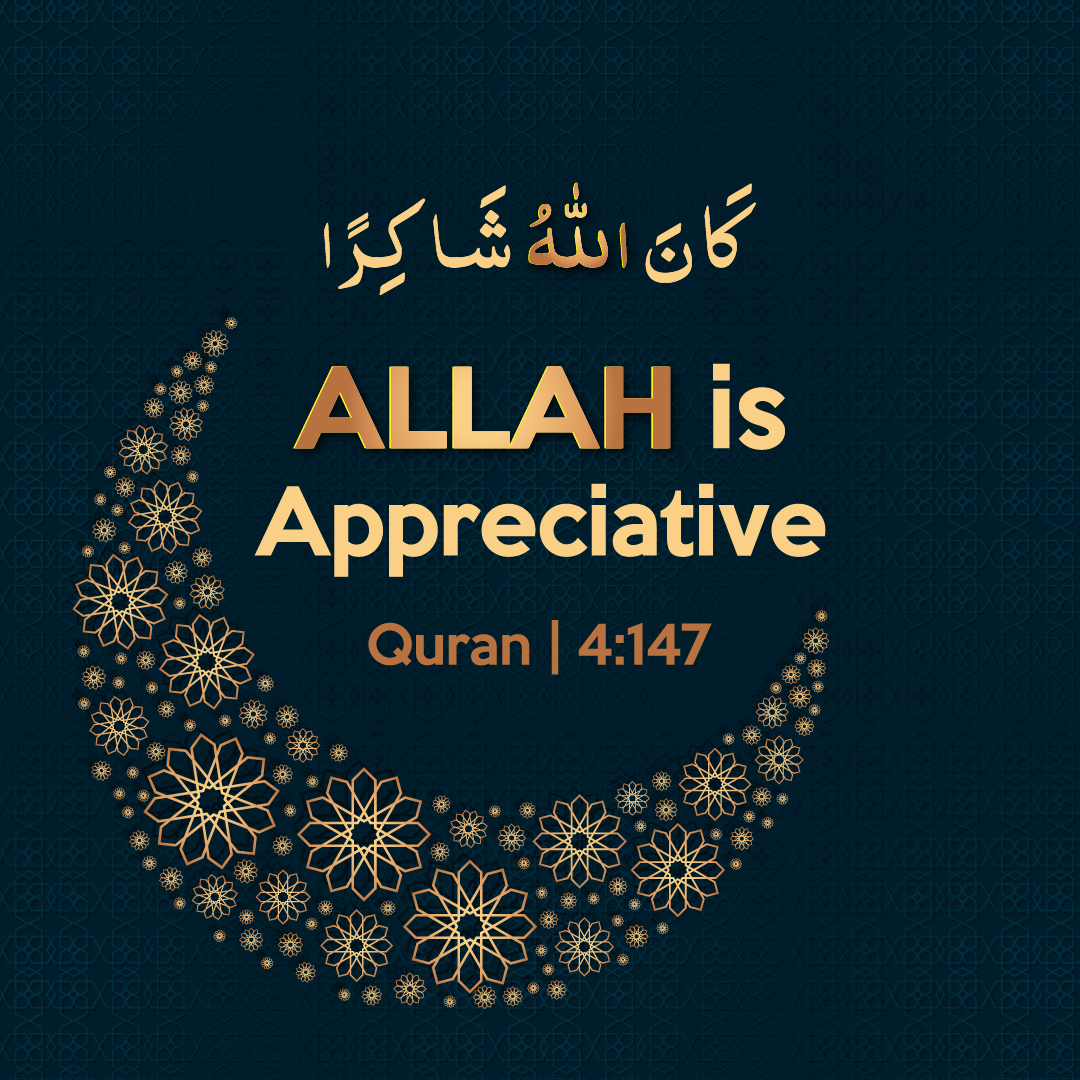
مَا یَفۡعَلُ اللّٰہُ بِعَذَابِکُمۡ اِنۡ شَکَرۡتُمۡ وَاٰمَنۡتُمۡ ؕ وَکَانَ اللّٰہُ شَاکِرًا عَلِیۡمًا ﴿۱۴۷﴾
Why should Allah punish you if you are grateful and you believe. Allah is Appreciative and All-Knowing.
This verse from Surah An-Nisa asks a question that contains its own answer: why would Allah punish those who are grateful and believe? Gratitude in Islam is presented here not as a polite habit but as a shield — a quality that, combined with faith, protects the believer from punishment.
How Gratitude Protects the Believer
The structure of this verse is remarkable. Allah does not say “I will not punish you if you are grateful.” He asks “why would I?” — a rhetorical question that reveals His nature as merciful and just. Punishing someone who is genuinely grateful and believes would contradict who Allah is. This means gratitude is not just a nice quality to have; it is a spiritual safeguard that aligns the believer with Allah’s mercy and turns away His displeasure.
The verse ends by naming two of Allah’s attributes: Appreciative (Shakir) and All-Knowing (Alim). This combination is significant. Allah not only recognises every act of gratitude — He knows the sincerity behind it. Nothing is hidden from Him. As Ash-Shakur, the Most Appreciative, Allah rewards gratitude with increase, and as Al-Alim, the All-Knowing, He distinguishes between lip-service gratitude and the kind that comes from the heart.
“If you are grateful, I will surely increase you in favour; but if you deny, indeed, My punishment is severe.”
This verse from Surah Ibrahim adds a promise and a warning. Gratitude leads to increase — more blessings, more favour, more closeness to Allah. Ingratitude leads to the opposite. This is not arbitrary; it is a divine principle woven into the fabric of existence. A person who recognises their blessings and thanks Allah for them opens the door to receiving more. A person who denies or ignores their blessings risks losing them entirely.
How to Practise Gratitude Every Day
Gratitude in Islam is expressed in three ways: with the heart, the tongue, and the actions. The heart recognises that every blessing comes from Allah. The tongue says “Alhamdulillah” and expresses thanks openly. The actions demonstrate gratitude by using blessings in ways that please Allah — spending wealth in charity, using health for worship, and using knowledge to benefit others. The Prophet (pbuh) would pray until his feet swelled, and when asked why, he said: should I not be a grateful servant?
For the believer, this verse is an invitation to reflect on every blessing — no matter how small — and to respond with sincere thanks. Gratitude in Islam is not seasonal or occasional. It is a constant state of awareness that transforms how a person experiences every moment of their life. The one who is grateful lives in a state of abundance, regardless of how much they own, because they see everything as a gift from the Most Generous Creator.
Follow our YouTube, Threads and LinkedIn for more Islamic Quotes and reminders on gratitude and faith in Islam.
Through the heart (recognising blessings from Allah), the tongue (saying Alhamdulillah), and actions (using blessings in ways that please Allah — charity, worship, and kindness).
Allah warns in Quran 14:7 that ingratitude leads to severe consequences. Denying or ignoring blessings risks losing them.
Saying Alhamdulillah is important, but true gratitude also requires the heart to recognise Allah’s blessings and the actions to reflect that recognition through worship, charity, and responsible use of what Allah has given.
Because recognising that blessings come from Allah is itself an act of faith. A grateful person acknowledges their dependence on the Creator, while an ungrateful person acts as if they are self-sufficient.