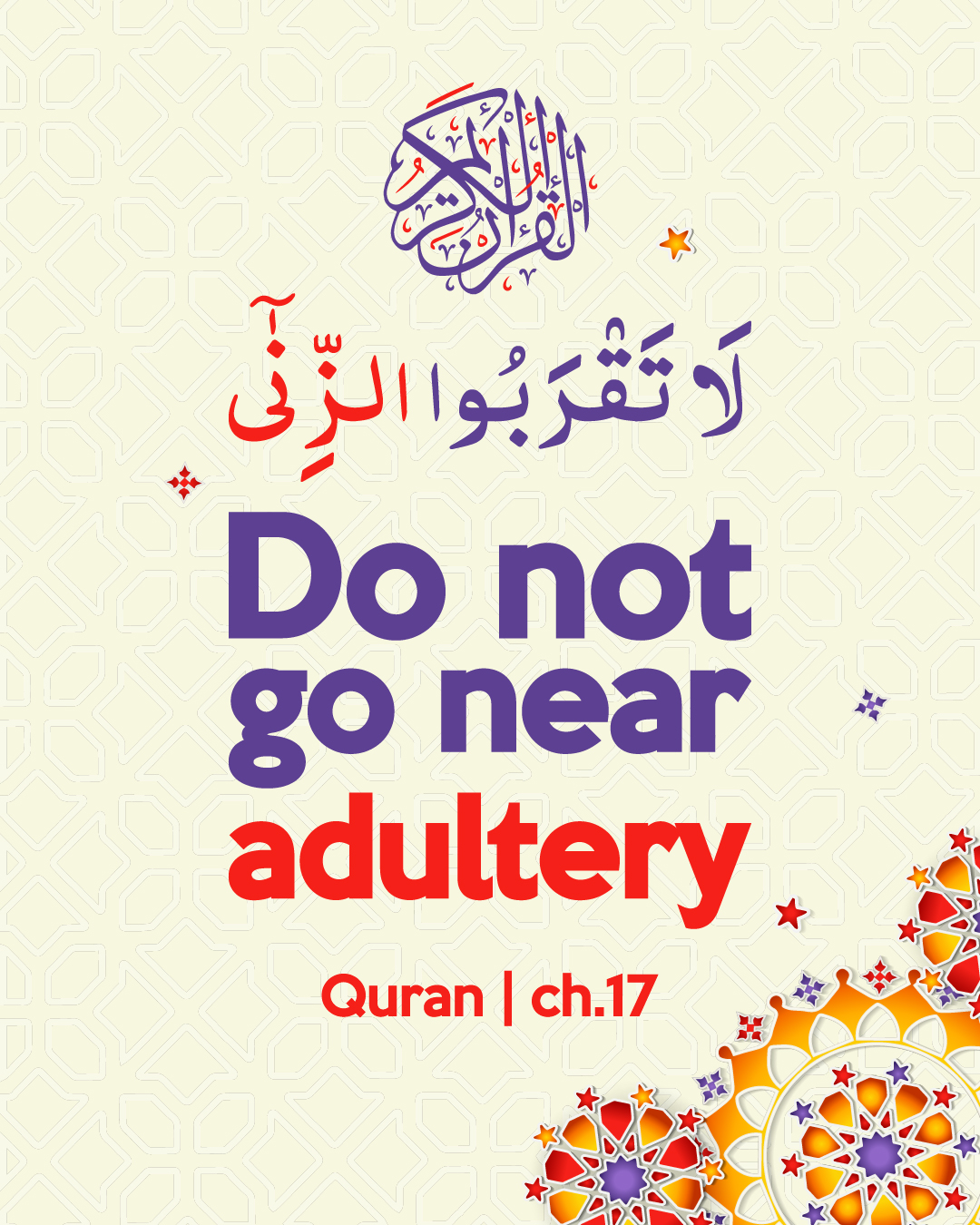
Zina in Islam refers to any unlawful sexual intercourse — including adultery and fornication. Allah forbids it in Quran 17:32 and describes it as an immoral act and an evil way. The prohibition extends to everything that leads toward it.
Allah uses the phrase ‘do not go near’ rather than ‘do not commit’ to emphasise that the prohibition covers not just the act itself but every step that leads to it — including inappropriate interactions, isolation with non-mahram, and consuming immoral content.
The Quran prescribes specific punishments for zina in Quran 24:2, which apply under strict legal conditions with verified evidence. The spiritual consequences — distance from Allah and loss of inner peace — are equally serious.

The Quran Says About Zina in Islam
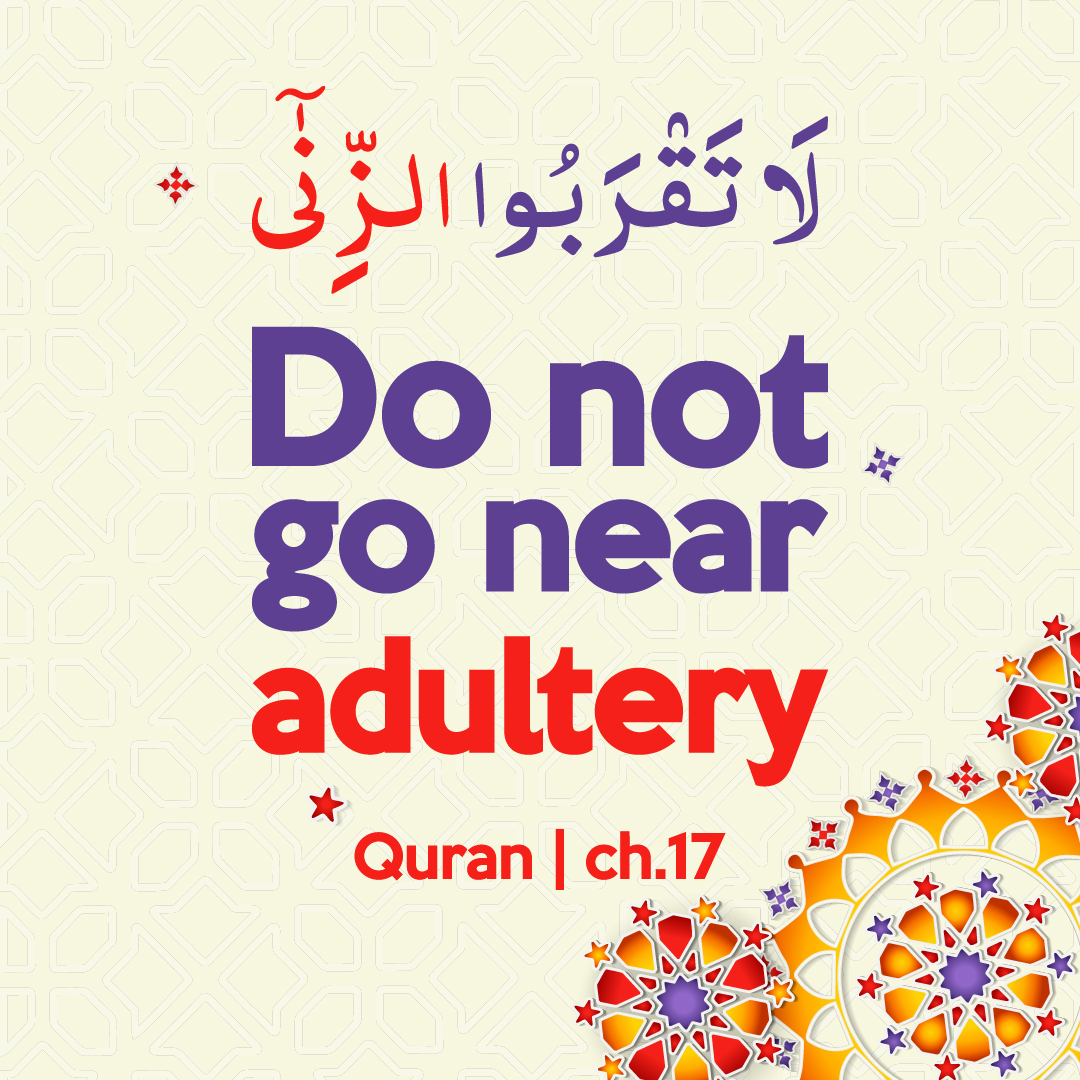
وَلَا تَقۡرَبُوا الزِّنٰۤی اِنَّہٗ کَانَ فَاحِشَۃً ؕ وَسَآءَ سَبِیۡلًا ﴿۳۲﴾
“And do not go near adultery. Indeed, it is an immoral act and an evil way.”
This verse from Surah Al-Isra does not simply forbid adultery — it forbids going near it. Allah closes every door that could lead to the act itself. Understanding zina in Islam begins with this crucial distinction: the prohibition is not just against the sin but against every step that leads toward it.
Why Allah Says Do Not Go Near
Most prohibitions in the Quran use the word “do not do.” This verse is different — it says “do not go near.” The Arabic “la taqrabu” carries a stronger level of prohibition than a simple ban. Allah is not merely forbidding the act of zina; He is forbidding every path that leads to it. This includes being alone with someone of the opposite gender without a mahram, unguarded conversations that cross boundaries, consuming content that normalises immorality, and any situation where temptation is given the opportunity to grow. The ruling on zina in Islam is a fence around the believer, not just a line drawn at the edge.
The verse then describes zina with two words: “fahishah” — an immoral, shameful act — and “an evil way.” Allah does not soften the language or leave room for cultural reinterpretation. Zina is described as inherently destructive, a path that leads to ruin for the individual, the family, and the community. As Al-Quddus, the Most Holy, Allah demands purity from His servants — not because He wants to restrict them, but because He knows that purity protects everything they hold dear.
“Tell the believing men to lower their gaze and guard their modesty. That is purer for them. Indeed, Allah is Acquainted with what they do.”
This verse from Surah An-Nur provides the first practical step in avoiding zina in Islam: lowering the gaze. Allah calls this “purer for them” — meaning it is a purification of the heart before it is a rule of behaviour. When a person guards their eyes, they guard their thoughts. When they guard their thoughts, they guard their actions. The instruction to lower the gaze is not about shame — it is about building the internal discipline that prevents a person from ever reaching the door of zina. As Al-Basir, the All-Seeing, Allah is fully aware of what the eyes look at and what the heart desires.
How Zina in Islam Affects the Individual and Society
The consequences of zina extend far beyond the two people involved. It destroys trust within marriages, breaks apart families, creates children without stable homes, and spreads disease. In a broader sense, when zina becomes normalised in a society, the institution of marriage loses its value, relationships become disposable, and the social fabric weakens. The Prophet (pbuh) warned that when immorality becomes widespread in a community, diseases and hardships that were unknown to previous generations will emerge. The prohibition of zina in Islam is not a personal restriction — it is a protection of the entire social order.
For the believer who struggles with temptation, the Quran offers both a warning and a path forward. The warning is clear: zina is an immoral act and an evil way. But the path forward is equally clear — lower your gaze, guard your modesty, and seek marriage as a lawful outlet. Zina in Islam is treated with such seriousness because Allah values the dignity of every person and the stability of every family. Avoiding it is not just obedience — it is an act of love for yourself, your family, and the community Allah entrusted you to protect.
Follow our YouTube, Instagram and LinkedIn for more Muslim Quotes and teachings on zina in Islam and moral guidance.
By lowering the gaze (Quran 24:30), avoiding being alone with non-mahram, fasting to reduce desire (as the Prophet advised), seeking marriage when able, and staying away from environments that normalise immorality.
Yes. Allah forgives all sins for those who repent sincerely. Quran 39:53 says: do not despair of the mercy of Allah, He forgives all sins. Sincere repentance, regret, and the intention to never return are the conditions.
It means avoiding looking at what is forbidden — whether in person or through screens. The Quran describes it as purer for the believer (Quran 24:30). It is the first line of defence against temptation and a means of purifying the heart.
Because it destroys families, violates trust, harms children, spreads disease, and undermines the social fabric. Allah describes it as fahishah (shameful) and an evil way, placing it among the most serious prohibitions in the Quran.