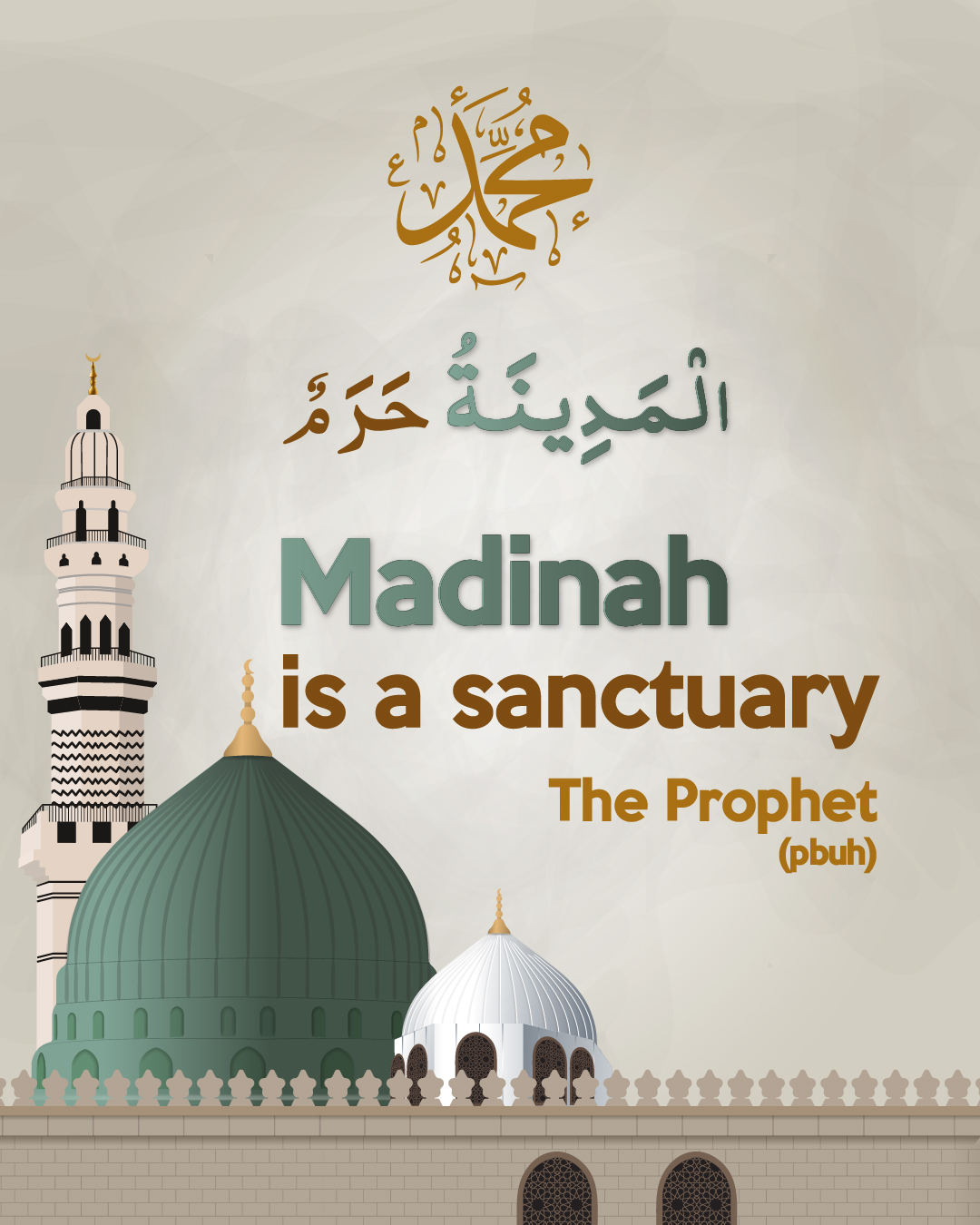
The Prophet (pbuh) declared Madinah a sanctuary (haram), placing it under divine protection (Bukhari 1867). It was the city of the Hijrah, the birthplace of the first Muslim community, and the final resting place of the Prophet (pbuh).
No. The Prophet (pbuh) explicitly prohibited cutting the trees and vegetation of Madinah as part of its sacred designation. This ruling reflects the city’s protected status in Islamic law.
The Prophet (pbuh) said that prayer in his mosque is worth a thousand prayers elsewhere, except for Masjid al-Haram in Makkah. This makes Masjid an-Nabawi one of the most rewarding places to worship.


The Prophet Said About Madinah in Islam
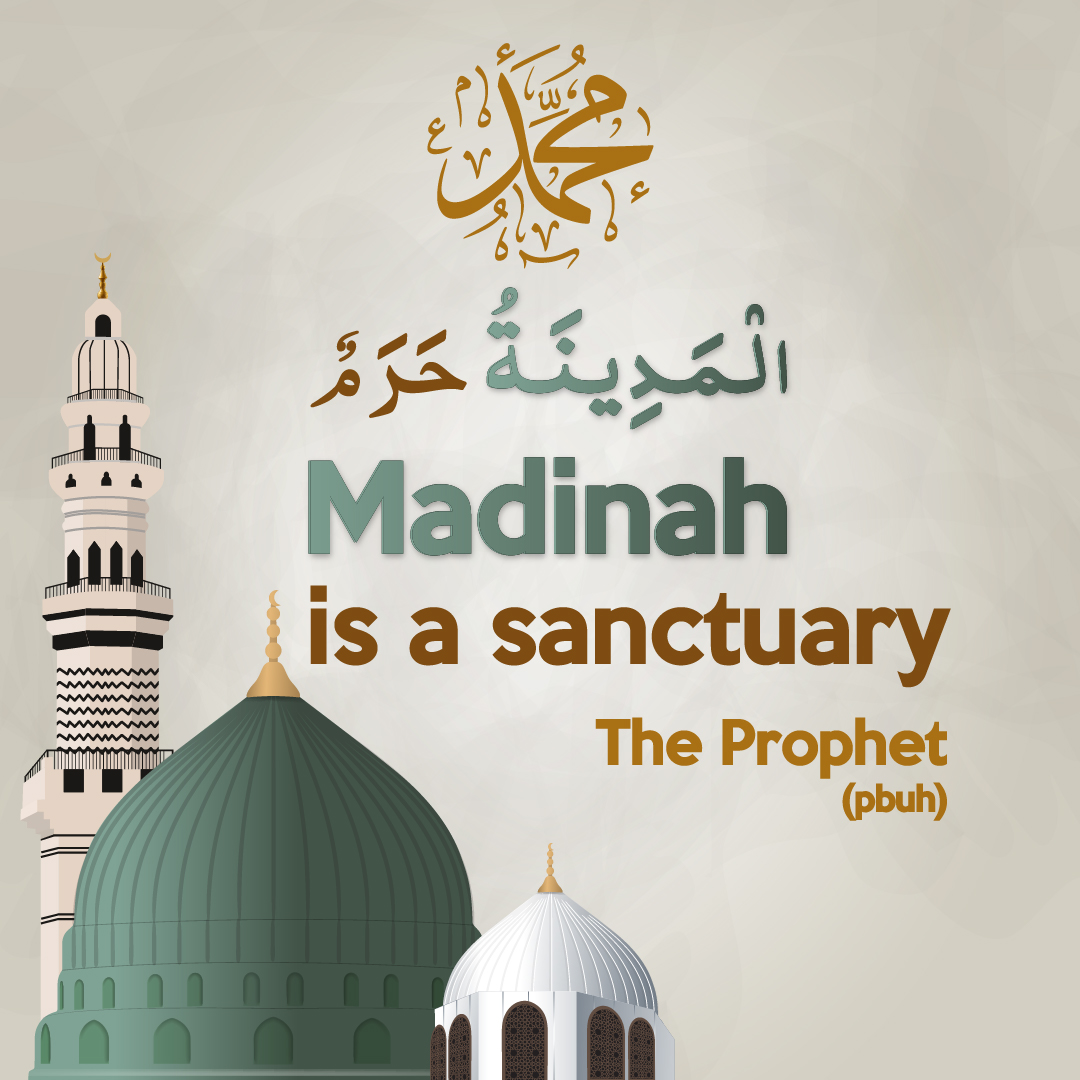
الْمَدِينَةُ حَرَمٌ، مِنْ كَذَا إِلَى كَذَا، لاَ يُقْطَعُ شَجَرُهَا، وَلاَ يُحْدَثُ فِيهَا حَدَثٌ، مَنْ أَحْدَثَ حَدَثًا فَعَلَيْهِ لَعْنَةُ اللَّهِ وَالْمَلاَئِكَةِ وَالنَّاسِ أَجْمَعِينَ
“Madinah is a sanctuary from one place to another. Its trees must not be cut, and no wrongdoing or religious innovation should be introduced there. Whoever introduces wrongdoing there will incur the curse of Allah, the angels, and all people.”
This hadith establishes the sacred status of Madinah in Islam. The Prophet (pbuh) declared it a sanctuary — a place where trees must not be cut, wrongdoing must not be introduced, and the protection of Allah extends over every part of it. It is a teaching that defines Madinah as more than a city; it is a trust given to every generation of Muslims.
What the Prophet Declared About the Sanctity of Madinah
The Prophet (pbuh) used the word “haram” to describe Madinah — the same word used for the Sacred Mosque in Makkah. This designation carries legal and spiritual weight. The trees and vegetation of Madinah must not be cut or destroyed. No act of wrongdoing or religious innovation should be introduced within its boundaries. The Prophet (pbuh) placed a severe warning on anyone who violates this sanctity: the curse of Allah, the angels, and all people. This is not a casual statement — it reflects how deeply the Prophet (pbuh) valued the city that welcomed him when Makkah rejected him.
Madinah in Islam holds a unique position. It was the city of the Hijrah, the place where the first Muslim community was built, and the city where the Prophet (pbuh) is buried. Its streets witnessed the birth of Islamic civilisation — the first mosque, the first constitution between Muslims and other communities, and the first functioning Islamic state. Protecting Madinah is not just about preserving a geographical location; it is about honouring the legacy of everything that was built there. As Al-Hafiz, the Protector, Allah guards what is sacred, and Madinah stands as proof of that protection.
“Indeed, those who believed and emigrated and fought with their wealth and lives in the cause of Allah, and those who gave shelter and aided — they are allies of one another.”
This verse from Surah Al-Anfal describes the very people who built Madinah into what it became: the Muhajirun who emigrated and the Ansar who gave them shelter. Their sacrifice and solidarity are the foundation of Madinah’s legacy. The city’s sanctity is not just about its soil or its trees — it is about the faith, the brotherhood, and the struggle that took place there. As Al-Waliy, the Protecting Friend, Allah honoured those who built this city and placed His protection over it through the words of His Prophet (pbuh).
Why Madinah Matters to Every Muslim
For every Muslim, Madinah in Islam is more than a destination for pilgrimage. It is a living reminder of what Islam can build when faith, community, and sacrifice come together. The Prophet (pbuh) chose to stay in Madinah when he could have returned to Makkah sooner. He built the foundations of the Muslim community there. He taught, judged, prayed, and lived among its people. His mosque — Masjid an-Nabawi — remains one of the three holiest mosques in Islam, and praying there carries a reward multiplied a thousand times.
For the believer, this hadith is a call to honour what the Prophet (pbuh) honoured. Madinah in Islam is sacred not because of its geography but because of what happened there and who lived there. Respecting its sanctity means respecting the legacy of the Prophet (pbuh) and the community he built — a legacy that every Muslim carries forward through their faith, their conduct, and their commitment to the values that were first lived out in the streets of Madinah.
Follow our YouTube, X and Pinterest for more Islamic Quotes and reminders on the sacred places of Islam.
Madinah was the destination of the Hijrah, where the Prophet (pbuh) established the first Muslim community, built the first mosque, created the Constitution of Madinah, and led the Muslim state until his passing.
The Ansar were the people of Madinah who welcomed the Prophet (pbuh) and the Muhajirun (emigrants from Makkah), gave them shelter, shared their wealth, and fought alongside them. The Quran praises them in Quran 8:72.
Yes. Madinah is the second holiest city in Islam after Makkah. It is home to Masjid an-Nabawi, where the Prophet (pbuh) is buried, and carries a sacred designation that prohibits wrongdoing and destruction within its boundaries.
The Prophet (pbuh) warned that whoever introduces wrongdoing or religious innovation in Madinah will incur the curse of Allah, the angels, and all people. This reflects the severity of violating the city’s sacred status.