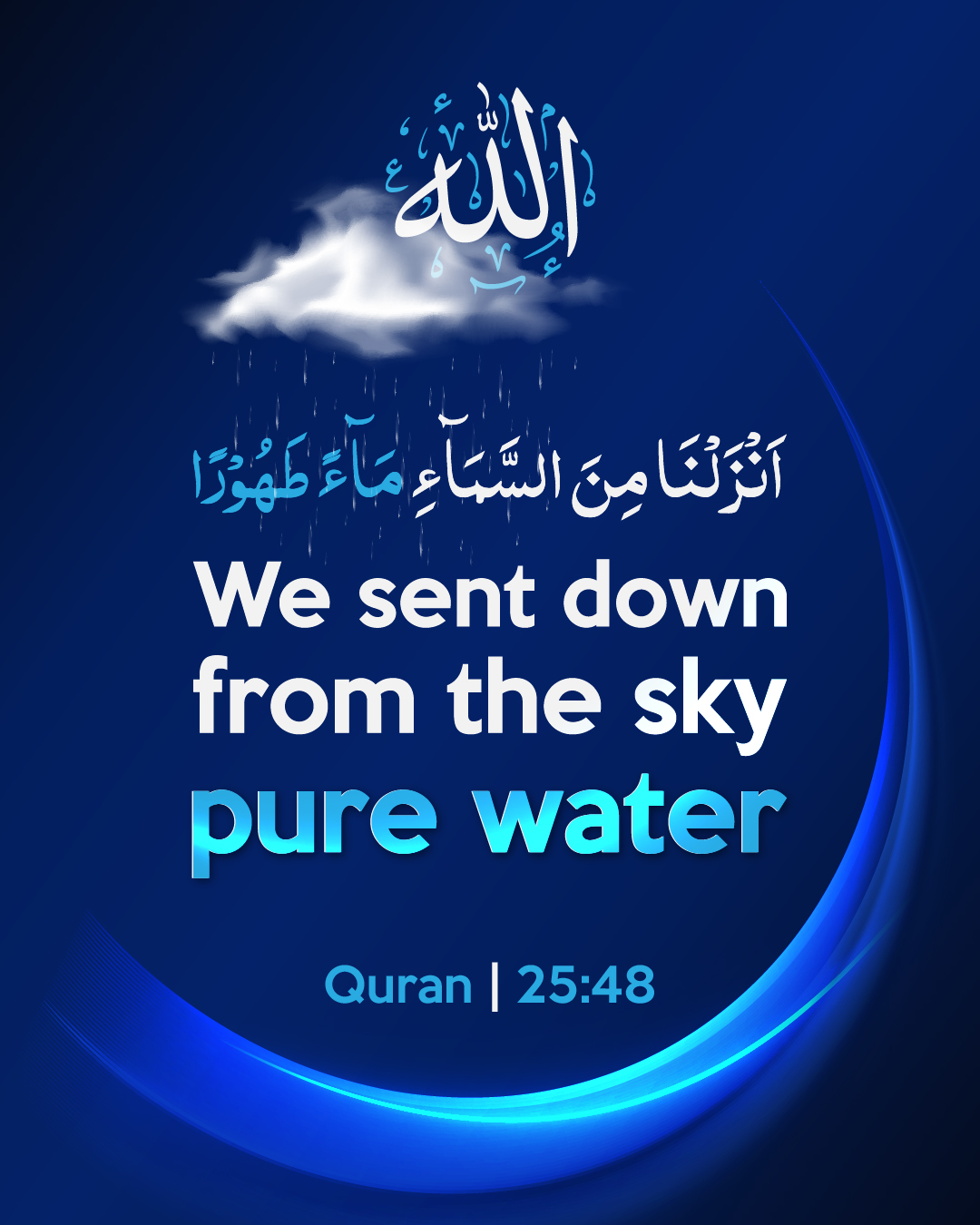
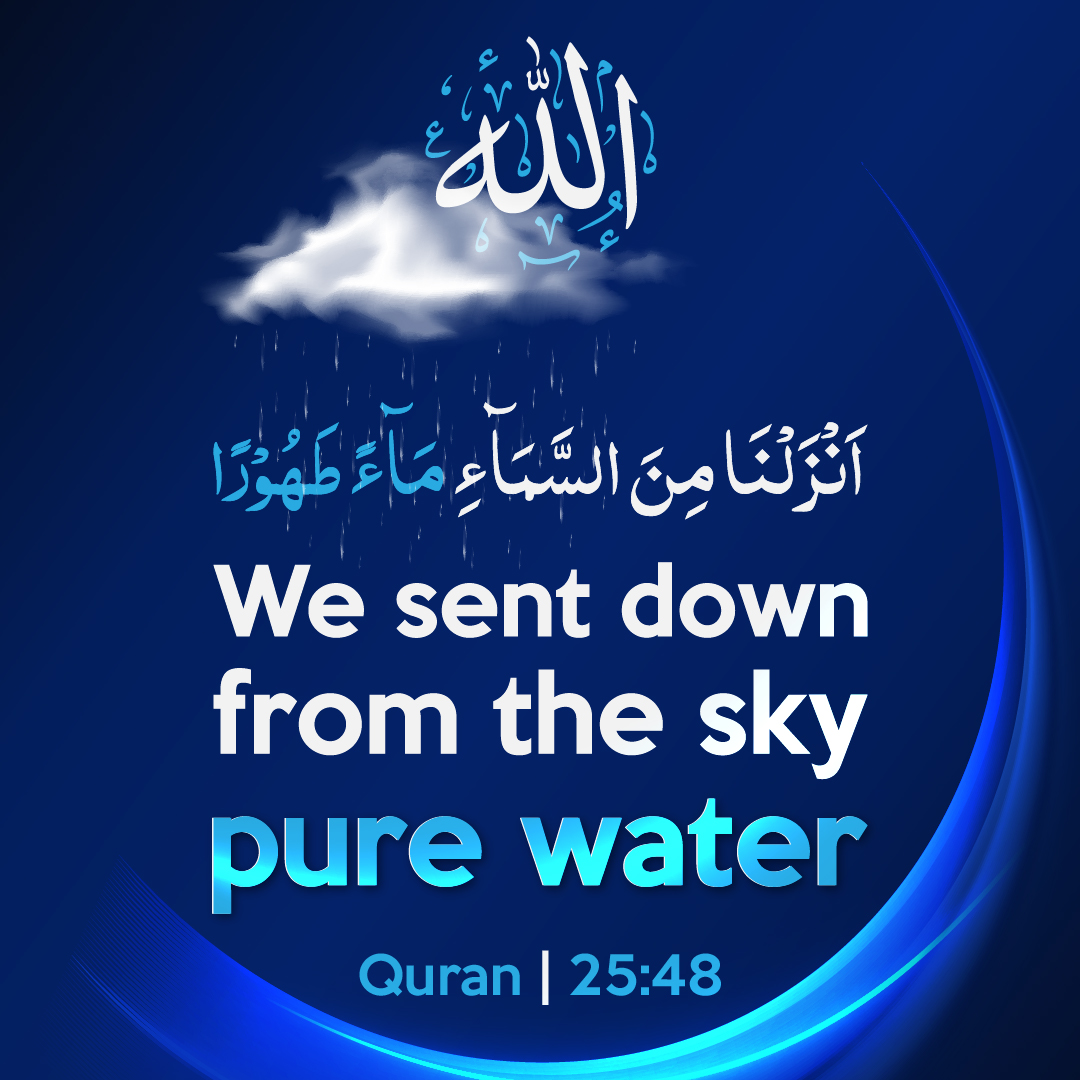
The Quran describes rain as a mercy from Allah, sent down in measured amounts through winds that carry glad tidings. In Quran 25:48, Allah calls rain “pure water” and frames it as an act of His generosity and sustenance.
Yes. The Quran describes winds carrying clouds, rain descending from the sky, water settling in the earth, and rivers flowing as a result — all elements of the water cycle described long before modern meteorology formalised the concept.
The Prophet (pbuh) would say: “Allahumma sayyiban naafi’an” — O Allah, let it be a beneficial rain. He recognised rain as a moment of divine mercy and encouraged Muslims to make dua during it.

Allah Says About Rain in the Quran
وَہُوَ الَّذِیۡۤ اَرۡسَلَ الرِّیٰحَ بُشۡرًۢا بَیۡنَ یَدَیۡ رَحۡمَتِہٖ ۚ وَاَنۡزَلۡنَا مِنَ السَّمَآءِ مَآءً طَہُوۡرًا ﴿ۙ۴۸﴾
“And He it is Who sends the winds as glad tidings before His mercy, and We send down pure water from the sky.”
This verse from Surah Al-Furqan describes one of the most beautiful natural phenomena through the lens of faith. Allah calls the winds “glad tidings” and rain “mercy,” transforming the way a believer sees every storm. Understanding rain in the Quran means seeing water not as a weather event but as a direct gift from the Creator.
How the Quran Describes the Journey of Rain
Allah describes a process: winds are sent first, carrying the promise of what is to come, and then pure water descends from the sky. This sequence mirrors what modern meteorology confirms — wind patterns drive clouds across landscapes, gathering moisture that eventually falls as precipitation. The Quran describes this with a precision that predates scientific discovery by over a millennium. But the verse goes further than science: it frames the entire process as an act of mercy from Allah, turning a physical phenomenon into a spiritual reminder.
The word “pure” is significant. Allah does not merely say He sends down water — He specifies that it is tahur, meaning purifying. Rain cleanses the earth, replenishes rivers, and sustains all life. As Al-Muhyi, the Giver of Life, Allah uses rain as the primary instrument through which dead land is revived, crops are grown, and ecosystems are sustained. Every drop of rain is a reminder that life itself depends entirely on the will and mercy of the Creator.
“And We send down from the sky water in a measured amount, and We settle it in the earth, and indeed, We are able to take it away.”
This verse from Surah Al-Mu’minun adds an essential dimension to how rain is described in the Quran. Allah says it descends in a measured amount — not randomly, not excessively, but in precise quantities suited to sustain life. He then reminds humanity that He has the power to take it away entirely. This is both a blessing and a warning. As Al-Muqeet, the Sustainer, Allah maintains the delicate balance that makes life on earth possible.
What Rain Teaches a Believer About Gratitude
Rain in the Quran is never presented as an isolated natural event. It is always connected to Allah’s mercy, His provision, and His power. The Prophet (pbuh) would make dua when rain fell, recognising it as a moment of divine generosity. He taught Muslims to say: “O Allah, let it be a beneficial rain.” This simple habit transforms the way a believer experiences weather — from passive observation to active gratitude, from a forecast on a screen to a conversation with the Creator.
For the Muslim who reads about rain in the Quran, the lesson is clear: nothing in nature is accidental. Every cloud, every wind, every drop of water is directed by Allah with purpose and precision. Recognising this turns ordinary moments into acts of worship. The next time rain falls, a believer does not simply see water — they see mercy descending from the sky, sent by the One who promised to sustain everything He created.
Follow our YouTube, TikTok and Facebook for more Islamic Quotes and reflections on the signs of Allah in nature.
Rain sustains all life on earth — it grows crops, fills rivers, and purifies the land. Allah calls it mercy because it is a direct provision from Him that no human effort can produce. Without it, life would cease to exist.
The Arabic word “tahur” means purifying. Allah does not just send water — He sends water that cleanses, sustains, and revives. This description emphasises both the physical and spiritual purity of rain as a gift from the Creator.
Yes. The Quran repeatedly presents rain as a sign of Allah’s power, mercy, and wisdom. It is one of the most visible reminders in daily life that all provision comes from Him and that the natural world operates under His command.
Yes. Allah says in Quran 23:18 that He sends rain in a measured amount and is fully able to take it away. This serves as both a reminder of His power and a call to gratitude for every blessing received.