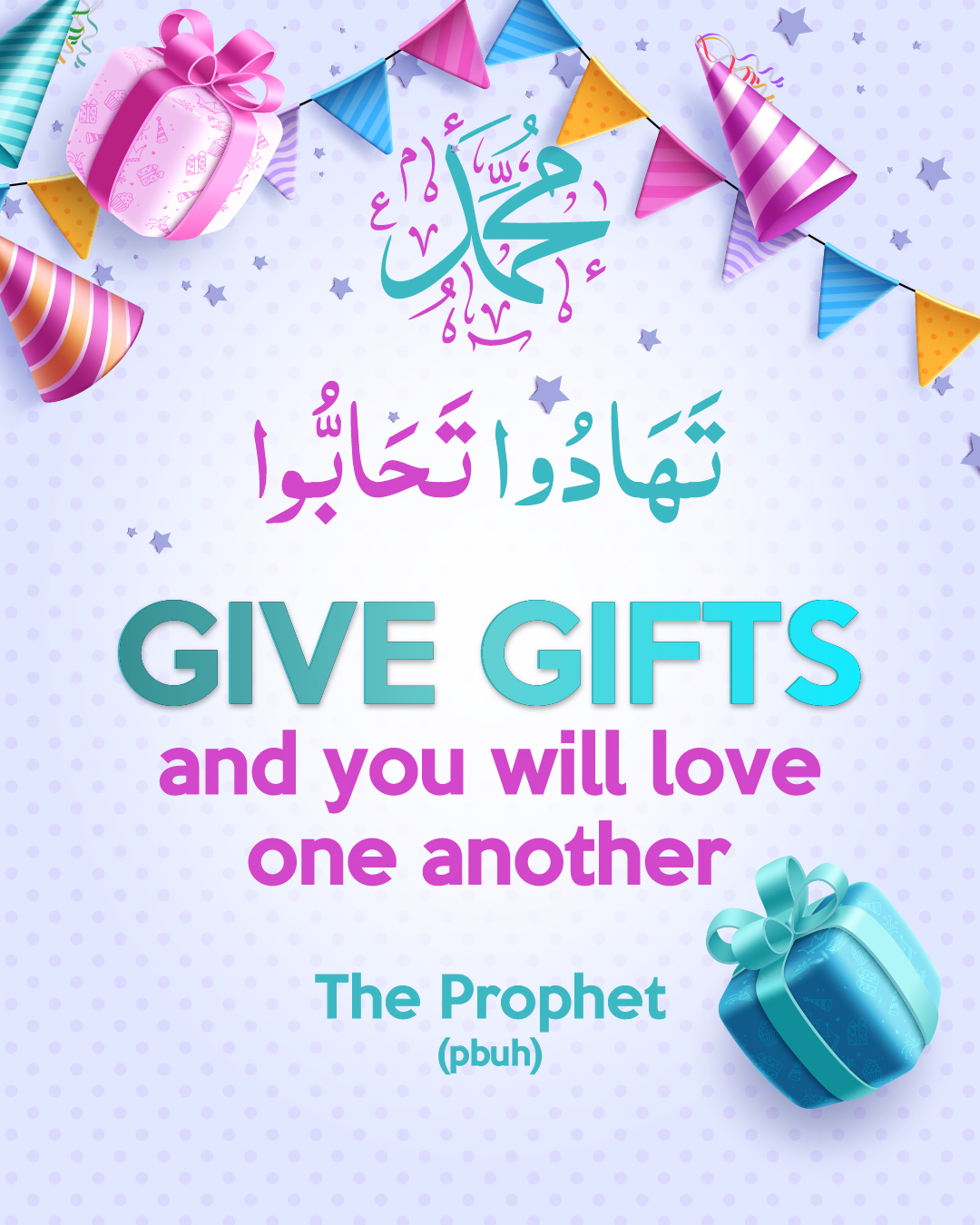
The Prophet (pbuh) said: Give gifts and you will love one another (Al-Adab Al-Mufrad 594). Islam encourages gift giving as a practical way to build love, strengthen bonds, and express generosity between people.
No. The Prophet (pbuh) gave and received simple gifts — food, perfume, and everyday items. What matters in Islam is the intention and the act of thinking about the other person, not the monetary value of the gift.
Yes. The Prophet (pbuh) regularly gave and accepted gifts, making it a well-established sunnah. He encouraged Muslims to exchange gifts to foster love and strengthen community ties.
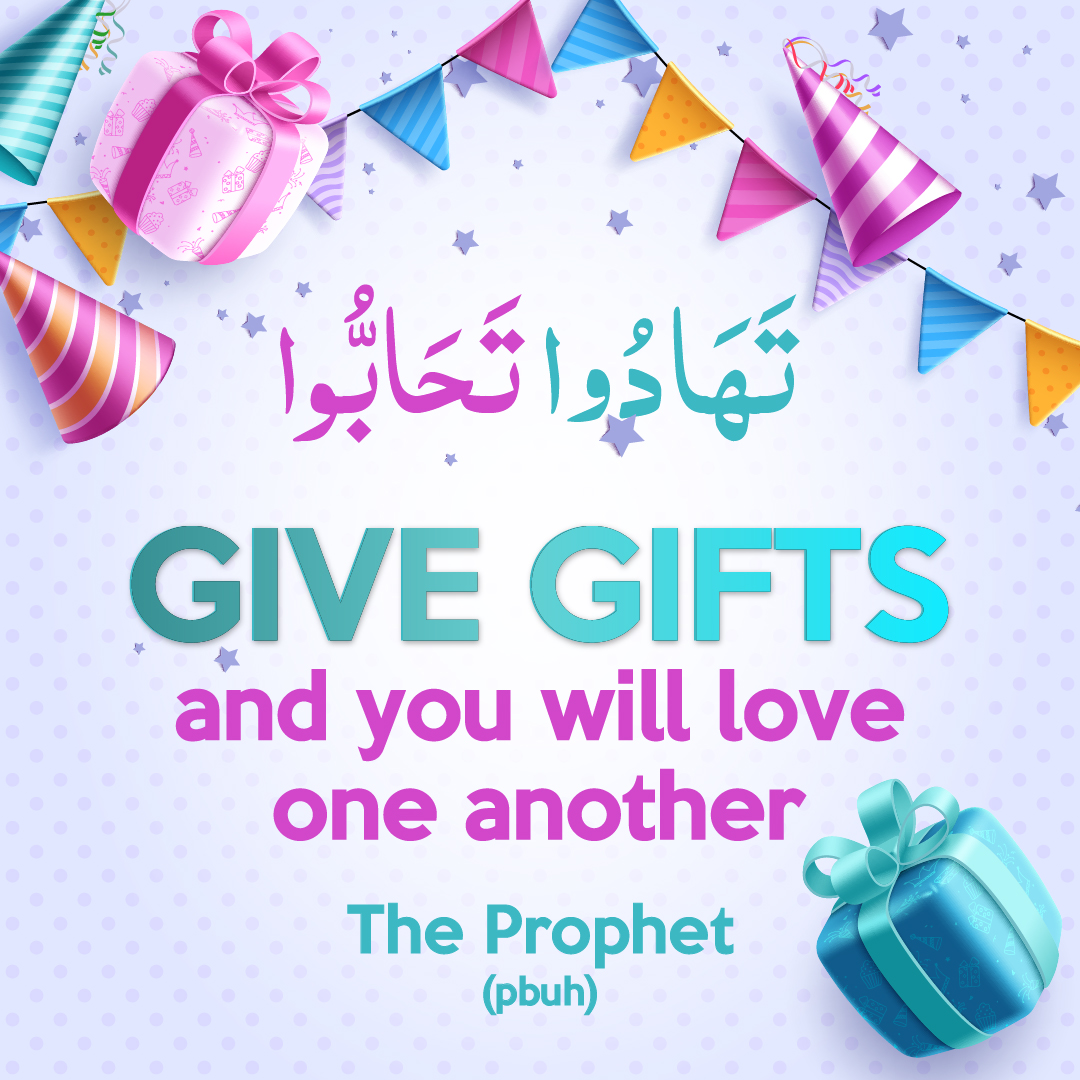

The Prophet Said About Giving Gifts in Islam
تَهَادُوا تَحَابُّوا
“Give gifts and you will love one another.”
This hadith is one of the simplest and most practical teachings of the Prophet (pbuh). In just a few words, he reveals a powerful tool for building love between people: giving gifts in Islam. It is not about expense or extravagance — it is about the act itself and the intention behind it.
How Gift Giving Builds Love Between Muslims
The Prophet (pbuh) understood human nature deeply. People feel valued when they receive something — not because of the material worth, but because someone thought of them. A gift says: I remembered you, I care about you, I went out of my way for you. This is why the Prophet (pbuh) connected gift giving directly to love. It is not a transaction; it is a bridge between hearts. In a community where gifts are exchanged freely, suspicion fades, warmth grows, and bonds become harder to break.
What makes giving gifts in Islam distinct is that it is motivated by faith, not obligation. A Muslim gives because the Prophet (pbuh) encouraged it, because Allah loves generosity, and because it softens hearts that may have hardened. The gift does not need to be expensive. The Prophet (pbuh) himself gave and received simple gifts — food, perfume, everyday items. As Al-Wadud, the Most Loving, Allah placed love between the hearts of believers, and gifts are one of the tools He gave to nurture it.
“You will not attain righteousness until you spend from that which you love. And whatever you spend, indeed, Allah is Knowing of it.”
This verse from Surah Ali Imran pushes the concept further. True generosity — and by extension, truly meaningful gift giving — requires giving from what a person values and loves. It is easy to give away what is surplus; it is an act of faith to give away what matters. When a Muslim gives a meaningful gift, they are practising the kind of sacrifice that brings them closer to righteousness. As Ash-Shakur, the Most Appreciative, Allah sees every gift given with sincerity and rewards it far beyond its material worth.
Why the Prophet Made Gift Giving a Habit
The Prophet (pbuh) did not just recommend giving gifts — he practised it consistently. He would accept gifts and reciprocate them. He would give gifts to neighbours, companions, and even those he had disagreements with. Gift giving was, for him, a tool of reconciliation, a gesture of friendship, and a way to keep the bonds of community strong. In Islam, giving a gift is not limited to special occasions. It can happen any day, for any reason, and to anyone — Muslim or non-Muslim.
For the believer, this hadith is an invitation to start a habit that costs little but returns much. A small, thoughtful gift can repair a strained relationship, welcome a new neighbour, or simply brighten someone’s day. Giving gifts in Islam is not about impressing others — it is about expressing love in a tangible way. The Prophet (pbuh) gave Muslims one of the easiest paths to building a loving community, and it starts with something as simple as a gift.
Follow our YouTube, TikTok and Facebook for more Islamic Quotes and reminders on building love and community in Islam.
Yes. Islam encourages good relations with all people, and giving gifts to non-Muslim neighbours, colleagues, and friends is permissible and encouraged as a gesture of kindness and goodwill.
The best gift is one given with sincerity and thought. The Quran says in Quran 3:92 that true righteousness involves giving from what you love. A meaningful, thoughtful gift carries more weight than an expensive one.
Yes. The Prophet (pbuh) would accept gifts and reciprocate them. Reciprocation maintains balance in relationships and ensures that generosity flows in both directions.
There is no specific time required. Muslims can give gifts on any occasion — Eid, weddings, births — or for no occasion at all. Spontaneous gifts are often the most meaningful and impactful.