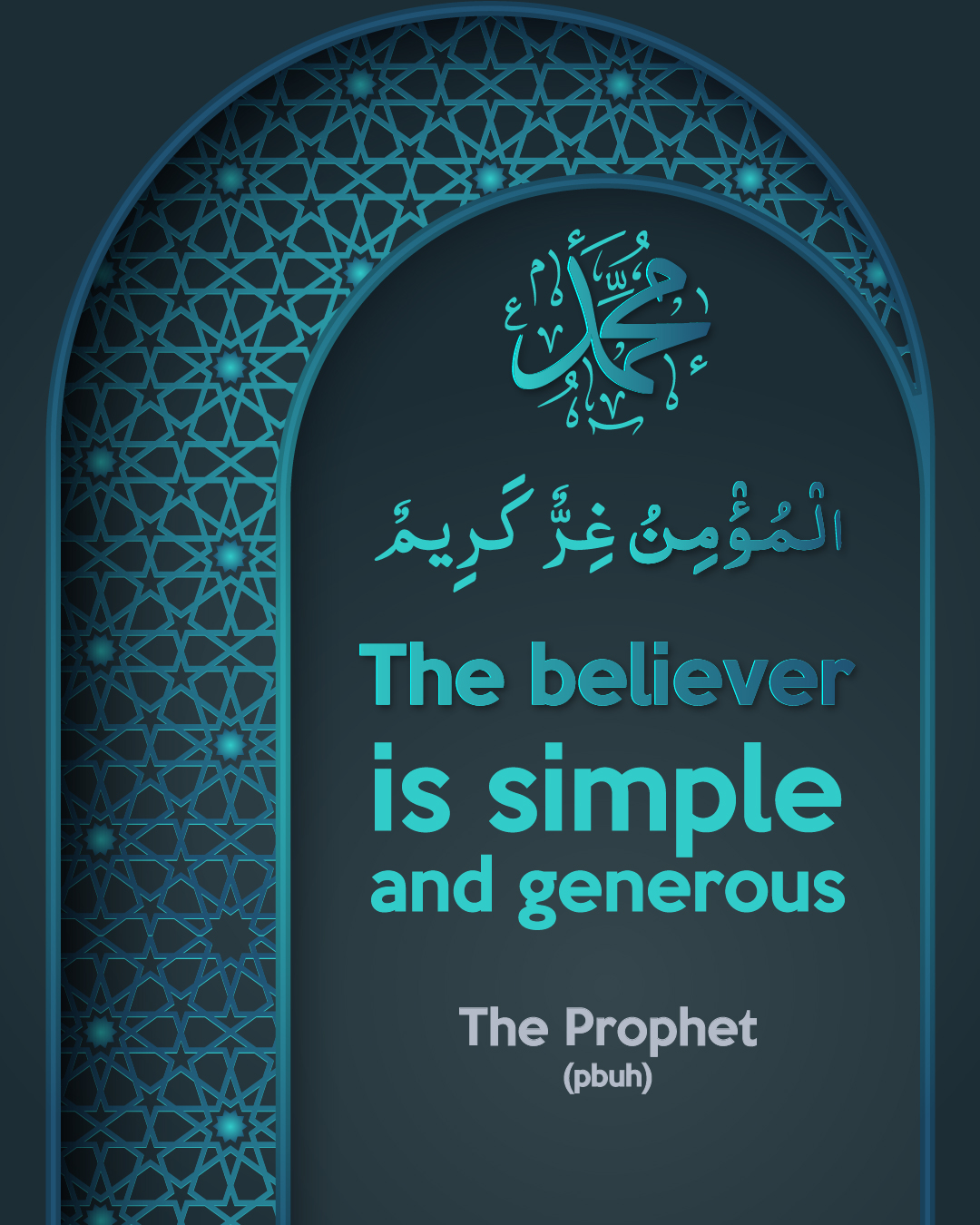
The Prophet (pbuh) described the believer as simple and generous, contrasting them with the extravagant who are deceitful (Abi Dawud 4790). Generosity in Islam is about sincere giving from the heart, not spending for show.
The Quran warns against extravagance and describes the servants of Allah as those who spend with balance (Quran 25:67). The Prophet (pbuh) called the extravagant person deceitful and ignoble.
The Prophet (pbuh) lived simply but gave freely. He never refused a request, shared his food and possessions, and was described as more generous than the wind — especially during Ramadan.
The Prophet Said About Generosity in Islam
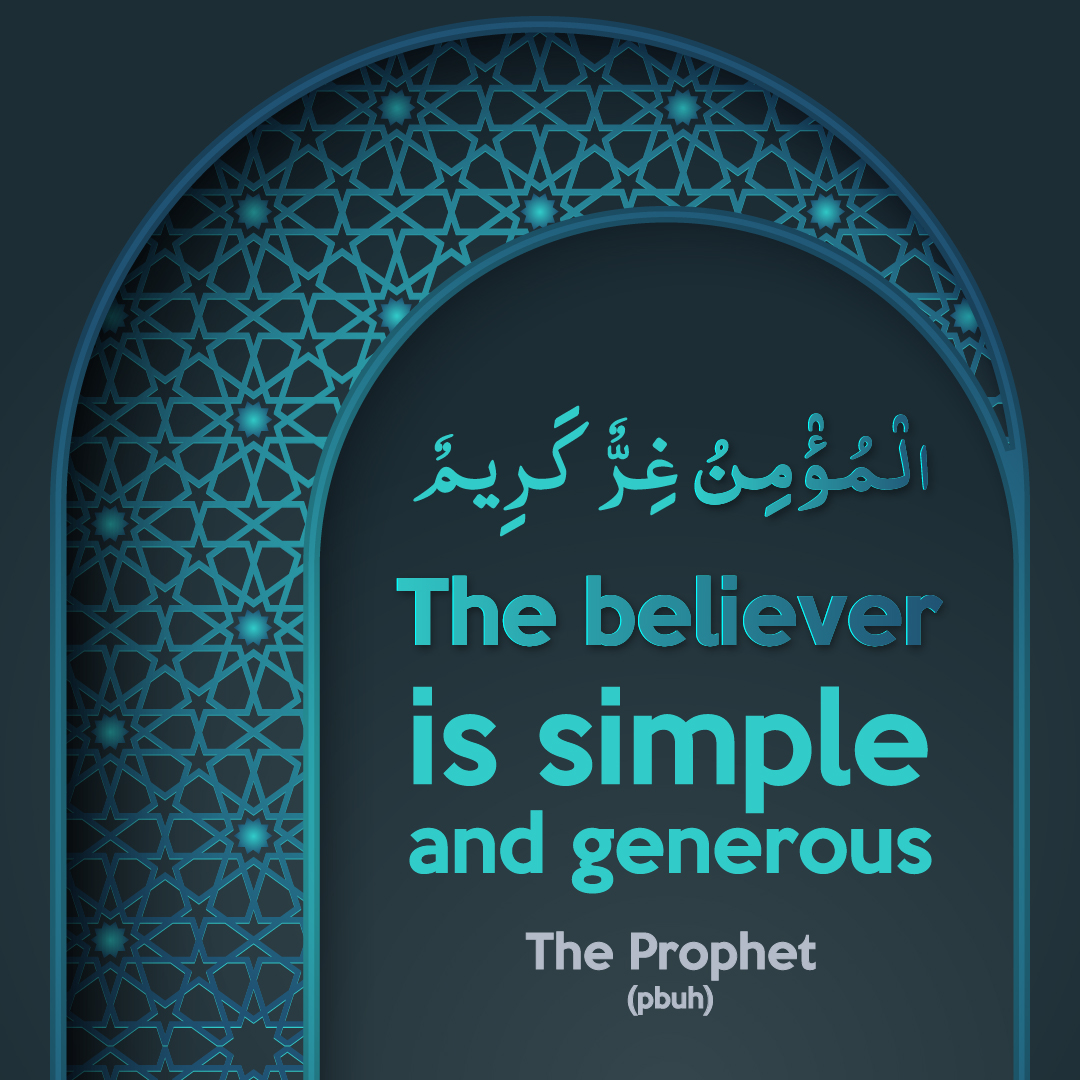
الْمُؤْمِنُ غِرٌّ كَرِيمٌ وَالْفَاجِرُ خِبٌّ لَئِيمٌ
“The believer is simple and generous, but the extravagant is deceitful and ignoble.”
This hadith draws a sharp contrast between two types of people. The Prophet (pbuh) described the believer as simple and generous — and the extravagant as deceitful and ignoble. Generosity in Islam is not about how much a person spends; it is about the spirit behind their giving and the simplicity of their character.
The Difference Between Generosity and Extravagance
The Prophet (pbuh) paired simplicity with generosity and extravagance with deceit. This pairing is deliberate. A simple person gives because they genuinely care. An extravagant person spends to impress, control, or manipulate. Generosity in Islam flows from sincerity — it does not require wealth, status, or public recognition. A cup of water given with a pure heart is worth more than a lavish gift given for show. The Prophet (pbuh) was teaching that what matters is not the size of the gift but the condition of the heart behind it.
The word “ignoble” in this hadith is striking. The Prophet (pbuh) did not simply call the extravagant person wasteful — he called them low in character. Extravagance often masks insecurity, pride, or a desire to be seen. It can also harm others by creating unrealistic expectations or flaunting wealth in front of those who have less. As Al-Kareem, the Most Generous, Allah gives without limit and without seeking recognition — and He expects the same spirit from those who claim to follow His guidance.
“And those who, when they spend, are neither extravagant nor miserly, but hold a just balance between those extremes.”
This verse from Surah Al-Furqan describes the servants of the Most Merciful as people who spend with balance. They are not wasteful, but they are not stingy either. This is the Islamic ideal: generous without being reckless, careful without being selfish. Generosity in Islam occupies the middle ground — giving freely but wisely, sharing openly but without excess. As Ar-Razzaq, the Provider, Allah sustains those who give in His path and guarantees that balanced generosity is never a loss.
How to Practise Generosity the Islamic Way
The Prophet (pbuh) was the most generous person in his community, yet he lived with remarkable simplicity. His home was modest, his meals were basic, and his possessions were few. But when someone asked him for something, he never said no. This is the model of generosity in Islam: live simply so that you have more to give, and give freely without attaching conditions or expecting praise. True generosity is quiet, consistent, and motivated by the desire to please Allah alone.
For the Muslim seeking to develop this quality, the hadith provides clear guidance: be simple in your lifestyle and generous with others. Avoid spending to impress, and avoid withholding out of fear. Generosity in Islam is a spiritual discipline that purifies the heart, strengthens the community, and earns the pleasure of the One who owns everything and gives without measure.
Follow our YouTube, Threads and LinkedIn for more Islamic Quotes and reminders on generosity and character in Islam.
Generosity is giving sincerely to benefit others. Extravagance is spending excessively to impress, show off, or waste. Islam praises the former and condemns the latter.
Yes. The Prophet (pbuh) taught that even a smile is charity. Generosity in Islam is about the spirit of giving — time, kindness, effort, and whatever a person has — not about the amount of money involved.
The Quran describes the servants of Ar-Rahman as those who are neither extravagant nor miserly but hold a just balance (Quran 25:67).
Simplicity frees a person from attachment to material possessions, reduces envy and pride, and creates more room for generosity. The Prophet (pbuh) modelled this by living modestly despite having access to wealth.