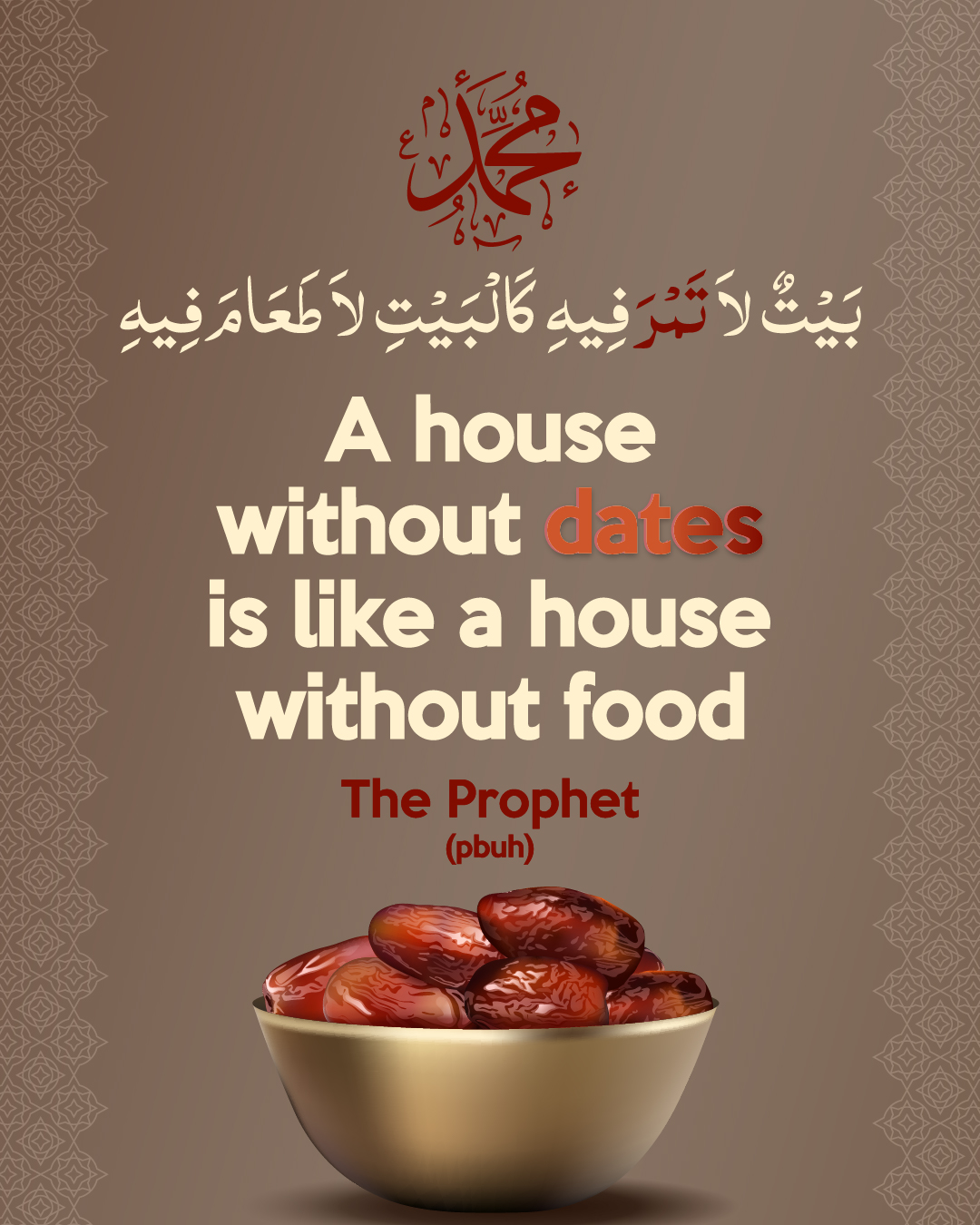
The Prophet (pbuh) said a house without dates is like a house without food (Ibn Majah 3328). He ate dates regularly, broke his fast with them, and recommended them for health and barakah. Dates in Islam hold a status above any other fruit in prophetic tradition.
Yes. The Prophet (pbuh) would break his fast with fresh dates. If fresh dates were unavailable, he would use dried dates. If neither were available, he would drink water. This makes dates the first choice for iftar in the sunnah.
The Prophet (pbuh) said that whoever eats seven ajwa dates of Madinah in the morning will not be harmed by poison or magic that day (Bukhari 5445). Ajwa dates hold a special status among all varieties of dates in Islam.


The Prophet Said About Dates in Islam
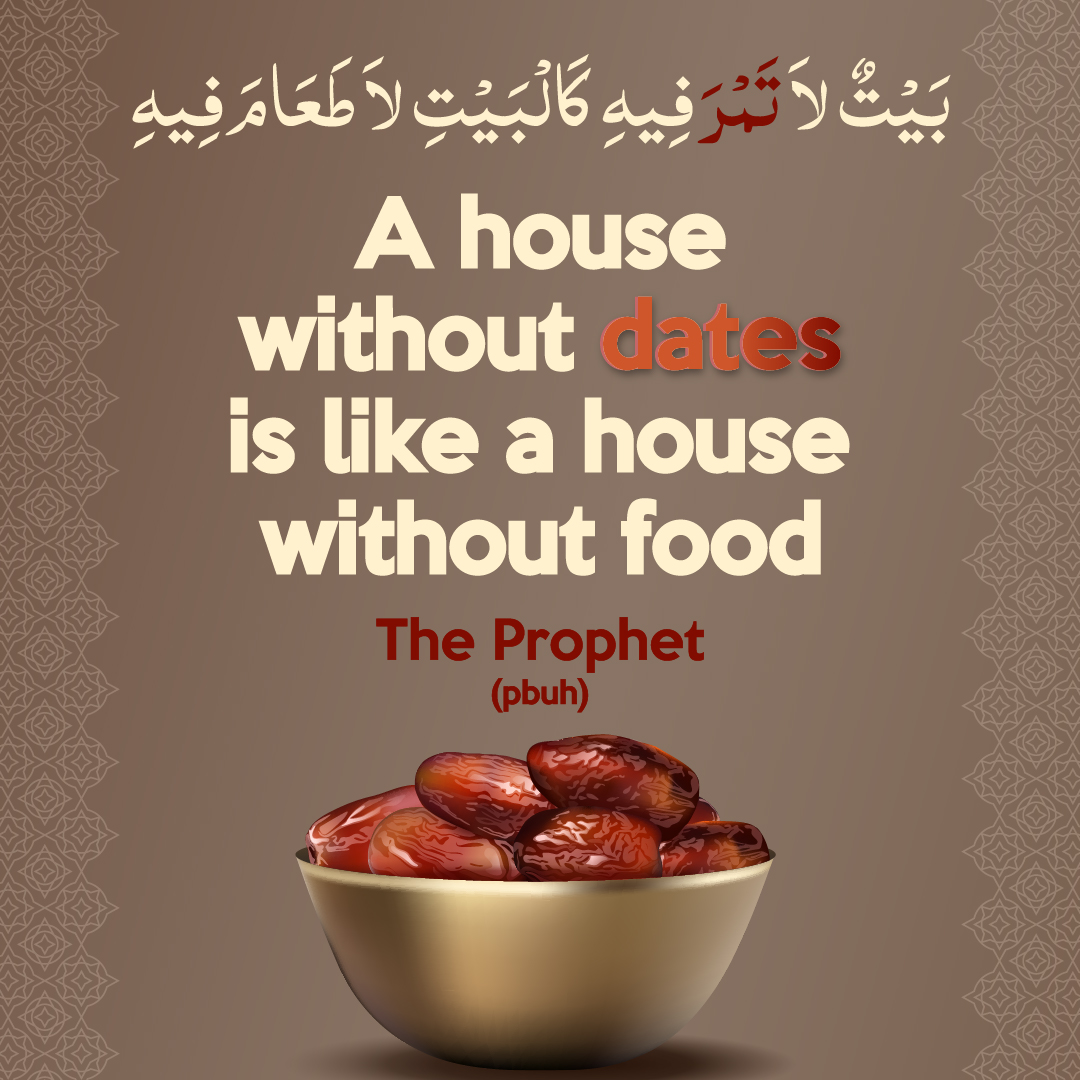
بَيْتٌ لاَ تَمْرَ فِيهِ كَالْبَيْتِ لاَ طَعَامَ فِيهِ
“A house without dates is like a house without food.”
This hadith reveals how central dates were to the Prophet’s household and to the Muslim way of life. He did not say dates are a nice addition or a healthy snack — he compared a house without them to a house without food. Understanding dates in Islam begins with recognising that this fruit holds a status unlike any other in prophetic tradition.
Why the Prophet Elevated Dates Above All Other Foods
The Prophet (pbuh) could have chosen any food to make this comparison, but he chose dates. He broke his fast with dates. He ate them for suhoor. He fed them to newborns during tahneek. He gifted them, recommended them for pregnancy, and kept them as a staple in his home. This was not coincidence — it was prophetic wisdom rooted in divine guidance. Dates in Islam are not simply a cultural preference of the Arabian Peninsula; they are a sunnah food that the Prophet (pbuh) consistently prioritised across every stage and occasion of life.
Modern nutrition has confirmed what the Prophet (pbuh) practised fourteen centuries ago. Dates are rich in natural sugars for instant energy, fibre for digestion, potassium for heart health, and iron for blood strength. They are one of the most nutrient-dense fruits on earth. As Ar-Razzaq, the Provider, Allah placed extraordinary nourishment inside a small, humble fruit — and then guided His Prophet (pbuh) to teach the ummah to make it a household essential.
“And shake the trunk of the palm tree towards you, and it will drop upon you fresh, ripe dates. So eat and drink and be content.”
These verses from Surah Maryam describe the moment Allah provided dates to Maryam (peace be upon her) during the pains of childbirth. Of all the foods Allah could have offered in that moment of extreme need, He chose fresh, ripe dates. This is not a small detail — it is a divine endorsement of the fruit’s ability to nourish, strengthen, and comfort. The significance of dates in Islam is confirmed not only by the Prophet’s practice but by Allah’s own choice in the Quran. As Al-Kareem, the Most Generous, Allah gave Maryam the very food He knew would sustain her best.
How Dates in Islam Connect Sunnah to Daily Life
The Prophet (pbuh) taught Muslims to break their fast with dates, saying that if someone does not have dates, they should break it with water. This instruction places dates as the first choice for iftar — ahead of every other food. He also recommended eating an odd number of dates and specifically praised the ajwa date of Madinah, saying that whoever eats seven ajwa dates in the morning will not be harmed by poison or magic that day. These are not vague suggestions — they are specific, practical teachings that make dates in Islam a part of the believer’s daily routine.
For the Muslim household, this hadith is a call to action: keep dates in your home. They are a sunnah food, a source of barakah, and a link to the daily practice of the Prophet (pbuh). Dates in Islam represent something larger than nutrition — they represent a lifestyle built on prophetic guidance. A home that stocks dates is a home that follows the sunnah in the most practical, everyday way. The Prophet (pbuh) made it simple: a house without dates is a house without food.
Follow our YouTube, Facebook and X for more Muslim Quotes and teachings on dates in Islam and sunnah foods.
Yes. Dates and date palms are mentioned over twenty times in the Quran. In Quran 19:25-26, Allah provided fresh dates to Maryam during childbirth, and in multiple other verses, date palms are listed among Allah’s signs and blessings.
Dates are rich in natural sugars, fibre, potassium, iron, magnesium, and antioxidants. They provide instant energy, support digestion, strengthen the heart, and boost iron levels — benefits that modern science has confirmed and the Prophet (pbuh) practised centuries ago.
The Prophet (pbuh) recommended eating dates in odd numbers. He specifically mentioned seven ajwa dates in the morning for protection. There is no strict daily requirement, but keeping dates as a regular part of the diet follows the sunnah.
Yes. The Prophet (pbuh) compared a house without dates to a house without food, making it clear that dates should be a household staple. Keeping dates in the home is a practical way to follow the sunnah every day.