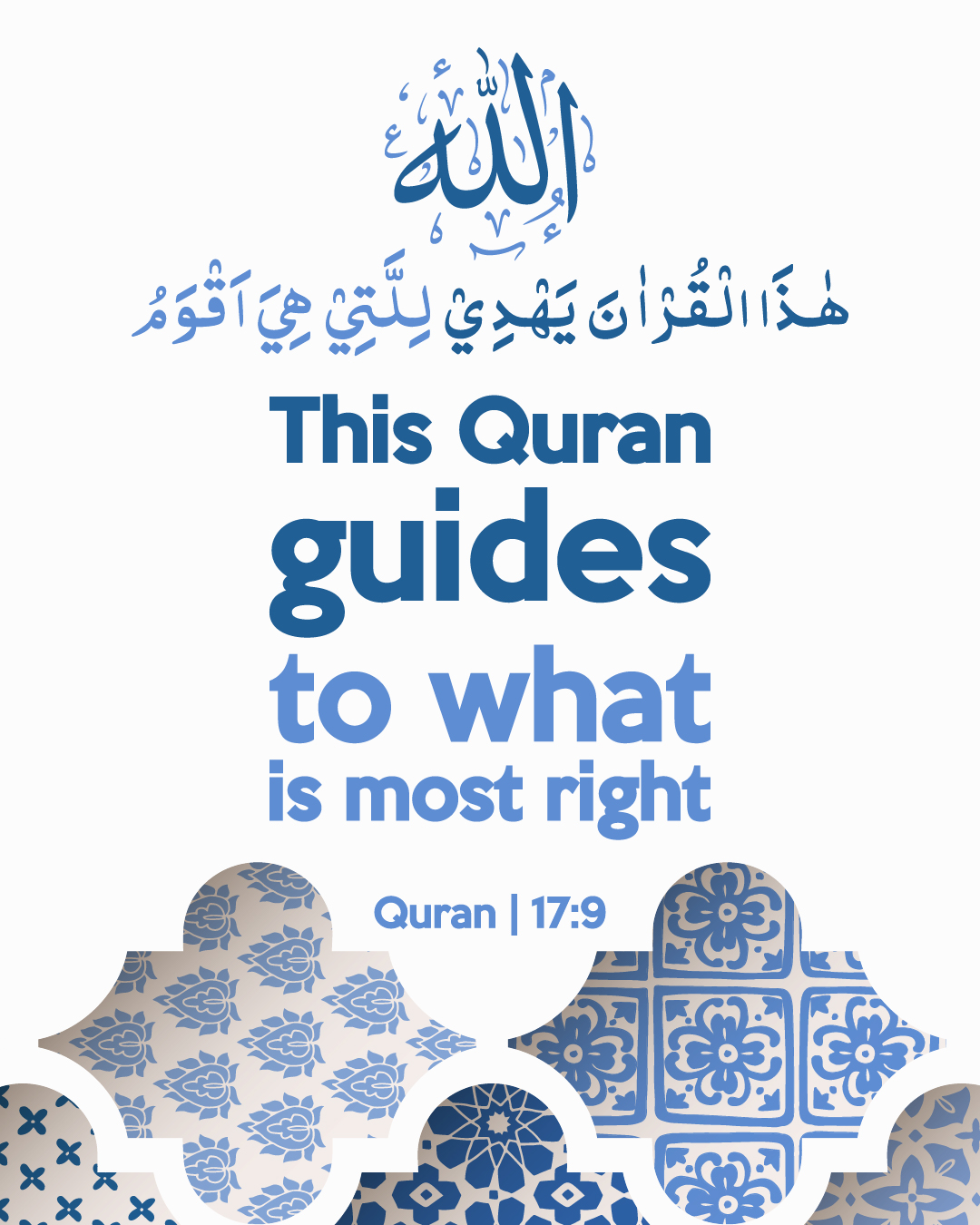
The Arabic phrase “allatee hiya aqwam” means the most upright and the most correct. Allah did not say the Quran guides to something merely good or acceptable — He said it guides to the highest standard. This means the Quran offers the best possible direction for belief, behaviour, and purpose in every situation a person may face.
Yes. The principles the Quran teaches about justice, mercy, patience, and accountability are as relevant today as they were fourteen centuries ago. Every generation faces new challenges, but the human heart remains the same — it needs direction, comfort, and purpose. The Quran provides all three.
Allah Says About the Guidance of the Quran
اِنَّ ہٰذَا الۡقُرۡاٰنَ یَہۡدِیۡ لِلَّتِیۡ ہِیَ اَقۡوَمُ وَیُبَشِّرُ الۡمُؤۡمِنِیۡنَ الَّذِیۡنَ یَعۡمَلُوۡنَ الصّٰلِحٰتِ اَنَّ لَہُمۡ اَجۡرًا کَبِیۡرًا ۙ﴿۹
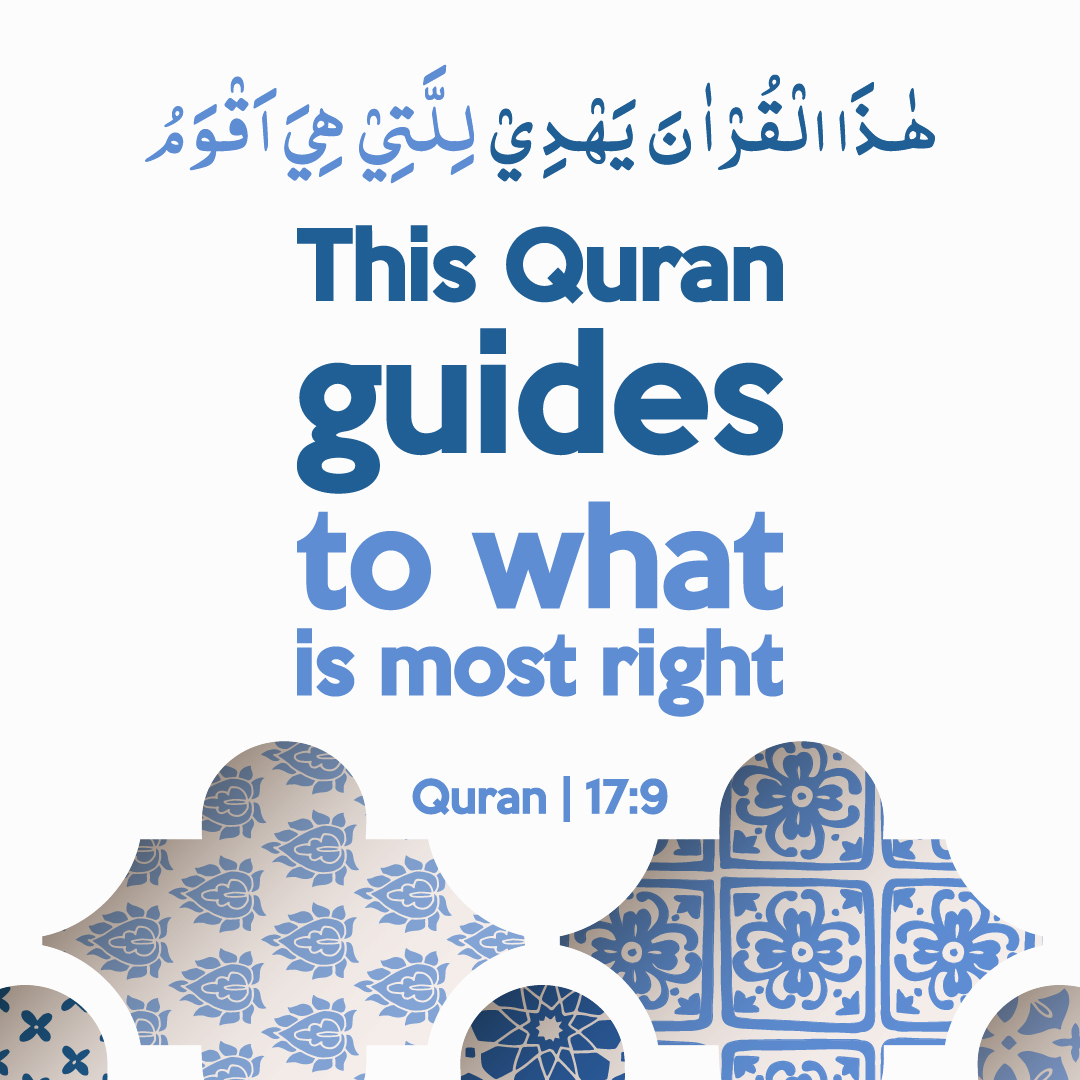
“Indeed, This Quran guides to what is most right and gives good news to the believers who do righteous deeds that they will have a great reward.”
This verse from Surah Al-Isra captures the essence of what the Quran was sent to do. Allah describes it as a book that guides to what is most right and delivers good news to those who believe and act on that belief. It is a verse that speaks to the very purpose of the guidance of the Quran.
What It Means to Be Guided to What Is Most Right
The Arabic phrase “allatee hiya aqwam” means the most upright, the most just, and the most correct path. Allah did not say the Quran guides to something good or something acceptable. He said it guides to what is most right — the highest standard of conduct, belief, and purpose. This is not partial guidance or vague advice; it is a comprehensive direction for every area of life. From how a Muslim worships to how they conduct business, from how they treat their family to how they respond to hardship — the guidance of the Quran covers it all with precision and clarity.
The second part of the verse shifts from guidance to reward. Allah gives good news to the believers who do righteous deeds that they will have a great reward. This connection is important: guidance alone is not enough. A person must act on what the Quran teaches for the promise to apply. Faith without action is incomplete, and action without guidance is directionless. The Quran provides both — a clear path and the motivation to walk it. As Al-Hadi, the Guide, Allah does not simply point the way; He illuminates every step of the journey.
“O mankind, there has come to you instruction from your Lord and healing for what is in the breasts and guidance and mercy for the believers.”
This verse from Surah Yunus expands the role of the Quran beyond guidance. Allah describes it as an instruction, a healing, a source of direction, and a mercy — all in a single verse. The word “healing” is particularly striking because it addresses what happens inside the heart: doubt, anxiety, grief, and spiritual emptiness. The guidance of the Quran is not only intellectual; it is deeply emotional and spiritual. It speaks to the mind and the soul at the same time. As An-Nur, the Light, Allah sent this Book to illuminate what darkness could never reach.
Why the Quran Remains Relevant for Every Generation
One of the most remarkable qualities of the guidance of the Quran is that it does not expire. The principles it teaches about justice, mercy, patience, and accountability are as relevant today as they were fourteen centuries ago. Every generation faces new challenges, but the human heart remains the same — it needs direction, it needs comfort, and it needs purpose. The Quran provides all three. The Prophet (pbuh) called it the rope of Allah that, when held firmly, prevents a person from ever going astray. It is not a book for one era; it is a book for all time.
For the Muslim seeking clarity in a confusing world, this verse is a reminder that the answer has always been within reach. The Quran does not guide to what is popular or what is easy; it guides to what is most right. That distinction matters because the right path is not always the comfortable one, but it is always the one that leads to peace in this life and reward in the next. The guidance of the Quran is a gift that never fades — and reading it with intention is how a believer unwraps it.
Follow our YouTube, Instagram and LinkedIn pages for more Islamic Quotes and reflections on the guidance of the Quran.
The Quran provides guidance through direct commandments, moral principles, stories of past nations, and descriptions of Allah’s attributes. It addresses matters of worship, relationships, justice, personal conduct, and spiritual growth. Allah describes it in Quran 17:9 as guiding to what is most right — covering every dimension of human life.
The Quran describes itself as a guidance, a healing for what is in the hearts (Quran 10:57), a book about which there is no doubt, a light, a criterion between right and wrong, and a mercy for all believers. It is the most comprehensive description any scripture gives of its own purpose.
Yes. Allah explicitly describes the Quran as “healing for what is in the breasts” in Surah Yunus (10:57). This refers to spiritual and emotional healing — relief from doubt, anxiety, grief, and emptiness. Many Muslims find deep comfort and peace in reciting and reflecting on the Quran during difficult times.
A Muslim should read the Quran with intention, reflection, and a willingness to act on its teachings. Understanding the meaning — not just reciting the words — is what transforms reading into guidance. Regular, consistent engagement with the Quran, even a few verses a day, keeps a believer connected to its light.