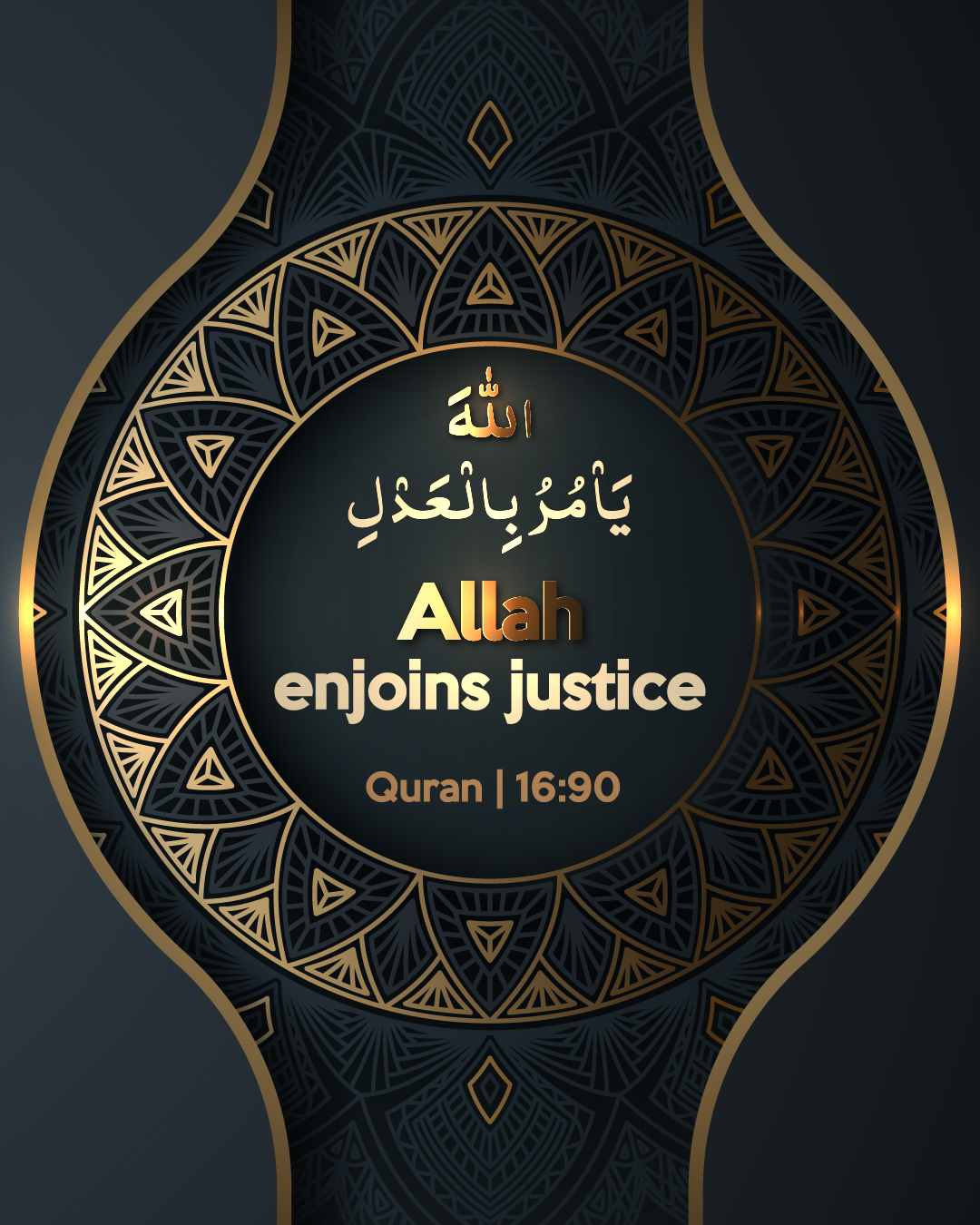
Allah commands justice, excellence, and giving to relatives in Quran 16:90 and demands that believers stand for justice even against themselves (Quran 4:135).
Ihsan means excellence in goodness — going beyond the minimum. It applies to worship, character, and how a person treats others. The Prophet (pbuh) described it as worshipping Allah as if you can see Him.
Yes. Quran 4:135 commands Muslims to stand for justice even if it goes against themselves, their parents, or their relatives.





The Quran Says About Justice in Islam
اِنَّ اللّٰہَ یَاۡمُرُ بِالۡعَدۡلِ وَالۡاِحۡسَانِ وَاِیۡتَآیِٔ ذِی الۡقُرۡبٰی وَیَنۡہٰی عَنِ الۡفَحۡشَآءِ وَالۡمُنۡکَرِ وَالۡبَغۡیِ ۚ یَعِظُکُمۡ لَعَلَّکُمۡ تَذَکَّرُوۡنَ ﴿۹۰﴾
“Indeed, Allah enjoins justice, excellence in goodness, and giving to relatives, and He forbids immorality, wrongdoing, and oppression. He advises you so that you may take heed.”
This verse from Surah An-Nahl is considered by many scholars to be the most comprehensive verse in the Quran. In a single sentence, Allah commands justice in Islam, excellence in goodness, and generosity to family — while forbidding immorality, wrongdoing, and oppression. It is a complete moral framework.
The Three Commands and Three Prohibitions
Allah commands three things: justice (adl), excellence in goodness (ihsan), and giving to relatives. Justice means treating everyone fairly, regardless of personal feelings. Ihsan means going beyond what is required — doing good with beauty and sincerity. Giving to relatives means maintaining family bonds through support and generosity. These three commands cover a Muslim’s obligations to society, to their own character, and to their family — leaving no area of life unaddressed.
Allah then forbids three things: immorality (fahsha), wrongdoing (munkar), and oppression (baghy). Immorality includes all forms of indecency and shamelessness. Wrongdoing covers every act that is recognised as wrong by faith and reason. Oppression is the abuse of power over others — whether in a family, a workplace, or a nation. As Al-Adl, the Most Just, Allah commands what He Himself embodies and forbids what contradicts His nature.
“O you who believe, be persistently standing firm in justice, witnesses for Allah, even if it be against yourselves, your parents, or your relatives.”
This verse from Surah An-Nisa takes justice in Islam to its most demanding level: a Muslim must stand for truth even if it goes against their own interests, their parents, or their closest relatives. This is the standard Allah sets. Justice is not selective, not tribal, and not negotiable. As Al-Hakeem, the All-Wise, Allah designed justice to be the foundation of a functioning, fair society — and He placed the responsibility on every individual believer.
Why Justice Is the Foundation of Islamic Society
Justice in Islam is not just a legal concept — it is a moral obligation that applies to every Muslim in every situation. A parent must be just between their children. A business owner must be just with employees. A leader must be just with their people. The Prophet (pbuh) said that the just will be on pulpits of light on the Day of Judgement — those who were fair in their rulings, their families, and everything under their care.
For the believer, this verse is a daily standard. Every decision, every transaction, every conversation is an opportunity to practise justice or betray it. Justice in Islam is not passive fairness — it is active commitment to what is right, even when it is difficult, even when it is costly, and even when no one is watching. Allah advises with this verse so that people may take heed — and taking heed means living by it every single day.
Follow our YouTube, X and Pinterest for more Islamic Quotes and reflections on justice and moral conduct in Islam.
Baghy is the abuse of power — taking what does not belong to you, harming those weaker than you, or exploiting a position of authority for personal gain. Allah explicitly forbids it in Quran 16:90.
Because it covers three commands (justice, excellence, and family generosity) and three prohibitions (immorality, wrongdoing, and oppression) — addressing virtually every aspect of moral conduct in a single verse.
The Prophet (pbuh) was just in all matters. He said that even if his own daughter committed theft, he would apply the law. He treated all people — rich and poor, Arab and non-Arab — with equal dignity.
The Prophet (pbuh) said that the just will be on pulpits of light on the Day of Judgement — a special honour for those who were fair in their decisions, their families, and all matters under their care.