Islam teaches that patience (sabr) is one of the highest virtues a Muslim can develop. Allah promises in Quran 2:153 that He is with those who are patient, and the Quran describes it as a path to divine closeness and reward.
Prophet Dawud (peace be upon him) is described as a man of strength who was always turning back to Allah (Quran 38:17). He models the kind of patience Islam encourages — not passive endurance, but active devotion to Allah through every trial.
Allah promises that those who are patient will receive their reward without limit (Quran 39:10). He also guarantees His companionship — being with the patient — which is considered the greatest reward of all.








Allah Says About Patience in Islam
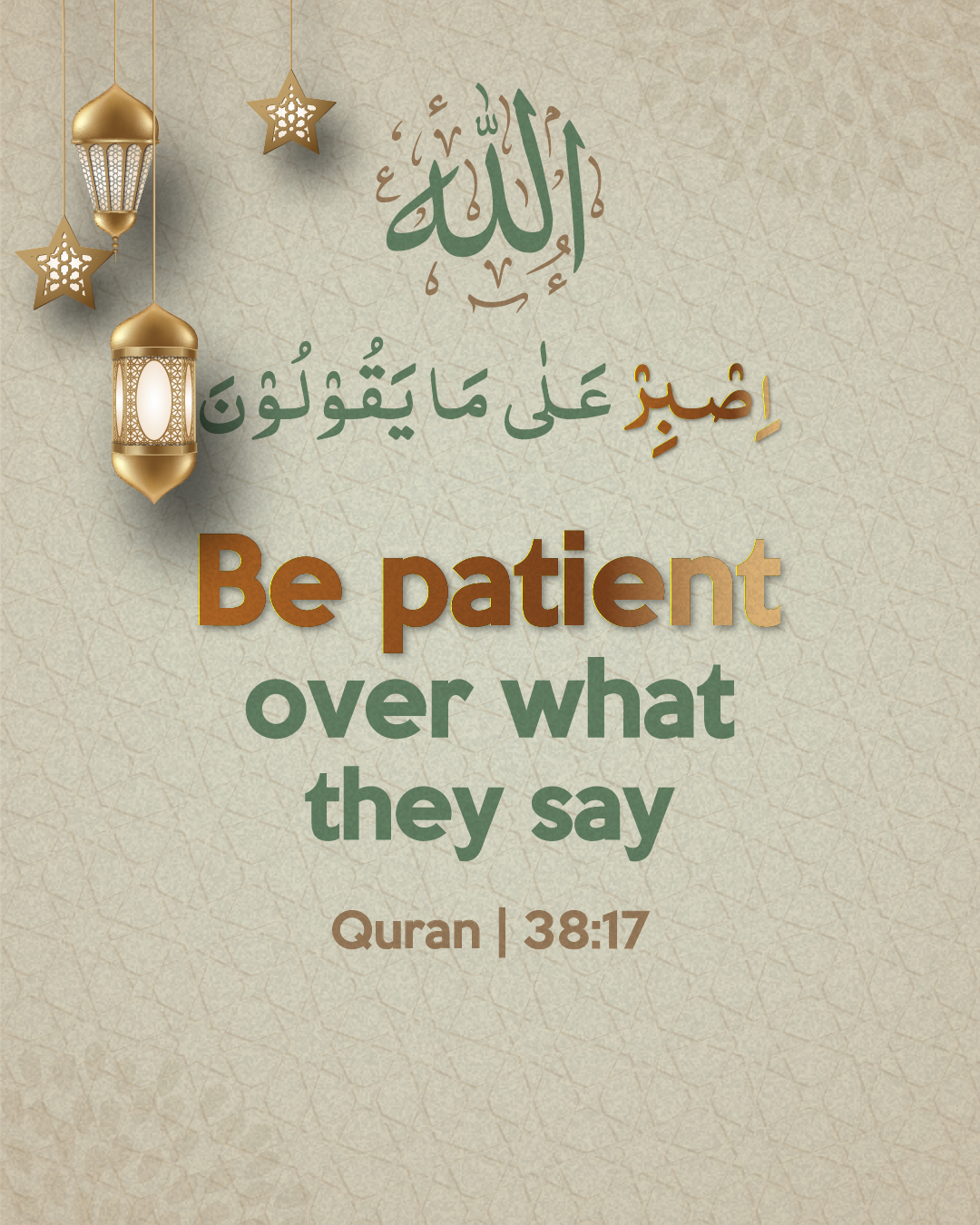
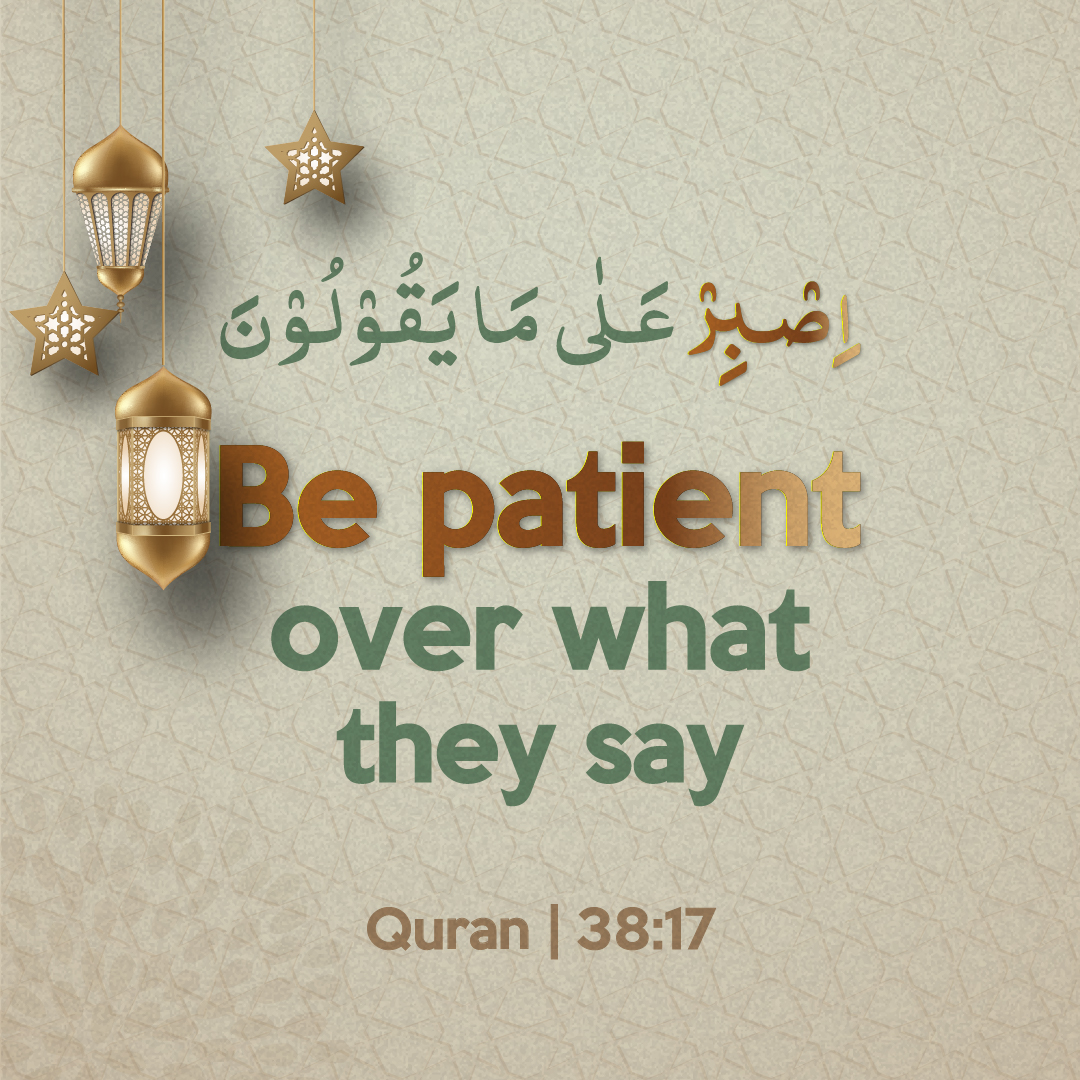
اِصۡبِرۡ عَلٰی مَا یَقُوۡلُوۡنَ وَاذۡکُرۡ عَبۡدَنَا دَاوٗدَ ذَا الۡاَیۡدِ ۚ اِنَّہٗۤ اَوَّابٌ ﴿۱۷﴾
“Be patient over what they say, and remember Our servant David, the one of strength. Indeed, he was always turning back to Allah.”
This verse from Surah Sad pairs two qualities that Islam considers inseparable: patience and devotion to Allah. By referencing Prophet Dawud (peace be upon him) as an example of strength and constant return to Allah, this verse defines patience in Islam not as passive endurance but as active faith under pressure.
What the Quran Teaches About the Nature of Patience
Allah commands the Prophet (pbuh) — and through him, every believer — to be patient over what people say. This instruction acknowledges that hurtful words, criticism, and rejection are part of life. Patience in Islam does not mean pretending the pain does not exist; it means choosing to respond with faith instead of frustration. The verse then offers a model: remember Dawud, a man of immense strength who was always turning back to Allah. Strength and patience are not contradictions in Islam — they are companions.
The Arabic word “awwab” used to describe Dawud means one who constantly returns to Allah. This is the key to understanding patience in Islam: it is sustained by the habit of turning to Allah in every situation. A person can endure hardship for a while through willpower alone, but lasting patience requires a deeper source. As As-Sabur, the Most Patient, Allah Himself embodies this quality and rewards those who reflect it in their own character.
“Indeed, Allah is with those who are patient. O you who believe, seek help through patience and prayer.”
This verse from Surah Al-Baqarah delivers one of the most comforting promises in the Quran: Allah is with those who are patient. This is not a distant observation — it is divine companionship. When a believer endures hardship with faith, Allah draws closer to them. The verse also links patience directly to prayer, confirming that the two are meant to work together. As Al-Mujeeb, the Responsive, Allah answers the prayers of those who combine patience with sincere supplication.
How to Practise Patience in Daily Life
Patience in Islam is tested in three areas: obedience to Allah, abstaining from sin, and enduring hardship. Each one requires a different kind of discipline. Waking up for Fajr when the body wants to sleep is patience. Walking away from a dishonest opportunity is patience. Remaining calm when life does not go as planned is patience. The Prophet (pbuh) said that patience is a light — it illuminates the believer’s path and gives them clarity when others are lost in confusion and complaint.
For the Muslim facing difficulty, this verse is a direct instruction: be patient, and remember those who came before you. Dawud was a king, a warrior, and a prophet — yet his defining quality was not power but his constant return to Allah. Patience in Islam is not about being strong enough to carry the burden alone. It is about being wise enough to hand it over to the One who is always near and always listening.
Follow our YouTube, Instagram and LinkedIn for more Islamic Quotes and reminders on patience and faith in Islam.
Develop patience through consistent prayer, remembrance of Allah, reading the Quran, and following the example of the prophets who endured far greater trials. The Prophet (pbuh) taught that patience grows with practice and is strengthened by faith.
Scholars identify three types: patience in obeying Allah (performing worship consistently), patience in avoiding sin (resisting temptation), and patience in enduring hardship (accepting Allah’s decree with faith and trust).
No. Patience in Islam is not passivity. It means maintaining faith and composure while actively taking the right steps. A patient person still seeks solutions, makes dua, and works toward improvement — but they do so without losing trust in Allah’s plan.
The Prophet (pbuh) said that patience is a light (Muslim 223). He also taught that no one is given a gift better or more comprehensive than patience, and that whoever tries to be patient, Allah will grant them patience.