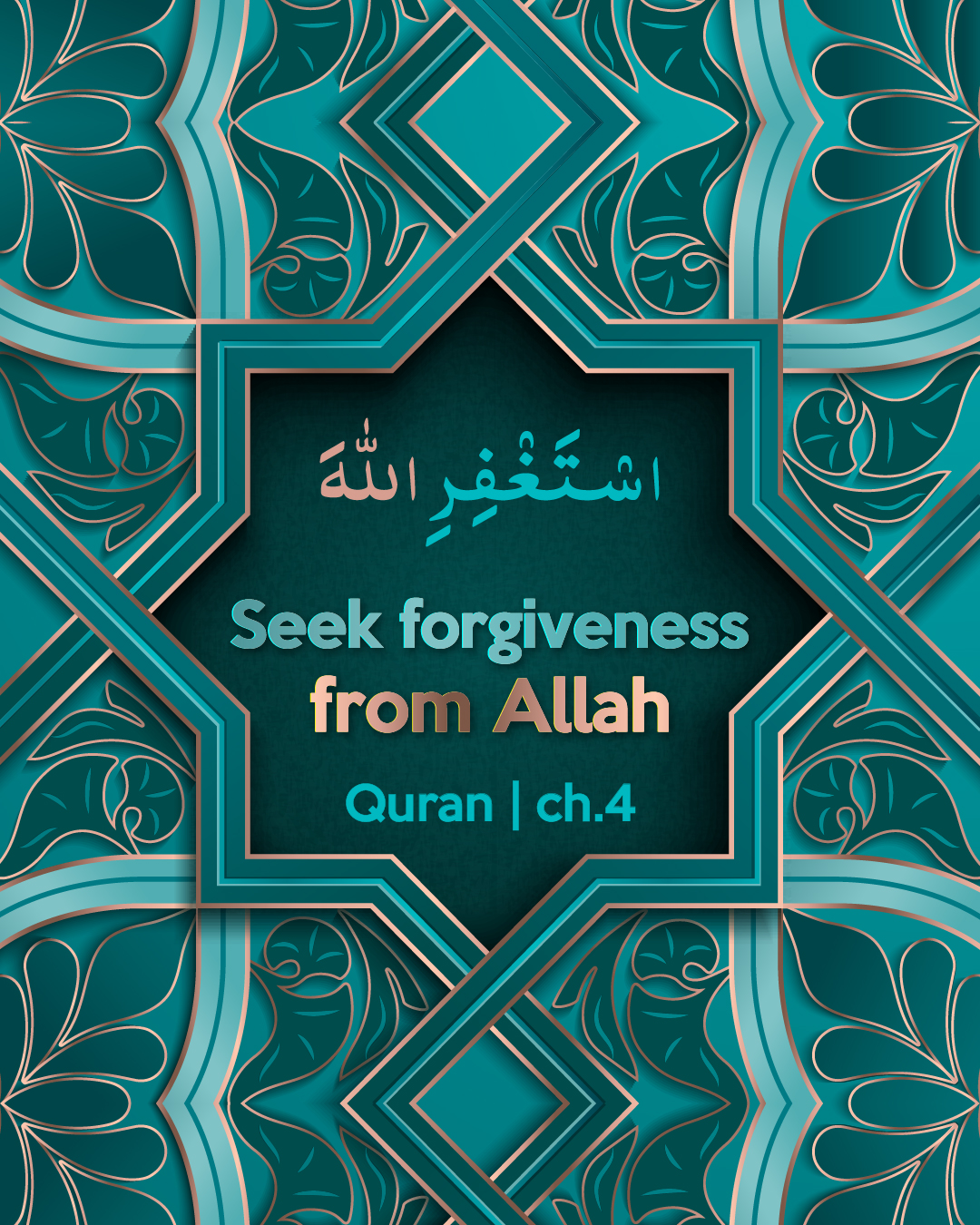
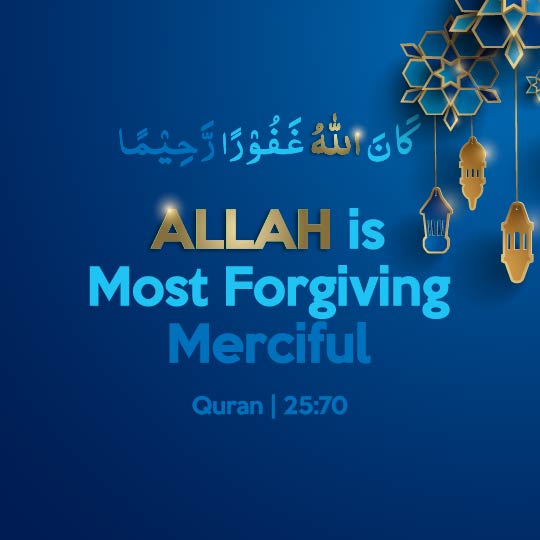
Allah commands believers to seek His forgiveness in Quran 4:106 and promises that He is Most Forgiving and Merciful. In Quran 39:53, He says He forgives all sins. Forgiveness in Islam has no limit and is available to anyone who sincerely repents.
Istighfar is the act of seeking forgiveness from Allah. The word comes from the Arabic root meaning to cover, shield, and protect. It is practised by saying ‘Astaghfirullah’ (I seek forgiveness from Allah) and is recommended as a daily habit.
The Prophet (pbuh) said he sought forgiveness from Allah more than seventy times a day. There is no upper limit. Forgiveness in Islam is a continuous practice, not a one-time act reserved for major sins.

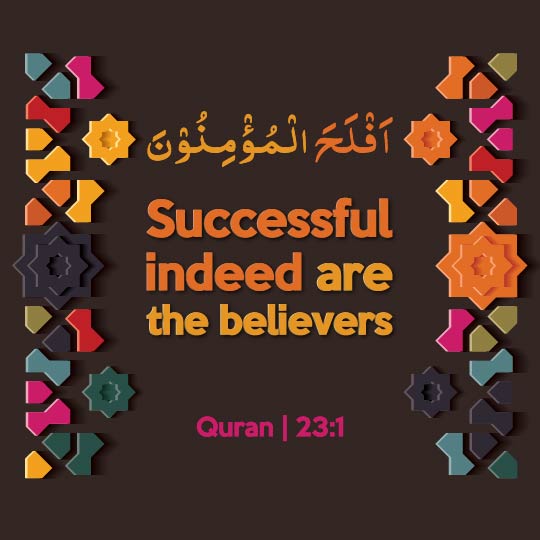

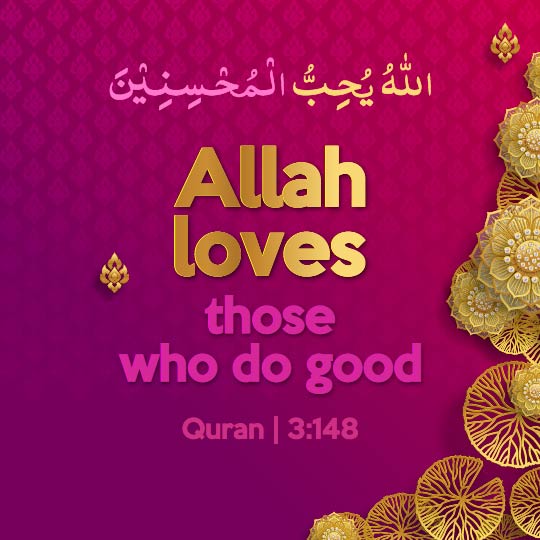
The Quran Says About Forgiveness in Islam
وَّاسۡتَغۡفِرِ اللّٰہَ ؕ اِنَّ اللّٰہَ کَانَ غَفُوۡرًا رَّحِیۡمًا ﴿۱۰۶
“And seek forgiveness from Allah. Surely, Allah is Most Forgiving, Merciful.”
This verse from Surah An-Nisa delivers two things every believer needs: a command and a promise. The command is to seek forgiveness. The promise is that Allah is Most Forgiving and Most Merciful. Forgiveness in Islam is not a distant hope — it is a door that Allah Himself holds open and invites every person to walk through.
Why Allah Commands Us to Seek His Forgiveness
The verse begins with an imperative: “seek forgiveness from Allah.” This is not a suggestion or an optional spiritual exercise. It is a direct command from the Creator to every human being. The Arabic word “istaghfir” comes from the root gh-f-r, which means to cover, to shield, to protect. When a Muslim seeks forgiveness, they are asking Allah to cover their sins, shield them from the consequences, and protect them from repeating the same mistakes. Forgiveness in Islam is not about shame — it is about returning to the One who already wants to forgive.
The verse then reveals why this command is so easy to follow: “Surely, Allah is Most Forgiving, Merciful.” Allah does not just forgive — He is inherently forgiving by nature. The name Ghafur (Most Forgiving) appears over seventy times in the Quran, more than almost any other divine attribute. This repetition is deliberate. Allah wants every believer to know that no matter how many times they fall, the door of forgiveness in Islam is never closed. As Al-Ghaffar, the Repeatedly Forgiving, Allah does not forgive once and then stop — He forgives again and again, without limit and without fatigue.
“Say: O My servants who have transgressed against themselves, do not despair of the mercy of Allah. Indeed, Allah forgives all sins. Indeed, He is the Most Forgiving, the Most Merciful.”
This verse from Surah Az-Zumar is often called the most hopeful verse in the entire Quran. Allah addresses those who have sinned heavily — not with anger, but with reassurance. He says: do not despair. He forgives all sins. Not some. Not the small ones. All of them. This is the scope of forgiveness in Islam — it has no ceiling, no expiry date, and no category of sin that falls outside its reach. As At-Tawwab, the Acceptor of Repentance, Allah actively turns toward those who turn toward Him, meeting their small step with His infinite mercy.
How Forgiveness in Islam Transforms a Person’s Life
The Prophet (pbuh) said: “I seek forgiveness from Allah more than seventy times a day.” If the best human being who ever lived — a man already guaranteed Paradise — sought forgiveness that frequently, it reveals that istighfar is not only for sinners. It is a daily spiritual practice that purifies the heart, clears the mind, and keeps the believer connected to Allah. Forgiveness in Islam is not a one-time event that happens after a major sin. It is a constant rhythm of return that shapes a Muslim’s entire relationship with their Creator.
For the believer who carries guilt, who replays their mistakes, or who wonders whether they have gone too far — this verse is Allah speaking directly to them. Seek forgiveness. He is already waiting to give it. Forgiveness in Islam is not earned through perfection; it is received through sincerity. A single moment of genuine regret, a quiet whisper of “Astaghfirullah,” and a sincere intention to do better — this is all it takes to activate the mercy of the One who named Himself the Most Forgiving.
Follow our YouTube, TikTok and Facebook for more Muslim Quotes and reminders on forgiveness in Islam and the mercy of Allah.
Yes. Allah says in Quran 39:53 that He forgives all sins for those who sincerely repent. The only condition is that the person turns back to Him with genuine regret and the intention to change.
It means ‘I seek forgiveness from Allah.’ It is the most common form of istighfar and can be said at any time — after prayer, during difficulty, after making a mistake, or simply as a habit of the tongue and heart.
No. As long as a person is alive, the door of forgiveness remains open. Allah encourages believers never to despair of His mercy (Quran 39:53). Repentance is accepted until the moment of death.
The Quran and Sunnah describe multiple benefits: removal of sins, relief from anxiety, increase in provision, protection from punishment, and closeness to Allah. The Prophet (pbuh) said that whoever makes istighfar a habit, Allah will provide a way out of every difficulty.