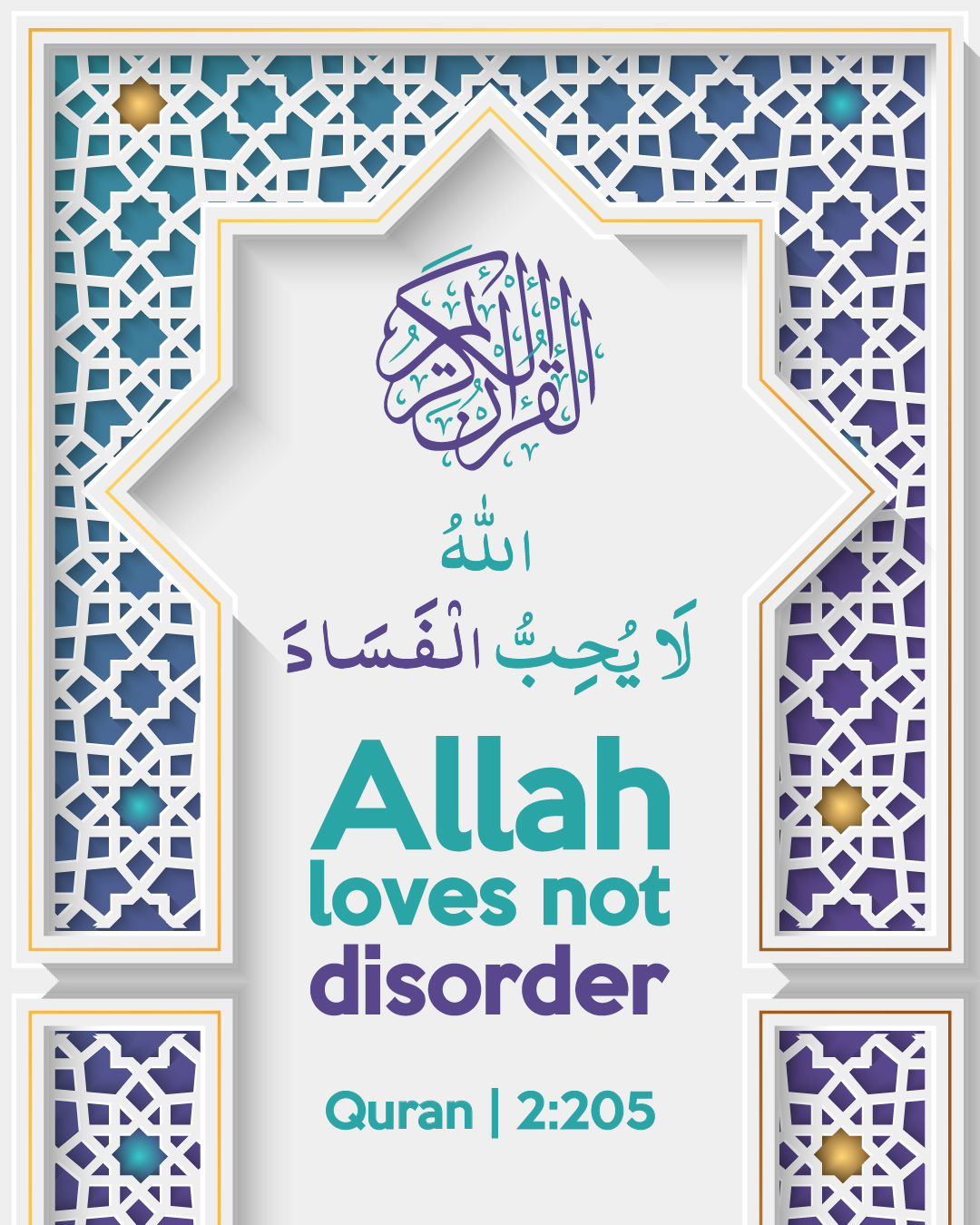
The Quran condemns corruption in multiple verses, including Quran 2:205 and Quran 7:56. Allah explicitly says He does not love disorder or those who spread corruption on earth.
Fasad means corruption, disorder, and mischief. It covers financial dishonesty, environmental destruction, moral decay, injustice, and any behaviour that undermines the order Allah has established.
Yes. Islam demands justice and accountability in governance. The Prophet (pbuh) warned leaders that they are shepherds responsible for their flocks and that abusing authority is a betrayal of trust.

The Quran Says About Corruption in Islam
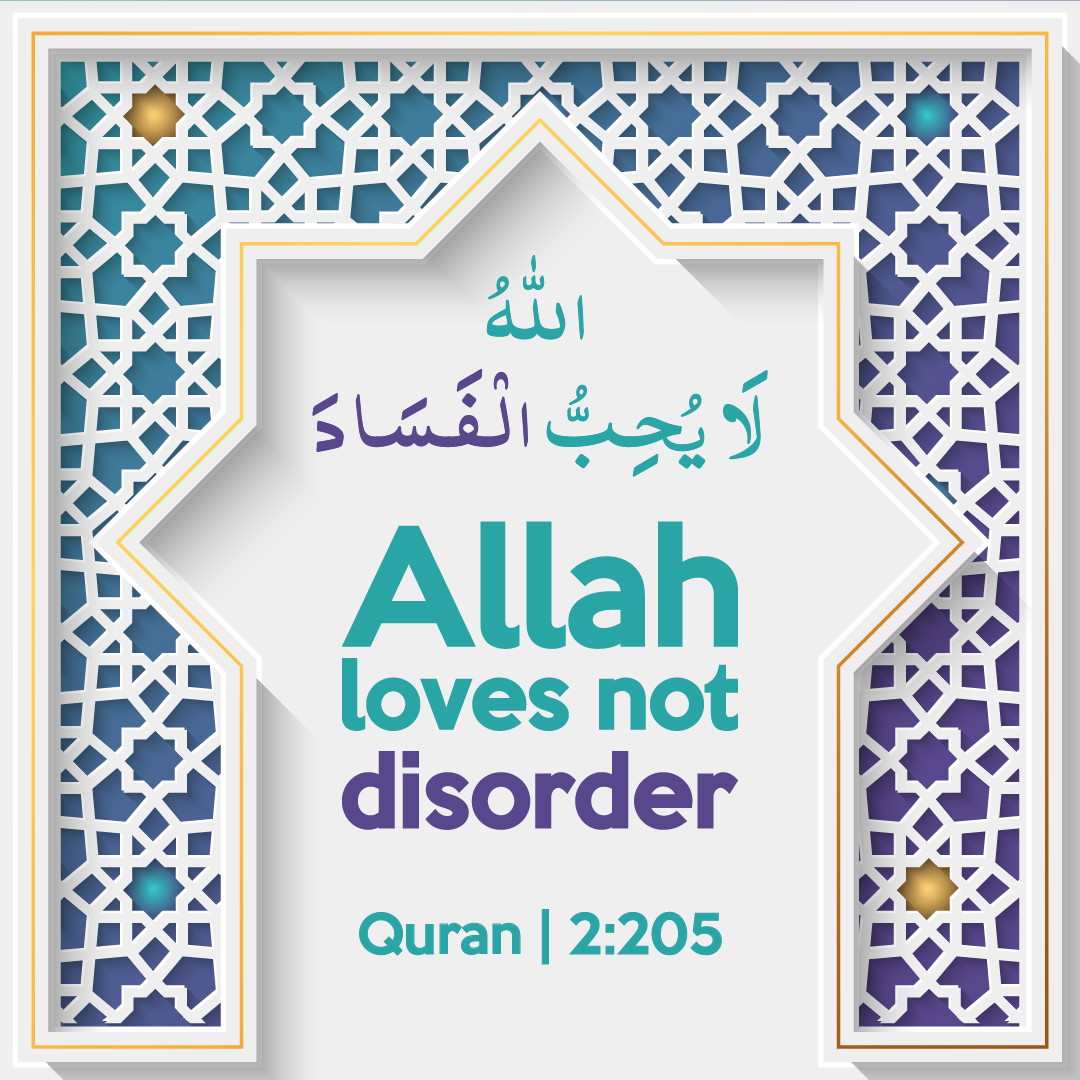
وَاِذَا تَوَلّٰی سَعٰی فِی الۡاَرۡضِ لِیُفۡسِدَ فِیۡہَا وَیُہۡلِکَ الۡحَرۡثَ وَالنَّسۡلَ ؕ وَاللّٰہُ لَا یُحِبُّ الۡفَسَادَ ﴿۲۰۵﴾
“When he turns away, he strives in the land to spread corruption in it and to destroy crops and offspring; and Allah loves not disorder.”
This verse from Surah Al-Baqarah describes a type of person who speaks well in public but works to spread corruption in private. Allah exposes this hypocrisy and declares that He does not love disorder — making it clear that corruption in Islam is one of the most condemned behaviours.
How the Quran Exposes Hidden Corruption
The verse describes a person who “turns away” — meaning when they are no longer under scrutiny, their true character emerges. In public, they may speak impressively. In private, they spread corruption, destroy livelihoods, and harm the next generation. The Quran identifies this as one of the most dangerous forms of hypocrisy: a person whose words and actions do not match. Corruption in Islam is not limited to financial dishonesty; it encompasses every form of harm that degrades society, the environment, and human dignity.
The mention of “crops and offspring” is significant. Allah connects corruption to the destruction of both sustenance and future generations. This means that corruption does not only harm those alive today — it poisons the world for those yet to come. As Al-Adl, the Most Just, Allah despises those who undermine the order He established and promises that their actions will not go unaccounted for.
“And do not do mischief on the earth after it has been set in order. And call upon Him with fear and hope. Surely, the mercy of Allah is near to those who do good.”
This verse from Surah Al-A’raf commands believers not to cause mischief on an earth that Allah has already set in perfect order. The natural world, social structures, and moral fabric of society are all part of Allah’s design. Corrupting any of them is an act of defiance against the Creator. The verse then points to the solution: call upon Allah with fear and hope, and do good. As Al-Muhsin, the Doer of Good, Allah draws near to those who actively counter corruption with righteousness.
Why Islam Takes Corruption So Seriously
Corruption in Islam is treated as a spiritual and social crime. It undermines trust, destroys communities, and harms the most vulnerable. The Prophet (pbuh) warned against bribery, fraud, cheating in trade, and any form of dishonesty that erodes the foundations of a just society. Islam does not separate ethics from daily life — a Muslim’s business practices, political involvement, and social conduct are all subject to the same moral standard.
For the believer, this verse is a call to be part of the solution, not the problem. Every act of honesty, justice, and fairness is a stand against corruption. Every time a Muslim refuses to cheat, lie, or exploit, they are protecting the order that Allah established. Corruption in Islam is not just a political issue — it is a spiritual one, and fighting it is an act of worship.
Follow our YouTube, Facebook and X for more Islamic Quotes and Islamic teachings on justice and integrity.
Corruption includes bribery, fraud, cheating, oppression, environmental destruction, spreading lies, and any behaviour that harms individuals, communities, or the natural order that Allah established.
Yes. Standing against corruption through honesty, justice, and fairness is protecting the order Allah created. The Prophet (pbuh) taught that a word of truth before an unjust ruler is one of the greatest forms of jihad.
To show that corruption harms both present sustenance (crops) and future generations (offspring). It is not just a current problem — it poisons the world for those who come after.
By being honest in all dealings, refusing to engage in bribery or fraud, speaking truth to power, supporting just institutions, and modelling integrity in personal and professional life.