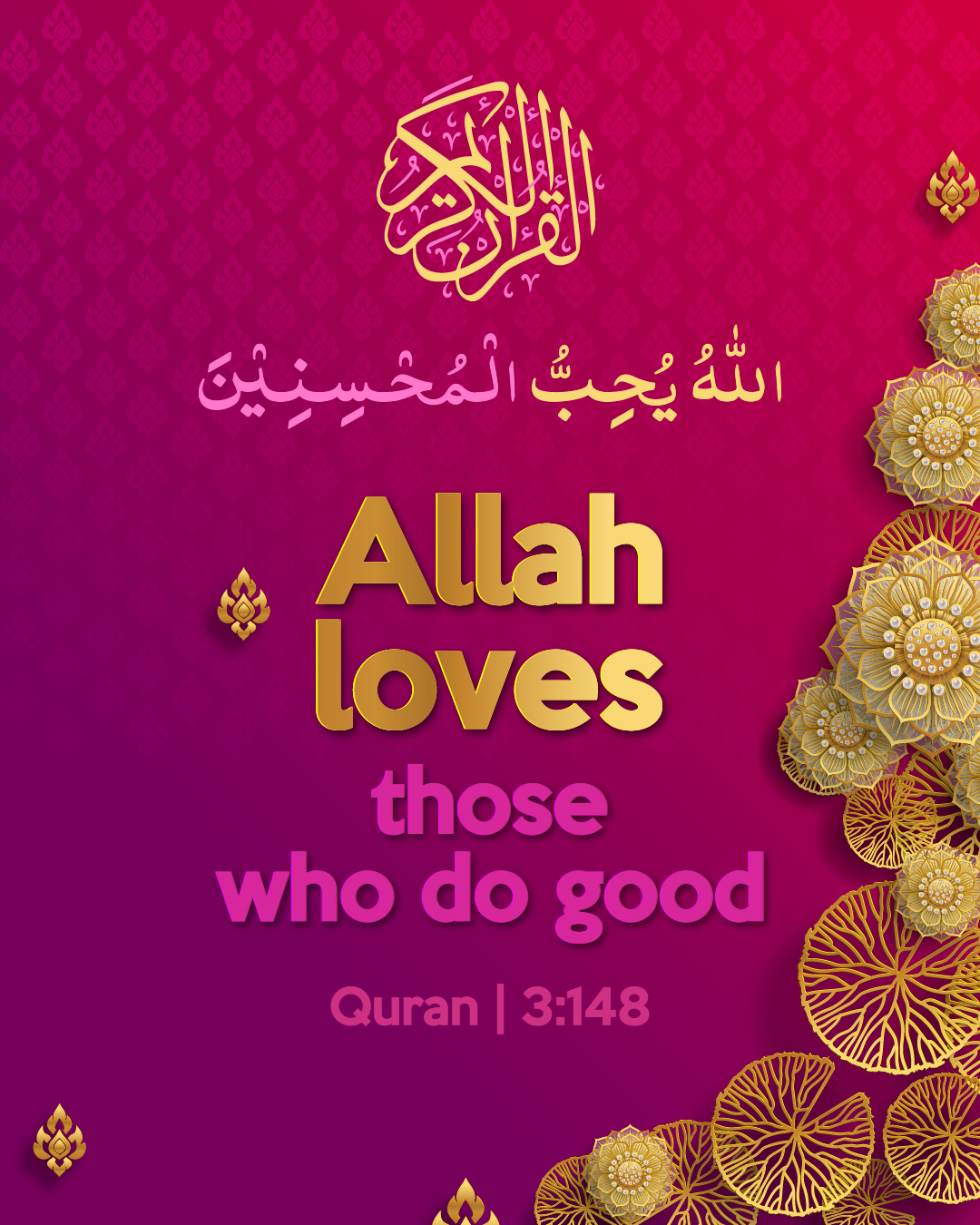
Yes. Quran 3:148 confirms that Allah gives reward in this world and an excellent reward in the next. The reward of this life includes dignity, peace, provision, and inner contentment.
Quran 16:97 promises a ‘good life’ (hayatan tayyibah) to believers who do righteous deeds. Scholars explain this as inner peace, contentment, and purpose — not necessarily material wealth.
No. Quran 16:97 explicitly says ‘whether male or female’ — both receive equal reward for their righteous deeds.
The Quran Says About Reward in Islam
فَاٰتٰٮہُمُ اللّٰہُ ثَوَابَ الدُّنۡیَا وَحُسۡنَ ثَوَابِ الۡاٰخِرَۃِ ؕ وَاللّٰہُ یُحِبُّ الۡمُحۡسِنِیۡنَ ﴿۱۴۸﴾٪
“So Allah gave them the reward of this world, as also an excellent reward of the next; and Allah loves those who do good.”
This verse from Surah Ali Imran confirms that Allah rewards the righteous in both worlds — not just the Hereafter. Reward in Islam is not deferred to a distant future; it begins in this life for those who do good, and reaches its fullest expression in the life to come.
How Allah Rewards in Both Worlds
Many people assume that Islamic reward is exclusively about the afterlife. This verse corrects that assumption. Allah says He gave them the reward of this world — victory, dignity, honour, and provision — as well as an excellent reward in the next. This dual reward reflects Allah’s generosity: He does not ask believers to endure this life without compensation and wait for everything until later. He provides in both, and the provision of this world often comes in forms the believer does not expect.
The phrase “an excellent reward of the next” uses the Arabic word “husn,” meaning beautiful and excellent. The reward of the Hereafter is not just adequate — it is supremely beautiful. As Al-Kareem, the Most Generous, Allah does not give the bare minimum. He gives abundantly, beautifully, and in proportion to the sincerity of the effort.
“Whoever does a good deed, whether male or female, while being a believer, We will surely cause them to live a good life, and We will surely give them their reward according to the best of what they used to do.”
This verse from Surah An-Nahl promises a “good life” to every believer who does righteous deeds — regardless of gender. This “hayatan tayyibah” is a life of inner peace, contentment, and purpose. It may not mean material luxury, but it means something far more valuable: a life where the heart is at rest because it trusts its Creator. As As-Salam, the Source of Peace, Allah grants a tranquillity that no amount of wealth can buy.
Why Allah Loves Those Who Do Good
The verse ends with a declaration of love: “Allah loves those who do good.” This is the ultimate motivation. A Muslim does good not just for the reward but because the Creator of the universe loves those who do it. To be loved by Allah is the highest honour any human can achieve — higher than wealth, fame, or power. The reward of Islam is not just Paradise; it is the love of the One who made Paradise.
For the believer, this verse is both an assurance and an invitation. The assurance is that no good deed goes unrewarded — in this world or the next. The invitation is to keep doing good, knowing that every act of kindness, worship, and sacrifice is seen, valued, and reciprocated by the Most Generous Creator. Reward in Islam is not a transaction; it is a relationship between a grateful servant and a loving Lord.
Follow our YouTube, Threads and LinkedIn for more Islamic Quotes and reminders on the rewards of doing good in Islam.
The ultimate reward is Allah’s love and Paradise. Quran 3:148 says Allah loves those who do good, making His love the highest honour a believer can earn.
Yes. Allah multiplies good deeds at minimum tenfold (Quran 6:160), and for some deeds the reward is multiplied even further without limit.
Yes. The Prophet (pbuh) taught that everyday actions — eating halal, smiling, removing harm from a path — are all rewarded when done with the right intention. Islam transforms ordinary life into worship.
To motivate believers with the highest possible reward: His love. Being loved by Allah means receiving His protection, guidance, and favour in this life and the next.