Yes. The Prophet (pbuh) declared cats clean and described them as part of the household. Water that a cat has drunk from remains pure and can be used for ablution. A cat walking in front of a person during prayer does not invalidate it. This ruling is based on the hadith narrated in Ibn Majah (369). The role of cats in Islam is significant, reflecting their importance in Islamic culture.
No. The Prophet (pbuh) explicitly stated that cats do not invalidate prayer. If a cat walks in front of you, rubs against you, or is nearby while you are praying, your prayer remains valid. Cats in Islam are classified as part of the household, not as impure animals.
The Prophet (pbuh) was known for his kindness toward all animals, and cats held a special place in his household. His companion Abu Hurairah earned his nickname — meaning “Father of the Kitten” — because of his love for cats, a quality the Prophet (pbuh) never discouraged but embraced.

The Prophet Said About Cats in Islam
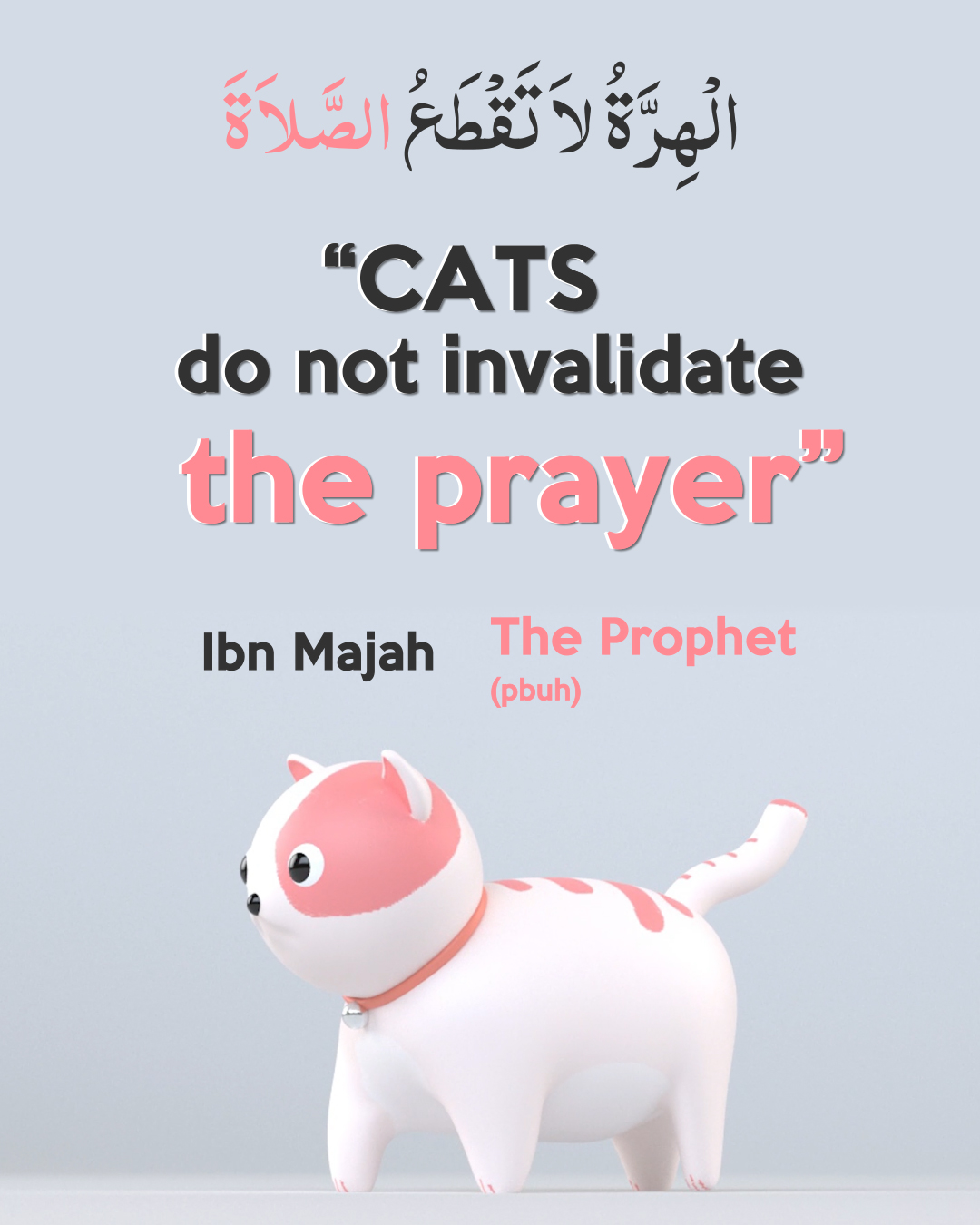
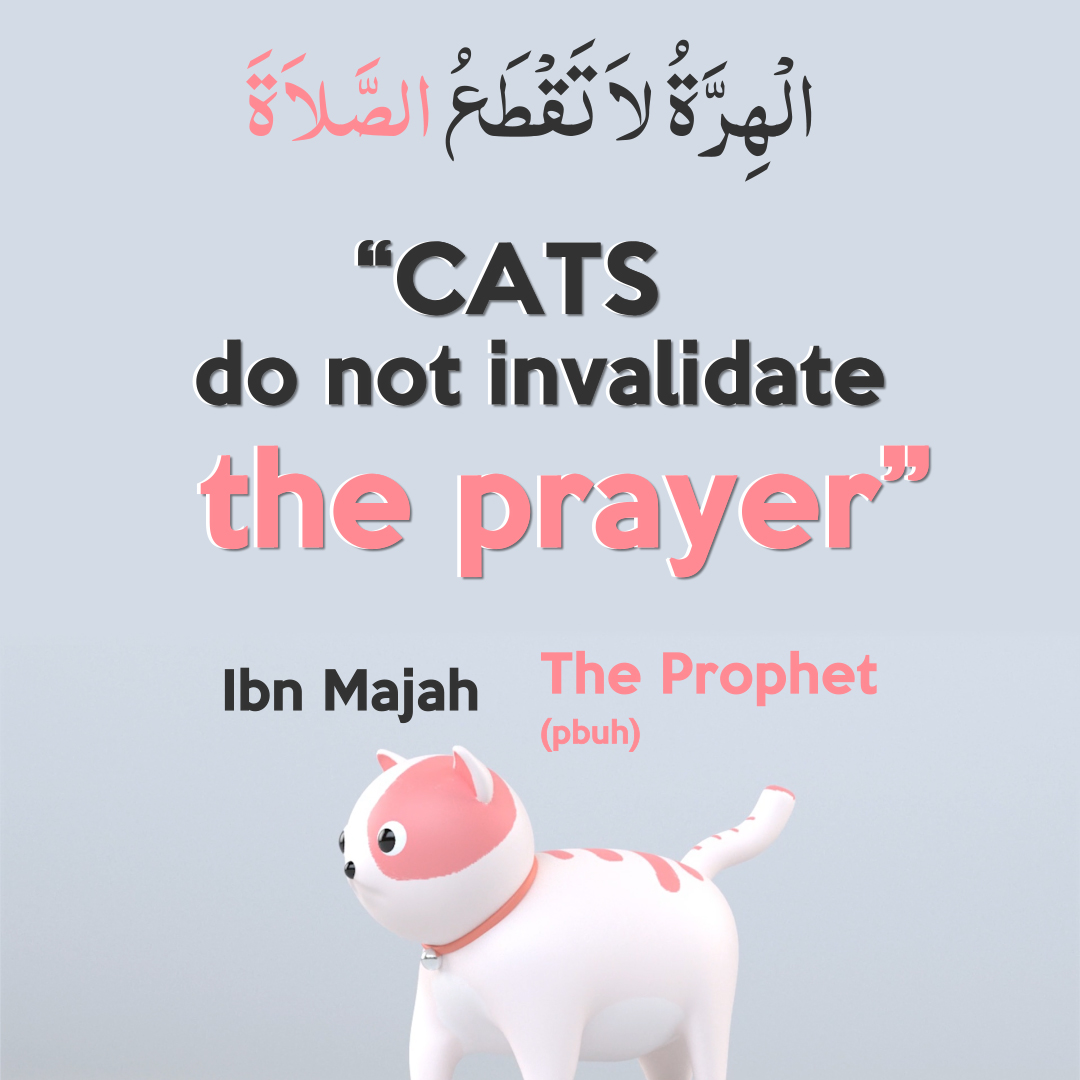
الْهِرَّةُ لاَ تَقْطَعُ الصَّلاَةَ لأَنَّهَا مِنْ مَتَاعِ الْبَيْتِ
“Cats do not invalidate the prayer, because they are one of the things that are useful in the house.”
This hadith settles one of the most commonly asked questions about cats in Islam. The Prophet (pbuh) made it clear that cats are clean, welcome in the home, and do not invalidate a Muslim’s prayer. It is a teaching that reflects Islam’s broader attitude of compassion and respect toward animals.
Why the Prophet Declared Cats Clean
The Prophet (pbuh) described cats as being among the useful things of the household. This statement carries legal weight in Islamic jurisprudence because it establishes that cats are not impure animals. A cat walking in front of someone during prayer does not break the prayer. Water that a cat has drunk from remains clean and can be used for ablution. The Prophet (pbuh) himself was known to show kindness toward cats, and his companion Abu Hurairah earned his famous nickname — meaning “Father of the Kitten” — because of his love for them.
What makes this hadith remarkable is how naturally it places cats within the daily life of a Muslim household. The Prophet (pbuh) did not merely tolerate cats; he described them as useful, a word that carries the meaning of something valued and beneficial. In a faith where cleanliness is half of belief, declaring cats clean is a significant statement. It means a Muslim can keep a cat without worrying about their prayer space, their water, or their garments being affected. As Ar-Rahman, the Most Compassionate, Allah placed mercy in the hearts of believers toward all living creatures.
“There is no creature on earth, nor a bird that flies with its wings, but they are communities like you. We have neglected nothing in the Book.”
This verse from Surah Al-An’am elevates the status of every living creature on earth. Allah describes animals as communities with their own purpose, just like human beings — with structures, behaviours, and roles in the natural world. When applied to the topic of cats in Islam, this verse reinforces that animals are not insignificant. They are part of Allah’s creation, recognised and accounted for in His Book. The Prophet (pbuh) lived this principle by treating animals with dignity, and he warned that harming them carries serious consequences. As Ar-Raheem, the Most Merciful, Allah’s mercy extends to every living being without exception.
What This Hadith Teaches About Compassion
The teaching about cats in Islam is part of a broader message about how Muslims should treat animals. The Prophet (pbuh) told the story of a woman who entered the Fire because she locked a cat and left it to starve, and he spoke of a man who earned Allah’s forgiveness by giving water to a thirsty dog. These are not minor anecdotes; they are moral teachings that carry the weight of Paradise and punishment. Islam does not separate compassion toward animals from a person’s faith. The two are deeply and inseparably connected.
For the Muslim who keeps a cat at home, this hadith is both a permission and a responsibility. The cat is clean, welcome, and valued — but it must also be cared for, fed, and treated with kindness. Islam does not allow a person to claim love for animals while neglecting their needs. The way a believer treats the creatures in their care is a direct reflection of their character and their relationship with the Creator who placed those creatures in their hands.
Check out our YouTube, TikTok and Facebook pages for more Islamic Quotes on the beautiful teachings of the Prophet (pbuh).
While keeping cats is not classified as a sunnah in the formal sense, cats were present and welcomed in the household of the Prophet (pbuh) and his companions. The Prophet (pbuh) declared them clean and useful, making it clear that having cats at home is fully permissible and in line with Islamic teachings.
Yes. The Prophet (pbuh) confirmed that cats are not impure. In a hadith narrated by Abu Dawud, he said the cat is not unclean and is among those who go around among you. Water left over by a cat remains pure and suitable for ablution and drinking.
The Prophet (pbuh) narrated the story of a woman who entered the Fire because she confined a cat, refusing to feed it or let it free to find its own food. This hadith (Bukhari 3318) makes it clear that mistreating animals, including cats, is a serious sin with consequences in the Hereafter.