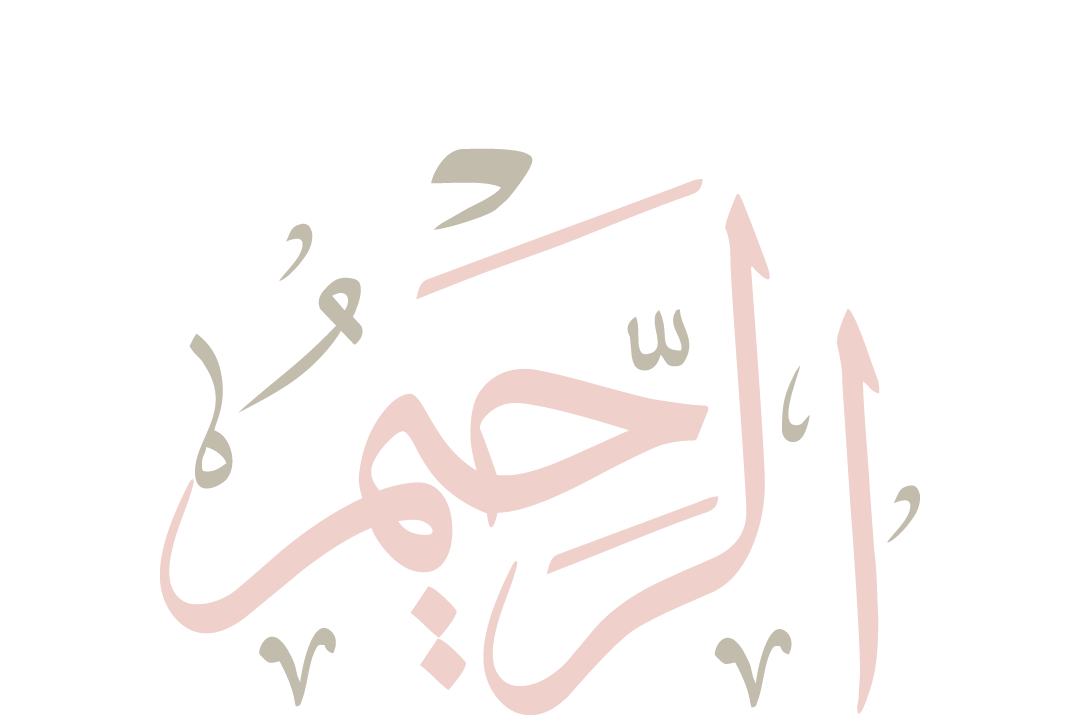
Ar-Raheem
The Most Merciful
Ar-Raheem (ٱلرَّحِيمُ) is the second of the 99 Names of Allah and the inseparable companion of Ar-Rahman. It means “The Most Merciful” — the One who bestows a special, enduring mercy upon those who believe in Him and strive to walk His path. Every surah of the Quran (except one) opens with this name alongside Ar-Rahman, reminding us that Allah’s mercy is both the beginning and the end of everything.
هُوَ ٱلَّذِى يُصَلِّى عَلَيۡكُمۡ وَمَلَـٰٓئِكَتُهُۥ لِيُخۡرِجَكُم مِّنَ ٱلظُّلُمَـٰتِ إِلَى ٱلنُّورِ ۚ وَكَانَ بِٱلۡمُؤۡمِنِينَ رَحِيمًا
“It is He who confers blessing upon you, and His angels, that He may bring you out from darkness into the light. And He is ever, to the believers, Most Merciful.”
Meaning and Root of Ar-Raheem
The name Ar-Raheem comes from the Arabic root Ra-Ha-Mim (ر-ح-م), the same root that gives us Ar-Rahman. While the root conveys mercy, compassion, and tenderness, the form of Ar-Raheem (fa’eel) carries a different emphasis. It indicates a mercy that is continuous, deliberate, and directed — a mercy that Allah chooses to bestow upon those who turn to Him in faith and sincerity.
Scholars describe Ar-Raheem as the mercy of consequence and reward. Where Ar-Rahman gives to all creation simply because He is compassionate by nature, Ar-Raheem gives to the believers as an act of loving acknowledgement — forgiving their sins, answering their prayers, granting them peace in their hearts, and preparing for them a place in Paradise. It is a mercy that deepens the more a person draws closer to Allah.
The word raheem also appears in Arabic to describe human qualities of tenderness. Unlike Ar-Rahman, which is exclusively reserved for Allah, the quality of being raheem can be attributed to people — and indeed, the Quran uses this very word to describe the Prophet Muhammad (pbuh) himself.
Ar-Raheem in the Quran
The name Ar-Raheem appears over 100 times in the Quran — making it one of the most frequently mentioned divine names. Its most recognisable appearance is in the Basmalah, “Bismillah ir-Rahman ir-Raheem,” which opens every surah of the Quran except Surah At-Tawbah. This phrase is so central to Muslim life that it is recited before meals, before journeys, and before virtually every meaningful action.
In Surah Al-Baqarah, Allah pairs the two names together when declaring the oneness of God. This verse brings together the concepts of divine unity and divine mercy — teaching us that the God we worship is not distant or indifferent, but intimately compassionate and personally merciful.
وَإِلَـٰهُكُمۡ إِلَـٰهٌ وَٰحِدٌ ۖ لَّآ إِلَـٰهَ إِلَّا هُوَ ٱلرَّحۡمَـٰنُ ٱلرَّحِيمُ
“And your God is one God. There is no deity [worthy of worship] except Him, the All-Compassionate, the Most Merciful.”
The name also appears frequently alongside Allah’s attributes of forgiveness. In verse 2:173 and throughout Surah An-Nisa, Allah pairs forgiveness with Ar-Raheem — showing that His special mercy always includes the wiping away of sins for those who repent.
The Difference Between Ar-Raheem and Ar-Rahman
These two names are the most commonly paired names of Allah, yet they carry beautifully distinct meanings. Ar-Rahman describes a vast, universal mercy that embraces everything in existence — the sun that warms every land, the water that sustains every creature. It is a mercy given without condition.
Ar-Raheem, by contrast, describes a focused, personal mercy that Allah directs towards those who believe. It is the mercy of guidance, forgiveness after mistakes, and eternal reward in the Hereafter. If Ar-Rahman is the rain that falls on every field, Ar-Raheem is the special care given to the garden that was tended with love.
Ar-Raheem special mercy for the believers
Ar-Rahman universal mercy for all creation
This distinction is captured in the Basmalah — “Bismillah ir-Rahman ir-Raheem” — which opens every surah except Surah At-Tawbah. By placing both names together, Allah reminds us that His mercy operates on two levels: one that sustains the entire universe, and one that nurtures the hearts of those who seek Him.
Allah’s Special Mercy for the Believers
What makes Ar-Raheem so deeply personal is that it speaks directly to the relationship between Allah and the believer. In Surah Al-Ahzab (33:43), Allah tells the believers that He and His angels send blessings upon them — and that He is, to the believers specifically, Raheema (Most Merciful). This is not a general statement about creation; it is an intimate address to those who have chosen faith.
This special mercy manifests in countless ways: the peace that settles in the heart during prayer, the strength to persevere through hardship, the guidance to make the right choice when the path is unclear. The Prophet Muhammad (pbuh) said: “When Allah created the creation, He wrote in a Book — and it is with Him above the Throne — ‘My mercy prevails over My wrath.'” (Sahih al-Bukhari 3194). Allah’s nature as Ar-Raheem means that His default disposition towards His servants is one of kindness and pardon.
Allah has written upon Himself mercy
In Surah Al-An’am (6:12), Allah states that He has “written upon Himself mercy” — meaning mercy is not merely something He gives occasionally but something He has made binding upon Himself. For the believer who calls upon Al-Ghaffar (The Ever-Forgiving) and Ar-Raheem, the response is always mercy.
Ar-Raheem and the Prophet Muhammad
One of the most remarkable aspects of the name Ar-Raheem is that Allah used the same word — raheem — to describe the Prophet Muhammad (pbuh). In Surah At-Tawbah (9:128), Allah says that the Messenger is “concerned over you [the believers] and to the believers is kind and merciful (raheem).” This is the only place in the Quran where a human being is described with this attribute alongside ra’uf (kind/gentle).
To the believers he is kind and merciful
This teaches us something profound: the Prophet (pbuh) was a living reflection of divine mercy on earth. His gentleness with children, his patience with those who wronged him, and his compassion for the poor were all expressions of the rahma that Allah placed in his heart. By following the Prophet’s example — as explored in our Inspired by the Prophet collection — believers can cultivate the quality of mercy within themselves.
How Believers Can Reflect Ar-Raheem
The Prophet Muhammad (pbuh) said: “Those who show mercy are shown mercy by the All-Compassionate. Be merciful to those on earth, and the One above the heavens will be merciful to you.” (Sunan Abu Dawud 4941). This hadith draws a direct line between human compassion and divine mercy — the more mercy a believer shows, the more of Allah’s special mercy (Ar-Raheem) they receive in return.
Living with an awareness of Ar-Raheem transforms how a Muslim approaches daily life. It means forgiving others not out of weakness but because Allah forgives. It means being patient with difficult people because Allah is patient with us. It means giving generously — of time, of wealth, of kind words — because every act of mercy is rewarded by the Most Merciful. And it means never despairing, because Ar-Raheem has promised that His mercy will always be there for those who seek it.
As we explore the 99 Names of Allah, Ar-Raheem stands as a deeply personal invitation. Where Ar-Rahman reassures us that the universe is built on mercy, Ar-Raheem promises that this mercy will find us — individually, personally, eternally. From Al-Malik (The Sovereign) to Al-Quddus (The Most Holy), every name reveals a facet of Allah’s majesty — but Ar-Raheem reminds us that behind all of it is a God who cares, forgives, and loves.
Check out our YouTube, Facebook, Pinterest and Threads pages for more insights on Ar-Raheem and the 99 Names of Allah.
Frequently Asked Questions
Ar-Raheem (ٱلرَّحِيمُ) means “The Most Merciful” or “The Especially Merciful.” It comes from the Arabic root Ra-Ha-Mim (ر-ح-م), which conveys mercy, compassion, and tenderness. It is the second of the 99 Names of Allah and describes a special, focused mercy that Allah directs towards those who believe in Him — a mercy of guidance, forgiveness, and eternal reward.
Both names share the same Arabic root and both relate to Allah’s mercy, but they differ in scope. Ar-Rahman refers to a universal mercy that covers all creation — believers and non-believers alike — in this world. Ar-Raheem refers to a special, enduring mercy that Allah reserves for the believers, particularly through forgiveness, spiritual guidance, and reward in the Hereafter. Together they appear in the Basmalah: “Bismillah ir-Rahman ir-Raheem.”
The name Ar-Raheem appears over 100 times in the Quran, making it one of the most frequently mentioned divine names. It features in the Basmalah (“In the name of Allah, the All-Compassionate, the Most Merciful”) that opens every surah except Surah At-Tawbah. Key appearances include Surah Al-Baqarah 2:163, Surah Al-Ahzab 33:43, and Surah Al-Fatihah 1:3. It is also frequently paired with Al-Ghafoor (The Ever-Forgiving) throughout the Quran.
Unlike Ar-Rahman, which is exclusively reserved for Allah, the word raheem can be used to describe human qualities. The Quran itself describes the Prophet Muhammad (pbuh) as raheem in Surah At-Tawbah (9:128). A person can be named Raheem (without the definite article “Ar-“) or Abd Ar-Raheem (عبد الرحيم), meaning “Servant of the Most Merciful.” Both are considered permissible and beautiful names in Islam.
Yes. In Surah At-Tawbah (9:128), Allah describes the Prophet Muhammad (pbuh) as “concerned over you [the believers] and to the believers is kind and merciful (ra’uf raheem).” This is a unique honour — the Prophet (pbuh) is the only person in the Quran described with the attribute raheem alongside ra’uf (kind/gentle), reflecting his role as a living embodiment of divine mercy on earth.