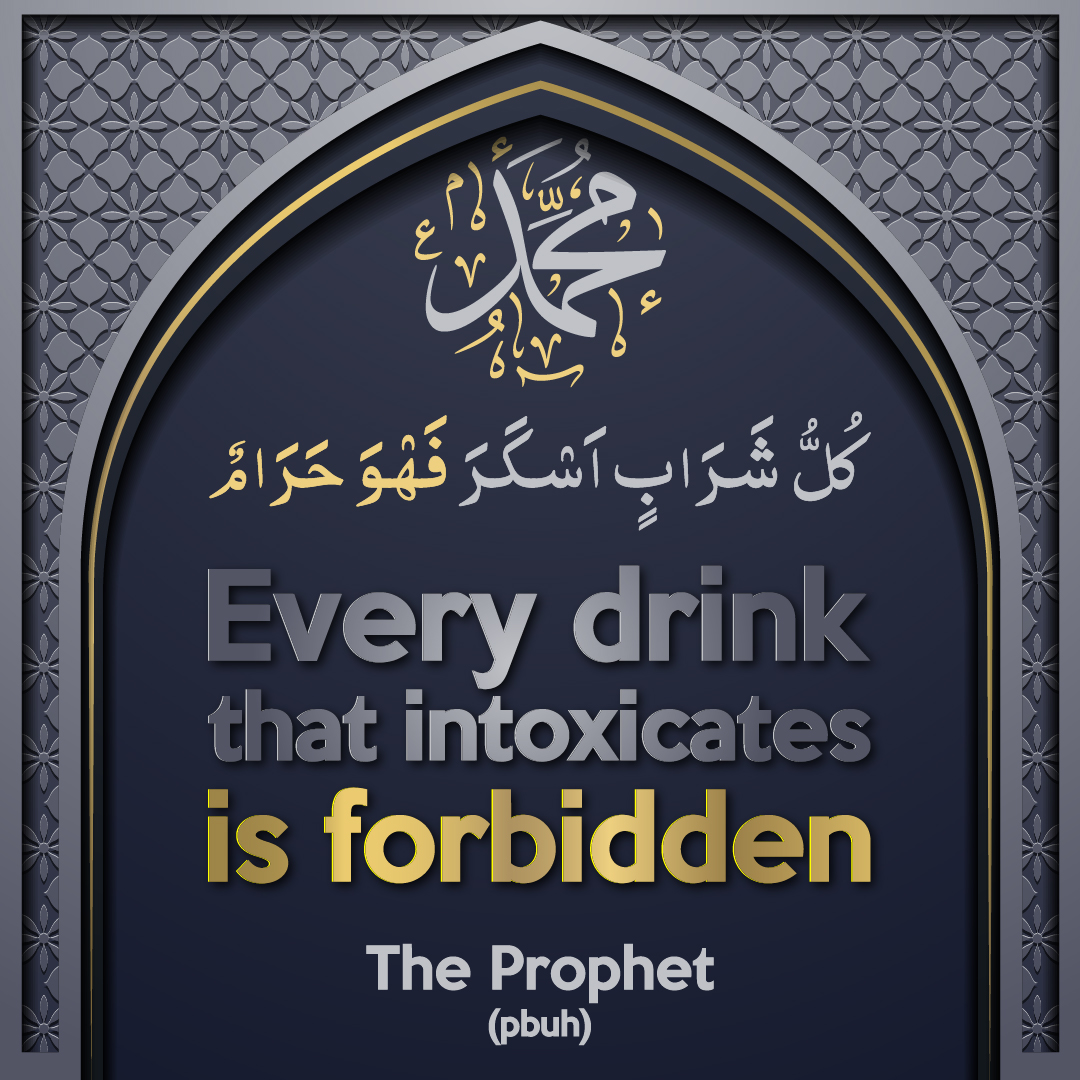
Yes. The ruling on alcohol in Islam is absolute. The Prophet (pbuh) said that every drink that intoxicates is forbidden (Bukhari 5586). The Quran calls intoxicants defilement from the work of Satan (Quran 5:90). There are no exceptions in Islamic law.
No. The Prophet (pbuh) said: whatever intoxicates in large quantities, even a small amount of it is forbidden. The teaching on alcohol in Islam closes any loophole about moderate or minimal consumption.
Allah explains in Quran 5:90-91 that alcohol causes animosity and hatred between people, and diverts the believer from the remembrance of Allah and from prayer. The prohibition of alcohol in Islam protects the mind, body, family, and community.
The Prophet Said About Alcohol in Islam
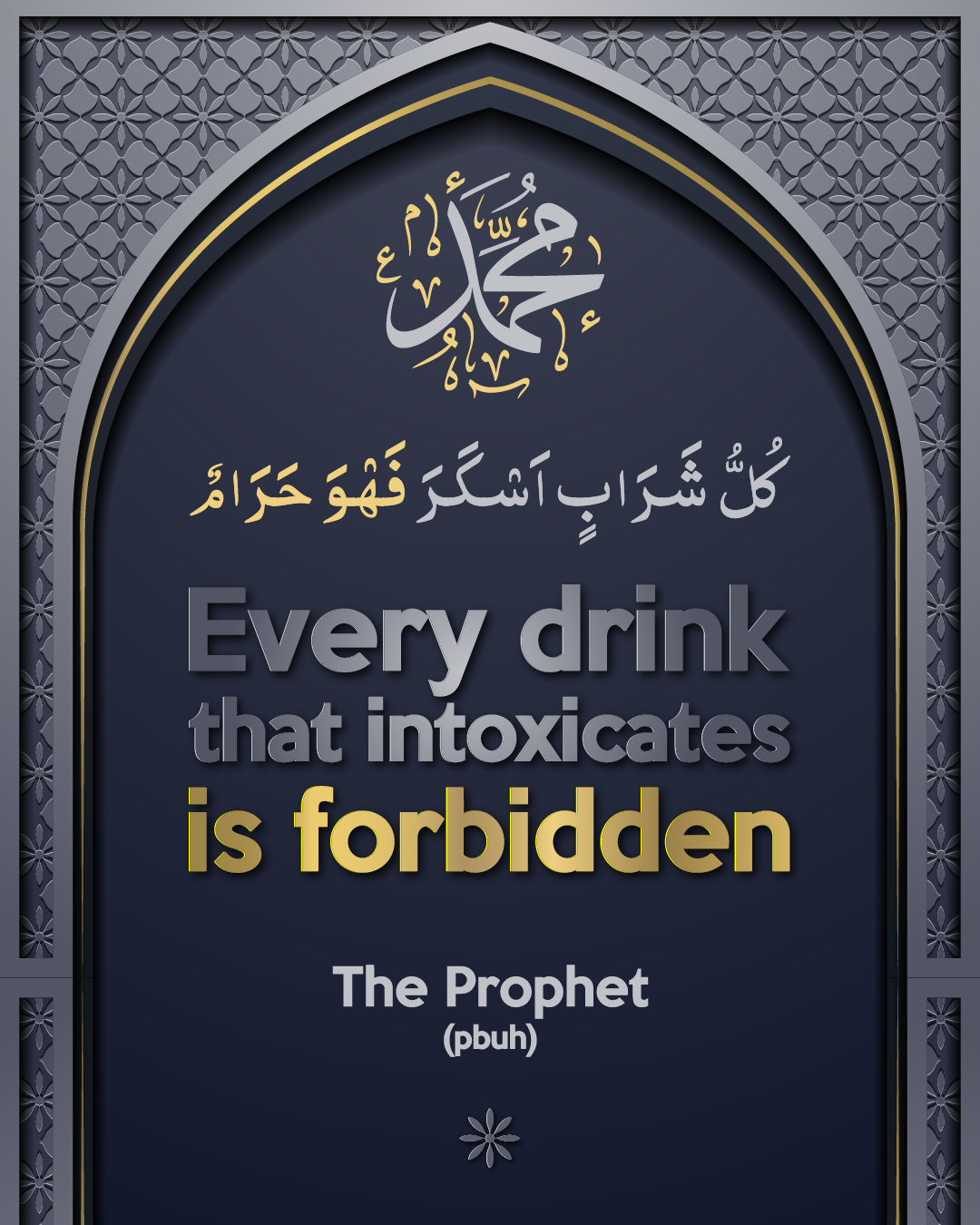
كُلُّ شَرَابٍ أَسْكَرَ فَهُوَ حَرَامٌ
“Every drink that intoxicates is forbidden.”
This hadith is one of the clearest and most concise rulings in all of Islamic law. The Prophet (pbuh) did not list specific beverages or leave room for interpretation — he declared that every drink that causes intoxication is haram. Understanding alcohol in Islam begins with this simple, uncompromising statement.
Why the Prophet Made the Ruling Absolute
The Prophet (pbuh) used the word “every” — a universal qualifier that leaves no exceptions. He did not say most drinks, or strong drinks, or excessive amounts. He said every drink that intoxicates is forbidden. This ruling covers wine, beer, spirits, and any substance — past, present, or future — that produces intoxication. The wisdom behind this absolute prohibition is that it removes all ambiguity. A Muslim does not need to calculate percentages or debate thresholds. If it intoxicates, it is haram. The simplicity of this ruling on alcohol in Islam is itself a mercy, because it protects the believer from the slippery slope of justification.
In another narration, the Prophet (pbuh) said: “Whatever intoxicates in large quantities, even a small amount of it is forbidden.” This closes the final loophole. Some might argue that a sip or a taste does not cause drunkenness, but the Prophet (pbuh) anticipated this reasoning and shut the door completely. As Al-Hakeem, the All-Wise, Allah revealed this ruling through His Messenger to protect the mind, the body, the family, and the community from the destruction that alcohol inevitably brings.
“O you who believe, intoxicants, gambling, stone altars, and divining arrows are but defilement from the work of Satan, so avoid them that you may be successful. Satan only wants to cause between you animosity and hatred through intoxicants and gambling, and to avert you from the remembrance of Allah and from prayer.”
These verses from Surah Al-Ma’idah reveal the reason behind the prohibition. Allah calls intoxicants “defilement from the work of Satan” — not a minor sin, not a grey area, but a tool of the enemy. He then explains exactly what alcohol does: it breeds animosity and hatred between people, and it pulls the believer away from the remembrance of Allah and from prayer. These are not theoretical harms — they are observable realities in every society where alcohol is consumed freely. As Al-Hafiz, the Protector, Allah prohibits what destroys and commands what preserves. The Quranic ruling on alcohol in Islam leaves no doubt about where Allah stands on this matter.
What the Ruling on Alcohol in Islam Protects
The prohibition of alcohol in Islam is not an arbitrary restriction — it is a shield around everything that matters. Alcohol destroys health: liver disease, addiction, and mental deterioration are well-documented consequences. It destroys families: domestic violence, neglect, and broken homes follow alcohol abuse across every culture. It destroys communities: crime rates, accidents, and social dysfunction rise wherever alcohol consumption is normalised. The Prophet (pbuh) saw all of this and declared a single, clear ruling that protects the believer from every one of these harms.
For the Muslim, avoiding alcohol is not a sacrifice — it is a liberation. It means a mind that is always clear, a tongue that is always under control, and a heart that is never clouded from remembering Allah. Alcohol in Islam is forbidden because the human being is too valuable to be diminished by a substance that strips away reason, dignity, and connection to the Creator. The Prophet (pbuh) gave this ruling out of love for his ummah, and following it is one of the simplest ways to honour that love.
Follow our YouTube, X and Pinterest for more Muslim Quotes and teachings on alcohol in Islam and halal living.
The Quran calls intoxicants defilement from the work of Satan and commands believers to avoid them (Quran 5:90). It describes how alcohol breeds animosity, hatred, and distance from Allah and prayer.
Scholars generally consider cooking with alcohol impermissible because the Prophet (pbuh) prohibited every intoxicating substance. The strict ruling on alcohol in Islam means that even if alcohol evaporates during cooking, using it as an ingredient is avoided by the majority of scholars.
In Islamic law, consuming alcohol is a punishable offence. The Prophet (pbuh) prescribed a disciplinary punishment for drinking. More importantly, the spiritual consequence is distance from Allah and the loss of clarity in worship and daily life.
No. The prohibition of alcohol in Islam extends beyond drinking. The Prophet (pbuh) cursed ten people in relation to alcohol: the one who produces it, the one for whom it is produced, the one who drinks it, the one who carries it, the one to whom it is carried, the one who serves it, the one who sells it, the one who benefits from its price, the one who buys it, and the one for whom it is bought.