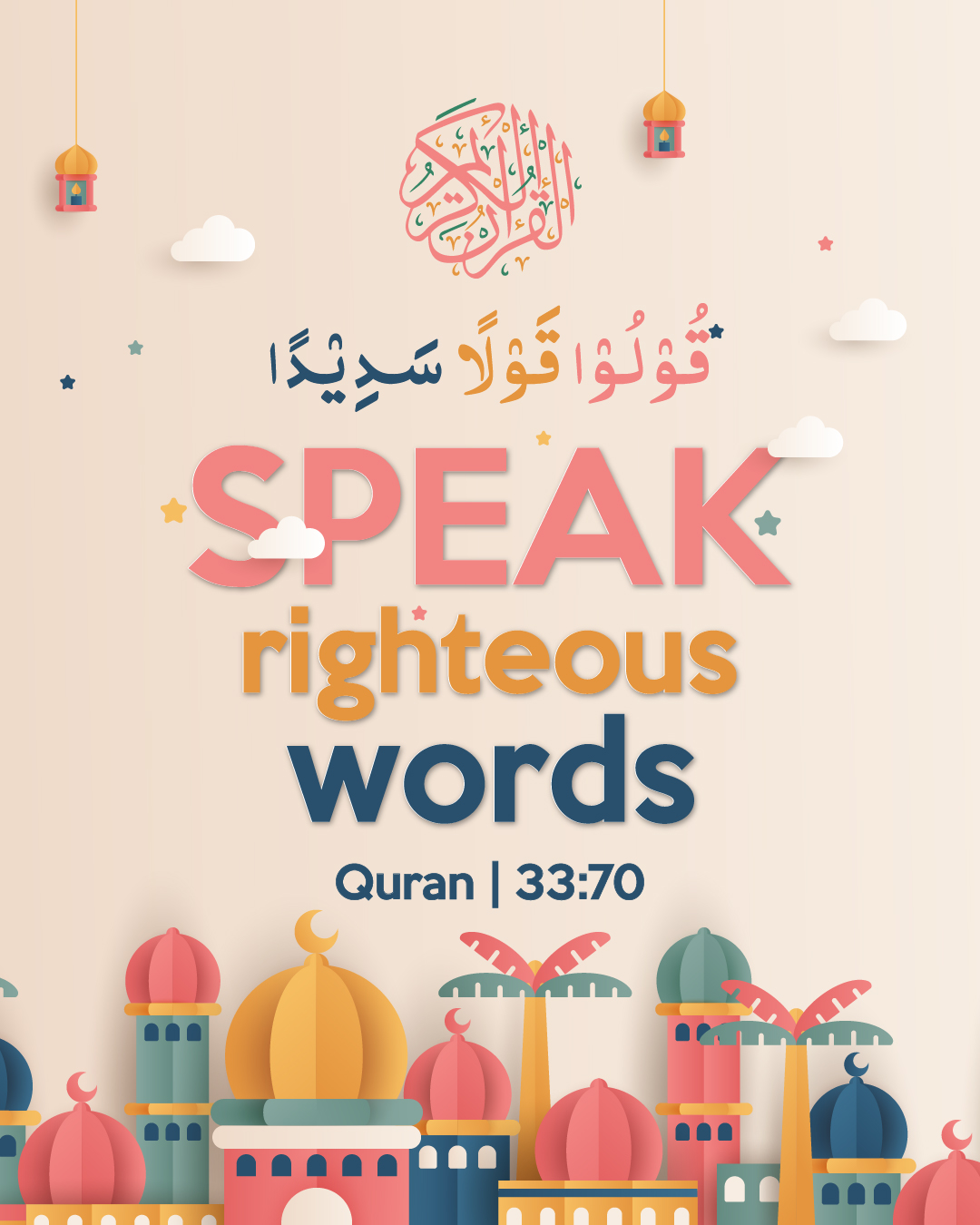
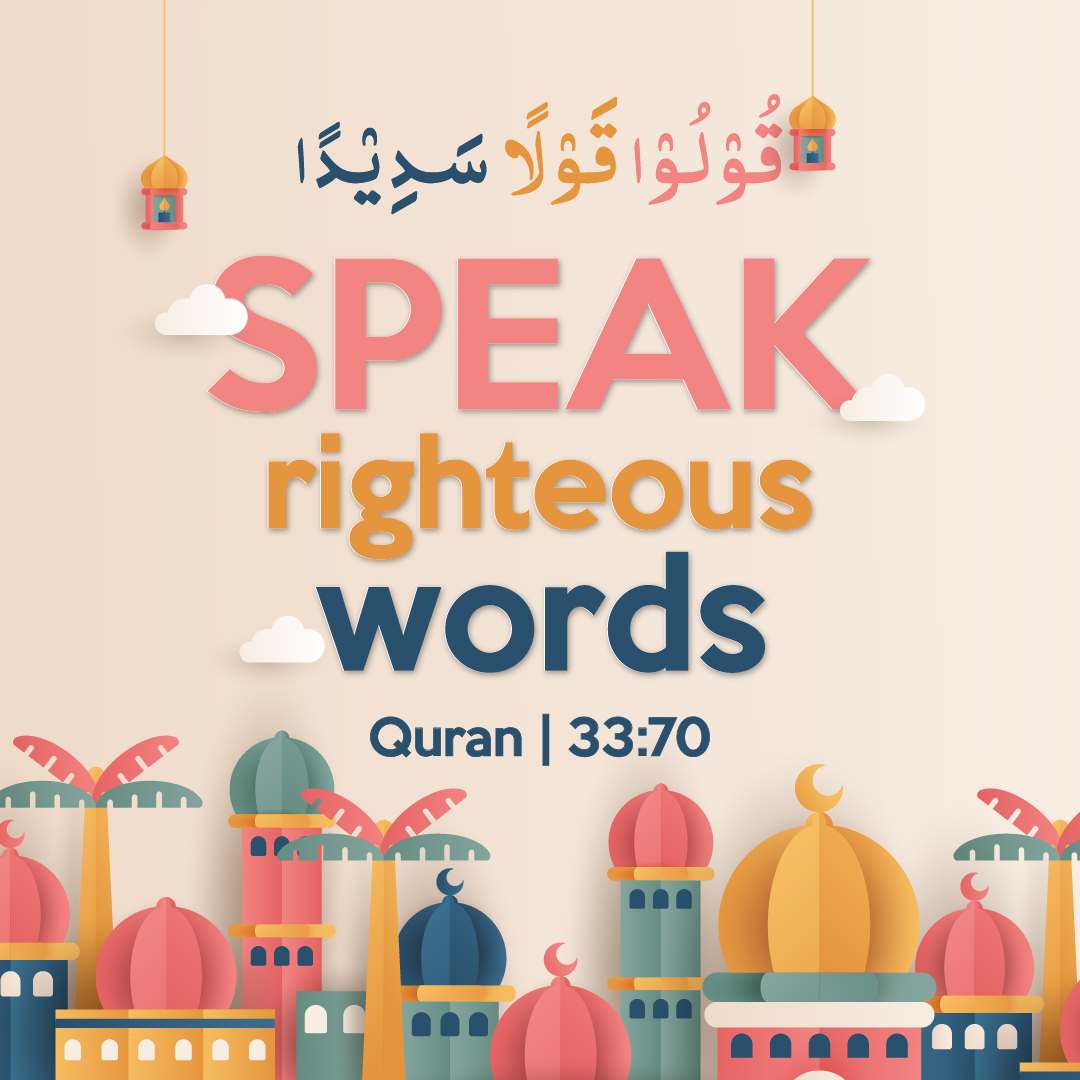
Righteous speech (qawlan sadeedan) means words that are true, purposeful, and straight. The Quran commands it in Quran 33:70 alongside the command to fear Allah, linking speech directly to spiritual consciousness.
Yes. Quran 50:18 says that every word a person utters is recorded by a watcher angel. This means there is no casual or inconsequential speech in Islam.
The Prophet (pbuh) said whoever guarantees what is between their jaws (their tongue), he guarantees them Paradise. He also said that most people enter the Fire because of their tongue and their private parts.




The Quran Says About Righteous Speech in Islam
یٰۤاَیُّہَا الَّذِیۡنَ اٰمَنُوا اتَّقُوا اللّٰہَ وَقُوۡلُوۡا قَوۡلًا سَدِیۡدًا ﴿ۙ۷۰
“O ye who believe! fear Allah, and speak righteous words.”
This verse from Surah Al-Ahzab pairs two of the most important qualities a Muslim can develop: consciousness of Allah and righteous speech. The instruction is direct — fear Allah and let that fear shape every word you speak.
What Righteous Speech Means in Islam
The Arabic phrase “qawlan sadeedan” means words that are straight, correct, and truthful. It is speech that hits the mark — not crooked, not manipulative, and not designed to mislead. Righteous speech in Islam is not just about avoiding lies; it is about speaking with purpose, accuracy, and integrity. Every word a Muslim speaks should be measured against this standard: is it true, is it necessary, and is it kind?
By linking righteous speech directly to taqwa (consciousness of Allah), the Quran makes it clear that how a person speaks is a reflection of their spiritual state. A person who fears Allah will naturally guard their tongue. They will avoid gossip, slander, exaggeration, and deception — not because these are merely bad habits, but because every word is heard by Allah. As As-Sami, the All-Hearing, nothing spoken escapes His attention.
“Not a word does he utter but there is a watcher by him, ready to record it.
This verse from Surah Qaf adds urgency to the command. Every single word a person speaks is recorded by an angel. There is no casual speech in Islam — everything is documented. This awareness should transform how a Muslim communicates. Righteous speech in Islam is not only about what is said to others; it includes what is said about others, what is said in anger, and what is said in private. As Ar-Raqib, the Watchful, Allah observes every conversation and every whisper.
The Power of Words in a Muslim’s Life
The Prophet (pbuh) said that whoever guarantees me what is between their jaws and what is between their legs, I guarantee them Paradise. The tongue is one of the two most dangerous parts of the body, and controlling it is one of the surest paths to salvation. Words can build or destroy, heal or wound, unite or divide. A Muslim who masters their speech has mastered one of the greatest challenges of faith.
For the believer, this verse is a daily reminder: before speaking, think. Is this word true? Is it beneficial? Would I be comfortable if Allah played it back to me on the Day of Judgement? Righteous speech in Islam is a discipline that shapes character, protects relationships, and earns the pleasure of the Creator. It starts with one decision — to let taqwa guide every word that leaves your mouth.
Follow our YouTube, TikTok and Pinterest for more Islamic Quotes and reminders on the power of words in Islam.
Yes. Gossip, backbiting, and slander are explicitly forbidden in the Quran. Speaking about others in a way that harms their reputation — even if what is said is true — is considered sinful.
By developing taqwa (awareness of Allah), pausing before speaking, asking whether your words are true and necessary, avoiding gossip, and following the Prophet’s advice to speak good or remain silent.
The Prophet (pbuh) said that a good word is charity. Speaking kindly, truthfully, and with wisdom earns reward from Allah and strengthens the bonds between people.
Yes. The Prophet (pbuh) advised that when angry, a person should remain silent. He also recommended seeking refuge in Allah from Satan, as anger often leads to words that are regretted later.