
What Does Ahlan wa Sahlan Mean?
Ahlan wa Sahlan is one of the warmest greetings in the Arabic language — the phrase used to welcome a guest at the door, a visitor to a city, or a newcomer into a gathering. You will hear it across the Arab world and wherever Arabic is spoken, offered with a smile and often an open hand. But what does this greeting actually mean, where does it come from, and why does such a simple welcome carry so much warmth? This guide explains it, word by word.
A Warm Welcome in Arabic
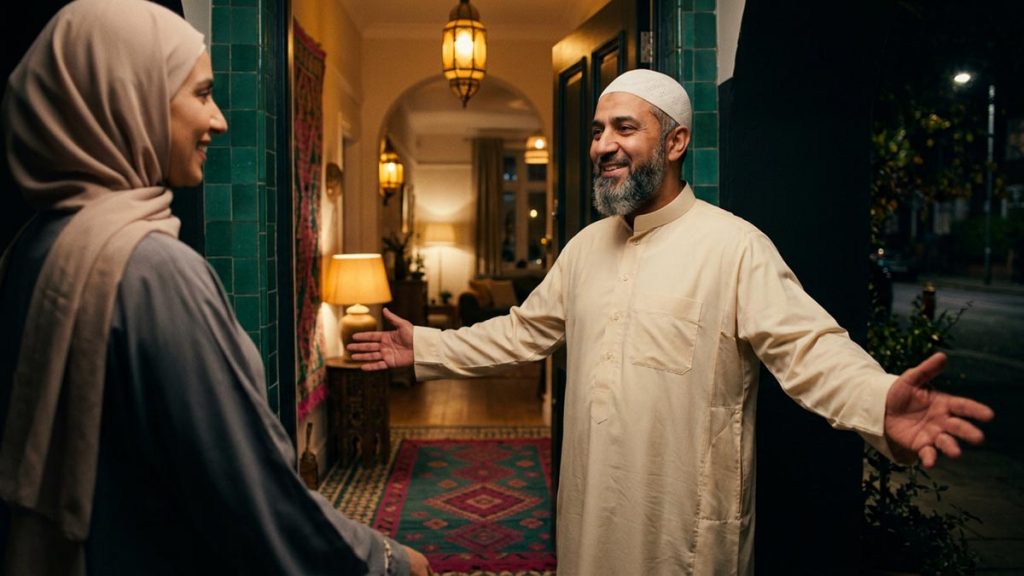
At its simplest, Ahlan wa Sahlan (أَهْلاً وَسَهْلاً) means “welcome.” It is what an Arabic speaker says to greet someone who has just arrived, whether at their home, their workplace, or their country. In everyday use it is the close equivalent of the English “welcome” or “you are most welcome here.”
Yet the phrase is richer than a single word can capture. Where English “welcome” is fairly plain, these two words quietly tell the guest something lovely: that they have arrived among family, and that everything here will be made easy for them. It is a greeting that does not just open a door — it makes the newcomer feel they belong.
In two short words, a guest is told they are family and their arrival is a joy, never a burden.
Breaking Down Ahlan wa Sahlan
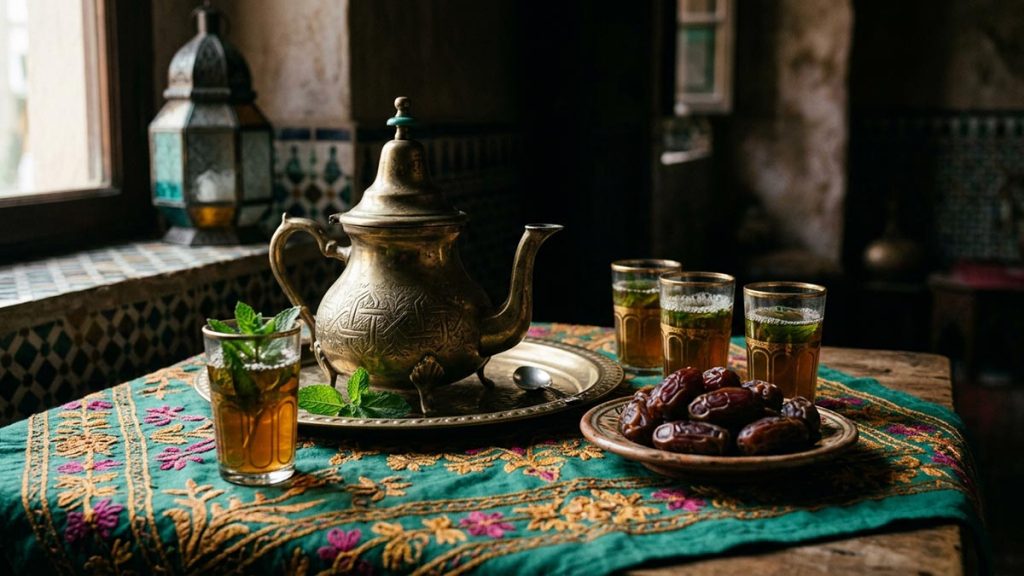
The beauty of the phrase becomes clear when you look at where each word comes from. Both halves are rooted in old Arabic images of belonging and ease:
- Ahlan (أهلاً) — from ahl, meaning “family” or “people.” The sense is: you have come to your own family. To the guest, it says — here, you are no stranger.
- wa (و) — simply “and,” joining the two blessings into a single greeting.
- Sahlan (سهلاً) — from sahl, meaning “a plain” or “level, easy ground.” The sense is: you have arrived somewhere smooth and easy, not rough or difficult — may your stay be effortless.
Classical scholars of the language explain the full, unspoken sentence behind the greeting as something like: you have alighted among family, and trodden on smooth ground. In two short words, the host promises the guest both belonging and comfort — the very things a traveller most longs to hear.
One word says you are among family, the other says may your stay be easy.
The Hospitality Behind the Phrase
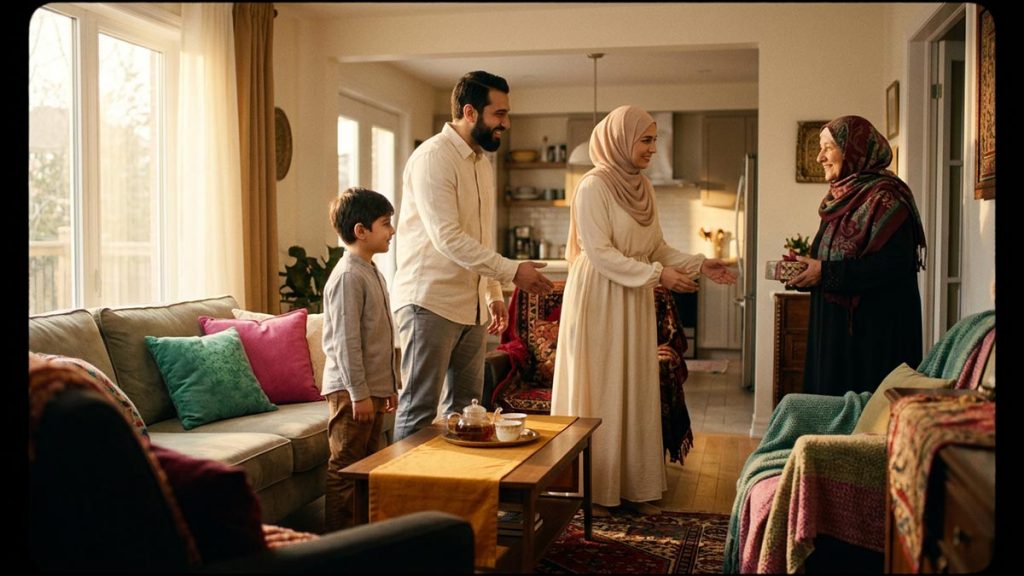
A greeting like this does not come from nowhere. It grows out of a deep culture of hospitality that runs through Arab life and that Islam raised almost to the level of worship. Making a guest feel welcome is not treated as mere politeness; it is seen as a duty and a mark of faith.
The Prophet Muhammad (pbuh) made this plain, teaching that whoever truly believes in Allah and the Last Day should honour their guest. Welcoming others generously, feeding them, and speaking to them kindly are all part of the art of greeting people and the generosity he modelled and encouraged in his community.
The Quran paints the same picture through the example of Prophet Ibrahim (pbuh). When strangers arrived at his home, he greeted them with peace and, without being asked, hurried to bring them a roasted calf — a scene of instant, open-hearted welcome preserved in Surah Adh-Dhariyat and echoed in Surah Hud. These two words are the everyday echo of that same spirit: treat the one who comes to you as family.
This is why hospitality became a point of honour across the Muslim world, with families vying to receive the traveller and the stranger, and seeing in every guest an occasion for reward rather than an inconvenience. A warm greeting at the threshold is the first and simplest act of that generosity — the promise, made in an instant, that the newcomer will be cared for.
The Prophet (pbuh) taught that whoever believes in Allah and the Last Day should honour his guest.
When Do People Say Ahlan wa Sahlan?

Although it is most at home in welcoming a guest, the phrase is used far more widely than a single moment at the door.
A host says it the instant a visitor arrives, and again as they step inside. It greets someone joining a gathering, a new colleague on their first day, or a caller at the start of a phone conversation. It is also used warmly as a reply — when someone thanks you, or asks a favour, answering with these words is a graceful way of saying “you are most welcome, it is my pleasure.”
Today the greeting reaches far beyond the home, too. It welcomes travellers arriving at an airport, customers stepping into a shop, and readers at the top of a message or a letter. Wherever it appears, it carries the same quiet promise it always has — that whoever has come is wanted, and will be treated with warmth.
In each case the greeting does the same gentle work that the Prophet praised in greeting: it lowers barriers and tells the other person they are wanted — much as a kind word to a neighbour opens a door. That is why it so often travels alongside the Islamic greeting of peace, rooted in As-Salam, the two together wrapping a newcomer in both peace and belonging.
The same two words welcome a guest at the door, a caller on the phone, and a stranger made to feel at home.
5 Everyday Forms of Ahlan wa Sahlan

Like many beloved phrases, this greeting comes in several forms, from the quick and casual to the deeply heartfelt. Here are five you are most likely to hear:
- Ahlan. The short, everyday version — a friendly “hi” or “welcome,” used casually among friends.
- Ahlan wa Sahlan. The full, warm welcome, offered to guests and newcomers with genuine feeling.
- Ahlan bik / Ahlan biki. “Welcome to you” — addressed to a man (bik) or a woman (biki), and often used as the reply to someone who has just welcomed you.
- Ya Ahlan wa Sahlan. An even warmer, more emphatic welcome, the ya adding a burst of delight at seeing the person.
- Ahlan wa Sahlan wa Marhaban. Welcomes stacked together for extra warmth, drawing in Marhaban when a host is especially pleased to receive a guest.
Whichever form is used, the heart of the greeting never changes. Each one tells the newcomer the same thing: you are among family, and we are glad you came.
From a quick Ahlan to a heartfelt Ya Ahlan wa Sahlan, the welcome only grows warmer.
Replying to Ahlan wa Sahlan and Related Greetings
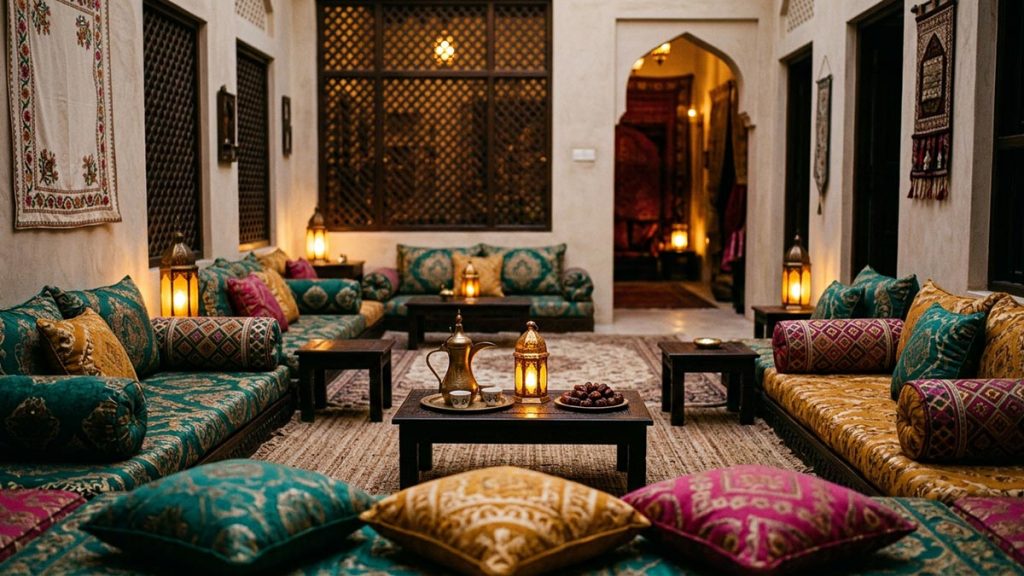
If someone welcomes you with these words, the warm and simple reply is Ahlan bik (to a man) or Ahlan biki (to a woman) — “welcome to you too.” In many places you will also hear Ya hala, another affectionate way of returning the welcome.
The greeting also sits within a wider family of Arabic and Islamic welcomes. Marhaban, “hello” or “welcome,” is a close cousin, often used in the same breath. And no Muslim greeting is complete without As-Salamu Alaikum, “peace be upon you,” answered with Wa Alaikum Assalam, “and upon you be peace.” While Ahlan wa Sahlan welcomes you into a place, the greeting of peace welcomes you with a prayer.
Together, these phrases form the gentle choreography of an Arab-Muslim welcome, the same spirit of companionship the faith encourages: peace offered first, then the open-armed assurance that you have arrived among family.
Why This Simple Greeting Matters

It is easy to pass over a greeting as a small thing. Yet Islam places enormous value on the way believers meet one another, because a warm word can soften a heart in an instant.
To welcome someone sincerely is to practise a whole cluster of Islamic virtues at once: kindness, generosity, good speech, and care for others. It reflects the righteous speech the Quran praises and the brotherhood the Prophet (pbuh) built between believers. A guest who is met with genuine warmth carries that feeling long after they leave.
There is peace in it, too. The greeting of peace traces back to As-Salam, the Source of Peace, one of Allah’s beautiful names, and every warm welcome shares in that same gift — making the world a little safer and gentler for the person in front of you.
So while Ahlan wa Sahlan may be only two words, it carries a whole way of treating people: as family, with ease, and with an open heart. To say it, and to mean it, is to keep alive one of the most beautiful habits of Arab and Islamic life — the art of making others feel truly at home.
A single warm greeting can make a stranger feel at home and turn a house into a place of peace.
If this warm little phrase made you smile or taught you something new, come and learn with us. Follow It’s About Islam on YouTube, TikTok and Pinterest for daily reminders, Quran reflections and the beautiful meanings behind the words that bring people closer together.
It means “welcome.” Literally, it tells a guest that they have arrived among family (ahl) and on easy, smooth ground (sahl) — in other words, make yourself at home and be at ease.
It is an Arabic greeting used across the Arab world by people of all faiths, not a religious formula. But it grows out of a culture of hospitality that Islam strongly encourages, teaching that honouring your guest is a sign of faith.
The warm reply is Ahlan bik (to a man) or Ahlan biki (to a woman), meaning “welcome to you too.” You may also hear Ya hala, another friendly way of returning the welcome.
Both are warm Arabic greetings. Marhaban is closer to “hello” or “welcome,” while Ahlan wa Sahlan is a fuller, cosier welcome that tells the guest they are among family and should feel at home. The two are often said together.
It comes from two classical Arabic words: ahl, meaning family or people, and sahl, meaning a plain or easy ground. The full idea is “you have come to family and arrived somewhere easy,” shortened over time to today’s warm greeting.