
What Does Radiyallahu Anha Mean?
Radiyallahu Anha is the honorific Muslims add after the name of a female Companion of the Prophet (pbuh) — women like Khadijah, Aisha, and Fatimah. It means “may Allah be pleased with her,” and it carries centuries of love and respect. But what does the phrase mean, and when is it said? This guide explains.
A Prayer of Pleasure and Honour

At its simplest, Radiyallahu Anha (رَضِيَ اللَّهُ عَنْهَا) means “may Allah be pleased with her.” It is said after the name of a female Companion, one of the blessed women who lived alongside the Prophet (pbuh) and believed in his message.
It is more than a title; it is a prayer that echoes a promise. The Quran itself speaks of Allah being pleased with the early believers, so when a Muslim says these words, they are asking for — and affirming — the pleasure of Allah upon a woman He honoured.
More than a title, these words ask for the pleasure of Allah upon a blessed woman.
Breaking Down Radiyallahu Anha
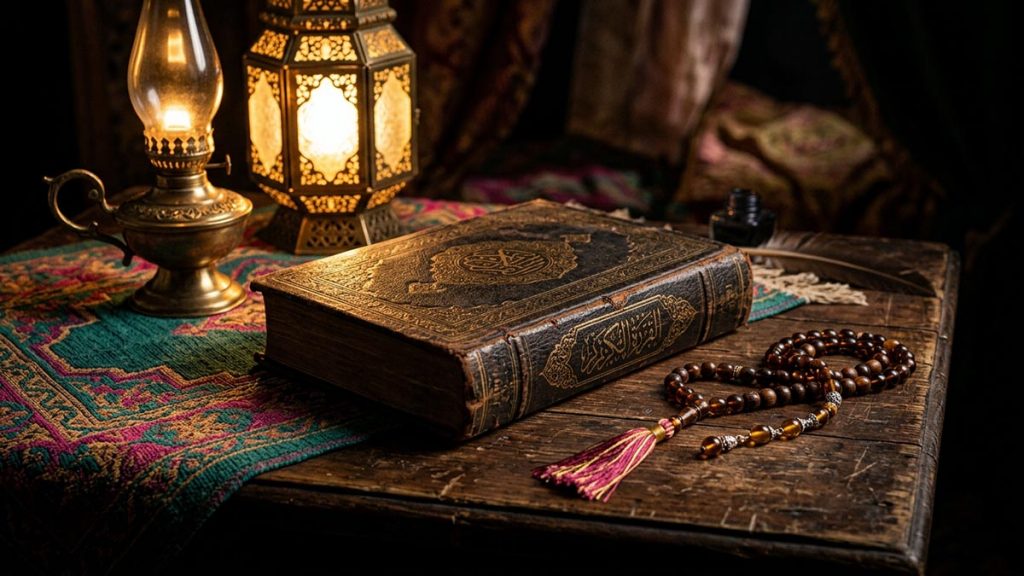
To feel the full weight of the phrase, it helps to unpack it word by word:
- Radiya — رَضِيَ — “is pleased” or “may He be pleased,” from rida, Allah’s good pleasure — among the greatest of all blessings.
- Allahu — اللَّهُ — “Allah,” the One whose pleasure is sought.
- Anha — عَنْهَا — “with her,” directing the blessing to the woman named.
Together the words ask that Allah’s pleasure rest upon a female Companion — a prayer of the highest honour, in the spirit of the brotherhood of the first believers.
Radiya Allahu means may Allah be pleased, anha means with her.
Why the Companions Are Honoured This Way
The honorific reflects the special rank of the Sahaba, the men and women who saw the Prophet (pbuh), believed in him, and carried Islam to the world. The Quran describes Allah as being pleased with the foremost of them, and they with Him.
So when a Muslim names a Companion, they add this prayer as both a request and a recognition — asking for Allah’s pleasure upon her, and honouring the sacrifices she made. The women among them, from the Prophet’s wives to the believers who endured the early trials and the hijrah, hold a treasured place.
The Quran says Allah is pleased with the first believers and they with Him.
When Do Muslims Say Radiyallahu Anha?
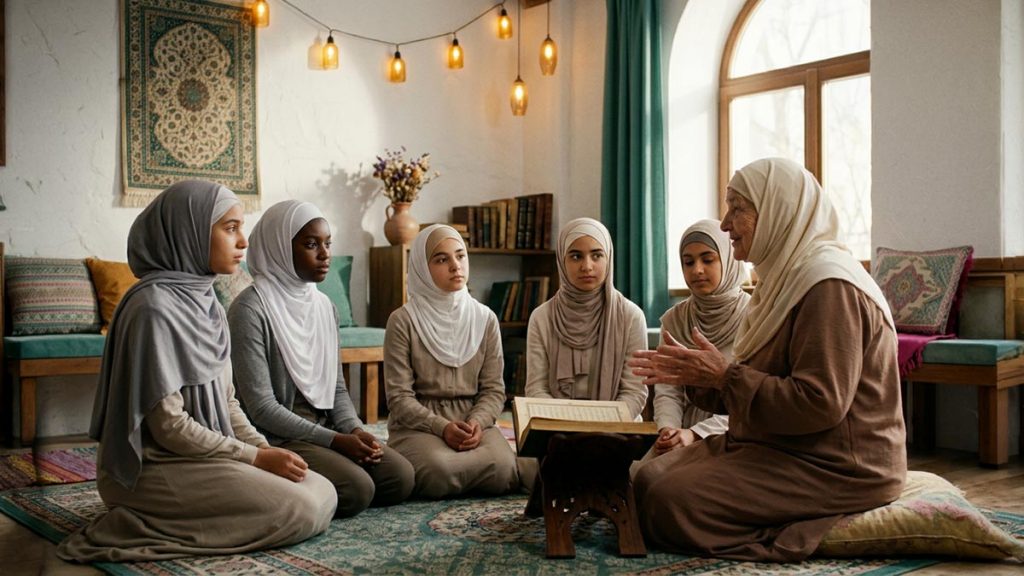
The phrase is said after the name of any female Companion of the Prophet (pbuh). When her name appears in a lesson, a book, a hadith, or a conversation, a believer adds this blessing out of love and respect.
It is the feminine form of the honorific: radiyallahu anha for one woman, while a man receives radiyallahu anhu and a group radiyallahu anhum. Wherever a blessed woman of the first generation is remembered, this is the prayer that honours her.
Said after Khadijah, Aisha, *Fatimah, and the believing women*.
5 Beloved Women Muslims Honour with Radiyallahu Anha
The honorific follows the names of the great women of early Islam. Here are five:
- Khadijah (radiyallahu anha). The Prophet’s (pbuh) first wife and the first to believe in him, who supported him with her wealth and her heart.
- Aisha (radiyallahu anha). A wife of the Prophet (pbuh) and a great scholar, who taught much of what Muslims know of his life.
- Fatimah (radiyallahu anha). His beloved daughter, married to Ali (RA), honoured as a leader among the women of Paradise.
- Asma (radiyallahu anha). The brave daughter of Abu Bakr, who aided the Prophet (pbuh) during the hijrah.
- Sumayyah (radiyallahu anha). Among the first to give her life for her faith, remembered for her steadfast patience.
Each of these women, whenever named, is met with a prayer for Allah’s pleasure — a small honour for a great faith.
To seek Allah’s pleasure upon them is to hope for that same pleasure oneself.
Radiyallahu Anha and Related Honorifics

It is the feminine form of Radiyallahu Anhu, said for a male Companion, and Radiyallahu Anhum, said for several together. The three differ only in whether one honours a woman, a man, or a group.
For a righteous woman who came after the Companions, Muslims instead say Rahimahullah in its feminine form, asking Allah’s mercy upon her.
Why This Honorific Matters
It would be easy to name a Companion and pass on. Radiyallahu Anha stops a believer to send a prayer for Allah’s pleasure upon her instead, keeping love for the first generation alive in everyday speech.
In honouring these women, Muslims remember that Islam was carried by mothers, wives, scholars, and martyrs as much as by men. To ask Allah’s pleasure upon them is to hope for the same pleasure for oneself, by following the faith they preserved.
If your love for the Companions grew as you read this, come and learn with us. Follow It’s About Islam on YouTube, TikTok and Facebook for daily reminders, Quran reflections and the beautiful meanings behind the phrases every Muslim knows by heart.
It means “may Allah be pleased with her.” Muslims say it after the name of a female Companion of the Prophet (pbuh), asking for and affirming Allah’s good pleasure upon her.
For the female Companions of the Prophet (pbuh) — women such as Khadijah, Aisha, and Fatimah — who saw him, believed in him, and helped carry Islam.
They differ only in who is honoured: anha for a single woman, anhu for a single man, and anhum for a group of Companions.
It is used specifically for female Companions of the Prophet (pbuh). For righteous women of later generations, Muslims usually say rahimahallah, “may Allah have mercy on her.”
Yes, in spirit. The Quran speaks of Allah being pleased with the first believers and they with Him, and this honorific grows directly from that promise of divine pleasure.