
What Does Rabbi Zidni Ilma Mean?
Rabbi Zidni Ilma is a short but powerful supplication from the Quran — a prayer asking Allah to increase you in knowledge. Students recite it before study, teachers before they teach, and seekers whenever they open a book. But what does this phrase actually mean, where does it come from, and why does Islam place such value on it? This guide explains.
A Prayer to Grow in Knowledge

The phrase Rabbi Zidni Ilma (رَبِّ زِدْنِي عِلْمًا) means “My Lord, increase me in knowledge.” It is a plea to Allah, the source of all knowing, to grant the one praying a deeper and truer understanding.
It is a striking prayer because of what it asks for. Of all the things a person could beg from God, this du’a asks for more knowledge — a sign of how highly Islam prizes learning as a path drawing the believer closer to their Creator.
Of all things to ask God for, this dua asks for more knowledge — a rare and beautiful plea.
Breaking Down Rabbi Zidni Ilma
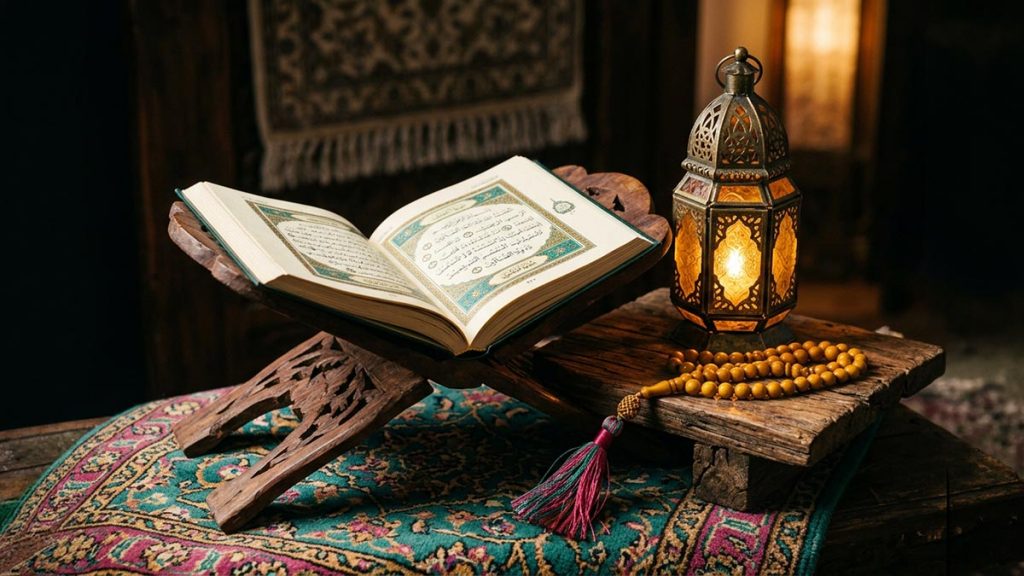
To feel the full weight of the phrase, it helps to unpack it word by word:
- Rabbi — رَبِّ — “My Lord,” an intimate call on Allah as the One who nurtures and sustains.
- Zidni — زِدْنِي — “increase me” or “grant me more,” a plea for growth.
- Ilma — عِلْمًا — “in knowledge,” both sacred understanding and beneficial learning of every kind.
Together the words ask Allah for something rare and beautiful: not wealth or ease, but an ever-growing knowledge — a supplication at the heart of education in Islam.
Rabbi calls on my Lord, zidni ilma asks Him to increase me in knowledge.
A Command Wrapped in a Prayer
This du’a is a verse of the Quran, found in Surah Taha. In it, Allah instructs the Prophet Muhammad (pbuh) himself to say “My Lord, increase me in knowledge” — the only thing in the entire Quran that Allah tells him to ask for more of.
That detail is remarkable. Even the Messenger of Allah, taught directly by revelation, was told to keep asking for more knowledge. It shows that no believer ever outgrows the need to learn, and that seeking knowledge is a lifelong act of worship before Al-Alim, the All-Knowing.
Allah told even His Prophet (pbuh) to say My Lord, increase me in knowledge — the only thing he was told to seek more of.
When Do Muslims Say Rabbi Zidni Ilma?

The prayer belongs to every moment of learning. Students say it before an exam or a lesson, readers before opening a book, and worshippers before studying the Quran, asking Allah to open their understanding.
Many make it a daily habit, part of their morning remembrance, so that the whole day’s learning is placed under Allah’s help. Whenever the mind reaches for understanding, this is the du’a that asks the One who knows all things to grant it, in the spirit of success.
Whispered before a lesson, an exam, *or opening the Quran*.
5 Powerful Reasons to Say Rabbi Zidni Ilma

Why do Muslims treasure this small prayer? Here are five reasons:
- It comes straight from the Quran. These are Allah’s own words, taught to the Prophet (pbuh) himself in Surah Taha.
- It honours knowledge as worship. Asking to grow in learning turns study into an act of devotion, not just effort.
- It keeps the heart humble. To ask for more knowledge is to admit how little we know before Al-Alim, the All-Knowing.
- It invites Allah’s help. The believer does not rely on their mind alone but asks the source of all knowing to open their understanding.
- It is short and always ready. Three words, easy to remember, that a student or seeker can whisper before any lesson.
For so brief a prayer, it carries a whole attitude to learning — humble, hopeful, and always reaching for more.
No one outgrows the need to learn before Al-Alim, the All-Knowing.
Rabbi Zidni Ilma and Related Supplications
It stands beside the beloved Quranic du’a Rabbana Atina fid-Dunya Hasanah, “Our Lord, give us good in this world” — both opening with a tender call on Allah as Rabb, our Lord.
And whenever a believer admires knowledge or blessing in another, they add Allahumma Barik, “O Allah, bless” — turning admiration into a prayer.
Why This Dua Matters

In a faith whose very first revealed word was “Read,” a prayer for knowledge sits close to the heart of Islam. Rabbi Zidni Ilma keeps that spirit alive, reminding the believer that learning is a gift from Allah and a form of drawing near to Him.
To make it a habit is to stay humble and curious for a lifetime. It turns every book, lesson, and question into worship — and keeps the seeker forever leaning on Al-Alim, the One who taught humankind what it did not know.
If this deepened your love for the words you already say every day, come and learn with us. Follow It’s About Islam on YouTube, Instagram and Threads for daily reminders, Quran reflections and the beautiful meanings behind the phrases every Muslim knows by heart.
It means “My Lord, increase me in knowledge.” It is a short supplication asking Allah, the source of all knowing, to grant a deeper and truer understanding.
Yes. It is part of verse 114 of Surah Taha, where Allah instructs the Prophet Muhammad (pbuh) to say “My Lord, increase me in knowledge” — the only thing in the Quran he is told to ask more of.
Before studying, taking an exam, reading, or learning the Quran — and as part of daily remembrance. Muslims say it whenever they want Allah’s help to understand.
Because Islam holds knowledge in the highest regard — its first revealed word was “Read.” A prayer asking Allah to increase one’s knowledge captures that spirit and makes learning an act of worship.
Ilm covers both sacred knowledge — of Allah, the Quran, and the faith — and beneficial worldly learning. The du’a asks Allah to increase the believer in all knowledge that draws them closer to Him and benefits others.