
What Does Allah Yarhamha Mean?
Allah Yarhamha is the tender prayer a Muslim breathes at the mention of a woman who has passed away — a plea that Allah have mercy on her. It is heard whenever a departed mother, grandmother, or friend is remembered, spoken softly with love. But what does this phrase mean, and when is it said? This guide explains.
A Prayer of Mercy for One Who Has Passed
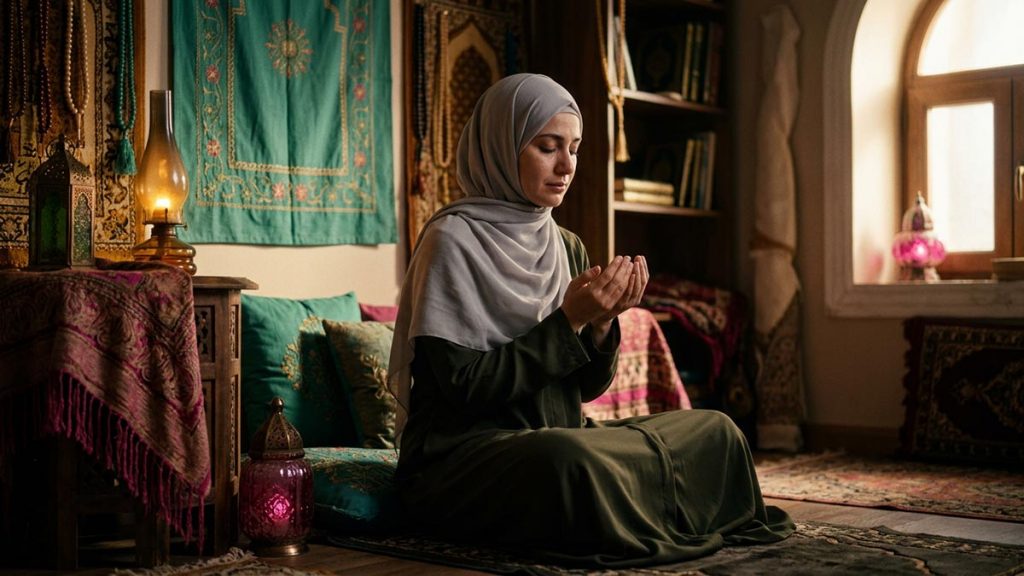
At its simplest, Allah Yarhamha (اللَّهُ يَرْحَمُهَا) means “may Allah have mercy on her.” It is said after the name of a woman who has died, asking Allah to shower His mercy upon her in the next life.
It is a small but tender prayer. When a believer speaks of a woman who has passed, these words turn the memory into a gift — a plea to the Most Merciful on behalf of one who can no longer pray for herself.
When she can no longer pray for herself, the living ask mercy for her — a gift beyond price.
Breaking Down Allah Yarhamha
To feel the full weight of the phrase, it helps to unpack it word by word:
- Allah — اللَّه — the source of all mercy, Ar-Raheem, the One being asked.
- Yarhamu — يَرْحَمُ — “has mercy” or “may He have mercy,” from rahmah, Allah’s vast tenderness.
- ha — ـهَا — “on her,” directing the prayer to the woman who has passed.
Together the words send Allah’s mercy upon one who has died — a prayer reaching beyond the grave, drawn from the boundless Allah’s Mercy the Quran describes.
Allah yarhamu means may Allah have mercy, ha means on her.
A Gift the Living Give the Dead
The phrase rests on a beautiful teaching: that the dead are helped by the prayers of the living. When a Muslim says Allah yarhamha, they offer a gift no wealth could buy — a plea for mercy to Allah on behalf of one who has moved on.
It is a warm, everyday prayer, said naturally whenever a departed woman is mentioned. It is especially tender when said of a mother or grandmother, honouring the love Islam gives to parents, and keeping her memory alive with a plea for mercy.
The dead are helped by the prayers of the living — so this prayer reaches beyond the grave.
When Do Muslims Say Allah Yarhamha?
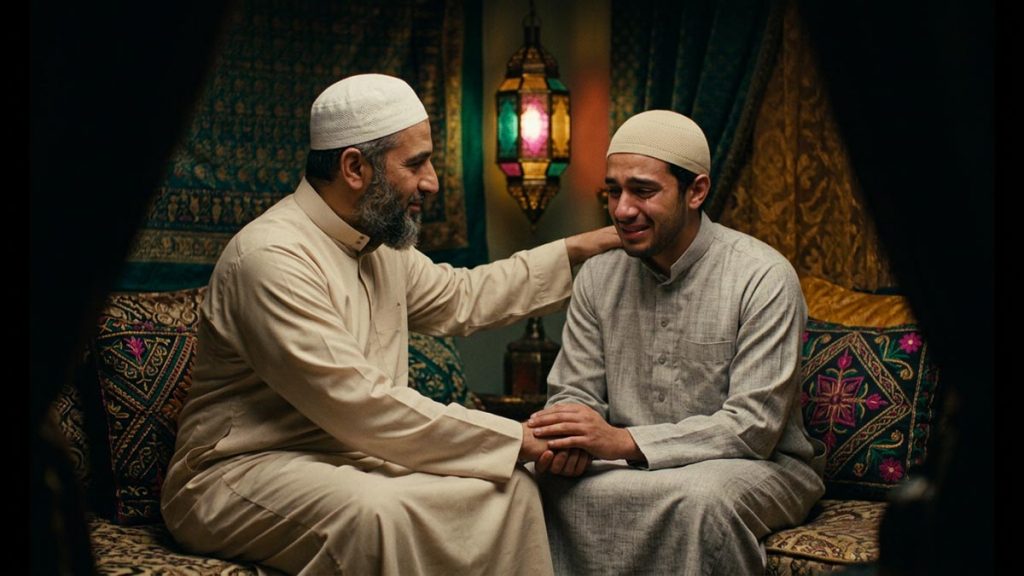
The phrase is said whenever a woman who has died is mentioned — a mother, a grandmother, a sister, a friend, or a teacher remembered in conversation. It follows her name softly, like a blessing.
It is the everyday, spoken form of a prayer of mercy for the deceased; for a man it becomes Allah yarhamuh. Wherever a departed woman is brought to mind, this is the gentle prayer that honours her.
Said for a mother, a grandmother, *or any departed woman*.
5 Gentle Moments Muslims Say Allah Yarhamha
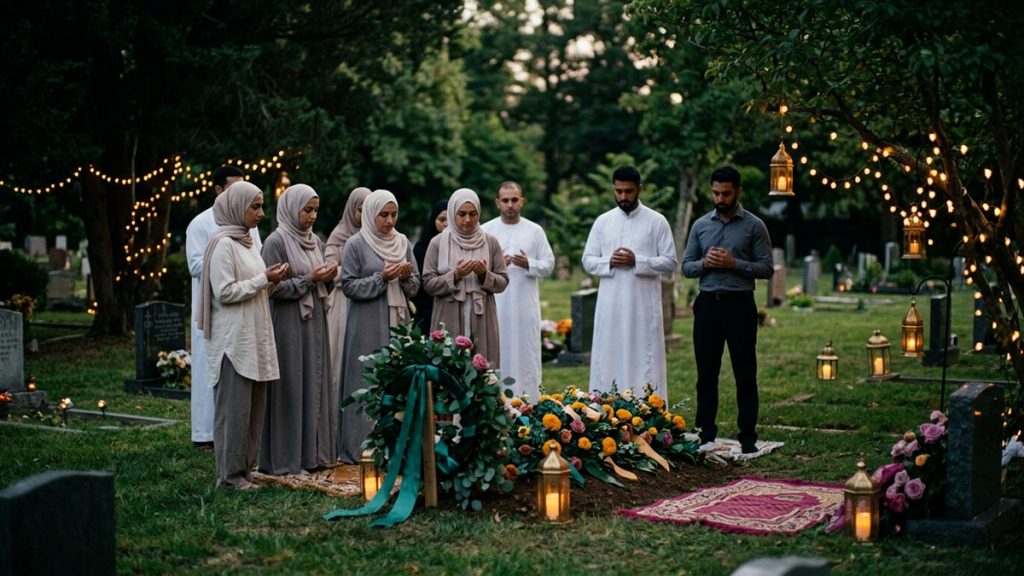
The prayer is offered whenever a departed woman is remembered. Here are five moments:
- Remembering a mother or grandmother. Speaking of a departed mother, a believer adds this prayer of mercy with deep love.
- Mentioning a departed sister or aunt. When a beloved relative who has passed comes up, the words follow her name naturally.
- Honouring a teacher. A departed teacher who shaped one’s education is remembered with mercy.
- At the graveside or funeral. Standing where the departed rests, believers ask Allah’s mercy upon her.
- Any time her name is spoken. Whenever a departed woman is mentioned at all, this gentle prayer honours her, in the spirit of Allah’s mercy.
Each time her name is spoken, it is met with a prayer for mercy — a gift the living can still give the dead.
Ask Allah’s mercy on them and hope to be remembered the same way.
Allah Yarhamha and Related Phrases

It is the feminine form, paired with Allah Yarhamuh, “may Allah have mercy on him,” said of a man who has passed. To the grieving family, Muslims also offer A’zamallahu Ajrak, “may Allah magnify your reward.”
It echoes the response to loss itself, Inna Lillahi wa Inna Ilayhi Raji’un — together, the gentle language of an Islamic farewell.
Why This Prayer Matters

It is easy to speak of someone who has died and feel there is nothing left to do. Allah Yarhamha answers that helplessness, giving the living a way to keep loving the dead — through prayer.
In doing so it keeps a departed loved one close. To ask Allah’s mercy on her is to honour the place she held in our lives, and to trust that mercy, freely, to the Most Merciful.
If you found comfort or learning in this, we are here to help you explore more. Follow It’s About Islam on YouTube, TikTok and Pinterest for daily reminders, Quran reflections and the beautiful meanings behind the phrases every Muslim knows by heart.
It means “may Allah have mercy on her.” Muslims say it after the name of a woman who has passed away, asking Allah to shower His mercy upon her.
Whenever a deceased woman is mentioned — a mother, grandmother, sister, or friend — and at the graveside or funeral. It is a gentle, everyday prayer of mercy for the departed.
For a man who has passed, it becomes Allah yarhamuh, “may Allah have mercy on him.” The prayer is the same; only the ending changes.
Both ask Allah’s mercy on a deceased woman. Allah yarhamha is the everyday, spoken form heard in conversation; rahimahallah is the more classical honorific, often used for scholars and the righteous.
The exact phrase is a supplication from everyday practice rather than a verse, but it draws on the Quran’s constant theme of Allah’s boundless mercy and forgiveness.