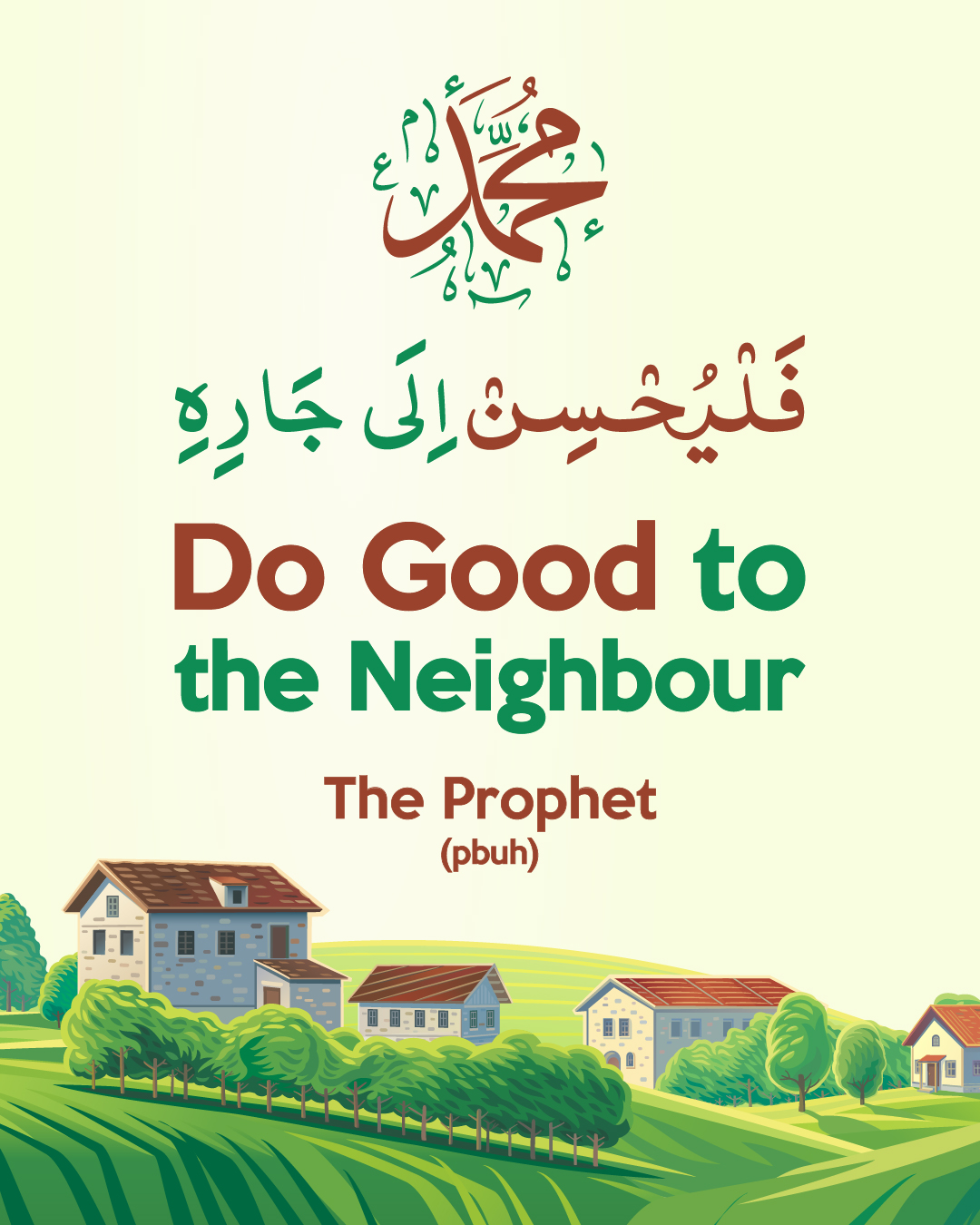
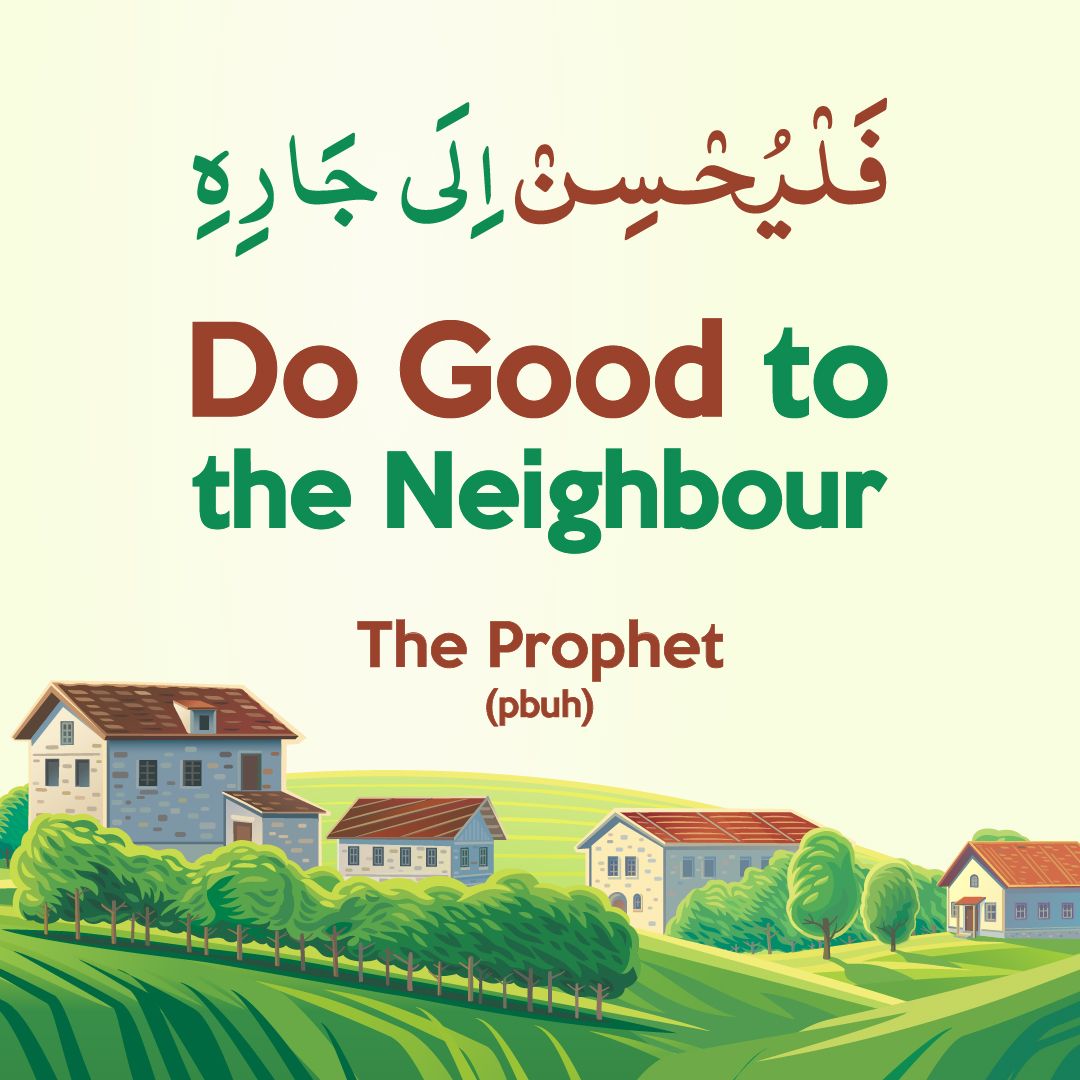
The Prophet (pbuh) said that whoever believes in Allah and the Last Day should do good to their neighbour (Muslim 48). The Quran commands kindness to both near and far neighbours (Quran 4:36). Islam treats the rights of neighbours as a direct expression of faith.
No. The Prophet (pbuh) said ‘the neighbour’ without specifying religion. Scholars confirm that the rights of neighbours in Islam extend to people of all faiths and backgrounds.
The rights include avoiding harm, being kind, sharing food, visiting when sick, offering help when needed, and maintaining good relations. The Prophet (pbuh) emphasised these so strongly that he said Jibril kept urging him about the neighbour’s rights.




The Prophet Said About Neighbours in Islam
مَنْ كَانَ يُؤْمِنُ بِاللَّهِ وَالْيَوْمِ الآخِرِ فَلْيُحْسِنْ إِلَى جَارِهِ وَمَنْ كَانَ يُؤْمِنُ بِاللَّهِ وَالْيَوْمِ الآخِرِ فَلْيُكْرِمْ ضَيْفَهُ وَمَنْ كَانَ يُؤْمِنُ بِاللَّهِ وَالْيَوْمِ الآخِرِ فَلْيَقُلْ خَيْرًا أَوْ لِيَسْكُتْ
“Whoever believes in Allah and the Last Day should do good to the neighbour. Whoever believes in Allah and the Last Day should honour his guest. Whoever believes in Allah and the Last Day should speak what is good or remain silent.”
This hadith ties three fundamental behaviours directly to faith: treating neighbours well, honouring guests, and speaking only what is good. The Prophet (pbuh) used the phrase “whoever believes in Allah and the Last Day” — making these actions markers of genuine belief, not optional courtesies. The treatment of neighbours in Islam is, by this standard, a test of faith.
Why the Prophet Linked Neighbours to Faith
The Prophet (pbuh) repeated the phrase “whoever believes in Allah and the Last Day” three times in this hadith, once for each instruction. This repetition is significant — it means that failing in any of these areas reflects a deficiency in faith, not just a lapse in manners. A person cannot claim full belief while neglecting their neighbours. The Prophet (pbuh) said in another narration that Jibril (peace be upon him) kept emphasising the rights of the neighbour until he thought the neighbour would be given a share in inheritance.
What makes the teaching about neighbours in Islam remarkable is its universality. The Prophet (pbuh) did not specify Muslim neighbours — he said “the neighbour.” Scholars confirm this includes neighbours of all faiths and backgrounds. A Muslim’s obligation to be kind, helpful, and considerate extends to everyone who lives near them. As Al-Wadud, the Most Loving, Allah wants believers to spread warmth and goodness in every direction, starting with those closest in proximity.
“Worship Allah and associate nothing with Him, and do good to parents and relatives, orphans, the needy, the near neighbour, the far neighbour, the companion at your side, the traveller, and those whom your right hands possess.”
This verse from Surah An-Nisa places the neighbour in a list that begins with parents and includes orphans, the needy, and travellers. Allah distinguishes between the “near neighbour” and the “far neighbour,” covering both those who live directly beside you and those in the wider community. This comprehensive instruction reinforces that caring for neighbours in Islam is not a cultural nicety — it is a Quranic command placed alongside the most fundamental obligations. As As-Salam, the Source of Peace, Allah commands believers to create peaceful, supportive environments wherever they live.
Speaking Good or Remaining Silent
The third instruction — speak what is good or remain silent — is a universal discipline that applies to every relationship, not just neighbours. The Prophet (pbuh) was teaching that words have consequences: they can build or destroy, heal or harm, unite or divide. A Muslim who controls their tongue protects their neighbours, their guests, their family, and their community from unnecessary pain. This single habit, if practised consistently, would eliminate most conflict between people.
For the believer, this hadith is a daily checkpoint. How did you treat your neighbour today? How did you speak to the people around you? Did your words add goodness to the world, or would silence have been better? Neighbours in Islam are not just people who live next door — they are a responsibility placed on every believer by the Prophet (pbuh) himself, and how you treat them is a direct reflection of how seriously you take your faith.
Follow our YouTube, TikTok and Facebook for more Islamic Quotes and Islamic teachings on community and kindness.
It means that before speaking, a Muslim should consider whether their words are truthful, beneficial, and kind. If they are not, silence is the better choice. This discipline protects relationships and prevents unnecessary harm.
In Quran 4:36, Allah commands believers to do good to the near neighbour and the far neighbour, placing this obligation alongside worship and kindness to parents.
Yes. The Prophet (pbuh) linked honouring guests to belief in Allah and the Last Day. Islam requires that guests are welcomed with hospitality, respect, and generosity.
Islam encourages patience and kindness even with difficult neighbours. The Prophet (pbuh) taught that enduring the harm of a bad neighbour with patience is itself an act of faith that Allah rewards.