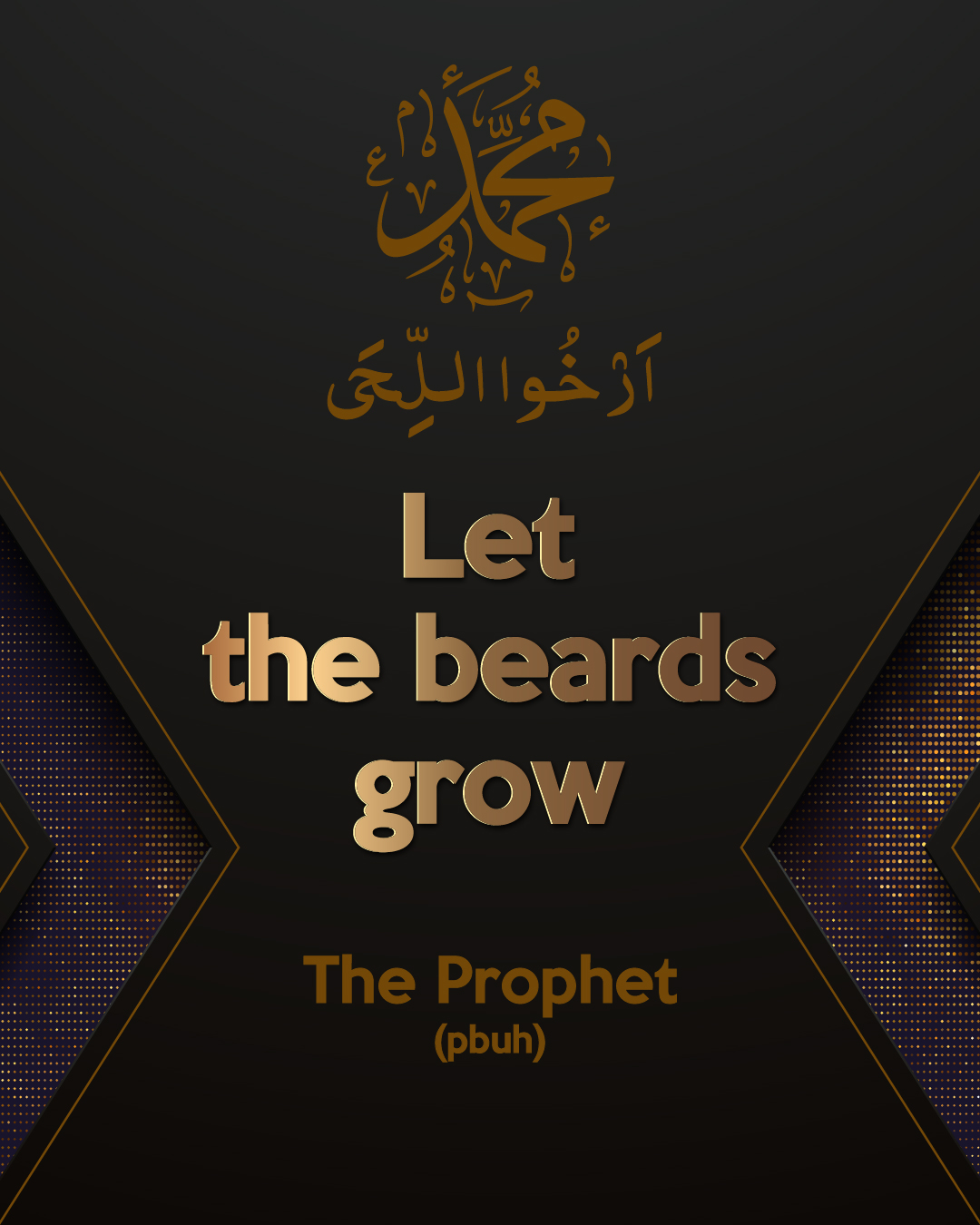
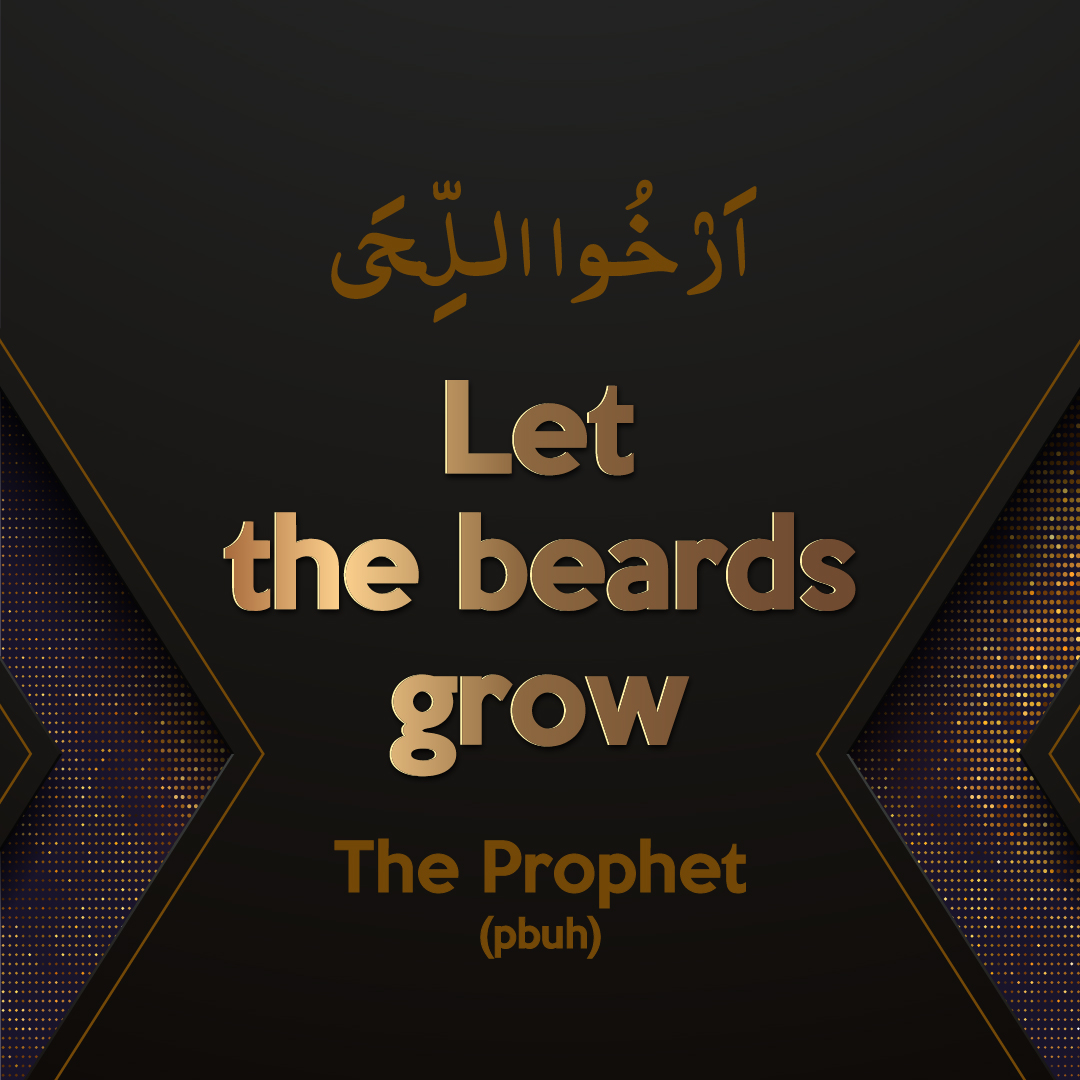
The majority of classical scholars consider growing the beard obligatory based on the Prophet’s direct command to let the beard grow (Muslim 260). Some scholars view it as a strongly emphasised sunnah. All agree it holds a significant place in Islamic practice.
The Prophet (pbuh) commanded trimming the moustache short so it does not cover the upper lip. This is done for cleanliness and hygiene. Some scholars recommend trimming it level with the lip, while others recommend cutting it shorter.
Scholars differ on this. Some permit trimming what exceeds a fist’s length based on the practice of certain companions. Others hold that the beard should not be trimmed at all based on the literal command to let it grow. The beard in Islam should not be shaved entirely.
The Prophet Said About the Beard in Islam
جُزُّوا الشَّوَارِبَ وَأَرْخُوا اللِّحَى خَالِفُوا الْمَجُوسَ
“Trim the moustache and let the beard grow. Be different from the Magians.”
This hadith gives Muslims two clear grooming instructions and one powerful reason. The Prophet (pbuh) commanded believers to trim the moustache, let the beard grow, and be distinct from the Magians. The ruling on the beard in Islam is rooted in following the sunnah, maintaining a Muslim identity, and honouring the natural form Allah created.
What the Prophet Commanded About the Beard and Moustache
The Prophet (pbuh) issued three instructions in a single sentence: trim, grow, and differentiate. Trimming the moustache is about cleanliness — keeping it short so it does not interfere with eating or drinking. Letting the beard grow is about preserving a visible sign of masculinity and faith. The beard in Islam is not a cultural accessory or a fashion choice; it is a practice rooted in prophetic tradition. Every prophet mentioned in Islamic sources — from Ibrahim to Musa to Muhammad (peace be upon them all) — is described as having worn a beard.
The third instruction — “be different from the Magians” — reveals a deeper principle. The Prophet (pbuh) consistently taught Muslims to maintain a distinct identity. The Magians, or Zoroastrians of that era, were known for growing their moustaches long and shaving their beards. The Prophet (pbuh) reversed this practice deliberately. As Al-Hakeem, the All-Wise, Allah guided His Messenger to establish grooming standards that preserve both hygiene and identity — two qualities that define the Muslim’s approach to personal appearance.
“Indeed, in the Messenger of Allah you have an excellent example for anyone whose hope is in Allah and the Last Day and who remembers Allah often.”
This verse from Surah Al-Ahzab establishes the principle behind following the Prophet’s grooming practice. He is described as an excellent example — and that example extends to how he looked, dressed, and presented himself. The beard in Islam is part of the Prophet’s personal sunnah, and those who grow it do so out of love and emulation of the best human being who ever lived. As Al-Khaliq, the Creator, Allah designed the male body to grow a beard naturally, and the Prophet (pbuh) taught that this natural form should be honoured rather than removed.
Why the Beard in Islam Is More Than Appearance
Scholars have differed on whether growing the beard is obligatory (wajib) or a strongly emphasised sunnah (sunnah mu’akkadah). The majority of classical scholars — including the four major schools of thought — consider it obligatory based on the Prophet’s direct command. Regardless of which position a Muslim follows, all scholars agree that the beard holds a significant place in Islamic practice. The beard in Islam is a visible expression of a man’s commitment to the sunnah, his connection to prophetic tradition, and his willingness to carry a Muslim identity in a world that often pressures conformity.
For the Muslim man, growing the beard is an act of obedience that goes beyond grooming. It is a daily, visible reminder of who he follows and what he stands for. The Prophet (pbuh) did not give this instruction to burden his ummah — he gave it to distinguish them with dignity. The beard in Islam connects a believer to a chain of prophets who all shared this practice, and wearing it with pride is one of the simplest ways to honour that legacy.
Follow our YouTube, Instagram and Threads for more Muslim Quotes and teachings on the beard in Islam and the sunnah.
The Magians (Zoroastrians) were known for growing long moustaches and shaving beards. The Prophet (pbuh) reversed this to maintain a distinct Muslim identity — a principle he applied across grooming, dress, and worship.
Islamic sources describe every prophet as having a beard. It is considered part of the fitrah — the natural disposition that Allah created in men. Growing the beard in Islam is following the way of all the prophets.
Scholars who consider the beard obligatory view shaving it as sinful. Those who consider it a strongly emphasised sunnah view shaving it as disliked (makruh). All agree that growing the beard is closer to the sunnah and more beloved to Allah.
The Prophet (pbuh) commanded letting the beard grow without specifying a maximum length. Some companions trimmed what exceeded a fist’s length, which some scholars accept as permissible. The key principle is to grow the beard and not shave it.