
Talbiyah
5 Things to Know About the Call of the Pilgrim
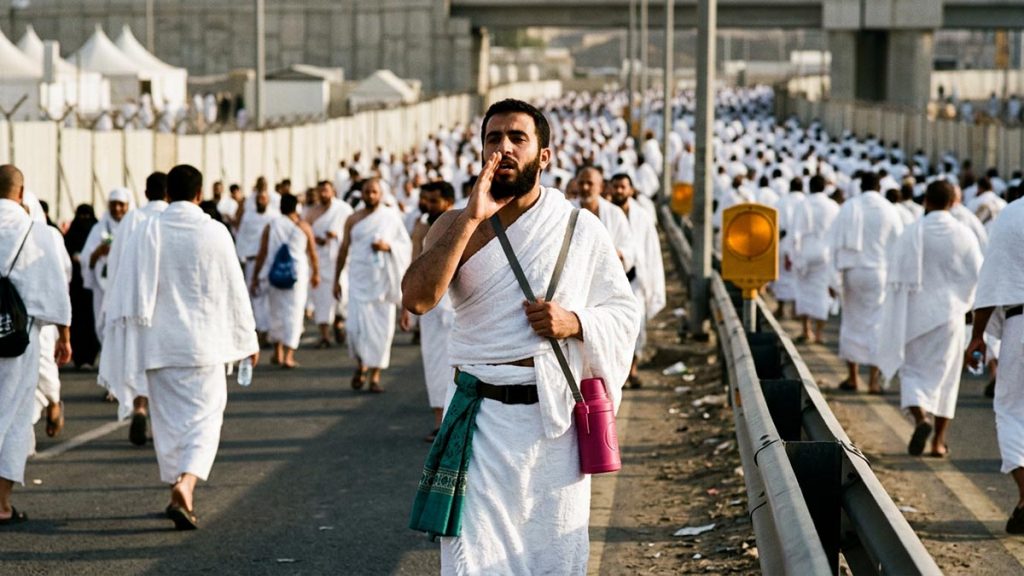
The Talbiyah is the beautiful proclamation of the pilgrim, the heart cry of Hajj and Umrah, recited from the moment of entering ihram and repeated aloud throughout the sacred journey. With its words, the pilgrim answers the call of Allah, declaring that they have come to His sacred house at His invitation, affirming His oneness and proclaiming that all praise, blessing and sovereignty belong to Him alone. This beautiful call fills the journey of pilgrimage with the remembrance of Allah from its very beginning. It is among the first acts of the pilgrim and accompanies them onward, setting the tone of devotion for everything that follows.
لَبَّيْكَ اللَّهُمَّ لَبَّيْكَ، لَبَّيْكَ لَا شَرِيكَ لَكَ لَبَّيْكَ، إِنَّ الْحَمْدَ وَالنِّعْمَةَ لَكَ وَالْمُلْكَ، لَا شَرِيكَ لَكَ
Labbayka-llāhumma labbayk, labbayka lā sharīka laka labbayk, innal-hamda wan-ni‘mata laka wal-mulk, lā sharīka lak.
“Here I am, O Allah, here I am. Here I am, You have no partner, here I am. Indeed all praise, grace and sovereignty belong to You; You have no partner.”
When the Prophet Muhammad (pbuh) and his companions set out for Hajj, they raised their voices with the Talbiyah, and the valleys echoed with their proclamation of the oneness of Allah. This beautiful call has been the anthem of the pilgrims ever since, uniting believers of every land and tongue in a single declaration of devotion. The Talbiyah is more than words recited; it is the response of the believer to the call of Allah, answered with the whole heart. The one who utters these words is not merely reciting a formula, but declaring that they have heard their Lord and come running, ready to surrender everything they own for His sake during the days of the sacred journey.
This guide explains the Talbiyah, its meaning, and five things to know about the call of the pilgrim, so that the believer may understand the proclamation they recite in Hajj and Umrah, raising their voice in answer to Allah, affirming His oneness, and filling the journey of pilgrimage with a remembrance that draws the heart ever nearer to its Lord.
Answering the Call of Allah
The Talbiyah opens with the word labbayk, meaning here I am at Your service, repeated to express the eager and complete response of the pilgrim to the call of Allah. When Allah commanded Ibrahim to call the people to the pilgrimage, the believers across all generations have answered that call, and the pilgrim who recites the Talbiyah today joins that timeless response. With these words, the pilgrim declares that they have come to the sacred house in answer to Allah, devoting themselves wholly to Him. The response is immediate and total, as though the pilgrim says with every fibre of their being that they have heard the call and rushed to obey, leaving behind the comforts and the familiar safety of home purely for the love of their Lord.

The Talbiyah then affirms the oneness of Allah, declaring that He has no partner, and proclaims that all praise, all blessing and all sovereignty belong to Him alone. In a few beautiful words, the pilgrim gathers the essence of faith: the response to Allah, the affirmation of His oneness, and the acknowledgement that everything good comes from Him. With each repetition, the pilgrim renews their devotion, answering the call of Allah anew and filling the heart with His remembrance. The words are short and easily memorised, yet they carry the weight of the whole pilgrimage, summarising in a single breath why the pilgrim has come and to whom they have come.
The Practice of the Prophet
When the Prophet (pbuh) entered ihram for the pilgrimage, he raised his voice with the Talbiyah, and his companions did the same, so that the air was filled with the proclamation of the oneness of Allah. He instructed that the men raise their voices with the Talbiyah, while the women recite it softly, and he taught that the pilgrim should repeat it abundantly throughout the journey. This shows that it is meant to be a constant and audible remembrance during the pilgrimage. Far from being recited once and forgotten, the call is meant to accompany the pilgrim through every stage of the journey, a refrain returned to again and again until the rites are complete.
The Prophet (pbuh) also taught of the great blessing of the Talbiyah, that when a pilgrim raises their voice with it, every stone, tree and clod of earth to their right and left joins them in the proclamation until the ends of the earth. This beautiful teaching shows that the whole of creation answers alongside the pilgrim, magnifying the reward of this remembrance. The believer who recites this proclamation joins not only the pilgrims of every age, but the very earth itself in glorifying Allah. There is great comfort in this, for the pilgrim who feels alone or weary is reminded that the whole of creation echoes their call, lending its voice to the praise of the One they have come to worship.
Everything to the right and the left joins the proclamation
When the Talbiyah Is Recited
The pilgrim begins the Talbiyah upon entering the state of ihram, after making the intention for Hajj or Umrah, and continues to repeat it throughout the journey. It is recited while travelling, upon meeting others, at the changing of states, after prayers, and in moments of remembrance, filling the days of pilgrimage with its proclamation. For the one performing Umrah, the Talbiyah continues until reaching the Kaaba to begin the tawaf; for the one on Hajj, it continues until the stoning of the pillar on the day of Eid. Knowing when to begin and when to stop helps the pilgrim observe this rite correctly, raising the call from the moment of intention and falling silent only once the appointed point of the journey has been reached.
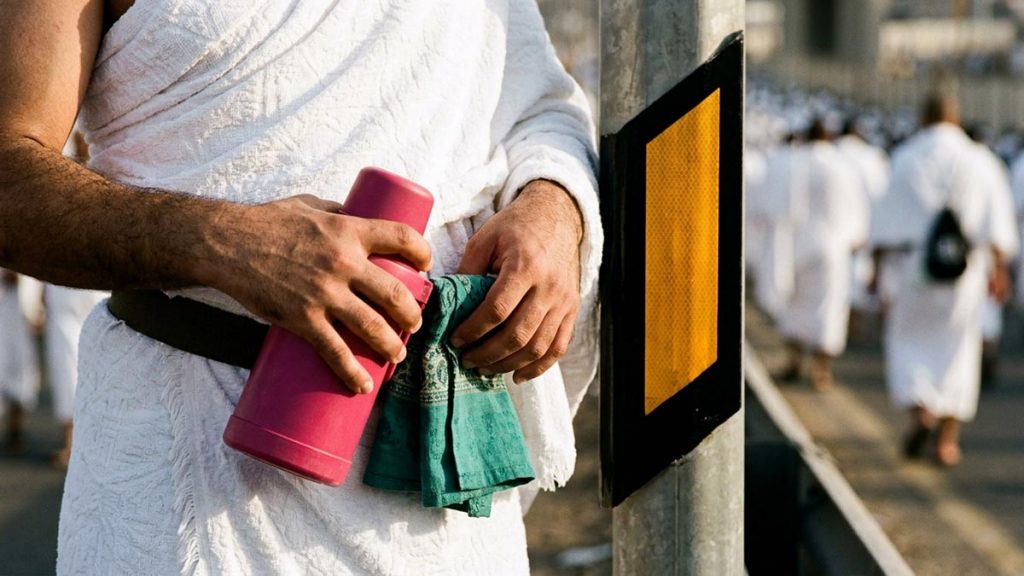
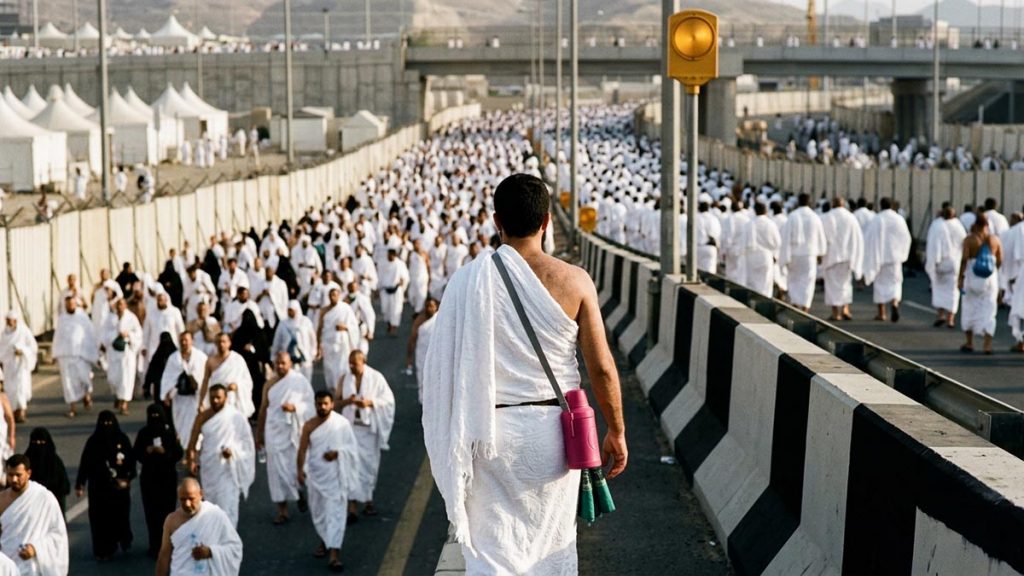
Raising the voice with the Talbiyah is part of its beauty, for it makes the pilgrim a herald of the oneness of Allah, declaring it openly for all to hear. The unity of the pilgrims, all reciting the same words in the same state of ihram, is a powerful sight, as believers of every nation and language are joined in a single call to Allah. The Talbiyah thus binds the community of pilgrims together in devotion, each answering the call of Allah with one voice. Rich and poor, ruler and labourer, of every colour and nation, the pilgrims stand in the same simple garments reciting the same words, a living picture of the equality of all people before their Creator, stripped of every worldly rank and title.
إِنَّ الْحَمْدَ وَالنِّعْمَةَ لَكَ
Innal-hamda wan-ni‘mata lak
Indeed all praise and grace belong to You
Five Things to Know About the Call of the Pilgrim
The Talbiyah is the anthem of the pilgrim throughout Hajj and Umrah. These five things help the believer understand the call and recite it in the way the Prophet (pbuh) loved throughout the long sacred journey.
- It answers the call of Allah, with labbayk meaning here I am at Your service.
- It affirms the oneness of Allah, declaring that He has no partner and all praise belongs to Him.
- It begins at ihram, recited from the intention and repeated throughout the journey.
- Men raise their voices with it, while women recite it softly, following the Sunnah.
- All creation joins the pilgrim, as stones, trees and earth proclaim it to the ends of the earth.
لَبَّيْكَ لَا شَرِيكَ لَكَ لَبَّيْكَ
Labbayka la sharika laka labbayk
You have no partner here I am
The Anthem of the Pilgrims
The Talbiyah is the beautiful call of the pilgrim, answering Allah and filling the journey of Hajj and Umrah with His remembrance. By understanding that it answers the call of Allah, affirms His oneness, begins at ihram and continues through the journey, is raised aloud by men and recited softly by women, and is joined by all creation, the believer grasps the meaning of this proclamation. The Prophet (pbuh) raised his voice with the Talbiyah, and the pilgrims of every age have answered the call of Allah with the same beautiful words. To stand among the pilgrims and hear these words rising from millions of voices at once is among the most moving experiences a believer can know, a sound that stirs the heart deeply and brings tears to the very eyes of those who answer the call.
This proclamation pairs naturally with the dua upon seeing the Kaaba and the dua during tawaf. Together they help the pilgrim fill the rites of Hajj and Umrah with the remembrance of Allah.
When the pilgrim raises the Talbiyah, every stone, tree and clod of earth joins the proclamation of the oneness of Allah. Learn the duas of Hajj with us on YouTube, where the Talbiyah is recited aloud, on TikTok for a reminder of the call of the pilgrim, and on Pinterest where readers share their journey to the sacred house.
Frequently Asked Questions
The Talbiyah is the call of the pilgrim: Labbayka Allahumma labbayk, here I am O Allah here I am; here I am, You have no partner, here I am; indeed all praise, grace and sovereignty belong to You; You have no partner. It is recited in Hajj and Umrah.
It means the pilgrim answers the call of Allah, with labbayk meaning here I am at Your service. It affirms that Allah has no partner and that all praise, blessing and sovereignty belong to Him alone.
It begins upon entering ihram, after the intention for Hajj or Umrah, and is repeated throughout the journey. For Umrah it continues until the tawaf, and for Hajj until the stoning of the pillar on the day of Eid.
It is Sunnah for men to raise their voices with the Talbiyah, while women recite it softly. The Prophet (pbuh) and his companions raised their voices with it, filling the air with the proclamation of the oneness of Allah.
The Prophet (pbuh) taught that when a pilgrim raises the Talbiyah, every stone, tree and clod of earth to their right and left joins them in the proclamation until the ends of the earth, magnifying the reward of this remembrance.
Allah commanded Ibrahim to call the people to the pilgrimage, and the believers of every generation have answered that call. The pilgrim who recites the Talbiyah today joins that timeless response to the call of Allah.