
What Is Miswak and Why Do Muslims Use It?
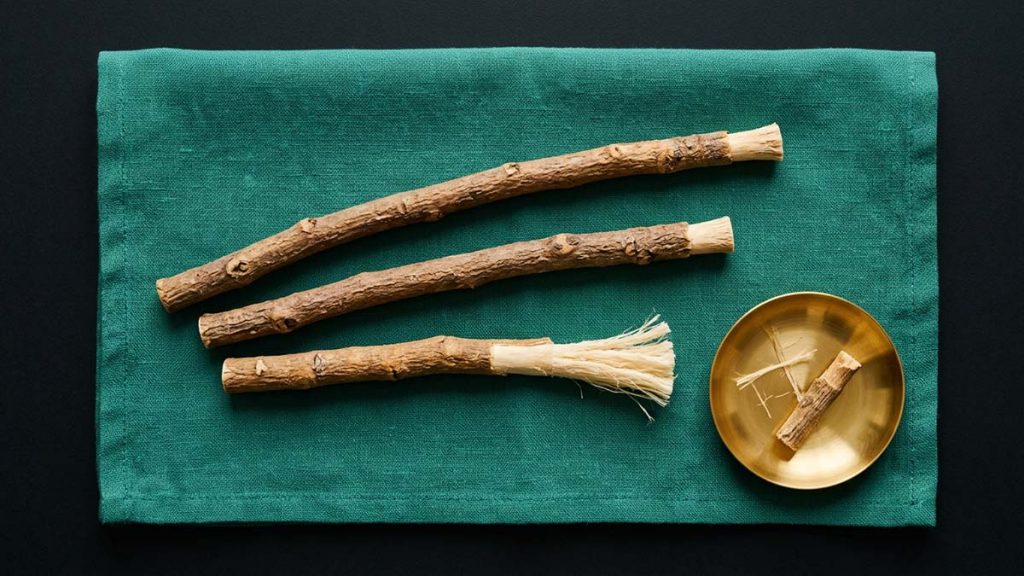
The miswak is a natural teeth-cleaning twig that has been used for over a thousand years and holds a beloved place in Islam. Taken from the roots and branches of the arak tree, this simple stick freshens the mouth, cleans the teeth and revives a cherished practice of the Prophet Muhammad (pbuh). For millions of Muslims it is far more than a hygiene tool, it is a living sunnah carried from the earliest days of Islam right through to today.
Light, portable and entirely natural, it needs no toothpaste, water or electricity, which is part of why it has endured for so long. It sits at the meeting point of worship and wellbeing, rewarding the one who uses it with both a cleaner mouth and the joy of following the Sunnah. In this guide we explain what the miswak is, its many benefits, its place in the Sunnah, when it is recommended, the science behind it, how it compares with a modern toothbrush and how to use and care for one.
لَوْلَا أَنْ أَشُقَّ عَلَى أُمَّتِي لَأَمَرْتُهُمْ بِالسِّوَاكِ عِنْدَ كُلِّ صَلَاةٍ
“Were it not that I would overburden my community, I would have ordered them to use the miswak before every prayer.”
What Is Miswak?
The miswak, also called the siwak, is a teeth-cleaning twig cut from the arak tree, known by its scientific name Salvadora persica. One end is chewed and softened into fine bristles, which are then brushed against the teeth and gums to clean them naturally. It has been used across Arabia, Africa and Asia since long before the modern toothbrush existed.
Using it could hardly be simpler. The frayed fibres sweep away food and plaque, while the natural juices of the wood freshen the breath and soothe the gums. No paste or water is required, which makes it a clean and convenient choice whether at home, travelling or on the way to the mosque.
What sets the miswak apart from an ordinary twig is its long history and its place in faith. It is gentle, effective and rooted in centuries of use, and for Muslims it carries the added honour of being a practice the Prophet (pbuh) loved and encouraged throughout his life.
The siwak is a cleansing for the mouth and a means of pleasing the Lord for every believer
6 Powerful Benefits Worth Knowing
Part of the enduring appeal here is the sheer range of benefits it offers, blending oral health with spiritual reward. Here are six of the most valued benefits of using one.
- It cleans the teeth and removes food and plaque naturally
- It freshens the breath without any need for toothpaste
- It helps soothe and strengthen the gums
- It is portable, affordable and needs no water or power
- It revives a beloved sunnah of the Prophet (pbuh)
- It brings reward by pleasing Allah through cleanliness
Purification is half of faith and a clean mouth is part of that purity beloved to your Lord
A Beloved Sunnah of the Prophet (pbuh)
It is one of the most beautifully documented sunnahs. The Prophet Muhammad (pbuh) used it so regularly and praised it so often that he said he would have made it obligatory before every prayer had he not feared it would burden his community. You can explore more of his daily habits in our Inspired by the Prophet section.
Reports describe him reaching for it on waking, before prayer, before reciting the Quran and when entering his home. It was a constant companion, kept close so that the mouth was always fresh and clean before standing in worship or speaking the words of the Lord.
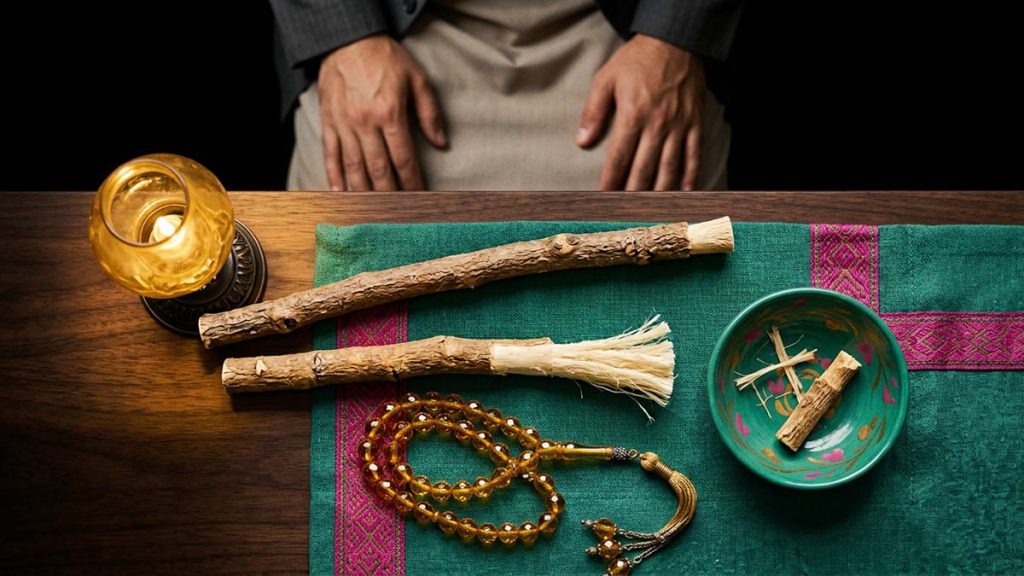
This is why it means so much to Muslims. Using it is a direct way of walking in the footsteps of the Prophet (pbuh), reviving a small but cherished part of his way of life every single day.
A fresh clean mouth at the start of every prayer was the cherished way taught to us in the noble sunnah
When Is It Recommended?
While it can be used at any time, there are special moments when the miswak is particularly recommended. Chief among them is before every prayer, following the encouragement of the Prophet (pbuh) to clean the mouth before standing before Allah, who loves those who purify themselves.
It is also recommended on waking from sleep, before making wudu, before reciting the Quran, when the taste or smell of the mouth changes, and before gatherings such as the Friday prayer. Many Muslims keep one to hand during Ramadan too, since using it while fasting is permitted and keeps the mouth fresh through the day.
In short, any time cleanliness and freshness matter, it is welcome. Its strongest association, though, remains with prayer and worship, the moments when a believer most wishes to be pure and presentable before the Lord.
Indeed Allah loves those who turn to Him and loves those who purify themselves in body and in heart
Cleanliness, Prayer and Worship
The deep link between the miswak and prayer is one of the most striking things about it. The Prophet (pbuh) tied cleaning the mouth directly to standing before Allah, teaching that purity of the body should accompany the purity of intention we bring to worship.
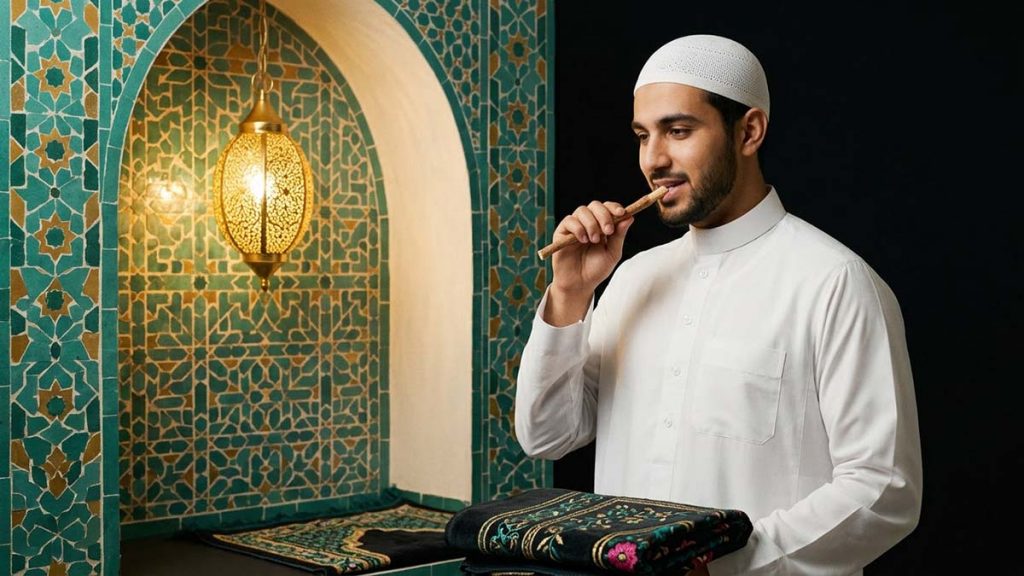
There is a gentle wisdom here. Just as we wash for wudu before prayer, freshening the mouth prepares us to recite, supplicate and draw near to our Lord with care and respect. It is a reminder that worship deserves our best, down to the smallest detail, a theme you can explore in our collection of sayings about prayer.
Approached this way, it becomes part of the rhythm of devotion. Reaching for it before prayer is not only good hygiene but a small repeated act of love, signalling that we are preparing to meet Allah, Al-Quddus, the Most Pure.
What Modern Science Says
Modern science has taken a keen interest in the miswak, and the findings are remarkable. The arak tree from which it comes is rich in natural substances, including antibacterial agents, fluoride, silica and tannins, many of which actively support oral health.
Research has found that these natural compounds help reduce plaque, fight the bacteria behind tooth decay and gum disease, and even strengthen tooth enamel. The fibres provide gentle mechanical cleaning, while the plant chemicals add a protective effect that an ordinary twig simply does not have.
The benefits are so well regarded that the World Health Organisation has recognised it as a useful tool for oral hygiene. Far from being merely traditional, it stands up impressively to scientific scrutiny.
The miswak comes from the arak tree and carries natural compounds that fight plaque and help protect the gums
Miswak vs the Modern Toothbrush
A natural question today is how the miswak compares with a modern toothbrush and toothpaste. The honest answer is that both can keep teeth clean, and many people happily use both, reaching for a toothbrush at home and a natural stick through the day.
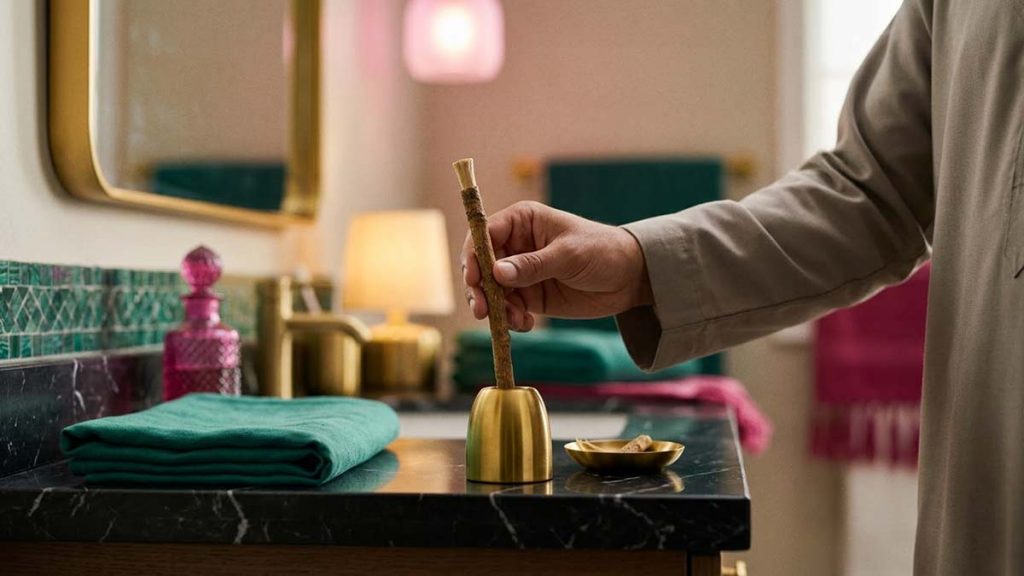
It has some clear advantages: it is natural, low-cost, plastic-free and comes with its own cleaning compounds, needing no water or paste. A toothbrush, on the other hand, can reach awkward corners easily and pairs well with fluoride toothpaste. Used together, the two complement one another nicely.
For the Muslim there is also a spiritual dimension that no toothbrush can match. Whatever else one uses, picking it up keeps alive a beloved sunnah, which is why so many treasure it alongside their everyday brushing.
So often was the siwak urged upon us that we almost thought it a duty so great is its virtue
How to Use and Care for One
Using a miswak is easy once you know how. Trim or peel away about a centimetre of bark from one end, then chew that tip gently until the fibres separate into soft bristles. Brush the teeth and gums with these bristles, working over all the surfaces just as you would with a toothbrush.
Caring for it is just as simple. Rinse the bristles after each use, snip off the frayed end every day or two to freshen the tip, and store it somewhere clean and dry. Keeping it in a small case or holder protects the bristles and makes it easy to carry with you.
With a little care a single stick lasts a good while, offering a clean, natural and rewarding way to look after your teeth. Worn down to its last, it is simply replaced, and the cherished habit continues. For a complete daily routine, many pair it with a wudu bottle and a beautiful attar.
Reviving the little sunnahs of daily life is something we love to share, and the miswak is a favourite among them. Find us on YouTube, Instagram and Threads.
Frequently Asked Questions
A miswak is a natural teeth-cleaning twig cut from the arak tree, known scientifically as Salvadora persica. One end is chewed into soft bristles used to clean the teeth and gums without paste or water.
Muslims use it to clean the mouth and to revive a beloved sunnah of the Prophet (pbuh), who used it often and encouraged it before prayer. It combines good hygiene with spiritual reward.
Yes. The Prophet (pbuh) used it regularly and praised it so highly that he said he would have made it obligatory before every prayer if he had not feared it would burden his community.
It does. Its fibres clean mechanically while natural compounds in the arak wood fight plaque and bacteria. Research and the World Health Organisation both recognise it as an effective oral hygiene tool.
Yes. Using it while fasting in Ramadan is permitted and keeps the mouth fresh. Many scholars recommend a dry stick and advise against swallowing anything from it during the fast.
With proper care a single stick can last a few weeks. Rinse it after use, trim the frayed end every day or two to expose fresh bristles, and store it somewhere clean and dry.