
What Is the Hijab and What Does It Mean in Islam?
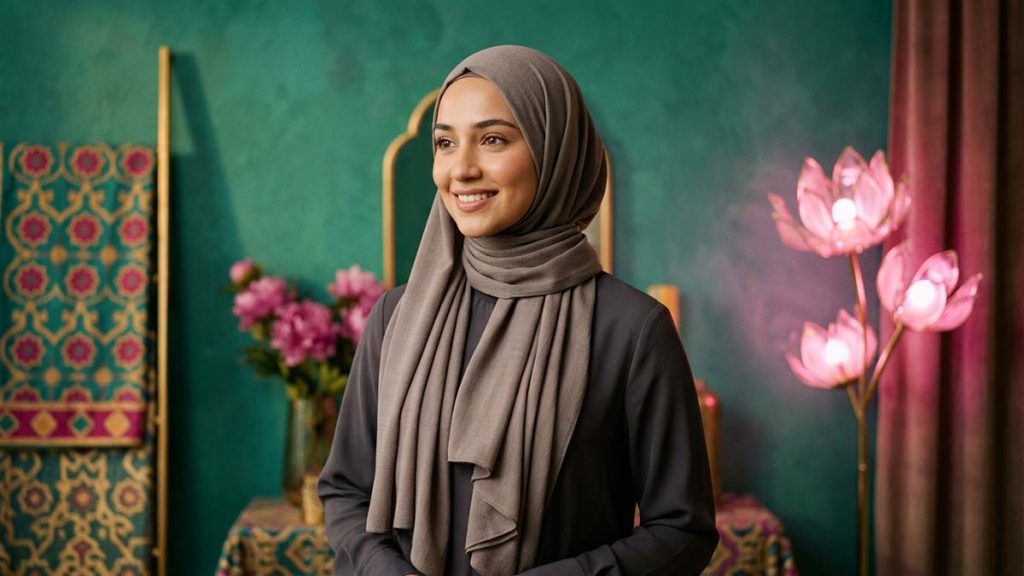
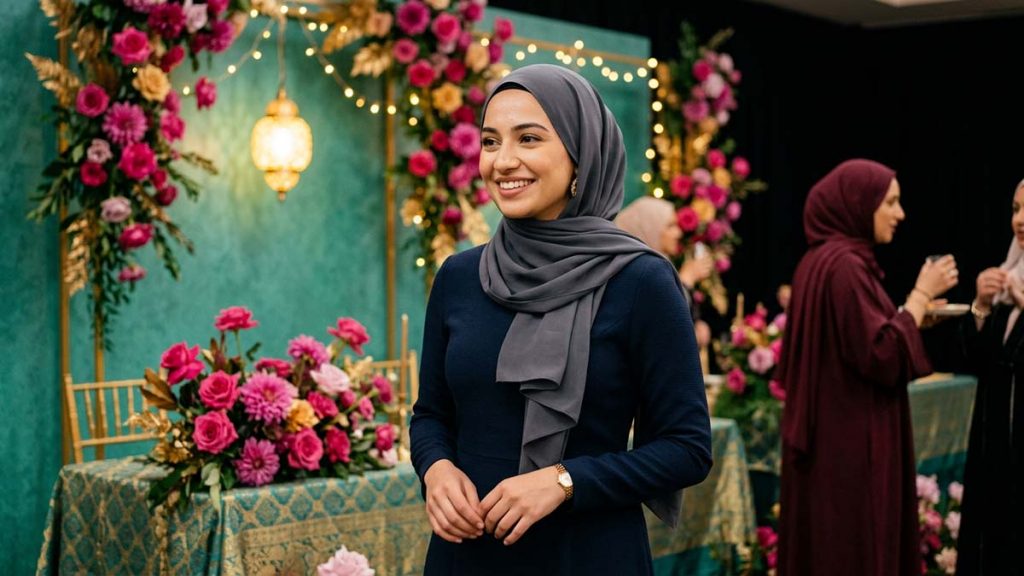
The hijab is one of the most recognised symbols of a Muslim woman’s faith. At its simplest it is the head covering worn to conceal the hair and neck, yet its meaning runs far deeper than cloth. It expresses modesty, dignity and a quiet devotion to Allah, a personal act of worship a woman carries with her each day. Worn in countless beautiful ways across the world, it is at once a sign of faith, a statement of identity and a source of strength.
For many women, putting it on is both a spiritual commitment and a natural part of daily life. It is mentioned in the Quran as a mark of the believing women, and it has been worn across cultures and centuries in styles as varied as the communities that wear it. In this in-depth guide we explain what the hijab is, the beautiful styles women choose, what it means in Islam, its place in the Quran and Sunnah, the modesty it reflects, the different kinds of veil, its journey around the world and how to choose and care for your own.
وَقُل لِّلْمُؤْمِنَاتِ يَغْضُضْنَ مِنْ أَبْصَارِهِنَّ وَيَحْفَظْنَ فُرُوجَهُنَّ وَلْيَضْرِبْنَ بِخُمُرِهِنَّ عَلَىٰ جُيُوبِهِنَّ
“And tell the believing women to lower their gaze and guard their chastity, and to draw their head coverings over their chests.”
What Is the Hijab?
The hijab is the modest covering worn by Muslim women, most often a scarf wrapped around the head to conceal the hair, ears and neck while leaving the face visible. The Arabic word itself carries the sense of a screen, barrier or veil, and in everyday use it refers both to the headscarf and to the wider principle of dressing modestly before anyone outside the immediate family.
In practice it is more than a single garment. It is part of a complete approach to modest dress that also values loose, non-revealing clothing such as the abaya. A woman may pair her scarf with flowing outer layers so that the whole outfit, not just the head covering, reflects the same gentle dignity.
Above all, it is a personal choice and an act of devotion. A woman wears it to please Allah and to be known for who she is rather than how she looks. That sincere intention is what transforms an ordinary piece of fabric into something meaningful, worn with pride and quiet confidence.
Modesty is a branch of faith and faith leads its people to Paradise so guard your modesty with care
7 Beautiful Hijab Styles
One of the joys of the hijab is how beautifully varied it can be. Shaped by climate, culture and personal taste, women have developed countless ways of wrapping and styling their scarves. Here are seven popular styles worn around the world today.
- The wrapped scarf, draped simply over the head and shoulders
- The pinned style, fastened neatly under the chin
- The Turkish style, folded smoothly across the forehead
- The Khaleeji style, with volume gathered at the crown
- The shawl style, using a wide rectangular wrap
- The turban style, twisted and tucked away from the neck
- The two-piece style, with a fitted under-cap and outer scarf
When a believing woman guards her prayer and her chastity she may enter Paradise by whichever gate she wishes
What the Hijab Means in Islam
In Islam it is an act of obedience and a visible sign of faith. By covering, a woman places her devotion to Allah above the opinions and gaze of others, choosing modesty as a way of honouring both herself and her Creator. The same spirit of humility and inner beauty shines through the example of the Prophet Muhammad (pbuh), explored across our Inspired by the Prophet section.
The covering is also a source of dignity and protection. It allows a woman to move through public life with confidence, valued for her character, faith and contribution rather than her appearance. Far from holding her back, many women describe it as freeing, lifting the pressure to be judged on looks alone.
Wisdom on modesty and inner worth runs throughout the teachings of Islam, and you can find more reflections in our collection of Islamic quotes. For the believer, it is never about hiding beauty but about reserving it, and about placing the soul before the surface.
For the believing men and the believing women who guard themselves Allah has prepared forgiveness and a great reward
The Hijab in the Quran and Sunnah
The hijab is firmly rooted in the Quran and the Sunnah. In Surah An-Nur, Allah instructs the believing women to draw their head coverings over their chests and to guard their modesty, and in Surah Al-Ahzab He tells the women of the believers to draw their outer garments around themselves so they are recognised and not harmed.
The practice was embraced by the women of the early Muslim community without hesitation. When the verses of covering were revealed, the believing women are described as hurrying to wrap themselves in whatever cloth they had, eager to answer the command of their Lord. Their example set the pattern that Muslim women have followed ever since.
The Sunnah adds further depth, teaching that modesty is a central characteristic of the faith itself. Understood together, the Quran and Sunnah present it not as a cultural add-on but as part of the guidance Allah revealed for the dignity, honour and protection of women.
Every religion has a defining character and the character of Islam is modesty so let it shine in you
Modesty for Both Men and Women
It is a common misunderstanding that modesty in Islam is asked of women alone. In fact the Quran addresses believing men first, instructing them to lower their gaze and guard their chastity, before turning to the believing women. It therefore sits within a shared culture of decency that places responsibility on everyone.

Men have their own code of modest dress and conduct, covering the body, avoiding arrogance and lowering the gaze. A woman who wears it does so within a community that is meant to value restraint, courtesy and respect from all of its members, men and women alike.
Seen this way, it is one thread in a much larger fabric of modesty woven through the whole society. It is not a burden placed on women but part of a mutual commitment to dignity, the same value that draws the community together for worship such as the Friday prayer.
Tell the believing men to lower their gaze and to guard their modesty for that is purer for them and Allah is aware of what they do
Different Types of Islamic Veil
The word hijab is often used as a general term, but there are several distinct styles of Islamic veil. The hijab itself usually refers to a headscarf that covers the hair and neck while leaving the face clear. It is by far the most widely worn covering among Muslim women across the world.
Other forms include the khimar, a longer cape-like scarf that flows over the shoulders and chest, and the jilbab, a loose full-length outer garment. The niqab is a face veil worn by some women in addition to the headscarf, leaving only the eyes visible, while the abaya is the long robe worn over everyday clothing.
Which covering a woman wears depends on her understanding, culture and personal choice. What unites them all is the shared aim of modesty, and the hijab in its everyday sense, the simple headscarf, remains the most common and recognisable expression of that aim.
The Hijab Around the World
The hijab is worn by women on every continent, and its look has been shaped by the cultures it has travelled through. In some regions bright colours and bold prints are popular, while in others soft neutrals or all-black coverings are the norm. The same act of faith takes on a rich variety of local expressions.
In recent decades the hijab has also become a visible part of modern fashion. Designers, established brands and Muslim creators have built an entire modest-wear movement, making it easier than ever to find coverings that are both stylish and faithful to Islamic values.
This growing presence has helped make the hijab familiar in workplaces, sport, media and education, with more visible role models than ever before. For many women, wearing it proudly in any setting is a quiet but powerful statement of confidence and belonging.
Modest fashion has grown into a global industry worth hundreds of billions worn by millions of women around the world today
Choosing and Caring for Your Hijab
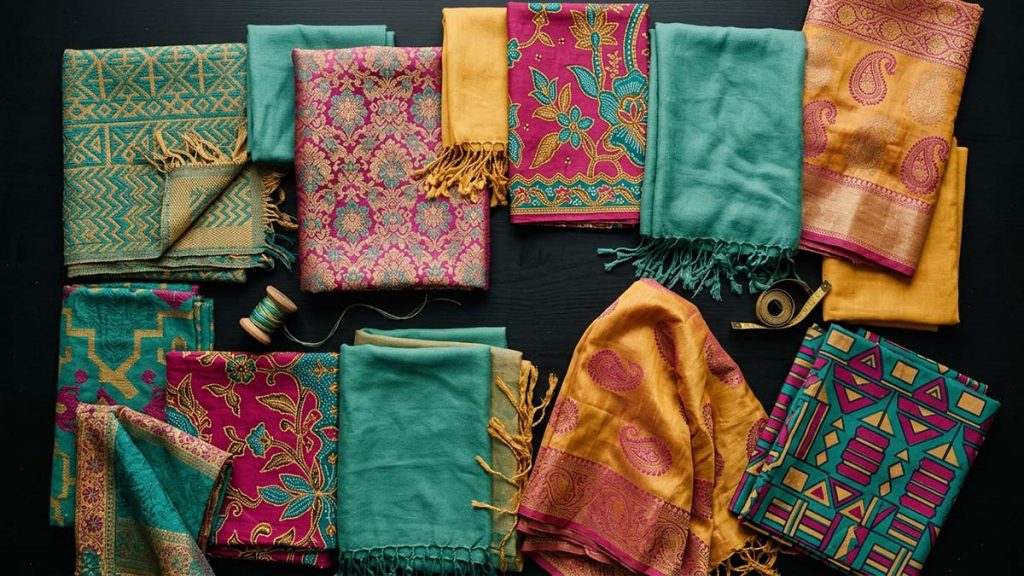
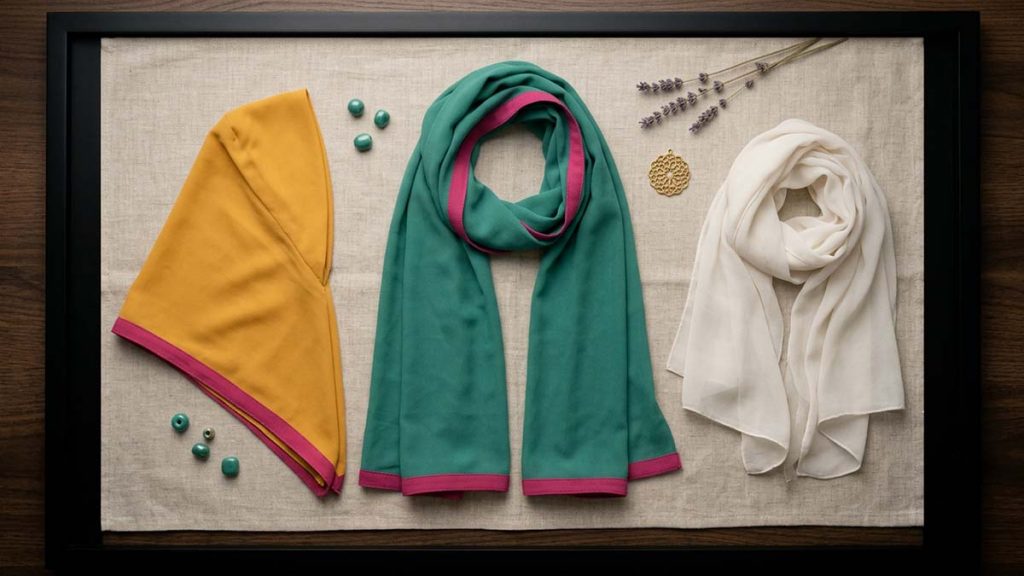
When choosing a hijab, comfort and breathability matter as much as beauty. Light cotton and jersey are easy to wear and stay in place for everyday use, while chiffon, georgette and silk add elegance for special occasions. Keeping a small range of colours and weights means there is always something suitable for work, prayer or a celebration.
Caring for your scarves keeps them looking their best. Most cottons and jerseys can be machine washed gently, while delicate fabrics like silk are better hand washed and air dried. Folding or rolling scarves neatly, rather than crumpling them, helps avoid creases and keeps them ready to wear.
Most important of all is the heart behind the covering. Worn with sincerity, the hijab is a daily turning toward Allah, Al-Quddus, the Most Pure, and a quiet answer to the gentle command of modesty. Chosen with care and worn with intention, even the simplest scarf becomes a garment of devotion.
Modest fashion is full of beauty and creativity, and we share styling ideas and reminders across our social channels. Find us on YouTube, Threads and LinkedIn.
Frequently Asked Questions
The hijab is the modest head covering worn by Muslim women, usually a scarf that conceals the hair, ears and neck while leaving the face visible. It also refers to the wider principle of modest dress in Islam.
Women wear it as an act of obedience to Allah and a sign of faith, choosing to be valued for their character rather than their appearance. Many also find it a source of dignity, protection and confidence.
Yes. The Quran instructs believing women to draw their head coverings over their chests and guard their modesty, just as it first instructs believing men to lower their gaze and guard themselves.
The hijab is the headscarf covering the hair and neck. The niqab is a face veil leaving only the eyes visible, and the abaya is the loose outer robe worn over clothing. Many women combine them.
Many girls begin around puberty, though families vary and some start earlier to grow comfortable with it. It is encouraged to be a sincere personal choice rather than something forced.
Light cotton and jersey are comfortable and stay in place for everyday wear, while chiffon, georgette and silk suit special occasions. Breathable fabrics are ideal in warm climates.