
Mina: The Tent City of the Hajj Pilgrimage
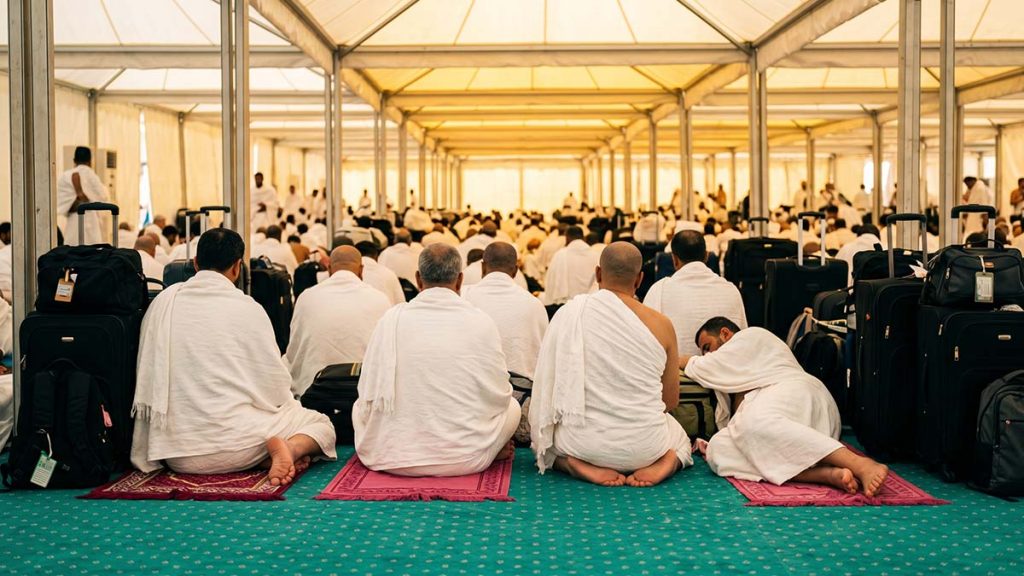
Mina is one of the most remarkable places in the Muslim world, a vast valley near Makkah that transforms each year into a temporary city of millions. Filled with rows upon rows of white tents stretching as far as the eye can see, it is where the pilgrims of Hajj rest, worship, and perform some of the most important rites of the pilgrimage. From the stoning of the pillars to the sacrifice of Eid, Mina witnesses moments that echo the devotion of Prophet Ibrahim. In this guide we explore what it is, the rites performed there, and the essential things every believer should know about this sacred valley.
The Quran speaks of the pilgrims gathering to witness benefits and to remember the name of Allah through the appointed days of the pilgrimage.
لِّيَشۡهَدُواْ مَنَٰفِعَ لَهُمۡ وَيَذۡكُرُواْ ٱسۡمَ ٱللَّهِ فِيٓ أَيَّامٖ مَّعۡلُومَٰتٍ عَلَىٰ مَا رَزَقَهُم مِّنۢ بَهِيمَةِ ٱلۡأَنۡعَٰمِ
“That they may witness benefits for themselves and mention the name of Allah on appointed days over what He has provided them of sacrificial animals.”
What Is Mina?
Mina is a valley located a few miles east of Makkah, between the holy city and the plain of Arafah. During the days of Hajj, it becomes a temporary city where millions of pilgrims stay in tents, making the valley one of the most extraordinary gatherings of people anywhere on earth. Outside the pilgrimage season it stands largely empty, waiting for the believers to return.
It is here that pilgrims spend several days performing key rites of the pilgrimage, including the stoning of the pillars and the sacrifice that marks Eid al-Adha. The valley is steeped in the history of Prophet Ibrahim, and the rites performed there carry deep meaning rooted in his unwavering obedience to Allah.
6 Essential Things to Know About Mina
To understand the role of this valley in the pilgrimage, here are six essential things to know about Mina:
- It lies between Makkah and Arafah, a key stop on the journey of Hajj.
- Pilgrims stay there in tents, on the eighth and the days after Eid.
- The stoning of the pillars takes place in Mina each year.
- The sacrifice of Eid al-Adha is offered here and nearby.
- It becomes a city of millions, then empties after the pilgrimage.
- Its rites recall Ibrahim and his rejection of Shaytan.
Mina in the Quran and Sunnah
The gathering of the pilgrims and their worship through these days is described in Surah Al-Hajj, where Allah speaks of the believers coming to witness benefits and to remember His name. The Prophet (pbuh) spent these days in Mina during his Farewell Pilgrimage, praying, resting, and performing the rites, and his example sets the pattern that pilgrims follow to this day.
That they may witness benefits for themselves and remember the name of Allah through the appointed days of the blessed pilgrimage
Why Mina Matters in Hajj
The valley is far more than a campsite; it is the stage for some of the pilgrimage’s most powerful rites. It is where pilgrims symbolically reject Shaytan by stoning the pillars, where the great sacrifice is offered, and where they spend the nights of the festival in worship and reflection. Without the days at Mina, the rites of Hajj would be incomplete, making it a cornerstone of the entire journey.
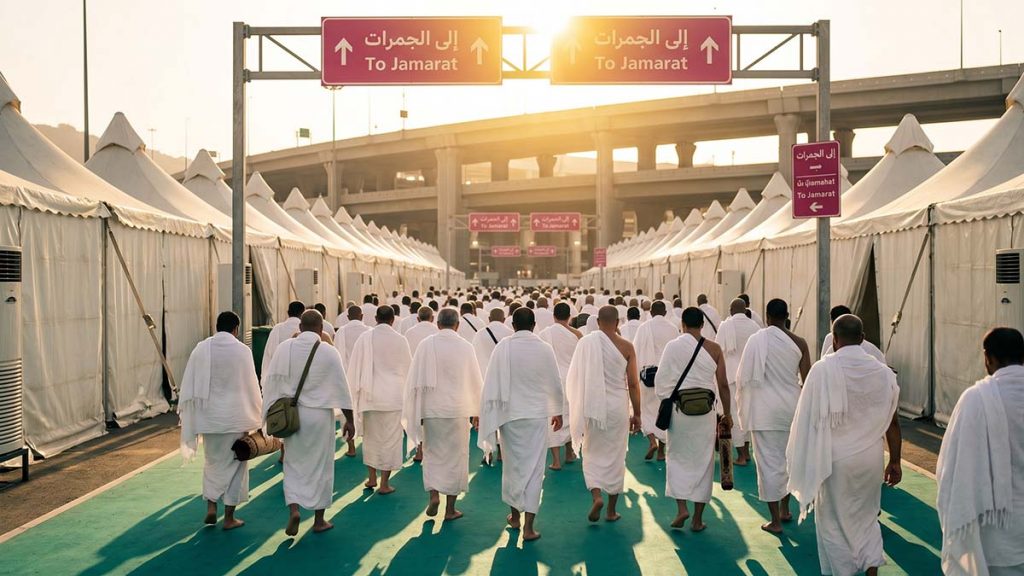
The valley also teaches a quiet lesson in simplicity. Millions of people, rich and poor alike, live for several days in identical plain tents, sharing the same conditions and the same purpose. Stripped of luxury and status, the pilgrims are reminded that all are equal before Allah, just as they are in their white garments of ihram.
The Day of Tarwiyah
The days here begin on the eighth of Dhul Hijjah, known as the Day of Tarwiyah. On this day the pilgrims travel from Makkah to Mina and spend the night there in worship, praying the five daily prayers and preparing their hearts for the great standing at Arafah the following day. It is a gentle, reflective beginning to the most intense days of the pilgrimage.
The Stoning of the Pillars
One of the most well-known rites performed in Mina is the stoning of the pillars, where pilgrims cast small pebbles at three stone structures. This act re-enacts how Prophet Ibrahim rejected the whisperings of Shaytan, who tried to turn him away from obeying Allah. Each thrown pebble is a declaration of the pilgrim’s own determination to resist temptation and remain firm in obedience.
The Days of Tashriq
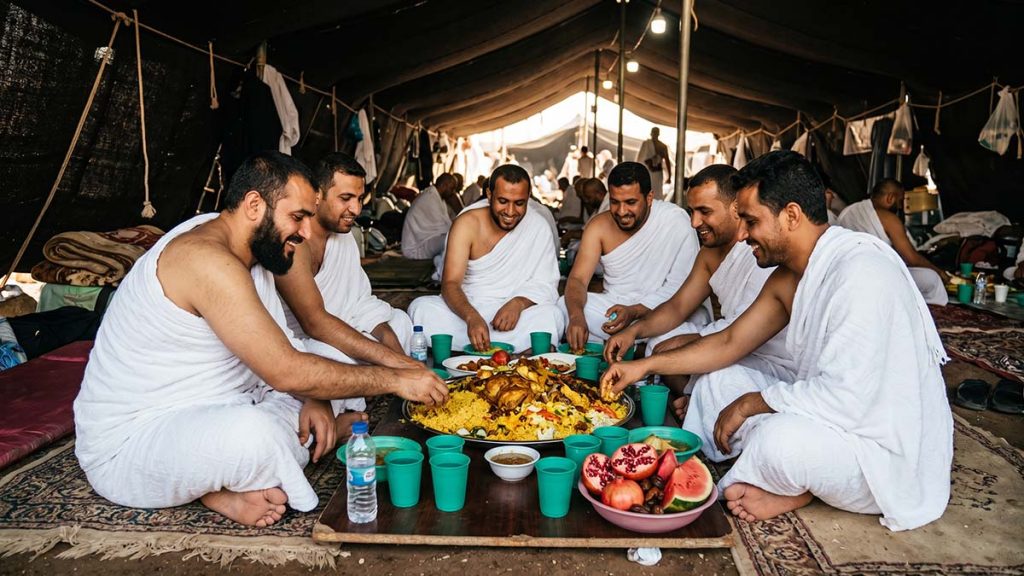
After the day of Eid, the pilgrims remain for the days of Tashriq, two or three further days of worship, remembrance, and the continued stoning of the pillars. These are described as days of eating, drinking, and remembering Allah, a blessed time when the takbir rings through the valley and the pilgrims complete the final rites of their journey in a spirit of gratitude.
The days of Tashriq are days of eating drinking and remembrance a blessed time of gratitude to Allah
Common Mistakes to Avoid
To make the days in the valley smooth and rewarding, avoid the following:
- Losing patience with the crowds, the heat, and the simple conditions.
- Neglecting the prayers and dhikr amid the busyness of the rites.
- Rushing or skipping the stoning without understanding its meaning.
- Treating the tents as a holiday camp rather than a place of worship.
- Forgetting that good character is part of an accepted pilgrimage.
The Legacy of Ibrahim in the Valley
Every rite performed in this valley carries the memory of Prophet Ibrahim, whose obedience to Allah is honoured throughout the pilgrimage. The stoning recalls his rejection of Shaytan, and the sacrifice recalls his willingness to give up his beloved son. Walking the same ground where these events unfolded fills the pilgrim with awe and a longing to follow his example of total submission.
This deep connection to a great prophet is part of what makes the days here so moving, linking the believer of today to a chain of devotion stretching back thousands of years.
In this blessed valley the pilgrim relives the obedience of Ibrahim rejecting Shaytan with stones and submitting fully to Allah
A City of Millions
The scale of the gathering here is almost beyond imagination. For a few short days each year, this quiet valley swells into one of the largest temporary cities on earth, home to millions of worshippers from every nation, all living side by side in plain white tents. Then, as the pilgrimage ends, the crowds depart and the valley falls silent once more, waiting for the believers to return the following year.
Each year this valley holds millions of pilgrims in white tents united in worship then empties once the rites are done
Life in the Tent City
Living in this tent city for several days is an unforgettable experience. Pilgrims from every corner of the earth share meals, prayers, and stories, forming bonds of brotherhood across languages and nations. The simplicity of tent life, far from worldly comforts, helps the heart focus on Allah and reminds every pilgrim of the temporary nature of this world and the journey towards the next.
The Festival in the Valley
The valley comes most alive on the day of Eid al-Adha, when the takbir rings out and the sacrifice is offered in remembrance of Ibrahim. The pilgrims, having stoned the largest pillar, shed their state of ihram, and many shave their heads as a sign of renewal and humility. Joy fills the tents as the rites of the festival unfold and the hardest days of the journey give way to celebration.
These festival days bind worship and gratitude together. After the intensity of Arafah and the long night under the open sky, the believer tastes the sweetness of completing the rites, surrounded by fellow pilgrims in a shared spirit of thankfulness to Allah.
Lessons Mina Teaches Us
The valley of the tents teaches the believer simplicity, patience, and the rejection of temptation. It shows that all people are equal before Allah, that worldly comfort is fleeting, and that firmness against Shaytan is part of true faith. It is a living lesson in patience and steadfast devotion to our Creator.
Curious about the great tent city of Hajj? It’s About Islam shares short, beautiful reminders on Mina, the pilgrimage, and the legacy of Ibrahim you can share. Find us on YouTube, X and Pinterest.
Frequently Asked Questions About Mina
Mina is a valley near Makkah, between the holy city and Arafah, where pilgrims stay in tents during Hajj. It is where the stoning of the pillars and the Eid sacrifice take place.
Pilgrims stay in Mina to perform key rites of Hajj, including the stoning of the pillars and the sacrifice, and to spend the nights of the festival in worship and reflection.
The main rites in Mina are the stoning of the three pillars, the sacrifice of Eid al-Adha, and the worship and remembrance carried out during the Day of Tarwiyah and the days of Tashriq.
Pilgrims travel to Mina on the eighth of Dhul Hijjah, the Day of Tarwiyah, and return after standing at Arafah to spend the days of Tashriq there during the festival.
The Day of Tarwiyah is the eighth of Dhul Hijjah, when pilgrims move from Makkah to Mina and spend the night in worship before the great standing at Arafah.
Mina hosts some of the most important rites of the pilgrimage, including the stoning of Shaytan and the sacrifice, making it a cornerstone of the journey of Hajj.
The Valley of Devotion
Mina is a place like no other, a valley that becomes a city of millions united in the worship of Allah. By performing its rites with understanding, living its simplicity with patience, and rejecting temptation as Ibrahim did, the pilgrim draws closer to their Creator. May Allah accept the worship of all who gather in this blessed valley and grant them a pilgrimage free of sin.