
Dua Before Sleeping
5 Beautiful Sunnahs for a Peaceful Night
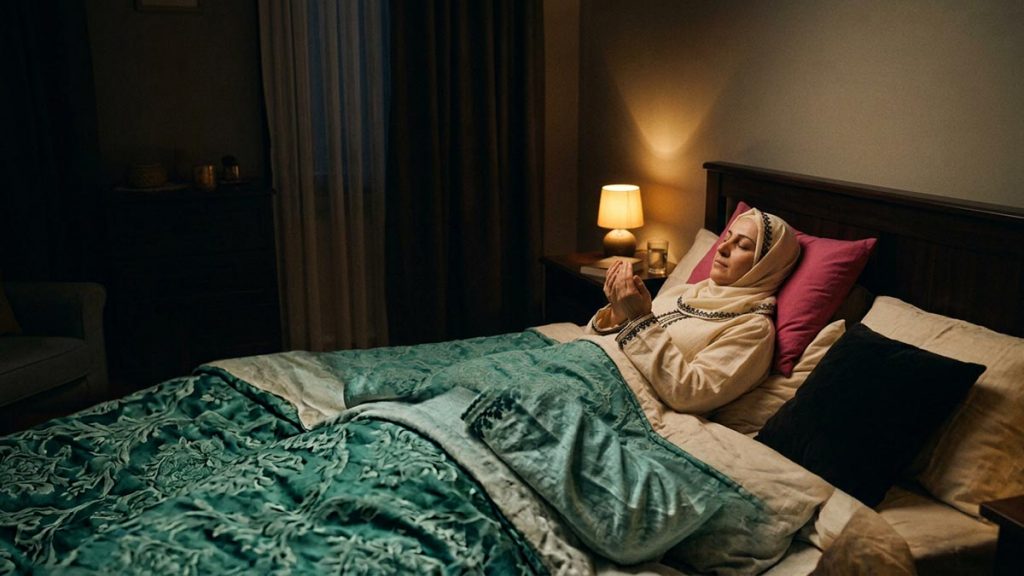
Sleep is a daily reminder of death, a time when the soul is taken up to Allah and returned only by His will. The dua before sleeping prepares the believer for this nightly surrender, placing the soul, the body and the coming hours of darkness into the safe keeping of Allah. The Prophet Muhammad (pbuh) never lay down without remembrance, and he taught his companions a beautiful set of bedtime supplications.
The dua before sleeping is more than a single phrase. It is a gentle routine of remembrance and recitation that calms the heart, seeks protection through the night, and turns the last waking moments of the day into worship. This guide gathers the central supplication with five sunnahs of bedtime, so that every night begins in the remembrance of Allah and ends in His care.
The Meaning of the Dua Before Sleeping
The dua before sleeping that the Prophet (pbuh) said on lying down places the act of sleep directly in the name of Allah. By saying that in the name of Allah he dies and lives, the believer recognises that sleep is a lesser death and waking a lesser resurrection, both held entirely in the hands of Allah. The one who falls asleep with this remembrance entrusts his very soul to its Maker, content that if it is taken in the night it returns to the most merciful of keepers.
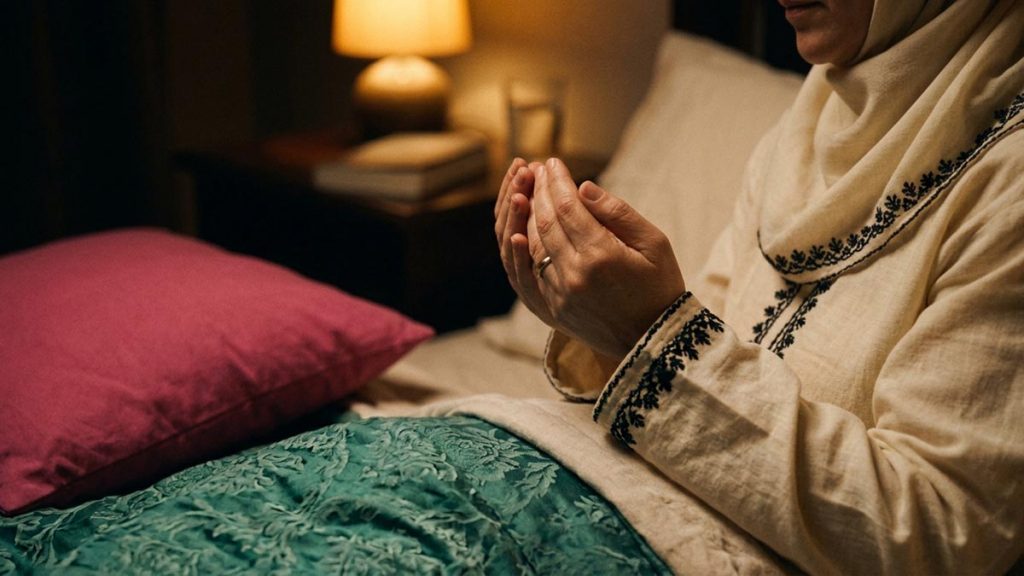
The Prophet (pbuh) also taught a fuller supplication of surrender, in which the believer hands over his soul, turns his face, and entrusts his affair to Allah, seeking nothing but His pleasure and refuge. To sleep in this state is to lie down in complete trust, free of the worries that keep the restless awake.
اللَّهُمَّ أَسْلَمْتُ نَفْسِي إِلَيْكَ وَفَوَّضْتُ أَمْرِي إِلَيْكَ
Allahumma aslamtu nafsi ilayka wa fawwadtu amri ilayk
O Allah I submit my soul to You and I entrust my affair to You
Reciting the Quran for Protection Through the Night
Central to the dua before sleeping is the recitation of protective verses of the Quran. The Prophet (pbuh) taught that whoever recites Ayat al-Kursi on lying down will have a guardian from Allah remain with him and no devil come near him until morning. He also taught that the last two verses of Surah Al-Baqarah suffice a person who recites them at night, bringing protection and reward.
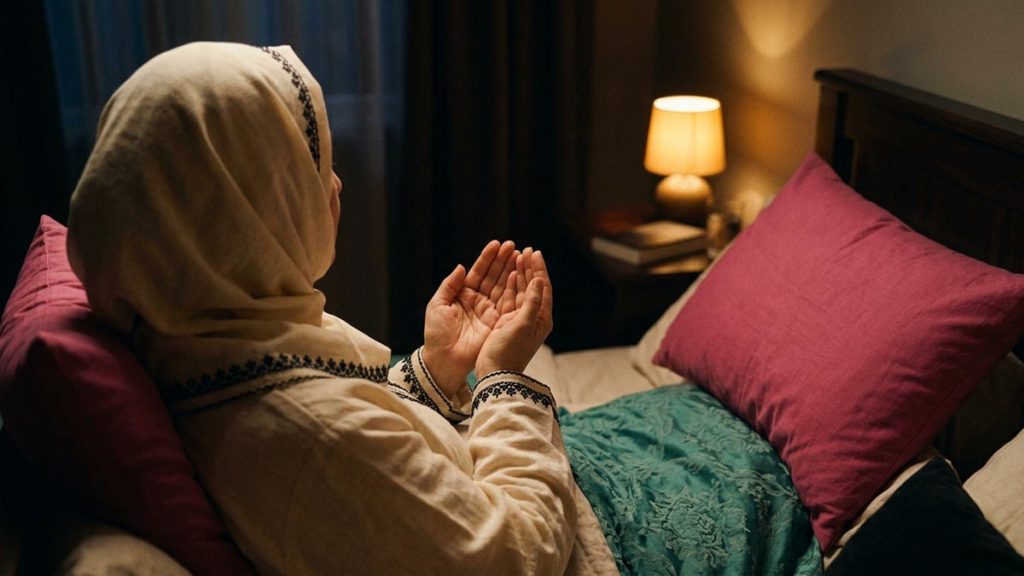
He further taught the practice of cupping the hands, reciting Surah Al-Ikhlas and the two surahs of refuge, Al-Falaq and An-Nas, then gently wiping over the body as far as one can reach, repeating this three times. These short surahs, taken together, form a shield of divine words around the sleeper for the whole night.
قُلْ هُوَ اللَّهُ أَحَدٌ اللَّهُ الصَّمَدُ
Qul huwallahu ahad Allahus-samad
Say He is Allah the One Allah the Eternal Refuge
The Tasbih the Prophet (pbuh) Taught at Bedtime
When his beloved daughter Fatimah asked the Prophet (pbuh) for a servant to ease her household labour, he gave her instead a gift better than any servant: a remembrance to say on going to bed. He taught her to glorify Allah, praise Allah, and proclaim the greatness of Allah a set number of times before sleep, promising it would be better for her than what she had asked for.
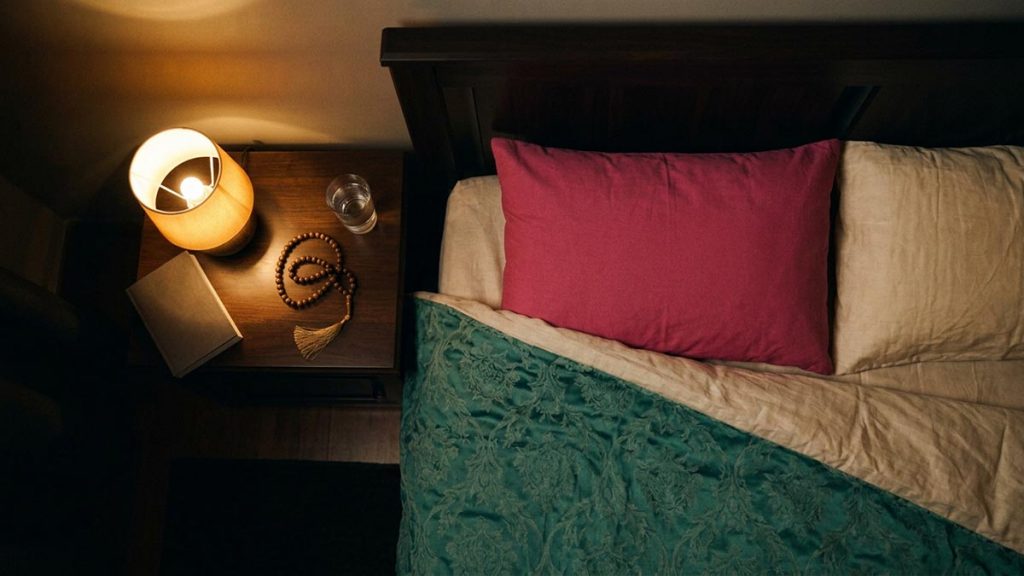
This bedtime tasbih, saying Subhanallah, Alhamdulillah and Allahu akbar, fills the final moments of the day with the remembrance of Allah and turns rest itself into a continuation of worship. It costs nothing, takes only a minute, and leaves the heart settled and the tongue moist with the praise of Allah as sleep arrives.
سُبْحَانَ اللَّهِ وَالْحَمْدُ لِلَّهِ وَاللَّهُ أَكْبَرُ
Subhanallahi wal-hamdu lillahi wallahu akbar
Glory be to Allah all praise is for Allah and Allah is the Greatest
Five Sunnahs of Bedtime at a Glance
The Prophet (pbuh) surrounded sleep with gentle habits that protect the body and the soul. Keeping these five sunnahs turns an ordinary night into an act of worship under the care of Allah.
- Perform wudu before lying down, sleeping in a state of purity as the Prophet (pbuh) advised.
- Dust off the bed and lie down on the right side, facing the direction of prayer where possible.
- Recite Ayat al-Kursi and the last two verses of Surah Al-Baqarah for protection through the night.
- Cup the hands, recite Al-Ikhlas, Al-Falaq and An-Nas, and wipe over the body three times.
- Say the bedtime tasbih and the supplication Bismika Allahumma amutu wa ahya as the eyes close.
Practised together, these sunnahs settle the heart and place the believer firmly in the protection of Allah. The dua before sleeping pairs naturally with the dua upon waking up that greets the return of life each morning, and it follows the evening dua recited at sunset. Together they reflect the constancy of dua in Islam, keeping the believer close to Allah through the night.
A night that begins in the remembrance of Allah is a night wrapped in His protection, and the habit takes only a moment to keep. Learn the bedtime sunnahs with us on YouTube, where the supplications are recited aloud, on Facebook for a gentle reminder before you sleep, and on X where readers share what brings peace to their nights.
Frequently Asked Questions
The central dua before sleeping is Bismika Allahumma amutu wa ahya, in Your name O Allah I die and I live. The Prophet (pbuh) said it on lying down, entrusting his soul to Allah, and it is part of a wider set of bedtime supplications and recitations.
The Prophet (pbuh) taught reciting Ayat al-Kursi, the last two verses of Surah Al-Baqarah, and the three short surahs Al-Ikhlas, Al-Falaq and An-Nas while cupping the hands and wiping over the body three times. These bring protection through the night.
When Fatimah asked for a servant, the Prophet (pbuh) taught her instead to say Subhanallah, Alhamdulillah and Allahu akbar before sleep, telling her it was better for her than a servant. It is a beloved sunnah of bedtime remembrance.
The Quran describes Allah taking the souls at the time of sleep and returning them on waking, so sleep is a minor death. Saying the dua before sleeping entrusts the soul to Allah, while the waking supplication thanks Him for its safe return.
The Prophet (pbuh) preferred to sleep on his right side, often placing his right hand under his cheek, and facing the direction of prayer where possible. It is a gentle sunnah that completes the manners of bedtime.
The supplications are a mercy, not a burden, so a person says what they can and is rewarded for their intention. Even reciting Ayat al-Kursi alone places the sleeper under the protection of Allah until morning.