
Evening Dua
7 Powerful Supplications to Close the Day
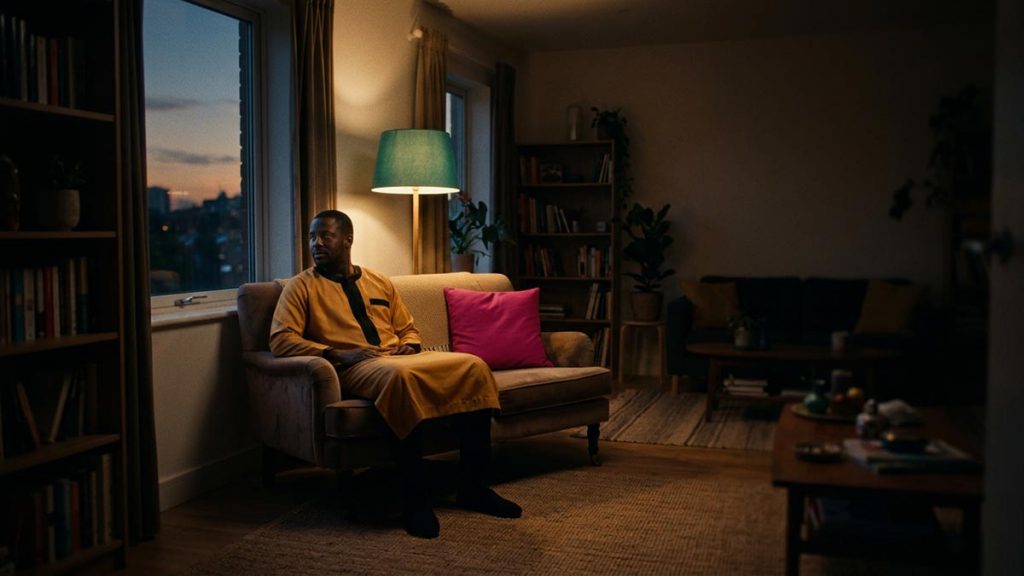
As the sun sets and the day folds into night, the believer turns to Allah with the evening dua, a treasury of remembrance taught by the Prophet Muhammad (pbuh). Just as the morning began under the care of Allah, the evening closes the day in His protection, handing over the coming hours of darkness to the One who never sleeps. These supplications transform the quiet of nightfall into a fortress of remembrance.
أَمْسَيْنَا وَأَمْسَى الْمُلْكُ لِلَّهِ، وَالْحَمْدُ لِلَّهِ، لَا إِلَهَ إِلَّا اللَّهُ وَحْدَهُ لَا شَرِيكَ لَهُ، لَهُ الْمُلْكُ وَلَهُ الْحَمْدُ وَهُوَ عَلَى كُلِّ شَيْءٍ قَدِيرٌ، رَبِّ أَسْأَلُكَ خَيْرَ مَا فِي هَذِهِ اللَّيْلَةِ وَخَيْرَ مَا بَعْدَهَا، وَأَعُوذُ بِكَ مِنْ شَرِّ مَا فِي هَذِهِ اللَّيْلَةِ وَشَرِّ مَا بَعْدَهَا
Amsaynā wa amsal-mulku lillāh, wal-hamdu lillāh, lā ilāha illā-llāhu wahdahu lā sharīka lah, lahul-mulku wa lahul-hamd wa huwa ‘alā kulli shay’in qadīr. Rabbi as’aluka khayra mā fī hādhihil-laylah wa khayra mā ba‘dahā, wa a‘ūdhu bika min sharri mā fī hādhihil-laylah wa sharri mā ba‘dahā.
“We have reached the evening and at this time the whole kingdom belongs to Allah. All praise is for Allah. There is no god but Allah alone, with no partner; to Him belongs the kingdom and to Him is all praise, and He has power over all things. My Lord, I ask You for the good of this night and the good that follows it, and I seek refuge in You from the evil of this night and the evil that follows it.”
The evening dua is not a single phrase but a gathering of short, powerful supplications that the Prophet (pbuh) recited and taught his companions. Together they cover gratitude for the day that has passed, protection from the harm of the night, contentment of the heart, and trust in the decree of Allah. Recited daily, they wrap the believer in the mercy of Allah from sunset until dawn.
This guide gathers seven authentic evening supplications, each rooted in the Quran or the Sunnah, so that the close of every day becomes a moment of peace, security and nearness to Allah.
The Meaning of the Evening Dua
The opening words of the evening dua declare a profound truth: as the believer reaches the close of the day, the entire kingdom of the heavens and the earth still belongs to Allah alone. Nothing has slipped from His control while the day passed, and nothing will in the night to come. By repeating these words at sunset, the heart is reminded that the One who owns all things is the same One being asked for protection, and that there is no power or refuge except with Him.
The supplication then asks for the good of the coming night and seeks refuge from its evil, both the harm that may appear during it and whatever lies beyond it. The Prophet (pbuh) taught that the night carries its own trials, from restless thoughts to unseen dangers, and that the believer meets them not with fear but with reliance on Allah. To praise Allah at evening is to acknowledge that the One who guided the day will guard the night.
فَسُبْحَانَ اللَّهِ حِينَ تُمْسُونَ وَحِينَ تُصْبِحُونَ
Fa subhanallahi hina tumsuna wa hina tusbihun
So glory be to Allah when you reach the evening and when you rise in the morning
This verse, revealed in Surah Ar-Rum, ties the remembrance of Allah directly to the times of evening and morning, showing that the evening dua is not merely a tradition but a practice woven into the very fabric of the Quran.
Sayyidul Istighfar at Nightfall

Among the greatest of the evening supplications is Sayyidul Istighfar, the master formula for seeking forgiveness. The Prophet (pbuh) taught that whoever says it in the evening with firm conviction and dies during that night will enter Paradise. In it the servant affirms the lordship of Allah, admits to sin, and throws himself entirely upon the mercy of his Creator. There is no more fitting way to seal a day than by asking forgiveness for its shortcomings.
The believer acknowledges that he cannot count the favours of Allah upon him, nor can he escape the weight of his own mistakes, and so he returns to Allah humbled and hopeful. Said each evening, Sayyidul Istighfar keeps the heart soft and the account with Allah short, never letting the sins of one day harden into the burdens of many.
أَنْتَ رَبِّي لَا إِلَٰهَ إِلَّا أَنْتَ خَلَقْتَنِي وَأَنَا عَبْدُكَ
Anta Rabbi la ilaha illa anta khalaqtani wa ana ‘abduk
You are my Lord there is no god but You You created me and I am Your servant
Ayat al-Kursi for the Protection of the Night
The Prophet (pbuh) taught that whoever recites Ayat al-Kursi, the Verse of the Throne, in the evening will remain under the protection of Allah, with a guardian appointed over him until morning and no devil able to draw near. This single mighty verse describes the absolute sovereignty of Allah, His perfect knowledge, and His tireless watch over all creation, for neither drowsiness nor sleep ever overtakes Him.
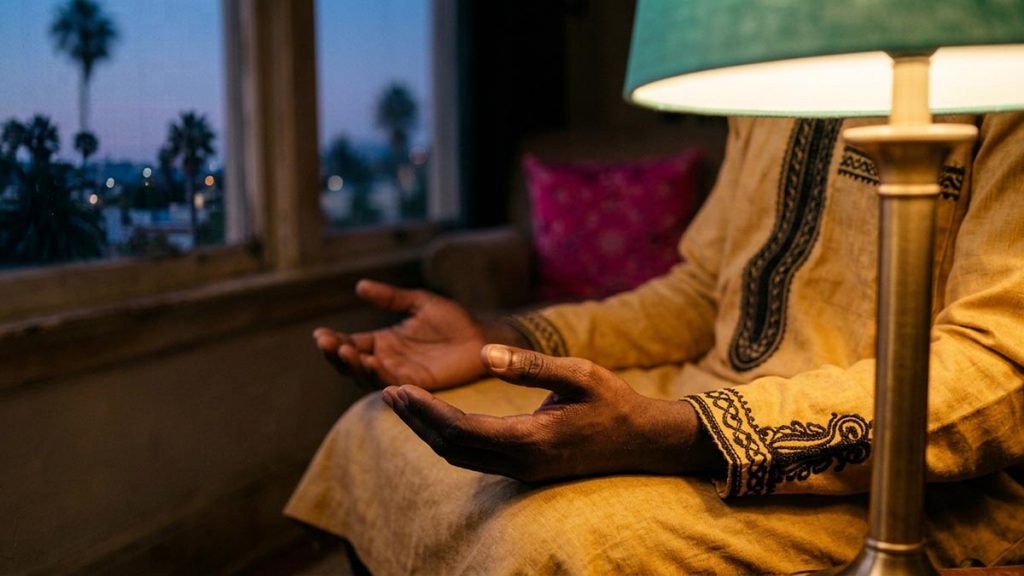
Reciting it as part of the evening dua is like setting a seal of protection over the home and the heart for the whole night. While the believer sleeps and is at his most vulnerable, the verse affirms that the One guarding him never rests, never tires, and never overlooks the smallest thing.
اللَّهُ لَا إِلَٰهَ إِلَّا هُوَ الْحَيُّ الْقَيُّومُ لَا تَأْخُذُهُ سِنَةٌ وَلَا نَوْمٌ
Allahu la ilaha illa huwal-Hayyul-Qayyum la ta’khudhuhu sinatun wa la nawm
Allah there is no god but He the Ever-Living the Sustainer of all neither drowsiness overtakes Him nor sleep
Seeking Refuge from the Harm of the Night
The night was a time the Prophet (pbuh) gave special attention to in his supplications, for harm can come in darkness from sources both seen and unseen. He taught his companions to seek refuge in the perfect words of Allah from the evil of all that He has created, and he said that whoever recites this in the evening three times will not be harmed by anything until morning. It is a shield woven from the words of Allah Himself.
To seek refuge in the perfect words of Allah is to take shelter behind something that cannot fail, for the words of Allah are complete, encompassing every form of protection a creature could need. The believer who recites this at evening rests in the knowledge that no creeping creature, no harmful soul, and no hidden danger can reach what Allah has chosen to protect.
أَعُوذُ بِكَلِمَاتِ اللَّهِ التَّامَّاتِ مِنْ شَرِّ مَا خَلَقَ
A‘udhu bikalimatillahit-tammati min sharri ma khalaq
I seek refuge in the perfect words of Allah from the evil of what He created
Sufficiency in Allah, Seven Times Over
The Prophet (pbuh) taught a supplication of pure reliance to be said seven times in the evening, declaring that Allah alone is sufficient. Whoever says it with sincerity, Allah will be enough for him against whatever worries him of this world and the next. In a few words the believer lays down every anxiety about provision, safety and the future, and rests in the sufficiency of his Lord.
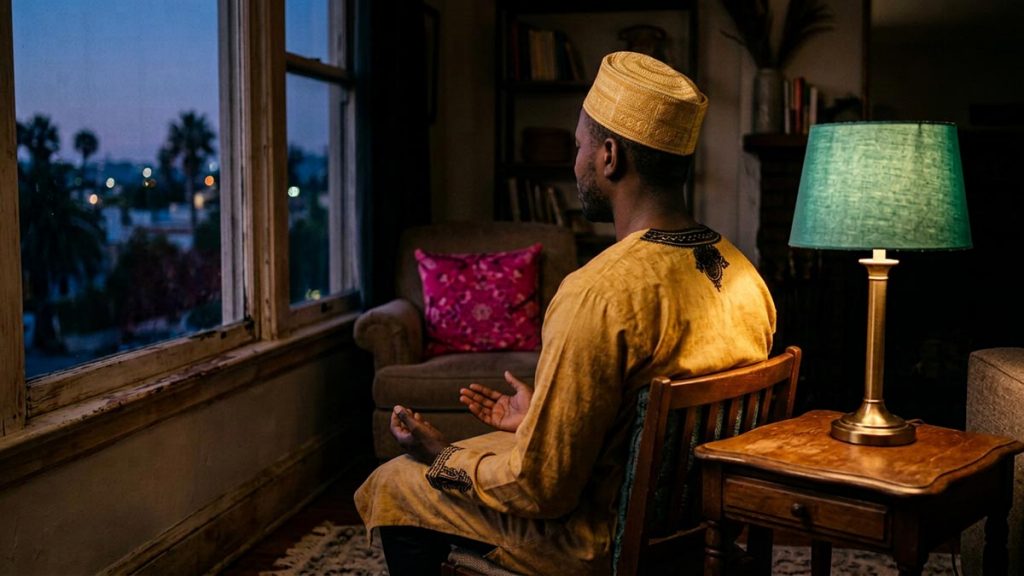
Repeating it seven times allows the meaning to settle deep into the heart, until reliance on Allah is not a passing thought but a steady conviction. As night falls and the cares of the day press in, the evening dua answers them with a calm and complete trust that Allah, who holds the Throne, is more than enough for His servant.
Ending the Day in Contentment
The Prophet (pbuh) promised that whoever says a particular supplication in the evening, expressing pleasure with Allah as Lord, Islam as religion, and Muhammad (pbuh) as Prophet, has a right upon Allah to be pleased with him on the Day of Resurrection. To close the day in contentment is to make peace with the decree of Allah, accepting whatever the hours brought as part of His wise plan.
This contentment is the crown of the evening dua. After gratitude, forgiveness, protection and reliance, the believer arrives at a settled heart that asks for nothing more than the pleasure of Allah. The Prophet (pbuh) modelled this balance perfectly, ending each day not in regret over what was lost but in satisfaction with the One who gives and withholds in perfect wisdom.
رَضِيتُ بِاللَّهِ رَبًّا وَبِالْإِسْلَامِ دِينًا وَبِمُحَمَّدٍ نَبِيًّا
Radhitu billahi Rabban wa bil-islami dinan wa bi Muhammadin nabiyya
I am pleased with Allah as my Lord and with Islam as my religion and with the Prophet (pbuh)
Seven Evening Supplications at a Glance
Recited together at the close of the day, these seven supplications form a complete evening routine of remembrance, drawn entirely from the Quran and the authentic Sunnah of the Prophet (pbuh).
- Amsayna wa amsal-mulku lillah, declaring that the whole kingdom belongs to Allah as evening arrives.
- The remembrance of Allah at evening, as commanded in Surah Ar-Rum, glorifying Him at sunset and dawn.
- Sayyidul Istighfar, the master supplication for seeking the forgiveness of Allah.
- Ayat al-Kursi, placing the believer under the protection of Allah through the night.
- Seeking refuge in the perfect words of Allah from the evil of all He has created, recited three times.
- Declaring Allah sufficient against every worry, recited seven times.
- Expressing contentment with Allah as Lord, Islam as religion, and the Prophet (pbuh) as guide.
Whoever keeps to these supplications, even on the busiest of evenings, ends the day connected to Allah and enters the night in safety. The evening dua pairs naturally with the morning dua to wrap the believer’s entire day in remembrance, and it flows into the dua before sleeping as the eyes grow heavy. Together they reflect the constancy of dua in Islam, where the believer never stands far from his Lord.
The close of the day is a sacred window of mercy, and a few words at sunset can carry you safely through the night. Recite the evening adhkar with us on YouTube, where the supplications are recited aloud, on TikTok for a daily reminder as the sun sets, and on Pinterest where readers share how the evening dua brings peace to their nights.
Frequently Asked Questions
The evening dua is a collection of short supplications from the Quran and the Sunnah that the Prophet (pbuh) recited at sunset. They give thanks for the day, seek protection through the night, and place the believer under the care of Allah until morning.
The evening adhkar are recited after the time of Asr until just after sunset, with Maghrib being the ideal moment. If the time passes, scholars say a person may still recite them through the early part of the night so the blessing is not missed.
They share most of the same supplications, with the wording adjusted for the time of day, so the morning dua says Asbahna, we have reached the morning, while the evening dua says Amsayna, we have reached the evening. Together they protect the believer across the full day and night.
Sayyidul Istighfar is called the master of seeking forgiveness, a supplication the Prophet (pbuh) taught in which the servant affirms the lordship of Allah and asks His pardon. He promised Paradise to whoever says it with conviction in the evening and dies that night.
Reciting all of them brings the complete protection and reward described by the Prophet (pbuh), but any portion is beneficial and better than none. Even Ayat al-Kursi alone in the evening places a person under the guard of Allah until morning.
It is best to learn the Arabic, since the exact words carry the rewards the Prophet (pbuh) described, and many are short verses or phrases. While memorising them, understanding the meaning in English helps the heart engage with what the tongue is reciting.