
Dua for Anxiety
5 Comforts to Find in Allah
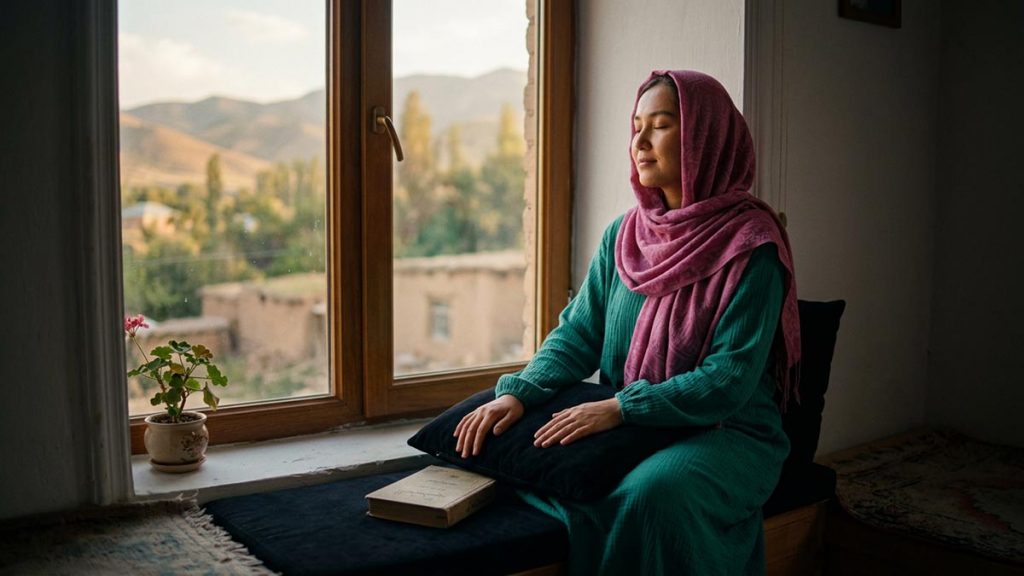
Anxiety is a heavy burden that many people carry, a restless worry that can weigh on the heart and disturb the calm of daily life. The dua for anxiety is a supplication the Prophet Muhammad (pbuh) taught and made regularly, seeking refuge in Allah from anxiety and grief, and from the weaknesses that so often come with them. It does not dismiss the struggle, but turns it over to Allah, the source of all comfort, who can bring calm to the most troubled heart.
اللَّهُمَّ إِنِّي أَعُوذُ بِكَ مِنَ الْهَمِّ وَالْحَزَنِ، وَالْعَجْزِ وَالْكَسَلِ، وَالْبُخْلِ وَالْجُبْنِ، وَضَلَعِ الدَّيْنِ وَغَلَبَةِ الرِّجَالِ
Allāhumma innī a‘ūdhu bika minal-hammi wal-hazan, wal-‘ajzi wal-kasal, wal-bukhli wal-jubn, wa dala‘id-dayni wa ghalabatir-rijāl.
“O Allah, I seek refuge in You from anxiety and grief, from weakness and laziness, from miserliness and cowardice, from the burden of debt and being overpowered by men.”
Islam treats the heart with gentleness, recognising that worry and grief are real and that even the prophets turned to Allah for relief from them. The dua for anxiety is part of a believer’s spiritual care, a way of seeking the comfort and calm of Allah. It works alongside, and never in place of, the practical care that anxiety may call for, including support from trusted people and professionals when the burden grows heavy.
This guide explains the dua for anxiety, the meaning of seeking refuge from worry and grief, and five comforts to find in Allah, so that the believer carrying anxiety may turn to Allah for relief and hope, while also caring for themselves through the support and help that Islam encourages.
The Meaning of the Dua for Anxiety
The dua for anxiety is a supplication the Prophet (pbuh) taught his companions and made often himself, seeking refuge in Allah from a series of burdens that weigh on the heart and hold a person back. It begins with the two heaviest: anxiety, which is worry over what is to come, and grief, which is sorrow over what has passed. It then seeks refuge from weakness and laziness, from miserliness and cowardice, and from the burden of debt and being overpowered by others. In a few words, it gathers the troubles that disturb the heart and lays them before Allah.
What is striking is that the Prophet (pbuh), the best of creation, made this dua regularly. This teaches the believer that anxiety and grief are not signs of weak faith, but real burdens that even the prophets sought refuge from. There is no shame in carrying worry, nor in turning to Allah for relief from it. The dua gives the anxious heart somewhere to place its burden, handing it to the One who can lift it.
The four pairs in the dua are beautifully balanced. Anxiety and grief weigh on the heart; weakness and laziness hold back the body; miserliness and cowardice cripple the character; and the burden of debt and domination by others press from outside. By seeking refuge from all of these, the believer asks Allah to free them from the inner and outer burdens that so often feed a troubled and anxious heart.
Understanding Anxiety in Islam
Islam does not treat worry and sorrow as failings to be hidden, but as real human experiences that deserve gentleness and care. The Quran speaks often to the grieving and the fearful, reassuring them that Allah is near, that hardship is followed by ease, and that no soul is burdened beyond what it can bear. Even the Prophet (pbuh) experienced years known as the year of grief, and Allah comforted him through them. This shows that feeling anxiety is part of being human, not a sign of distance from Allah.
At the same time, Islam offers the heart a powerful source of calm. The Quran teaches that it is in the remembrance of Allah that hearts find rest, and that those who believe and turn to Allah are met with His tranquillity. The dua for anxiety draws on this, giving the worried heart a way to seek the calm of Allah. It is a means of spiritual comfort, turning a restless heart toward the peace that comes from trusting in Him.
It is important to understand that anxiety can also be a condition that needs real care, just as the body needs care when it is unwell. Seeking refuge in Allah through this dua is a beautiful and beneficial act, but it stands alongside the practical steps that help, such as speaking to trusted people, caring for one’s health, and seeking the help of professionals when worry becomes overwhelming. The believer turns to Allah for comfort while also taking the means He has provided. There is a beautiful balance in this: faith does not ask the believer to deny their pain or to pretend that all is well, but to bring that pain honestly to Allah while also doing what helps. A heart that turns to Allah and also seeks support is following the way of Islam, which never separates trust in Allah from wise and practical action.
أَلَا بِذِكْرِ اللَّهِ تَطْمَئِنُّ الْقُلُوبُ
Ala bidhikrillahi tatma’innul-qulub
Unquestionably in the remembrance of Allah do hearts find rest
Five Comforts to Find in Allah
For the heart carrying anxiety, Islam offers comforts that bring calm and hope. These five are found in turning to Allah, alongside the practical care that helps.
- Refuge from worry and grief, handing your burden to Allah with this dua.
- The calm of remembrance, for in the remembrance of Allah hearts find rest.
- The nearness of Allah, who is closer to you than you imagine and hears every prayer.
- Hope in ease after hardship, for Allah has promised that with hardship comes ease.
- Support and help, reaching out to trusted people and professionals when the burden is heavy.
وَمَنْ يَتَّقِ اللَّهَ يَجْعَلْ لَهُ مَخْرَجًا وَيَرْزُقْهُ مِنْ حَيْثُ لَا يَحْتَسِبُ
Wa man yattaqillaha yaj‘al lahu makhrajan wa yarzuqhu min haythu la yahtasib
And whoever fears Allah He will make for him a way out and provide for him
How the Believer Faces Anxiety
When anxiety presses on the heart, the believer turns first to Allah, seeking refuge in Him from worry and grief with this dua. They fill their day with the remembrance of Allah, in which hearts find rest, and they hold to prayer, which brings the soul into the presence of the One who calms every fear. These acts of worship are a gentle medicine for the heart, drawing the anxious soul toward the peace that comes from trusting in Allah.
Alongside this, the believer cares for themselves in practical ways, for Islam joins trust in Allah with taking the means. This includes speaking openly with trusted family or friends rather than carrying the burden alone, looking after one’s sleep, health and routine, and seeking the help of a doctor or counsellor when anxiety becomes heavy or persistent. Just as one would see a doctor for an illness of the body, seeking help for a troubled heart is a wise and encouraged step, not a weakness.
In this way, the dua for anxiety becomes part of a complete approach: turning to Allah for comfort and hope, while taking the practical steps that help. The believer does not face anxiety by faith alone or by means alone, but by joining the two, trusting that Allah is the source of all calm and that He has provided both the comfort of prayer and the help of those who can support them. Neither approach alone is complete: relying only on prayer while ignoring the means, or only on the means while forgetting Allah, both fall short of the balance Islam teaches. The believer holds the two together, certain that the comfort of Allah and the help of people are both gifts from Him, given to carry the anxious heart through.
لَا يُكَلِّفُ اللَّهُ نَفْسًا إِلَّا وُسْعَهَا
La yukallifullahu nafsan illa wus‘aha
Allah does not burden a soul beyond what it can bear
Finding Hope and Calm in Allah
Anxiety can make the heart feel as though calm is out of reach, but the believer is never without hope. The dua for anxiety turns the restless heart toward Allah, the source of all comfort, seeking refuge from worry and grief and trusting in the ease He has promised after hardship. Held together with the remembrance of Allah, the support of trusted people, and the help that anxiety may call for, this dua becomes a means of finding the calm and hope that come from Him.

This supplication pairs naturally with the dua for depression that seeks hope in the darkest moments, and the dua for stress that lightens a heavy load. Together they bring the troubled heart toward the comfort and mercy of Allah, who calms every fear and never burdens a soul beyond what it can bear, no matter how heavy the worry may feel.
Even the prophets sought refuge from worry, so there is no shame in bringing an anxious heart to Allah. Learn the healing duas with us on YouTube, where the supplications are recited aloud, on TikTok for a gentle reminder of the calm faith brings, and on Facebook where readers share how they find comfort in Allah while caring for themselves.
Frequently Asked Questions
The dua for anxiety is Allahumma inni a‘udhu bika minal-hammi wal-hazan, seeking refuge in Allah from anxiety, grief, weakness, laziness, miserliness, cowardice, debt and being overpowered. The Prophet (pbuh) made it regularly.
Say it whenever worry or sorrow weighs on your heart, and regularly as part of your daily remembrance, handing your burden to Allah. It turns the anxious heart toward the calm of Allah.
No, the Prophet (pbuh) himself made this dua regularly, showing that anxiety and grief are real human burdens, not signs of weak faith. There is no shame in carrying worry or in turning to Allah for relief.
No, the dua is a means of spiritual comfort that stands alongside, never in place of, practical care. The believer turns to Allah while also seeking support from trusted people and professionals when needed.
Islam treats them with gentleness, reassuring the heart that Allah is near, that hardship is followed by ease, and that no soul is burdened beyond what it can bear. The Quran teaches that hearts find rest in the remembrance of Allah.
Speaking with trusted family or friends, caring for one’s sleep, health and routine, and seeking the help of a doctor or counsellor when anxiety is heavy all help. Islam joins trust in Allah with taking these means.