
Zakat al-Fitr: The Charity of Eid al-Fitr
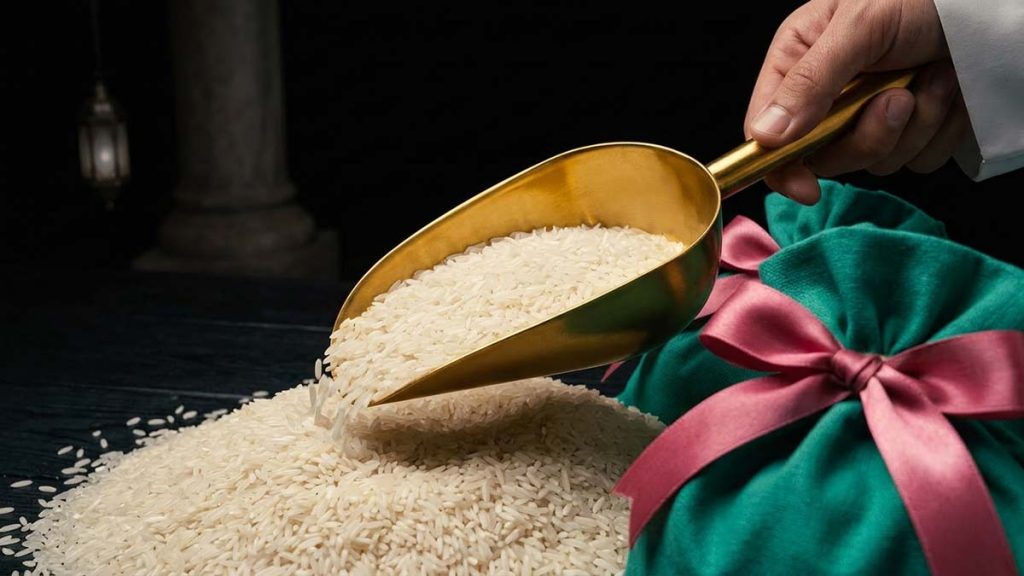
Zakat al-Fitr is a special charity given at the close of Ramadan, a duty that purifies the fasting person and brings joy to the poor on the day of Eid. Unlike the yearly Zakat on wealth, it is a small, fixed amount that every Muslim able to do so must give on behalf of themselves and their dependents before the Eid prayer. Simple yet profoundly meaningful, it ensures that no one is left hungry on a day of celebration. In this guide we explore what it is, why it matters, and the essential rules of who pays, how much, and when.
The Quran reminds the believer that true success belongs to the one who purifies the soul and remembers the name of their Lord.
قَدۡ أَفۡلَحَ مَن تَزَكَّىٰ
“He has certainly succeeded who purifies himself.”
What Is Zakat al-Fitr?
Zakat al-Fitr is an obligatory charity tied to the ending of the fast of Ramadan, also known as the charity of breaking the fast. It is given as a measure of staple food, or its value, on behalf of every member of a household, and must reach the poor in time for them to enjoy the day of Eid al-Fitr.
It serves two beautiful purposes at once: it purifies the fasting person from any shortcomings or idle speech during the month, and it feeds the needy so that they too can share in the joy of Eid. In this way the blessings of Ramadan reach the whole community, and the month of fasting ends not only with personal reward but with care for others woven into its final act.
6 Essential Rules of Zakat al-Fitr
To fulfil this duty correctly, it helps to know its basic conditions. Here are six essential rules every Muslim should keep in mind:
- It is obligatory on every Muslim who has food beyond their needs for the day.
- The head of the household pays on behalf of dependents, including children.
- The amount is one saa, about 2.5 to 3 kilograms of a staple food.
- It is given to the poor and needy who are entitled to receive it.
- It must be paid before the Eid prayer to serve its purpose.
- It may be given as food such as rice, wheat, or dates, or as its value.
The Charity of Fitr in the Sunnah
This charity was made a duty by the Prophet (pbuh) himself. The companion Ibn Umar reported that the Prophet (pbuh) enjoined it upon the believers as a measure of staple food, establishing it as a firm practice of the faith and a beautiful expression of charity in Islam.
The Prophet enjoined this charity of breaking the fast as one saa of dates or barley upon every Muslim young and old free and bonded
Why This Charity Matters
Beyond feeding the hungry, this charity completes and purifies the fast. The Prophet (pbuh) described it as a purification for the fasting person from any idle or indecent talk, and as food for the poor, so that the rich and the needy meet in joy rather than in hunger on the morning of Eid.
This charity was prescribed as a purification for the fasting person and as food for the needy so none go hungry on the day of Eid
Who Must Pay and for Whom
The duty falls on every Muslim who possesses more than their basic needs for the day and night of Eid. The head of a family customarily pays on behalf of everyone in the household, including spouses, children, and dependents, so that the entire family is included in this act of worship and generosity.
How Much and What to Give
The fixed measure is one saa, a volume of staple food equal to roughly 2.5 to 3 kilograms of items such as wheat, rice, barley, or dates. Many people today give the monetary value of this measure through trusted charities, a question on which scholars hold differing views, so it is wise to follow reliable local guidance to ensure the duty is fulfilled correctly.
When to Give Zakat al-Fitr
The charity becomes due at the end of Ramadan and should reach the poor before the Eid prayer. The Prophet (pbuh) instructed that it be given before people set out to pray, so that the needy are provided for in time to celebrate. Giving it a day or two early is permitted to ensure it arrives, but delaying it past the prayer causes it to lose its special purpose.
The Charity of Eid and the Joy of Giving
There is something deeply moving about a charity timed for a festival. While families prepare for Eid, this duty ensures the poor are not forgotten in the excitement, turning a day of personal joy into a day of shared joy. It binds the community together and reflects the mercy that runs through the whole of Ramadan.
Common Mistakes to Avoid
To make sure the charity counts as intended, avoid these common errors:
- Forgetting to pay on behalf of children and dependents in the home.
- Giving it after the Eid prayer, when it loses its special purpose.
- Paying far less than the required measure of staple food.
- Leaving it so late that it does not reach the poor in time for Eid.
- Treating it as optional rather than the duty the Prophet (pbuh) made it.
The Reward of Feeding the Poor
Charity given to the hungry holds a special weight in the sight of Allah, who loves those who care for His servants. This small act, multiplied across the whole ummah, feeds millions every Eid and reflects the mercy of Al-Barr, the Source of all goodness, while echoing the Prophet’s call to keep helping others in Islam.
Across the world each Eid this single charity feeds millions of the poor turning a day of celebration into a day of shared mercy
How It Differs from Zakat on Wealth
It is easy to confuse this charity with the yearly Zakat on wealth, but the two are quite different. The yearly Zakat is a percentage of accumulated wealth, calculated and paid once a lunar year by those who reach a certain threshold. This charity, by contrast, is a small fixed measure of food, due from nearly every Muslim regardless of wealth, and tied specifically to the ending of Ramadan.
Both are acts of purification and care for the poor, but this one is universal and modest, a duty even the person of limited means is asked to give and may also receive, binding rich and poor together in a single shared act.
The yearly Zakat purifies accumulated wealth while this charity purifies the fast itself one is a yearly due on riches the other a small gift tied to Ramadan
Calculating It Correctly Today
In practice, fulfilling this duty is simple. A household counts every member, including children, and gives one measure of staple food, or its value, for each person. Many trusted charities calculate the local value each year and distribute it on time to the needy, making it easy to pay even from afar. The key is to give for everyone in the home and to ensure it arrives before the prayer.
Giving With the Right Heart
As with all worship, the spirit behind the gift matters. Giving cheerfully, on time, and seeking only the pleasure of Allah turns a simple measure of food into a treasured deed. The believer gives not out of habit but out of gratitude for a month of fasting and for the countless blessings they enjoy, knowing that what is given for the sake of Allah is never truly lost.
A Mercy for the Whole Community
Zakat al-Fitr is one of the most beautiful examples of how Islam binds a community together. On a single morning, countless families give a small measure of food so that no household, however poor, faces the day of Eid in hunger. The rich and the struggling are joined in one act, one giving and one receiving, all in obedience to Allah.
This is the genius of Zakat al-Fitr: it turns a personal festival into a shared one. Because everyone who is able gives, the needy are lifted up quietly and with dignity, and the joy of Eid becomes something the entire community can taste together rather than a celebration for some and a hardship for others.
Lessons This Charity Teaches Us
This small, fixed duty teaches generosity, gratitude, and care for the community. It reminds the believer that worship is never only personal, that the poor have a right over our wealth, and that true joy is found in sharing. It is a beautiful close to a month built on gratitude and charity.
Want simple reminders to give well and complete your Ramadan? It’s About Islam shares short, beautiful guidance on charity, fasting, and Eid each week. Find us on YouTube, TikTok and Pinterest.
Frequently Asked Questions About Zakat al-Fitr
Zakat al-Fitr is an obligatory charity given at the end of Ramadan, before the Eid prayer. It purifies the fasting person and provides food for the poor so they can share in the joy of Eid.
The fixed measure is one saa, roughly 2.5 to 3 kilograms of a staple food such as rice, wheat, barley, or dates, or its monetary value through a trusted charity.
It should reach the poor before the Eid prayer. It may be given a day or two early to ensure it arrives, but delaying it past the prayer causes it to lose its purpose.
Every Muslim with food beyond their needs for the day must pay it. The head of the household usually pays on behalf of all dependents, including children.
Many give its monetary value through trusted charities, a point on which scholars differ. It is wise to follow reliable local guidance to ensure the duty is fulfilled correctly.
It is given to the poor and needy, so that they are provided for and able to celebrate Eid alongside the rest of the community.
Completing the Fast with Charity
Zakat al-Fitr is the gentle final act of Ramadan, a small gift that purifies the soul and feeds the hungry on a day of celebration. By paying it in full, on time, and with a grateful heart, the believer ensures that the mercy of the month reaches everyone, rich and poor alike. May Allah accept your fasting, your charity, and your worship throughout the blessed month.