
Reply to the One Who Sneezes
3 Words That Build Bonds

In Islam, even a sneeze becomes a moment of connection between believers. The reply to the one who sneezes is the response the Prophet Muhammad (pbuh) taught us to give when a fellow Muslim sneezes and praises Allah, answering their gratitude with a prayer of mercy. From this simple exchange flows warmth, care and the strengthening of brotherhood.
This short guide explains the reply to the one who sneezes, the threefold exchange that the Prophet (pbuh) taught, and the bond it builds, so that a passing reflex becomes a living thread of mercy between believers.
The Meaning of the Reply to the One Who Sneezes
The reply to the one who sneezes is Yarhamukallah, may Allah have mercy on you, said when a fellow believer sneezes and praises Allah. The Prophet (pbuh) made this reply a right of one Muslim upon another, so that the gratitude of the sneezer is met with a heartfelt prayer for mercy. It is a small kindness with great meaning, asking Allah for the most precious of gifts on behalf of a brother or sister.
The exchange is only due when the one who sneezes praises Allah first. If they do not, the believer is not obliged to reply, a gentle teaching that the blessing flows through the remembrance of Allah, not the sneeze itself.
يَرْحَمُكَ اللَّهُ يَا أَخِي
Yarhamukallahu ya akhi
May Allah have mercy upon you my brother
The Threefold Exchange

The Prophet (pbuh) taught a complete and beautiful exchange around the sneeze, a small conversation of praise, mercy and guidance shared between two believers.
- The one who sneezes says Alhamdulillah, praising Allah for the relief.
- The one who hears replies Yarhamukallah, may Allah have mercy on you.
- The sneezer answers Yahdikumullahu wa yuslihu balakum, may Allah guide you and set right your affairs.
يَهْدِيكُمُ اللَّهُ وَيُصْلِحُ بَالَكُمْ
Yahdikumu-llahu wa yuslihu balakum
May Allah guide you and set right all of your affairs
Building Brotherhood Through Small Kindnesses
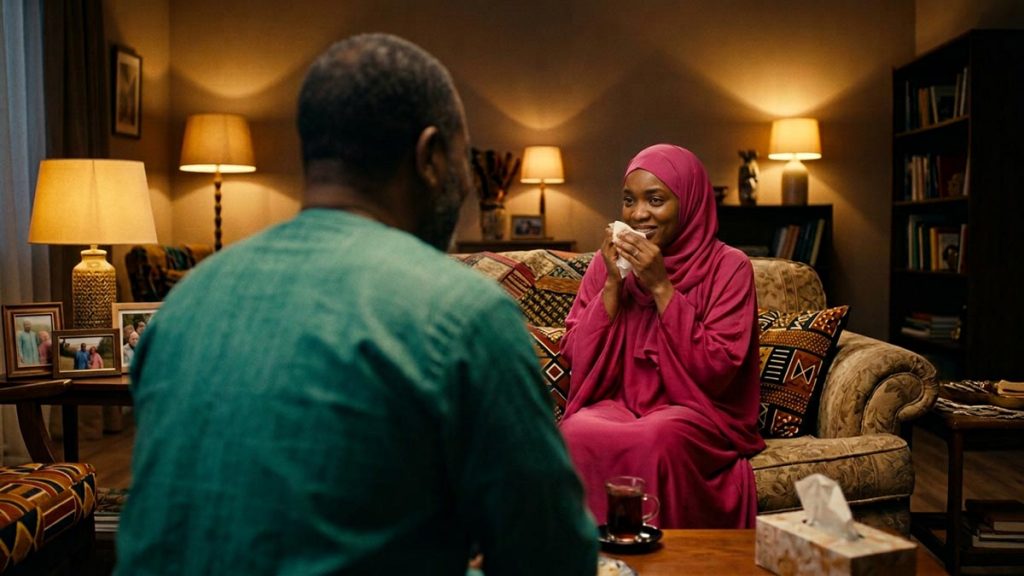
The reply to the one who sneezes shows how Islam weaves mercy into the smallest interactions of daily life. A moment that could pass unnoticed becomes an exchange of prayers, each believer asking Allah for goodness on behalf of the other. The Prophet (pbuh) listed answering the sneezer among the rights that Muslims owe one another, placing it alongside visiting the sick and accepting an invitation, because these small acts are the threads that bind a community in love. When believers wish one another mercy and guidance over something as minor as a sneeze, they nurture a habit of care that reaches into every part of their dealings, turning ordinary days into chances to lift one another closer to Allah.
To keep this sunnah alive is to keep the heart attentive to others and quick to wish them well. The reply to the one who sneezes pairs naturally with the dua upon sneezing, completing the gentle exchange the Prophet (pbuh) taught, and reflecting the warmth of greeting people that lies at the heart of Muslim community.
A few words of mercy when someone sneezes can quietly strengthen the bonds between believers. Learn the daily duas with us on YouTube, where the supplications are recited aloud, on X for a reminder of the small sunnahs of kindness, and on Pinterest where readers share the manners that bring a community together.
Frequently Asked Questions
The reply to the one who sneezes is Yarhamukallah, may Allah have mercy on you, said when a believer sneezes and praises Allah. The Prophet (pbuh) made this reply a right of one Muslim upon another.
After hearing Yarhamukallah, the one who sneezed replies Yahdikumullahu wa yuslihu balakum, may Allah guide you and set right your affairs. This completes the threefold exchange taught by the Prophet (pbuh).
The reply to the one who sneezes is only due when the sneezer praises Allah first by saying Alhamdulillah. If they do not, you are not obliged to reply, since the blessing flows through the remembrance of Allah.
The Prophet (pbuh) taught replying up to three times, and if a person continues sneezing beyond that, you may gently note they may have a cold and pray for their wellbeing instead. The reply remains a kindness, not a burden.
The Prophet (pbuh) listed it among the rights that Muslims owe one another, alongside visiting the sick and accepting invitations. These small acts of mercy build warmth and brotherhood within the community.