
Dua During Itikaf
5 Ways to Make the Most of Your Retreat

Itikaf, the spiritual retreat in the mosque during the last ten nights of Ramadan, is a beautiful act of devotion in which the believer withdraws from the world to focus wholly on Allah. Freed from the distractions of daily life, the worshipper fills their time with prayer, recitation of the Quran, remembrance and supplication, seeking the Night of Decree and drawing near to their Lord. The dua during itikaf includes a comprehensive supplication asking Allah for guidance, piety, chastity and contentment. The retreat strips away the distractions that crowd ordinary life, leaving the worshipper alone with their Lord in the house of Allah, free to seek Him without interruption. In a world that rarely allows a moment of quiet, this gift of uninterrupted time alone with Allah is among the most precious that the blessed month of Ramadan offers.
اللَّهُمَّ إِنِّي أَسْأَلُكَ الْهُدَى وَالتُّقَى وَالْعَفَافَ وَالْغِنَى
Allāhumma innī as’alukal-hudā wat-tuqā wal-‘afāfa wal-ghinā.
“O Allah, I ask You for guidance, piety, chastity and contentment.”
The Prophet Muhammad (pbuh) would perform itikaf in the last ten nights of Ramadan every year, dedicating himself entirely to worship in the mosque. This retreat allows the believer to deepen their connection with Allah, away from the noise of the world, in the most blessed nights of the year. The dua during itikaf reflects this devotion, turning to Allah with the supplications the Prophet (pbuh) loved, asking for the qualities that perfect the heart and the life. There is a sweetness to itikaf that those who experience it never forget, for to set aside the world for a few nights and live only for the worship of Allah is to taste a peace that the busy heart rarely knows.
This guide explains the dua during itikaf, a beautiful supplication of the Prophet (pbuh), and five ways to make the most of your retreat, so that the believer may fill the precious hours of itikaf with worship, reflection and dua, seeking the Night of Decree and emerging with a heart renewed in faith, guidance and contentment with Allah. The believer who enters itikaf sincerely often finds that these few nights reset the heart, breaking old habits of heedlessness and planting a fresh love of worship that lasts well beyond Ramadan.
A Comprehensive Supplication for the Retreat
Among the most beautiful supplications to recite during itikaf is the comprehensive dua the Prophet (pbuh) taught, quoted above: O Allah, I ask You for guidance, piety, chastity and contentment. In just four words, this dua gathers the essential goods of this life and the next: guidance to the truth, piety that protects from sin, chastity that guards from the forbidden, and contentment that frees the heart from need of people. It is a perfect supplication for the focused devotion of the retreat. Far from the noise of work, errands and conversation, the worshipper in itikaf has the rare stillness needed to ask for these qualities with a present heart, and to feel the weight of each word as it leaves the tongue.

Each quality the believer asks for is a treasure. Guidance keeps the heart on the straight path; piety, or taqwa, is the fear of Allah that holds one back from disobedience; chastity guards both body and soul from the unlawful; and contentment, or ghina, is the richness of the heart that needs nothing from creation. By asking Allah for all of these during itikaf, the believer seeks the very qualities that the retreat is designed to cultivate, emerging spiritually enriched. A retreat that produces these four fruits, guidance, piety, chastity and contentment, is a retreat that has truly succeeded, for these are the very things that make a life upright and a heart at peace long after the days of itikaf have ended. To leave the retreat carrying these qualities is to leave it transformed, for the believer returns to the world guided, God-fearing, restrained and content, needing nothing from creation while holding fast to their Lord.
The Practice of the Prophet
Itikaf was a consistent practice of the Prophet (pbuh), who would seclude himself in the mosque for the last ten nights of every Ramadan. Aisha reported that he would perform itikaf in the last ten nights until Allah took him, and his wives continued the practice after him. This shows that itikaf is a confirmed Sunnah of the blessed month, a beautiful way to devote the final nights wholly to the worship of Allah. That he never abandoned it, even in the year of his passing, shows how dear this practice was to him and how greatly he valued the chance to seclude himself with his Lord in the most blessed nights of the year.
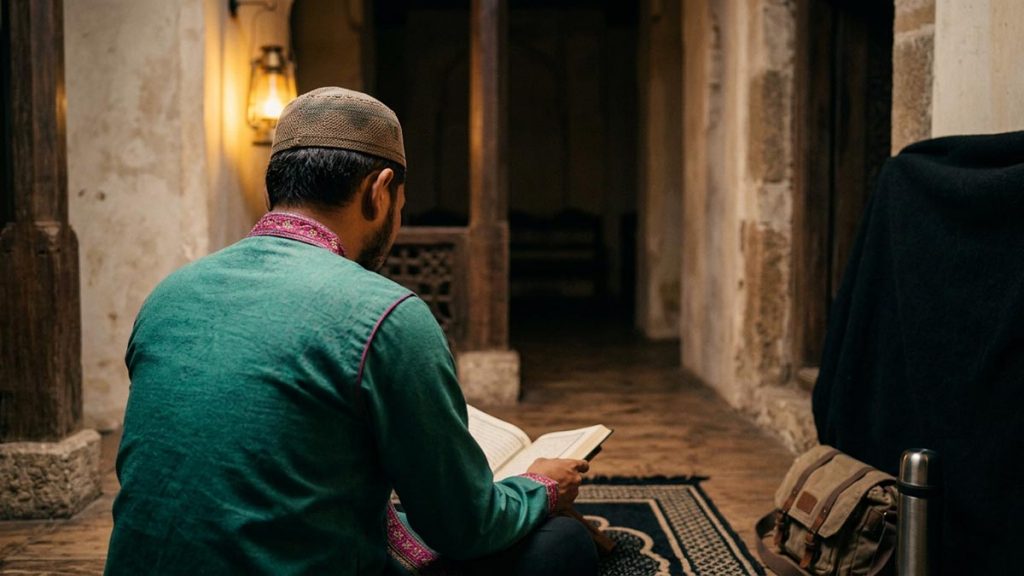
In his itikaf, the Prophet (pbuh) would not leave the mosque except for necessity, spending his time in prayer, recitation, remembrance and supplication. He sought the Night of Decree in these nights with complete focus, free from the distractions of the world. The believer who performs itikaf follows this beautiful example, dedicating their time to Allah and filling it with the dua during itikaf and other acts of worship. The believer learns from this that the goal of itikaf is not merely to sit in the mosque, but to fill every hour with meaningful worship, so that the body is present in the mosque while the heart is wholly turned toward Allah.
He would seclude himself in the mosque
Filling the Time with Worship
The hours of itikaf are precious, and the believer fills them with the best of deeds. Reciting the Quran is among the finest ways to spend the retreat, as the believer reflects on the words of Allah, especially in the month of the Quran. Standing in prayer, both the obligatory and voluntary, draws the worshipper near to Allah, while the night prayer and the search for the Night of Decree give the retreat its great purpose. With no work to rush to and no distractions to pull the heart away, the worshipper in itikaf can give the night prayer the length and depth it deserves, standing before Allah in the quiet of the night without hurry.

Beyond prayer and recitation, the believer fills the time with remembrance and supplication, repeating the dua during itikaf and the dua of pardon, and pouring out their needs to Allah. The retreat is also a time for reflection and repentance, examining the heart and turning to Allah in sincerity. By filling every hour with worship, the believer makes the itikaf a transformative experience, emerging with a heart renewed and drawn close to Allah. Even the moments of rest and the simple meals taken in the mosque become part of the worship, for the whole of the time is dedicated to Allah, and nothing in it is wasted on the idle and heedless pursuits that so often fill ordinary days.
And recite the Quran in the blessed nights
Five Ways to Make the Most of Your Retreat
Itikaf is a precious chance for focused devotion, set aside from the demands of ordinary life. These five ways help the believer make the most of the retreat and fill its blessed and precious hours with prayer, worship and heartfelt supplication before Allah.
- Recite the comprehensive dua, asking Allah for guidance, piety, chastity and contentment.
- Fill your time with the Quran, reciting and reflecting on the words of Allah throughout the retreat.
- Stand in night prayer, seeking the Night of Decree in the blessed last ten nights of Ramadan.
- Make abundant dhikr and dua, repeating the dua of pardon and pouring out your needs to Allah.
- Reflect and repent, examining your heart and turning to Allah in sincerity during the retreat.
وَالْعَفَافَ وَالْغِنَىٰ
Wal-‘afafa wal-ghina
And chastity and contentment of heart
Emerging Renewed in Faith
The dua during itikaf asks Allah for guidance, piety, chastity and contentment, the very qualities the retreat is designed to cultivate. By reciting this comprehensive supplication, filling the time with the Quran, standing in night prayer, making abundant dhikr and dua, and reflecting and repenting, the believer makes the most of their retreat. Following the example of the Prophet (pbuh), who performed itikaf every Ramadan, the believer emerges from the retreat with a heart renewed in faith, drawn close to Allah and enriched in guidance and contentment. The true sign of a successful itikaf is seen not only in the mosque but in the days that follow, as the believer carries the calm, the discipline and the nearness to Allah they gained back into the rhythm of their ordinary daily life.
This supplication pairs naturally with the dua for the last ten nights and the dua before itikaf. Together they help the believer fill the retreat with worship and seek the Night of Decree.
During itikaf, the believer withdraws to the mosque to focus wholly on Allah and seek the Night of Decree. Learn the duas of Ramadan with us on YouTube, where the supplications are recited aloud, on Instagram for a reminder to make the most of your retreat, and on Threads where readers share their experience of itikaf.
Frequently Asked Questions
A beautiful dua during itikaf is Allahumma inni asalukal-huda wat-tuqa wal-afafa wal-ghina, O Allah I ask You for guidance, piety, chastity and contentment. It gathers the essential goods of this life and the next.
Itikaf is the spiritual retreat in the mosque during the last ten nights of Ramadan, in which the believer withdraws from the world to focus wholly on Allah through prayer, recitation, remembrance and supplication.
Yes, the Prophet (pbuh) performed itikaf in the last ten nights of every Ramadan until Allah took him, and his wives continued the practice after him. It is a confirmed Sunnah of the blessed month.
Recite the comprehensive dua, fill your time with the Quran, stand in night prayer seeking the Night of Decree, make abundant dhikr and dua, and reflect and repent. These fill the retreat with worship.
It asks Allah for guidance to the truth, piety that protects from sin, chastity that guards from the forbidden, and contentment that frees the heart from need of people. These are the qualities the retreat cultivates.
The purpose of itikaf is to devote oneself wholly to Allah in the most blessed nights, free from distraction, seeking the Night of Decree and emerging with a heart renewed in faith, guidance and contentment.