
Dua for the Last Ten Nights
5 Ways to Seek the Night of Decree
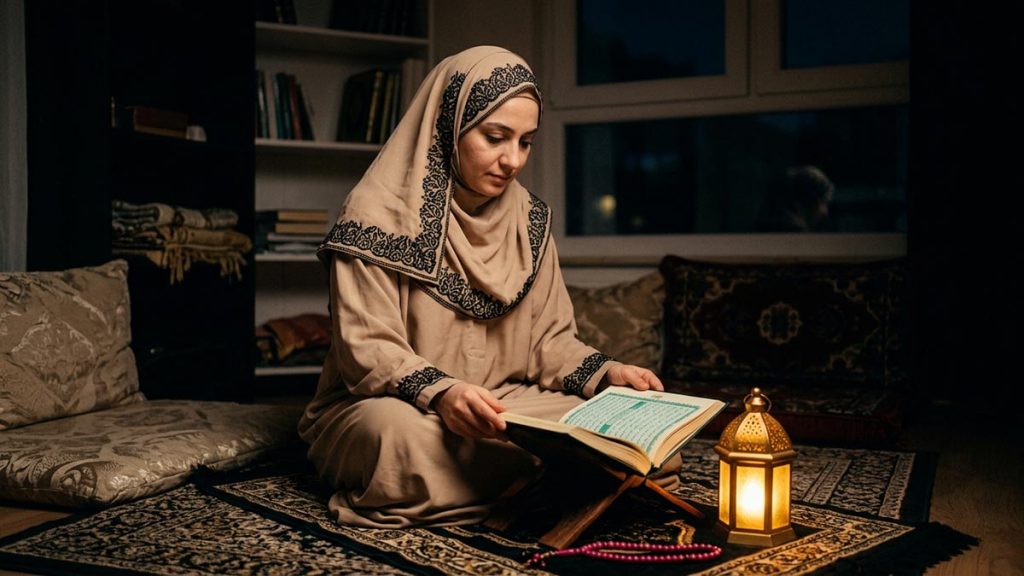
The last ten nights of Ramadan are the most blessed nights of the entire year, for hidden among them is the Night of Decree, a night better than a thousand months. In these final nights, the believer intensifies their worship, seeking the great prize of the blessed night through prayer, recitation, charity and supplication. The dua for the last ten nights centres on this earnest striving, turning wholly to Allah in the closing stretch of Ramadan to seize the greatest opportunity of the year. After weeks of fasting, the believer reaches these final nights with a heart already softened and a body trained in patience, ready to pour everything into the search for the blessed night.
لَيْلَةُ الْقَدْرِ خَيْرٌ مِنْ أَلْفِ شَهْرٍ
Laylatul-qadri khayrun min alfi shahr.
“The Night of Decree is better than a thousand months.”
The Prophet Muhammad (pbuh) would transform his worship in the last ten nights, staying awake through them, waking his family, and devoting himself entirely to Allah, as he sought the Night of Decree with all his strength. To follow his example in these nights is to draw the fullest mercy and forgiveness from the blessed month. The dua for the last ten nights expresses this devotion, asking Allah to grant the believer the Night of Decree and its boundless reward. To follow the Prophet (pbuh) in these nights is to join a path walked by the prophets and the righteous before us, who valued these hours above gold and filled them with the worship of Allah.
This guide explains the dua for the last ten nights and five ways to seek the Night of Decree, so that the believer may make the most of the closing nights of Ramadan, intensifying their worship and supplication in search of a night whose worship surpasses a lifetime, and meeting Allah with their sins forgiven and their record renewed. The believer who gives these nights their due steps out of Ramadan lighter than they entered it, carrying the hope that they were among those whom Allah freed and forgave on the greatest night of the year.
Nights Better Than a Thousand Months
In Surah Al-Qadr, Allah reveals the magnificent value of the Night of Decree, declaring that it is better than a thousand months. Hidden among the last ten nights of Ramadan, this single night surpasses more than eighty years of worship, making the closing nights of the month the most precious of the year. The believer who understands this value spends the last ten nights in earnest search of the blessed night, knowing that its reward is beyond anything else they could attain. No worldly gain, however great, could ever compare to the reward of a night that outweighs a thousand months, and so the believer sets aside the pursuits of the world to chase the prize that Allah has hidden in these final nights.
Because this immense reward is hidden in the last ten nights, the believer treats each of these nights as a treasure, filling them with prayer, recitation and supplication. The whole stretch becomes a season of intensified devotion, as the believer hopes that each night might be the very one that is better than a thousand months. The dua for the last ten nights is offered in this spirit, seeking from Allah the greatest prize of the blessed month. The believer does not approach these nights casually, but with the focus of one who knows that a single night among them may be worth more than the whole of their remaining life, and so refuses to let it slip by unguarded. Each of these nights is approached as a fresh chance, for the believer never knows which one Allah has chosen to be the greatest of all.
لَيْلَةُ الْقَدْرِ خَيْرٌ مِنْ أَلْفِ شَهْرٍ
Laylatul-qadri khayrun min alfi shahr
The Night of Decree is better than a thousand months
How the Prophet Spent These Nights
The companions described how the Prophet (pbuh) would transform his worship when the last ten nights of Ramadan arrived. Aisha reported that he would tighten his belt, a sign of devoting himself fully to worship, stay awake through the nights, and wake his family to pray. He poured all his energy into these nights as he had not done at any other time of the year, in earnest search of the Night of Decree. This was the practice of the most beloved of Allah, whose past and future were already forgiven, yet who still strove with all his strength in these nights, teaching by his example just how precious they are.
His example sets the standard for the believer in the last ten nights. Rather than letting these precious nights pass like any others, the believer follows the Prophet (pbuh) in intensifying worship, shortening sleep, and rousing the household to share in the reward. The dua for the last ten nights is part of this devotion, as the believer fills the nights with supplication, asking Allah to grant them the blessed night and its forgiveness. It is not enough to merely stay awake; the believer fills the wakefulness with worship, turning the long hours into prayer, recitation and dua, so that the tiredness of the body is transformed into a lasting and weighty treasure stored safely with Allah for the Day of Meeting.
He would tighten his belt and wake his family
Seeking the Night with Worship and Dua
The believer seeks the Night of Decree in the last ten nights through every form of worship: standing in prayer, reciting the Quran, giving charity, making dhikr, and pouring out supplication. The Prophet (pbuh) taught a special dua of pardon for the night, and the believer repeats it throughout the last ten nights, asking Allah to pardon their sins and accept their worship. Each act of devotion in these nights is multiplied in reward as the believer hopes to attain the blessed night. Knowing that even a small deed done on the Night of Decree carries the weight of a deed done across a thousand months, the believer is generous with worship in these nights, certain that nothing offered to Allah in them is ever lost.
Many believers also perform itikaf in the last ten nights, secluding themselves in the mosque to devote their time entirely to Allah, free from the distractions of daily life. Whether through itikaf or through intensified worship at home, the goal is the same: to seek the Night of Decree and its boundless mercy. The dua for the last ten nights expresses this longing, turning wholly to Allah in the most blessed nights of the year. Whether secluded in the mosque or worshipping at home, the believer pours their heart out to Allah in these nights, asking for the blessed night, for forgiveness, and for every good of this life and the next.
Five Ways to Seek the Night of Decree
The last ten nights hold the greatest reward of the year. These five ways help the believer seek the Night of Decree and draw the fullest mercy from the closing nights of the blessed month.
- Intensify your worship, following the Prophet (pbuh) in staying awake and praying through the nights.
- Repeat the dua of pardon, Allahumma innaka afuwwun, asking Allah to forgive you on the blessed night.
- Seek the odd nights especially, the twenty-first, twenty-third, twenty-fifth, twenty-seventh and twenty-ninth.
- Consider performing itikaf, secluding yourself in the mosque to devote your time wholly to Allah.
- Wake your family, sharing the reward of the nights by rousing your household to pray and supplicate.
Making the Most of the Closing Nights
The dua for the last ten nights turns the believer wholly to Allah in the most blessed nights of the year, seeking the Night of Decree better than a thousand months. By intensifying worship as the Prophet (pbuh) did, repeating the dua of pardon, seeking the odd nights especially, considering itikaf, and waking the family, the believer makes the most of the closing nights of Ramadan. To attain the blessed night in faith and seeking reward is to have ones past sins forgiven, the greatest success of the month of mercy. The believer who has truly given these nights their due reaches the end of Ramadan not with regret for opportunities lost, but with the quiet joy of one who knows they sought their Lord with everything they had.
This supplication pairs naturally with the dua for Laylat al-Qadr and the dua during itikaf. Together they help the believer fill the final nights of Ramadan with worship, supplication and the search for the Night of Decree.
In the last ten nights of Ramadan, the Prophet (pbuh) intensified his worship to seek the Night of Decree better than a thousand months. Learn the duas of Ramadan with us on YouTube, where the supplications are recited aloud, on Instagram for a reminder to make the most of the last ten nights, and on LinkedIn where readers share how they seek the blessed night.
Frequently Asked Questions
The dua for the last ten nights centres on seeking the Night of Decree through intensified worship and the supplication of pardon, Allahumma innaka afuwwun. The believer fills these blessed nights with prayer, recitation and dua.
Because hidden among them is the Night of Decree, a night better than a thousand months. Worship on that single night surpasses more than eighty years, making the last ten nights the most precious of the year.
The Prophet (pbuh) would tighten his belt, stay awake through the nights, and wake his family to pray, devoting himself entirely to worship as he sought the Night of Decree with all his strength.
Intensify your worship, repeat the dua of pardon, seek the odd nights especially, consider performing itikaf, and wake your family to pray. These follow the example of the Prophet (pbuh) in the last ten nights.
The odd nights of the last ten are emphasised, the twenty-first, twenty-third, twenty-fifth, twenty-seventh and twenty-ninth, though the exact night is hidden so the believer strives across all ten.
Itikaf is secluding oneself in the mosque to devote time wholly to Allah, free from daily distractions. The Prophet (pbuh) performed itikaf in the last ten nights, and many believers follow this to seek the Night of Decree.