
Dua for Laylat al-Qadr
5 Things to Know About the Night of Decree
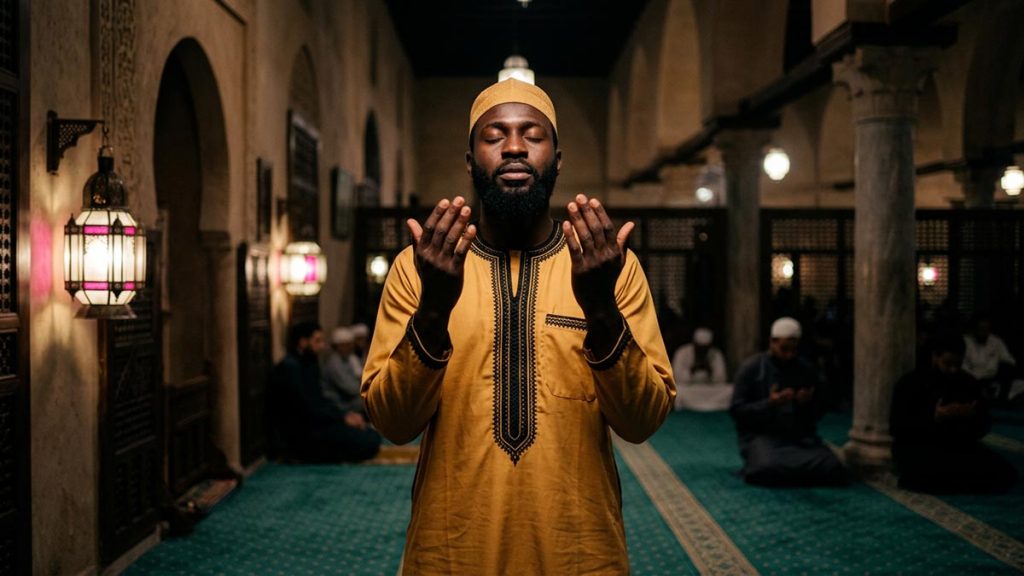
Laylat al-Qadr, the Night of Decree, is the greatest night of the year, a night better than a thousand months, on which the Quran was first revealed and the angels descend with peace until the break of dawn. To worship Allah on this single night carries more reward than worship across more than eighty years, making it the most precious opportunity in the life of a believer. The dua for Laylat al-Qadr is the beautiful supplication of pardon the Prophet Muhammad (pbuh) taught for this blessed night. Among all the nights of the year, none carries such weight, for on it the course of the coming year is written and the mercy of Allah descends upon the earth in a measure beyond counting.
اللَّهُمَّ إِنَّكَ عَفُوٌّ تُحِبُّ الْعَفْوَ فَاعْفُ عَنِّي
Allāhumma innaka ‘afuwwun tuhibbul-‘afwa fa‘fu ‘annī.
“O Allah, You are Pardoning and love pardon, so pardon me.”
When his beloved wife Aisha asked the Prophet (pbuh) what to say if she found the Night of Decree, he taught her a short and beautiful supplication asking Allah for pardon, for the One who is Pardoning loves to pardon His servants. This concise dua gathers the deepest need of the believer on the most blessed of nights: to have their sins erased and to meet Allah forgiven. This guide explains the dua for Laylat al-Qadr and five things to know about the Night of Decree, so that the believer may recognise its value, search for it in the right nights, and fill it with the supplication that turns a single night into the means of a lifetime of forgiveness.
Seeking the Night of Decree in the last ten nights of Ramadan, especially the odd nights, the believer fills these blessed hours with prayer, recitation and supplication, repeating the dua for pardon with hope and humility. To attain this night in faith and seeking reward earns the forgiveness of all past sins, so the believer strives for it earnestly, asking Allah for the pardon that the Prophet (pbuh) himself taught his family to seek. The reward is too great and the night too precious for the believer to leave it to chance, and so they prepare for it across the whole of the last ten nights.
The Pardon the Prophet Taught
When Aisha, the wife of the Prophet (pbuh), asked him what she should say if she knew which night was the Night of Decree, he taught her the beautiful supplication quoted above: O Allah, You are Pardoning and love pardon, so pardon me. This short and profound dua asks Allah for pardon, calling upon Him by His beautiful name Al-Afuww, the Pardoning, the One who not only forgives but loves to forgive and to erase the sins of His servants entirely. To call upon Allah by this name on this night is to appeal directly to His love of pardon, reminding oneself that the door of forgiveness is never more open than it is on the greatest night of the year.

The choice of this dua is deeply meaningful. On the greatest night of the year, when reward is multiplied beyond measure, the Prophet (pbuh) taught his family to ask not for worldly gifts but for the pardon of Allah, the greatest treasure a servant can attain. To be pardoned is to have ones sins wiped away as though they never were, meeting Allah with a clean record. The dua for Laylat al-Qadr seeks this supreme blessing on the most blessed of nights. The believer who grasps this turns away from lesser requests, understanding that a person who is truly pardoned has been given everything, for there is no greater gift than to stand before Allah with a record wiped clean.
اللَّهُمَّ إِنَّكَ عَفُوٌّ تُحِبُّ الْعَفْوَ فَاعْفُ عَنِّي
Allahumma innaka ‘afuwwun tuhibbul-‘afwa fa‘fu ‘anni
You are Pardoning and love to pardon
A Night Better Than a Thousand Months
Allah devoted an entire chapter of the Quran to this night, Surah Al-Qadr, in which He reveals that the Night of Decree is better than a thousand months. A thousand months is more than eighty years, longer than most human lives, so worship on this single night surpasses a lifetime of devotion. On this night the angels and the Spirit descend by the permission of their Lord with every decree, and it is peace until the break of dawn. The whole night is wrapped in tranquillity and mercy, as the angels fill the earth and carry the decrees of the coming year, making it a night unlike any other in its blessing and its calm.
This magnificent description shows why the believer longs for the Night of Decree above all other nights. The One who created time has chosen this night and filled it with mercy, peace and the descent of the angels. To stand in prayer, recite the Quran, and pour out the dua of pardon on this night is to seize a reward beyond imagining. The believer who understands its value spends the last ten nights searching for it with hope and devotion. No effort spent in seeking such a night is ever wasted, for even the nights that turn out not to be the Night of Decree are nights of worship in the most blessed days of the year, each carrying its own great reward.
لَيْلَةُ الْقَدْرِ خَيْرٌ مِنْ أَلْفِ شَهْرٍ
Laylatul-qadri khayrun min alfi shahr
The Night of Decree is better than a thousand months
Seeking the Night in the Last Ten
The Prophet (pbuh) taught the believers to seek the Night of Decree in the last ten nights of Ramadan, and especially in the odd nights: the twenty-first, twenty-third, twenty-fifth, twenty-seventh and twenty-ninth. Its exact night was kept hidden so that the believer would strive across all ten nights, intensifying their worship rather than relying on a single night. This hidden treasure encourages a depth of devotion throughout the final stretch of Ramadan. Had the night been named openly, many would have worshipped on that night alone and neglected the rest, but by concealing it Allah draws from His servants ten nights of striving instead of one, multiplying their reward and their nearness to Him.

Because the night is hidden, the wise believer treats every one of the last ten nights as though it could be the Night of Decree, filling each with prayer, recitation and the dua of pardon. The Prophet (pbuh) himself would intensify his worship in these nights, staying awake, waking his family, and devoting himself wholly to Allah. By seeking the night earnestly across the last ten nights, the believer ensures they do not miss the greatest opportunity of the year. It would be a profound loss to let such nights pass while distracted, and so the wise believer guards these nights jealously, treating each one as though the whole reward of the year depended upon it.
تَحَرَّوْا لَيْلَةَ الْقَدْرِ فِي الْوِتْرِ مِنَ الْعَشْرِ الْأَوَاخِرِ
Taharraw laylatal-qadri fil-witri minal-‘ashril-awakhir
Seek it in the odd nights of the last ten
Five Things to Know About the Night of Decree
The Night of Decree is the most precious night of the year. These five things help the believer seek and honour this great and deeply blessed night of the year well.
- It is better than a thousand months, so worship on this night surpasses a lifetime of devotion.
- The dua of pardon, Allahumma innaka afuwwun, is the supplication the Prophet (pbuh) taught for it.
- It is sought in the last ten nights of Ramadan, especially the odd nights.
- Its exact night is hidden, so the believer strives across all the last ten nights.
- Whoever stands it in faith seeking reward has their past sins forgiven.
Seizing the Greatest Night
The dua for Laylat al-Qadr seizes the greatest night of the year by asking Allah for His pardon, the supreme treasure a servant can attain. By reciting the supplication the Prophet (pbuh) taught Aisha, seeking the night in the last ten nights, treating every odd night as though it could be the Night of Decree, and standing in faith seeking reward, the believer makes the most of a night better than a thousand months. To attain this night and be pardoned is to meet Allah with sins erased, the greatest success of the blessed month. The believer who has spent the night in prayer and pardon emerges as though newly born, the burden of past sins lifted, free to begin again with a heart cleansed by the mercy of Allah on the night He honoured above all others.

This supplication pairs naturally with the dua for the last ten nights and the dua during itikaf. Together they help the believer fill the final nights of Ramadan with prayer, supplication and the search for the Night of Decree.
On the Night of Decree, better than a thousand months, the Prophet (pbuh) taught his family to ask Allah for pardon. Learn the duas of Ramadan with us on YouTube, where the supplications are recited aloud, on X for a reminder to seek the Night of Decree, and on Pinterest where readers share how they spend the last ten nights.
Frequently Asked Questions
The dua for Laylat al-Qadr is the supplication of pardon: Allahumma innaka afuwwun tuhibbul-afwa fafu anni, O Allah You are Pardoning and love pardon, so pardon me. The Prophet (pbuh) taught it to Aisha for the Night of Decree.
When Aisha asked what to say if she found the Night of Decree, the Prophet (pbuh) taught her to ask for pardon, the greatest treasure a servant can attain. On the most blessed night, he directed her to seek the forgiveness of Allah.
Because it is better than a thousand months, more than eighty years, so worship on this single night surpasses a lifetime. The Quran was revealed on it, the angels descend, and it is peace until dawn.
It is sought in the last ten nights of Ramadan, especially the odd nights: the twenty-first, twenty-third, twenty-fifth, twenty-seventh and twenty-ninth. Its exact night is hidden so the believer strives across all ten.
Its exact night was kept hidden so that the believer would strive across all the last ten nights, intensifying their worship rather than relying on a single night. This encourages deep devotion throughout the final stretch.
The Prophet (pbuh) taught that whoever stands in prayer on the Night of Decree out of faith and seeking reward will have their past sins forgiven. It is the greatest opportunity for forgiveness in the year.