
Muslim Entrepreneurs

Long before the word existed, Islam was a faith of entrepreneurs. The Prophet Muhammad (pbuh) was a trader, his beloved wife Khadijah was a wealthy businesswoman, and many of his closest companions built fortunes through honest commerce. For Muslims dreaming of starting a business today, this rich heritage offers something more valuable than any modern handbook: a set of timeless principles for building wealth without losing one’s soul. Here are seven enduring lessons for Muslim entrepreneurs, drawn from the example of the Prophet (pbuh) and those around him, and as relevant to a startup founder now as to a caravan trader fourteen centuries ago.
التَّاجِرُ الصَّدُوقُ الْأَمِينُ مَعَ النَّبِيِّينَ وَالصِّدِّيقِينَ وَالشُّهَدَاءِ
“The truthful and trustworthy merchant will be with the prophets, the truthful, and the martyrs.”
A Faith Built by Honest Trade
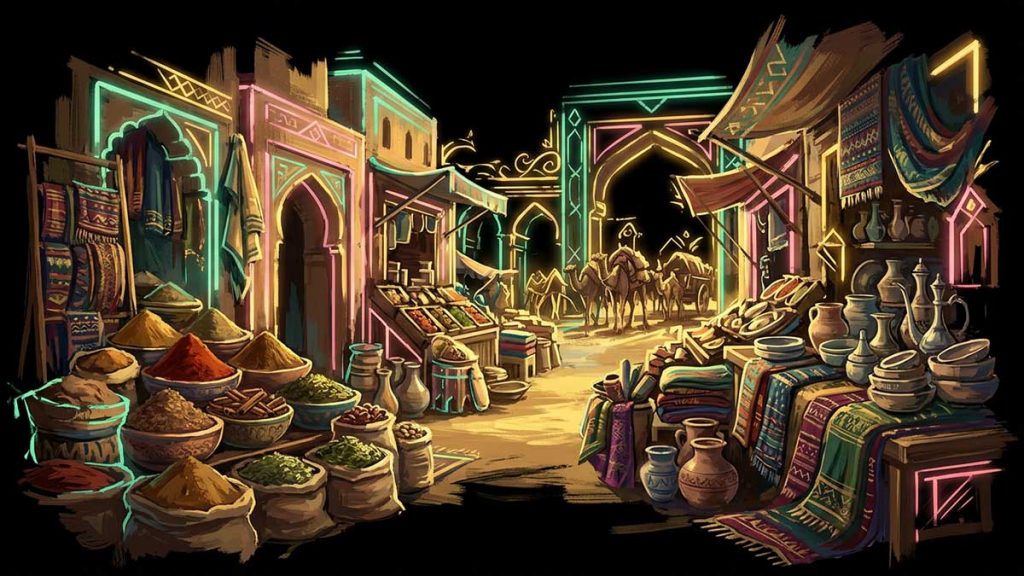
It is easy to forget that the heart of early Islam beat in a bustling trading city. Makkah sat on the great caravan routes, and commerce ran through its veins. The Prophet Muhammad (pbuh) himself earned his living as a merchant for years before prophethood, travelling with trade caravans and building a reputation that would shape the rest of his life.
That reputation can be summed up in a single title the people of Makkah gave him: Al-Amin, the trustworthy. In a marketplace where sharp practice was common, he stood out for his honesty, fairness and reliability, never cheating a customer or breaking a promise. His character in business was so admired that even those who later opposed his message still trusted him with their valuables.
His wife Khadijah was herself one of the most successful merchants in the city, a woman of wealth and standing who ran her own trading enterprise. It was her business that first brought the two together, and her confidence in the young Muhammad’s integrity that led her to employ him and, in time, to propose marriage. From its very beginnings, then, Islam was woven together with the world of enterprise.
For Muslim entrepreneurs, this history is not a footnote but a foundation. It tells us that seeking wealth through honest effort is not at odds with deep faith; the two were partners from the start. The seven lessons that follow distil that legacy into guidance any believer can carry into their own ventures. Indeed, some of the earliest Muslims to carry the faith to distant lands were not armies but traders, whose honesty and good character won hearts wherever their caravans and ships arrived. For Muslim entrepreneurs, that is a stirring thought: a well-run, ethical business can be a quiet form of dawah in its own right.
In Makkah they called the Prophet (pbuh) Al-Amin, the trustworthy — for his honesty in trade.
Lesson 1: Trade With Total Honesty

If there is one quality that defines the ideal Muslim in business, it is honesty. The hadith above places the truthful, trustworthy merchant in the very finest company on the Day of Judgement, alongside the prophets and the martyrs. Few statements could raise the dignity of honest commerce higher than that.
The Prophet (pbuh) was uncompromising on this point. He once passed a trader whose pile of grain hid wet, spoiled produce beneath a dry surface, and he taught plainly that whoever deceives is not one of us. Hiding defects, exaggerating claims, manipulating buyers or shading the truth in a contract all fall under that warning, whatever clever name modern marketing gives them.
For today’s Muslim entrepreneurs, this is both a moral anchor and, in the long run, a sound strategy. Customers return to those they can trust, and a reputation for integrity is among the most valuable assets any business can own. Honesty may occasionally cost a quick sale, but it builds the kind of lasting trust on which real success is founded. In a digital age of reviews, ratings and instant reputation, this old wisdom has only grown sharper. A single act of dishonesty can now follow a business for years, while a name built on trust spreads further and faster than ever before.
The Prophet (pbuh) warned: whoever deceives is not one of us — no exceptions in business.
Lesson 2: Earn Only What Is Halal

For a Muslim, how you earn matters as much as how much you earn. Wealth must be gathered through means that are halal, lawful and wholesome, and kept clear of what is forbidden. This rules out trading in harmful goods, cheating, exploitation and, above all, dealing in interest, or riba, which the Quran condemns in the strongest terms.
This principle quietly shapes every decision a faithful entrepreneur makes, from the products they sell to the way they raise money and treat their staff. A business that profits by harming people, deceiving them or trapping them in unfair debt may grow rich, but it forfeits the blessing, the barakah, that gives wealth its true worth in Islam.
Far from being a limitation, the pursuit of halal income gives a venture a clear conscience and a solid ethical core. Many of today’s most admired businesses are valued precisely for being ethical and responsible, a standard Islam set for its merchants many centuries ago. Clean earnings let an entrepreneur sleep soundly and stand before God with confidence. There is a quiet peace in knowing that not a single penny of one’s wealth was taken unjustly, and that peace, many Muslim entrepreneurs find, is worth more than any windfall that compromise might bring.
In Islam it is not only how much you earn, but how you earn it — that truly matters.
Lesson 3: Honour Every Promise
The Quran opens one of its chapters with a direct command to the believers to fulfil their contracts, and faithfulness to one’s word runs right through Islamic ethics. In business, a promise made is a trust accepted, whether it is a delivery date, a price agreed, a wage owed or the terms of a partnership.
The Prophet (pbuh) listed breaking a trust and going back on one’s word among the clear signs of hypocrisy, marking them as grave failings of character. For an entrepreneur, this means that contracts are sacred, deadlines are taken seriously, and commitments to customers, suppliers and employees are met even when it becomes difficult or costly to do so.
Reliability of this kind is the bedrock of every lasting commercial relationship. People want to work with those they can depend on, and a reputation for keeping promises opens doors that no amount of advertising can. In honouring our word, we mirror in miniature the faithfulness that Islam asks of us before God himself. A handshake, in the Islamic ideal, is as binding as any signed document, because behind it stands not just the law but the conscience of a believer who answers ultimately to their Lord.
Lesson 4: Serve People, Not Just Profit
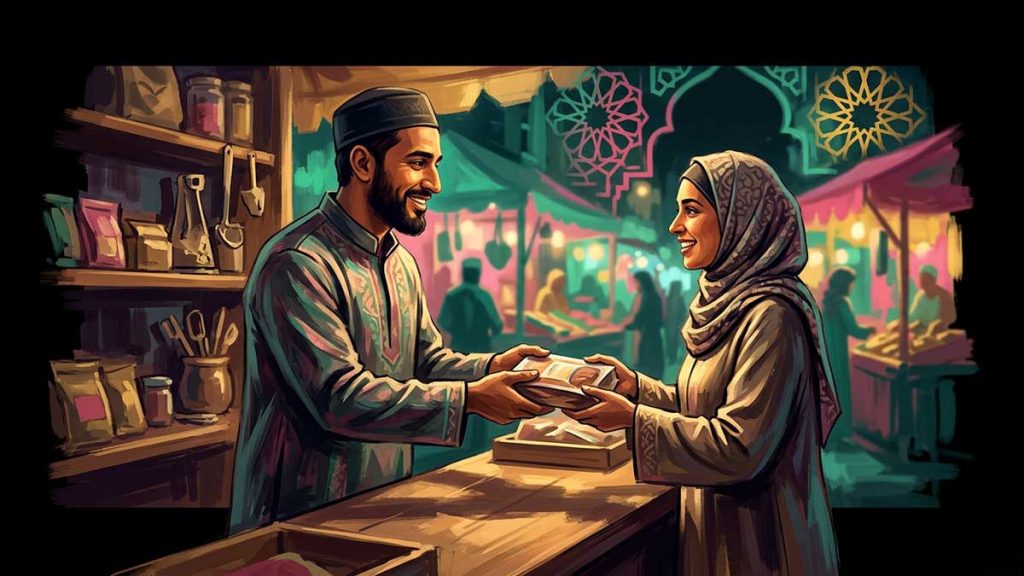
The Prophet (pbuh) taught that the best of people are those who are most useful to others, and this places service at the very centre of meaningful work. The most blessed businesses are those that genuinely solve problems and meet real human needs, treating profit as the reward for benefit given rather than the only goal worth chasing.
This shift in intention transforms the whole experience of work. An entrepreneur who asks first how their venture can help people, ease their burdens or improve their lives builds something with purpose and soul, not merely a machine for extracting money. Customers and employees alike can feel the difference between being served and being exploited.
Seen this way, honest enterprise becomes a form of worship and a kind of ongoing charity. Providing useful goods, creating fair employment and strengthening the community are all acts pleasing to God when undertaken with sincerity. The truest measure of a Muslim business is not only its balance sheet but the good it leaves behind in the world. This is why so many believers weigh their ventures by more than money, asking what difference they have made to their staff, their customers and the wider community. A profitable business that harms people is, in Islamic eyes, a poor one; a modest business that uplifts them is rich indeed.
The Prophet (pbuh) said the best people are those most useful to others — the heart of meaningful business.
Lesson 5: Pursue Excellence in Your Work

Islam asks its followers to do whatever they do beautifully and well. The Prophet (pbuh) taught that God loves, when one of you does a task, that he does it with excellence and mastery. This principle, often called itqan, calls every Muslim entrepreneur to take genuine pride in the quality of their work.
Excellence means refusing to cut corners, honouring the craft of whatever one produces, and treating even small details as worthy of care. A believer does not offer shoddy goods or careless service simply because they can get away with it, knowing that God sees the effort behind the product even when the customer does not.
This pursuit of quality is also, conveniently, the surest path to lasting success. Businesses built on excellence earn loyalty and a good name, while those built on the bare minimum rarely endure. To strive for mastery is to honour both the customer and the One who gave us our skills in the first place. Whether one is coding an app, baking bread or building furniture, the call to excellence is the same, quietly lifting ordinary work into something close to worship.
Lesson 6: Be Generous and Give Back
Wealth in Islam is never meant to be hoarded; it is a trust to be shared. Every prosperous Muslim pays zakat, an annual portion of their wealth given to those in need, and voluntary generosity beyond that is warmly encouraged and richly rewarded.
The companion Abdur-Rahman ibn Awf is a shining example for Muslim entrepreneurs. Arriving in Madinah with almost nothing, he asked only to be shown the marketplace, built a thriving trade through honest dealing, and became immensely wealthy, then gave with breathtaking generosity to the poor and to the cause of his faith. His riches were a means, not an end.
Far from draining a business, generosity is believed to increase its barakah, the divine blessing that makes wealth truly beneficial. Keeping a charity habit woven into one’s finances keeps the heart humble and the wealth pure. The Muslim entrepreneur gives not to be seen, but because everything they hold is ultimately a gift on loan from God.
Abdur-Rahman ibn Awf arrived with nothing and asked only to be shown the marketplace — then gave a fortune away.
Lesson 7: Trust God and Take Action
Finally, Islam strikes a beautiful balance between effort and faith. When a man asked whether he should leave his camel untied and simply trust in God, the Prophet (pbuh) replied that he should tie his camel first, and then trust in God. The lesson is unmistakable: do everything in your power, then leave the outcome to your Lord.
For the entrepreneur, this is liberating. It means working hard, planning carefully and taking sensible risks, while surrendering the anxiety over results that torments so many in business. Success and failure both rest ultimately in God’s hands, and a believer who has given their honest best can face either with a steady heart. There is deep relief in this for anyone who has lain awake worrying over a struggling venture. The believer is responsible for the effort, never the result, and that single shift in perspective can turn crushing pressure into calm, sustained determination.
This trust, or tawakkul, is the quiet strength behind every Muslim venture. It turns the fear of failure into calm perseverance and keeps gratitude alive in good times and bad. The entrepreneur who ties their camel and trusts in God works with both diligence and serenity, knowing that effort is their duty and the outcome is His to decide.
The Prophet (pbuh) said: tie your camel, then trust in God — effort and faith together.
Muslim Entrepreneurs Today

These ancient lessons are alive and thriving in the modern world. Across the globe, a new generation of Muslim entrepreneurs is building businesses that honour the same values, from halal food brands and modest-fashion labels to Islamic fintech apps, ethical investment platforms and countless small enterprises serving their local communities.
The wider halal economy, covering food, finance, travel, fashion and more, has grown into one of the fastest-expanding markets in the world, opening enormous opportunities for those who can serve it with integrity. Young Muslim founders are showing that one can be ambitious and devout at once, chasing innovation without abandoning principle.
What unites these ventures is a conviction as old as Islam itself: that business can be a force for good, a path of service and even a form of worship when conducted honestly and generously. The tools and markets change with every generation, but the timeless principles guiding Muslim entrepreneurs remain exactly as they were in the marketplaces of early Makkah. Whatever the century, the formula holds: honest dealing, halal earnings, real service, genuine excellence and open-handed generosity, all carried on a foundation of trust in God. Those who hold fast to these principles inherit not merely a business model, but a way of working that has been blessed since the very dawn of Islam.
Are you building, or dreaming of building, a business of your own? These timeless principles are a powerful place to begin. For more inspiration for Muslim entrepreneurs and faith in everyday life, follow It’s About Islam — find us on YouTube, Pinterest and Instagram.
Frequently Asked Questions
Yes. The Prophet Muhammad (pbuh) worked as a merchant before prophethood and was known as Al-Amin, the trustworthy. His wife Khadijah was a successful businesswoman, and many companions, like Abdur-Rahman ibn Awf, built wealth through honest trade.
A halal business deals in lawful, wholesome goods and services, earns through honest means, avoids interest (riba), cheating and exploitation, honours its contracts, and treats customers and staff fairly. How wealth is earned matters as much as how much.
Not at all. Islam permits and even encourages seeking wealth through honest effort. What matters is that the earnings are halal, that wealth does not corrupt the heart, and that it is shared generously through zakat and charity.
Barakah is divine blessing that makes wealth truly beneficial and lasting. Muslims believe that honesty, halal earnings and generosity attract barakah, so that even modest profits become a source of good, while ill-gotten gains lose it.
By working hard while trusting God with the outcome, a balance the Prophet (pbuh) described as tying your camel and then trusting in God. Faithful entrepreneurs pursue excellence and growth while keeping honesty, service and generosity at the centre.