
What Does Astaghfirullah Mean?
Astaghfirullah is the phrase a Muslim reaches for to seek Allah’s forgiveness — after a mistake, after prayer, or simply as a constant turning back to God. Light on the tongue but heavy in reward, it keeps the heart humble and clean. But what does this phrase mean, where does it come from, and when is it said? This guide explains.
Turning Back to Allah for Forgiveness
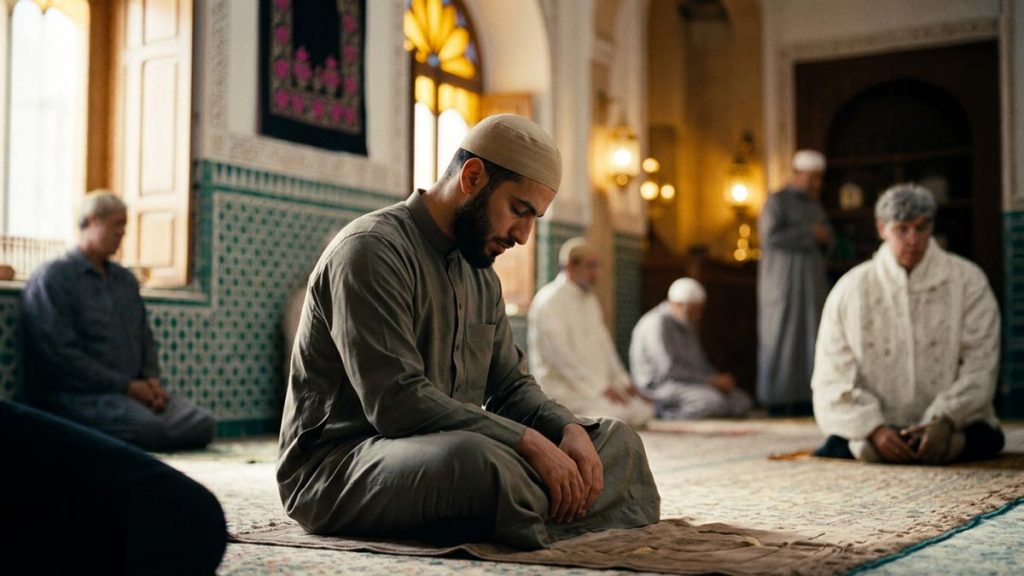
At its simplest, Astaghfirullah (أَسْتَغْفِرُ اللَّه) means “I seek forgiveness from Allah.” It is a short prayer asking Allah to pardon one’s sins and shortcomings, and to cover them with His mercy.
It is the language of istighfar — seeking forgiveness. To say it is to admit, humbly, that one has fallen short, and to turn back to Allah trusting that He is always ready to forgive.
To say it is to admit, humbly, that one has fallen short and turn back to a forgiving God.
Breaking Down Astaghfirullah
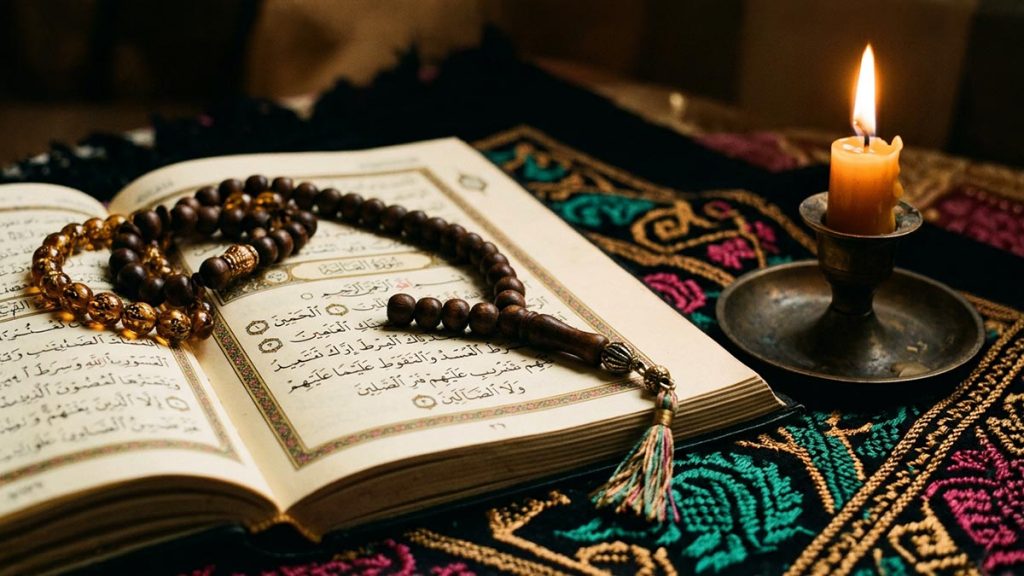
To feel the full weight of the phrase, it helps to unpack it word by word:
- Astaghfiru — أَسْتَغْفِرُ — “I seek forgiveness,” from ghafara, to forgive and to cover over.
- Allah — اللَّه — “Allah,” Al-Ghafur, the Ever-Forgiving, the One whose pardon is sought.
Together the words carry the heart back to Allah in search of pardon — the heart of forgiveness in Islam.
Astaghfiru means I seek forgiveness, Allah is the Ever-Forgiving.
A Door Always Open

The phrase rests on a comforting truth: that Allah’s door of forgiveness is never closed. No matter how many times a person slips, they can turn back with these words, and Allah, Al-Ghafur, meets sincere repentance with mercy.
The Prophet (pbuh) himself, though sinless, sought forgiveness many times a day, teaching believers to keep istighfar always on the tongue. Far from a sign of despair, it is a sign of hope — a habit that keeps the heart soft and points it toward repentance, the constant turning back that Allah loves.
Allah’s door of forgiveness is never closed — however many times we slip.
When Do Muslims Say Astaghfirullah?
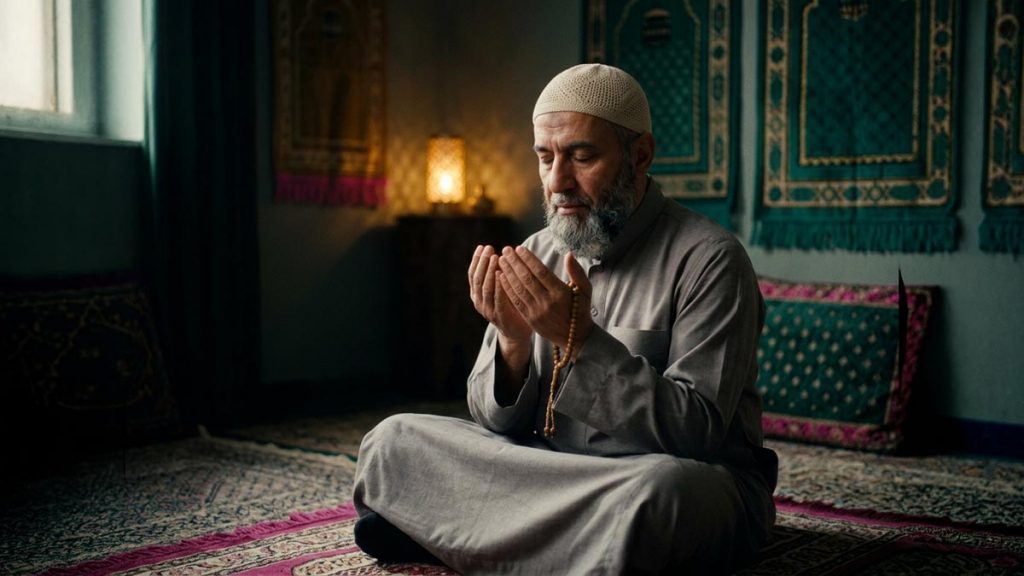
The phrase belongs to every moment of falling short. A believer says it after a sin or mistake, after the daily prayers, and whenever they catch themselves in a wrong thought, word, or deed.
It is also said on hearing or seeing something sinful, as a way of distancing the heart from it, and simply as constant remembrance throughout the day. Wherever a believer wishes to turn back to Allah, this is the phrase that opens the way.
Said after a sin, after prayer, *or as constant remembrance*.
5 Powerful Moments Muslims Say Astaghfirullah
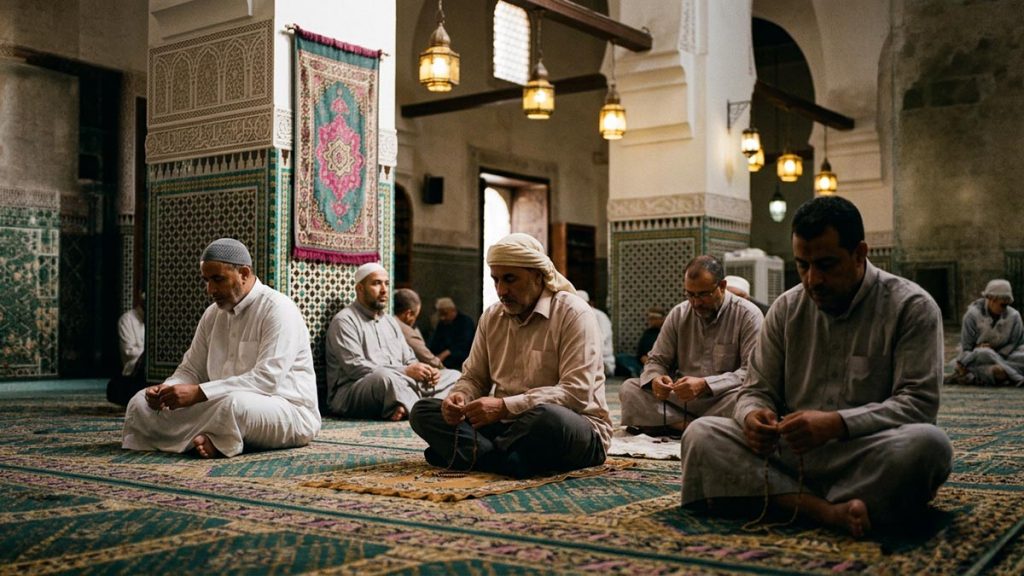
The phrase runs through a believer’s day. Here are five of the most common moments:
- After a sin or mistake. The moment a believer errs, they turn back to Allah with these words.
- After the daily prayers. It is a sunnah to seek forgiveness three times at the end of each prayer.
- On seeing or hearing wrong. Faced with something sinful, a Muslim distances their heart with istighfar.
- As constant remembrance. Kept on the tongue through the day, it keeps the heart humble and clean.
- In moments of hardship. Seeking forgiveness is a means of relief, opening the way to Allah’s forgiveness.
In each case the phrase does the same cleansing thing: it turns a believer back to Allah and asks for His pardon.
The Prophet (pbuh) sought forgiveness many times a day though he was sinless.
Astaghfirullah and Related Phrases

It stands among the great words of remembrance, alongside SubhanAllah, “glory be to Allah,” and Alhamdulillah, “all praise is due to Allah.”
It is often followed by turning fully back to God with La ilaha illallah, “there is no god but Allah” — renewing faith as the heart seeks pardon.
Why This Phrase Matters
It is easy to carry the weight of mistakes and feel they cannot be undone. Astaghfirullah lifts that weight, reminding a believer that Allah’s forgiveness is always within reach for the one who sincerely turns back.
In keeping it on the tongue, a Muslim keeps their heart humble and hopeful. To seek forgiveness often is not to dwell on sin, but to stay close to a merciful God — and to trust that His pardon is greater than any fault.
If this deepened your love for the words you already say every day, come and learn with us. Follow It’s About Islam on YouTube, TikTok and Facebook for daily reminders, Quran reflections and the beautiful meanings behind the phrases every Muslim knows by heart.
It means “I seek forgiveness from Allah.” It is a short prayer asking Allah to pardon one’s sins and cover them with His mercy.
After a sin or mistake, after the daily prayers, on seeing or hearing something wrong, in hardship, and simply as constant remembrance of Allah throughout the day.
Istighfar is the act of seeking Allah’s forgiveness, of which Astaghfirullah is the key phrase. The Prophet (pbuh) encouraged keeping it always on the tongue.
There is no fixed limit. It is a sunnah to say it three times after each prayer, and believers are encouraged to seek forgiveness abundantly. The Prophet (pbuh) did so many times a day.
The Quran repeatedly urges believers to seek Allah’s forgiveness and promises that He is Ever-Forgiving. The phrase grows directly from that command to turn back to Allah.