
What Is a Prayer Mat and Why Do Muslims Use One?
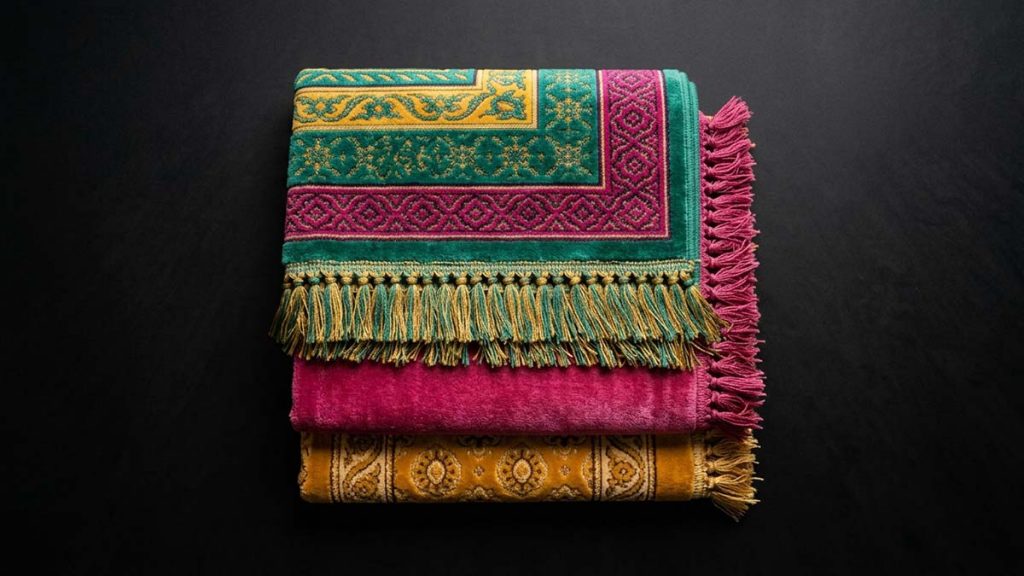
A prayer mat is a clean, often beautifully patterned mat that a Muslim spreads on the ground to perform the five daily prayers. Light enough to roll up and carry, it gives the worshipper a pure and comfortable space to stand, bow and prostrate before Allah, whether at home, at work or while travelling. Simple yet deeply cherished, it is one of the most familiar and loved items in any Muslim household.
More than a piece of fabric, a prayer mat marks out a small place set aside for worship and turns any spot into a space for meeting the Lord. Its clean surface helps ensure the purity that prayer requires, while its cushioning eases the body through the movements of the prayer. In this guide we explain what a prayer mat is, why Muslims treasure it, the central place of prayer in Islam, its link to cleanliness, how to choose one, the styles available, its value as a gift and how to care for it.
وَأَقِمِ الصَّلَاةَ لِذِكْرِي
“And establish prayer for My remembrance.”
What Is a Prayer Mat?
A prayer mat, also called a prayer rug or sajjada, is a rectangular mat used by Muslims as a clean surface for the daily prayers. It is large enough for a person to stand on and then to place their hands, knees and forehead upon during prostration, marking out a personal and purified space for worship.

Most are woven from soft fabric and decorated with beautiful Islamic designs, often featuring an arch, or mihrab, that points towards the direction of prayer. They are made to be light and portable, easily rolled up and carried in a bag or stored neatly when not in use.
While prayer is valid on any clean ground, a dedicated mat brings two real benefits. It guarantees a clean surface wherever a person prays, and it cushions the body through the bowing and prostration, making the prayer both purer and more comfortable.
The whole earth has been made for us a place of prayer and purity wherever we may stand
6 Reasons Muslims Treasure It
Its place in daily life rests on faith, purity and comfort together. Here are six reasons Muslims treasure this simple essential.
- It provides a clean surface for the five daily prayers
- It cushions the knees and forehead in prostration
- It is light, portable and easy to carry anywhere
- Its arch design helps mark the direction of prayer
- It sets aside a special space devoted to worship
- It makes a beautiful and meaningful gift
Prayer at the Heart of Islam
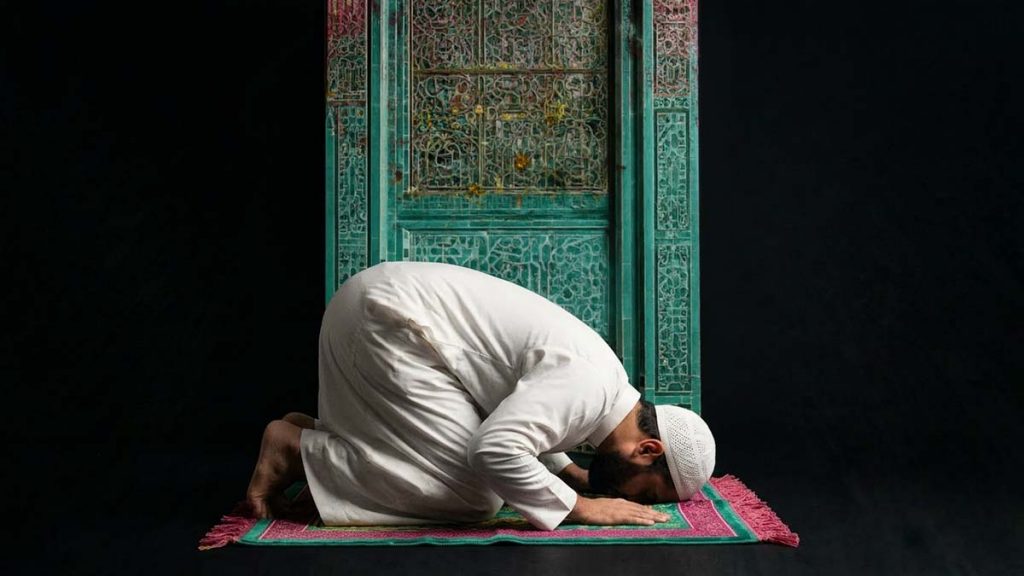
Prayer, or salah, stands at the very heart of Islam as the second pillar of the faith and the act that most defines a Muslim’s daily life. Performed five times each day, it is a direct connection between the servant and the Lord, woven into the rhythm of every morning, noon and night. You can read more about its beauty in our collection of sayings about prayer.
The Prophet Muhammad (pbuh) described prayer as the pillar of the religion and taught that it will be the first deed a person is questioned about on the Day of Judgement. To stand in prayer is to fulfil one of the greatest duties and joys of the believing heart.
A prayer mat supports this central act in a small but meaningful way. By providing a ready and clean place to pray, it helps a Muslim answer the call to worship promptly, turning to Allah, Al-Quddus, the Most Pure, throughout the day.
Prayer stands firm in the faith as the pillar of the religion and the light of the believer
Cleanliness and the Place of Prayer
Cleanliness is essential to prayer in Islam. Before each prayer a Muslim makes wudu, the ritual washing, and the place where they pray must also be clean and free of impurity for the prayer to be valid. The care taken over this purity reflects the respect owed to standing before the Lord, a theme explored in our Inspired by the Prophet section.
This is where a mat proves so useful. By laying down a clean surface, the worshipper can be confident that the ground beneath them is pure, even in a place whose cleanliness is uncertain, such as an office floor, a park or a roadside.
In this way the mat becomes part of the preparation for worship itself. Just as washing readies the body, spreading a clean mat readies the place, helping a Muslim come to prayer pure in every sense.
Keep ever clean with love and care the place where you stand to pray for purity is beloved
Choosing a Prayer Mat
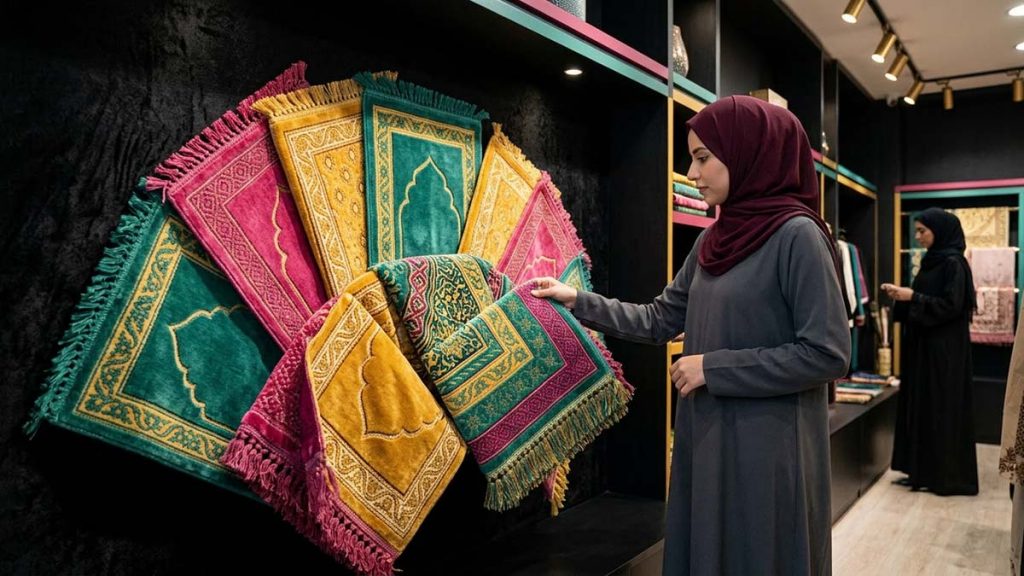
When choosing a prayer mat, comfort and quality matter most. Look for a soft yet supportive surface that cushions the forehead and knees, with enough padding to make long prayers comfortable without being so thick that standing feels unsteady. Many Muslims keep a thicker mat at home and a thin travel prayer mat for journeys.
Size is worth considering too. A mat should be long enough to comfortably fit the body in prostration, with a little room to spare, and there are larger family mats as well as compact single ones. A non-slip backing is a welcome feature, keeping the mat steady on smooth floors.
Beyond the practical, the beauty of a prayer mat brings its own quiet joy. Choosing a design and colour that lifts the heart can make the daily prayers feel all the more special, turning each one into a small and welcome moment of peace.
Styles, Designs and Materials
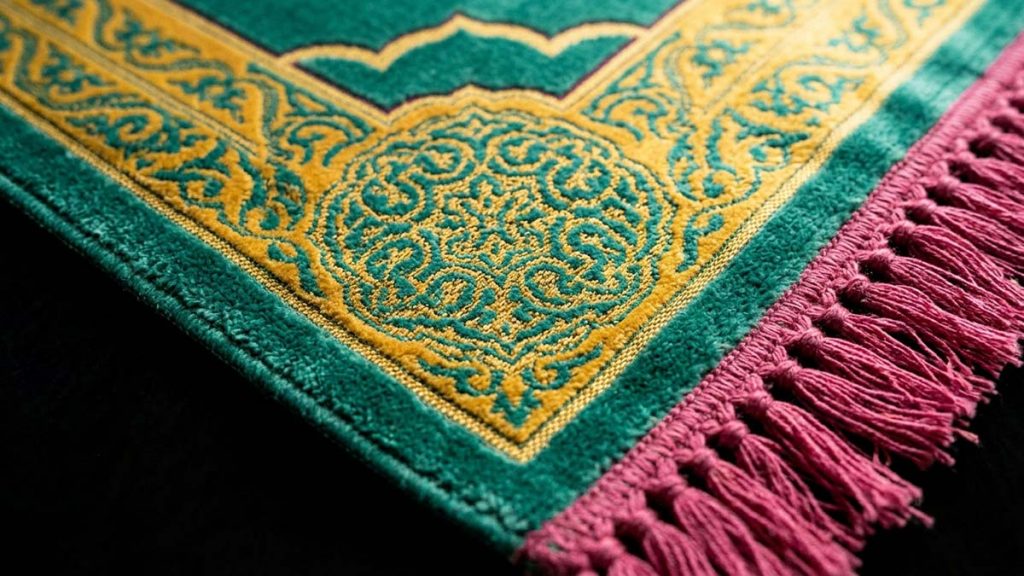
The variety of prayer mats is wonderful. Traditional woven rugs feature intricate geometric and floral patterns, often with the familiar mihrab arch at one end, while modern mats come in countless colours, fabrics and styles to suit every taste and home.
Materials range from soft velour and chenille to plush memory foam and hard-wearing woven cotton, each offering a different balance of comfort and durability. Some include helpful extras, such as a built-in compass to find the prayer direction or a padded section for the knees and forehead.
There are also specialist mats for particular needs, including thick orthopaedic mats for those with joint pain and foldable pocket mats for travel. Whatever the style, the purpose remains the same: a clean, comfortable and beautiful place to meet the Lord.
Take your adornment and present yourself well at every place of prayer before the Lord of all
A Gift and a Comfort
A prayer mat makes one of the most thoughtful gifts a Muslim can give or receive. Because it is used every single day in worship, it carries lasting meaning, and the giver shares in the reward of each prayer offered upon it. It is a cherished present for Eid, for weddings, for a new home or to welcome someone to Islam, sitting beautifully alongside a tasbih.
It is also a true comfort in a busy life. Spreading a familiar, beloved mat to pray can bring a moment of calm and focus, a small ritual that settles the heart before standing before the Lord and helps the worshipper leave the cares of the day behind.
For children too, having their own little mat can make learning to pray a joyful experience. A bright, child-sized mat helps a young one feel part of the family prayer and builds a love of worship from an early age.
A soft and clean mat spread upon the ground cushions the knees and the forehead through bowing and prostration
Caring for Your Prayer Mat
Caring for a prayer mat keeps it clean and beautiful for years. Because it touches the face in prostration, keeping it free of dust and dirt is both practical and respectful, so a regular shake out and a gentle vacuum help maintain its freshness between uses.
Most fabric mats can be washed when needed, though it is always wise to check the care label, as some delicate or decorated rugs are best spot-cleaned or hand-washed in cool water. Allowing a mat to dry fully before rolling it up prevents any musty smell from developing.
When not in use, roll the mat up gently rather than folding it, which protects the fibres and the design, and store it somewhere clean and dry. Treated with care, a good prayer mat remains a clean and welcoming place of worship, a daily companion in drawing near to the One we remember in prayer.
The daily prayer is the heart of our faith, and we share more on worship and its beauty across our channels. Find us on YouTube, Threads and LinkedIn.
Frequently Asked Questions
A prayer mat, also called a prayer rug or sajjada, is a clean mat Muslims spread on the ground to perform the five daily prayers. It provides a pure, comfortable surface for standing, bowing and prostration.
It ensures a clean surface for prayer wherever they are, which Islam requires for the prayer to be valid, and it cushions the body during prostration. It also sets aside a special space devoted to worship.
No. Prayer is valid on any clean ground, and the Prophet (pbuh) taught that the whole earth has been made a place of prayer. A mat simply guarantees cleanliness and adds comfort, which is why it is so widely used.
The arch, or mihrab, is a design that the worshipper points towards the direction of prayer, the Kaaba in Makkah. It echoes the prayer niche found in mosques and helps orient the mat correctly.
It should be long enough to fit the body comfortably in prostration with a little room to spare. Single mats are common, while larger family mats and compact travel mats are also widely available.
Shake it out and vacuum it gently between uses. Most fabric mats can be washed, but check the care label first, as delicate or decorated rugs may need spot-cleaning or gentle hand-washing, then full drying before storage.