
What Is a Tasbih and How Is It Used in Islam?

A tasbih is a string of prayer beads that Muslims use to count their words of remembrance and praise of Allah. Slipping one bead between the fingers with each phrase, the worshipper can keep track of their dhikr, the loving remembrance of the Lord, without losing count. Simple, portable and deeply loved, it is a quiet companion to faith carried in pockets and handbags across the Muslim world.
The beads themselves are only an aid, for the heart of the practice is the remembrance they help to count. Saying phrases such as SubhanAllah, Alhamdulillah and Allahu Akbar, especially after the prayers, is a beautiful sunnah that fills the day with the mention of Allah. In this guide we explain what a tasbih is, why Muslims use it, the power of dhikr, the words of remembrance, its use after prayer, the styles available, counting on the fingers and how to choose and use one.
يَا أَيُّهَا الَّذِينَ آمَنُوا اذْكُرُوا اللَّهَ ذِكْرًا كَثِيرًا
“O you who believe, remember Allah with much remembrance.”
What Is a Tasbih?
A tasbih, also known as a misbaha, subha or simply prayer beads, is a loop of beads strung together and used to count words of remembrance and praise. As each phrase is recited, the user moves one bead along, making it easy to keep an accurate count while the mind and heart stay focused on Allah.
Most strings hold either thirty three beads or ninety nine, numbers tied to the recommended counts of remembrance after prayer and to the ninety nine beautiful names of Allah. A small marker bead usually sits at the start, and a tassel or larger bead often marks the end of the loop.
Made from materials as varied as wood, olive stones, glass, gemstones and pearls, these beads are both practical and beautiful. Yet their purpose is always the same, to support the worshipper in the loving remembrance that lies at the heart of the faith.
Two words light upon the tongue yet heavy on the scale of deeds beloved to the Most Merciful
6 Beautiful Reasons Muslims Use It
Its appeal blends devotion, focus and ease. Here are six beautiful reasons Muslims reach for the tasbih.
- They help count words of remembrance accurately
- They aid focus and presence of heart in dhikr
- They encourage the beautiful sunnah after prayer
- They are portable and can be used anywhere
- They often reflect the ninety nine names of Allah
- They make a meaningful and lasting gift
The Power of Dhikr
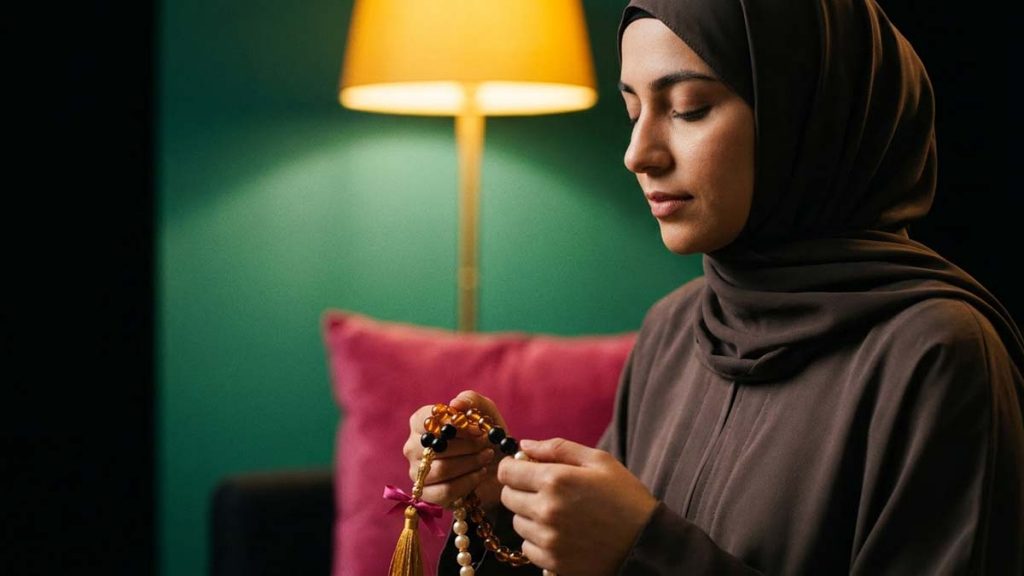
Dhikr, the remembrance of Allah, is one of the most beloved acts of worship in Islam. The Quran instructs the believers to remember Allah often, and the Prophet Muhammad (pbuh) filled his day with words of praise and gratitude, teaching that the tongue moist with the remembrance of the Lord is among the best of deeds. Its spirit runs through our guide to dua in Islam.

The beauty of remembrance is that it can be done at almost any time, while walking, resting, working or waiting, turning ordinary moments into worship. It brings peace to a restless heart and keeps the believer connected to their Lord throughout the busyness of life.
A tasbih gently supports this habit. Holding them is a quiet reminder to keep the tongue and heart engaged in remembrance, and counting along helps the worshipper complete their chosen words with focus and care.
In the remembrance of Allah alone do hearts find their truest rest and lasting peace
SubhanAllah, Alhamdulillah, Allahu Akbar
At the heart of the remembrance counted on the beads are three beautiful phrases. SubhanAllah, meaning Glory be to Allah, Alhamdulillah, meaning All praise is for Allah, and Allahu Akbar, meaning Allah is the Greatest, together capture glorification, gratitude and awe of the Lord.
The Prophet Muhammad (pbuh) taught a cherished practice of saying these phrases after every obligatory prayer, glorifying Allah thirty three times, praising Him thirty three times and proclaiming His greatness thirty four times. This simple act, light on the tongue, carries great reward in the sight of Allah.
Many other beautiful phrases are counted in the same way, including La ilaha illallah, there is no god but Allah, and Astaghfirullah, I seek the forgiveness of Allah. Each one mentioned fills the heart and the record of deeds with the light of remembrance.
Glorify and praise your Lord and proclaim His greatness after every prayer
The Tasbih After Prayer
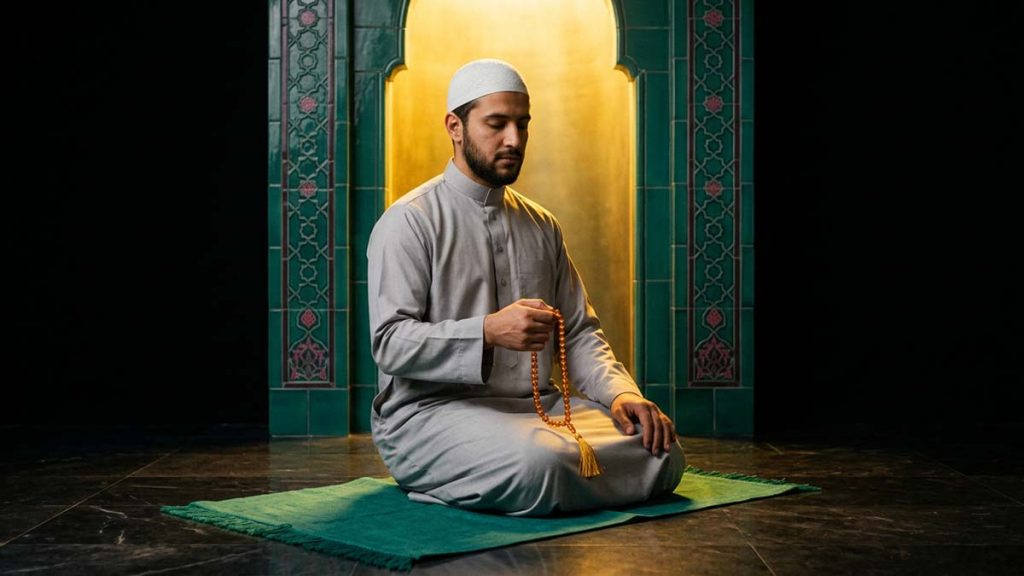
The most established time to reach for a tasbih is in the quiet moments just after the obligatory prayer. As the worshipper sits on their prayer mat, the beads help them complete the recommended words of glory, praise and greatness without losing count, rounding off the prayer with a beautiful sunnah.

This after-prayer remembrance is a gentle and rewarding pause. Rather than rushing away, the believer lingers a little in the presence of their Lord, letting the heart settle and carrying the calm of the prayer into the rest of the day.
Counting these phrases is made easy with a thirty three bead string, completed three times, or a ninety nine bead loop completed once. In this small act the worshipper turns to Allah, Ar-Rahman, the Most Merciful, with words of love and gratitude.
Beads, Materials and Styles
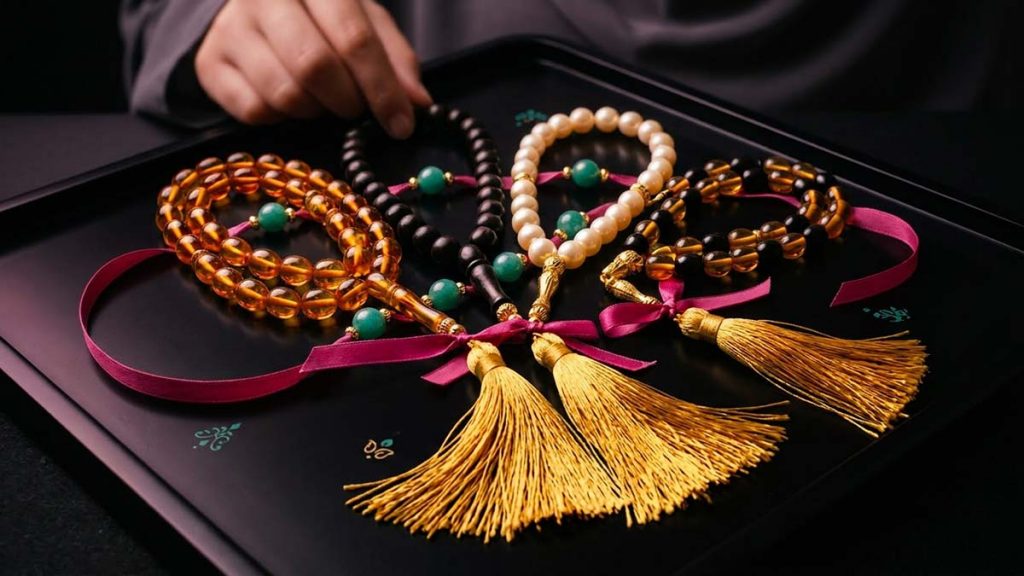
The world of the tasbih is rich and varied. Traditional strings are made from fragrant woods such as oud or sandalwood, from smooth olive stones gathered in the Holy Land, or from simple glass and plastic beads in every colour imaginable.
Finer sets use semi-precious stones like amber, agate, turquoise and pearl, prized for their beauty and often passed down through families. The size of the beads varies too, from tiny pocket strings to large, weighty beads that feel substantial in the hand.
Whatever the material, the design usually keeps the familiar structure of counted beads with a marker and a tassel. The choice comes down to personal taste, with many people treasuring a tasbih whose feel and beauty draws them back to remembrance again and again.
A tasbih usually holds beads upon a string thirty three or ninety nine in number to count the words of praise
Counting on the Fingers
While the tasbih is a loved and useful aid, it is worth knowing that counting remembrance on the fingers is itself a cherished sunnah. The Prophet Muhammad (pbuh) was seen counting his words of glorification on his fingers and encouraged this, noting that the fingers will be questioned and will speak on the Day of Judgement.
For this reason, some Muslims prefer to count on their hands, while others happily use beads, and both are perfectly acceptable. The tasbih is simply a helpful tool, never a requirement, and the reward lies in the remembrance itself rather than in any object.
Understanding this keeps the heart in the right place. Whether counting on a beautiful string or on the joints of the fingers, what matters is that the tongue is busy with the praise of Allah and the heart is present and sincere.
Count upon your fingers the words of praise for they will speak on the Day and bear witness for you
Choosing and Using a Tasbih
When choosing a tasbih, comfort and feel are key. Pick a string whose beads sit pleasantly between the fingers and whose size and weight you enjoy, since a set you love to hold will draw you back to remembrance more often. The ninety nine bead style pairs beautifully with learning the ninety nine names of Allah.
Using one is simple. Begin at the marker bead, then recite your chosen phrase and slide one bead along with each repetition, continuing around the loop until you reach your intended count. There is no fixed ritual to the movement, so use whatever feels natural and keeps you focused.
Above all, let the beads serve the heart rather than become a habit of the hands alone. Used with presence and sincerity, a tasbih is a gentle and beautiful companion, helping fill the day with the remembrance of the Lord that brings true and lasting peace to the heart.
Keeping the tongue busy with the remembrance of Allah is a beautiful daily habit, and we share more across our channels. Find us on YouTube, TikTok and Facebook.
Frequently Asked Questions
A tasbih, also called a misbaha or prayer beads, is a string of beads Muslims use to count words of remembrance and praise of Allah. Moving one bead per phrase keeps an accurate count during dhikr.
Start at the marker bead, recite your chosen phrase such as SubhanAllah, and slide one bead along with each repetition, continuing around the loop until you reach your intended count, often thirty three or ninety nine.
Common phrases include SubhanAllah, Alhamdulillah and Allahu Akbar, often recited after prayer, as well as La ilaha illallah and Astaghfirullah. The beads simply help count these beautiful words of remembrance.
Most have either thirty three beads, repeated three times for the after-prayer remembrance, or ninety nine beads, echoing the ninety nine beautiful names of Allah. A marker and a tassel usually mark the ends.
Counting remembrance is a sunnah, and the Prophet (pbuh) himself counted on his fingers, which is also encouraged. Beads are a permissible and helpful aid, but they are a tool, not a requirement, and the reward is in the remembrance itself.
Yes, and it is a cherished sunnah. The Prophet (pbuh) counted his glorification on his fingers and taught that they will bear witness on the Day of Judgement. Both fingers and beads are perfectly acceptable.