
What Is Henna and What Is Its Place in Islam?
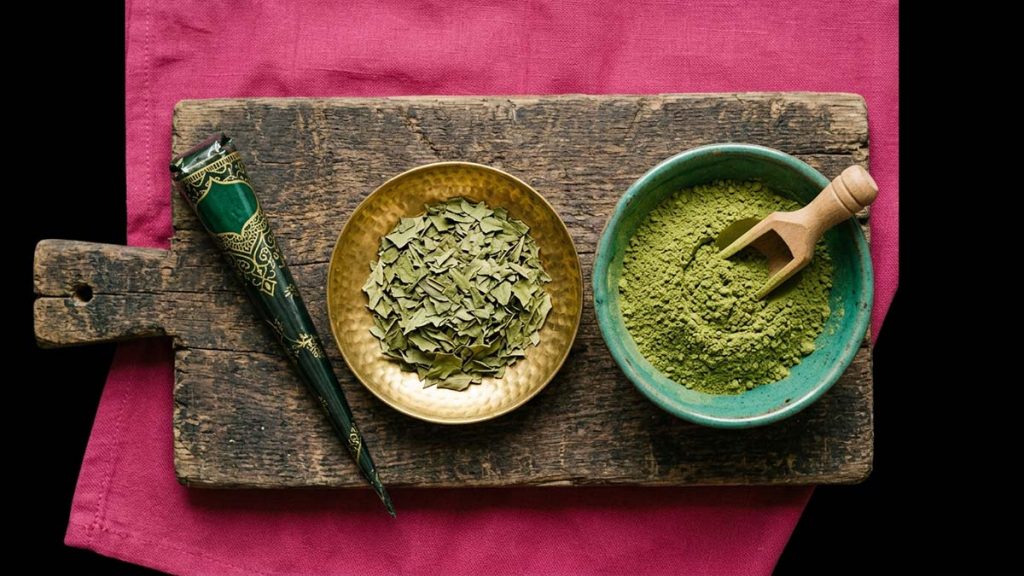
Henna is a natural reddish-brown dye made from the leaves of the henna plant, used for thousands of years to decorate the skin and colour the hair. In Islam it holds a warm and beloved place, both as a beautiful adornment for happy occasions and as a practice encouraged by the Prophet Muhammad (pbuh) himself. From intricate patterns on a bride’s hands to the gentle dyeing of grey hair, it weaves natural beauty into the life of the believer.
Loved across the Muslim world from Morocco to South Asia, this humble plant carries both cultural joy and spiritual meaning. It is a feature of weddings and the two Eids, a sunnah for changing the colour of greying hair, and a safe, natural alternative to harsh chemical dyes. In this guide we explore what henna is, why Muslims cherish it, its place in the Sunnah, its use for the hair, its role in celebrations, its beautiful designs, its natural safety and how to apply and care for it.
إِنَّ أَحْسَنَ مَا غَيَّرْتُمْ بِهِ هَذَا الشَّيْبَ الْحِنَّاءُ وَالْكَتَمُ
“The best things with which to change grey hair are henna and katam.”
What Is Henna?
Henna is a dye prepared from the dried, powdered leaves of the henna shrub, known by its botanical name Lawsonia inermis. When the powder is mixed into a paste and applied to the skin or hair, it leaves a lasting reddish-brown stain as its natural colouring molecule binds to the surface, deepening over a day or two before gradually fading.
On the skin it is used to create beautiful temporary designs, especially on the hands and feet, lasting one to three weeks before wearing away. In the hair it works as a natural dye and conditioner, lending a rich auburn tone and a healthy shine without any harsh chemicals.
Entirely plant-based, it has been treasured across the Middle East, North Africa and South Asia since ancient times. For Muslims it is valued not only for this natural beauty but for its honoured place in the practice of the Prophet (pbuh).
Indeed Allah is beautiful and He loves beauty in all that is lawful and pure for those who seek it
6 Beautiful Reasons Muslims Cherish It
The love for this gentle dye blends faith, beauty and tradition. Here are six reasons Muslims cherish it so dearly.
- It is a natural, plant-based and chemical-free dye
- It reflects a beloved sunnah of the Prophet (pbuh)
- It beautifies the hands for weddings and Eid
- It dyes grey hair gently and naturally
- It is safe, cooling and kind to the skin
- It carries rich cultural joy across the Muslim world
Henna in the Sunnah
This natural dye has a clear and honoured place in the Sunnah. The Prophet Muhammad (pbuh) praised it as among the best ways to change the colour of greying hair, and encouraged believing women to adorn their hands with its lovely colour, a beauty he recognised as fitting and good. You can read more of his gentle guidance in our Inspired by the Prophet section.
His companions, both men and women, used it, and it became a cherished part of early Muslim life. Far from being a mere custom, its use was something the Prophet (pbuh) actively recommended, which gives it a spiritual dimension that pure fashion never could.
For this reason, reaching for it is not only about beauty but about following a beloved example. Each application revives a gentle sunnah, blending the joy of adornment with the reward of obedience.
Adorn the hands with its lovely colour a beauty that befits the believing woman and a cherished practice
Dyeing the Hair Naturally
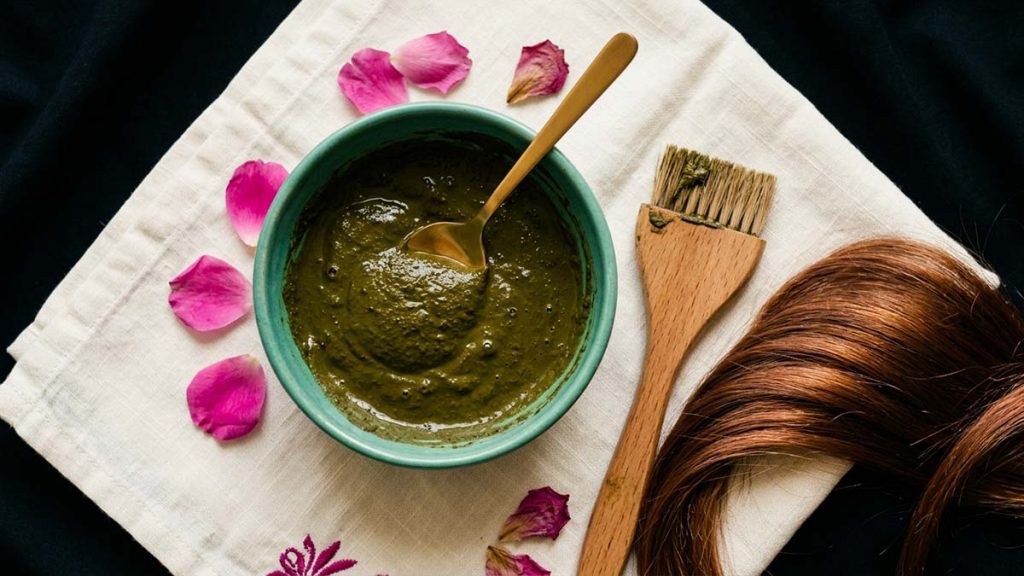
One of the most loved uses of henna is the colouring of the hair, especially the greying hair of later years. The Prophet Muhammad (pbuh) encouraged believers to change the colour of grey rather than leave it, and named this plant among the finest and most pleasing ways to do so.
As a hair dye it offers rich auburn and reddish tones while nourishing the strands, coating each hair to add strength and shine. Because it is entirely natural, it avoids the harsh chemicals of synthetic dyes, making it gentle on the scalp and a favourite for those seeking a wholesome alternative.
There is also a note of identity in this practice. The Prophet (pbuh) encouraged Muslims to differ from those who left their grey unchanged, so dyeing the hair in this beautiful natural way became a small but meaningful expression of faith.
Differ from others in your habits and ways by changing the colour of grey with a natural and pleasing dye
Weddings, Eid and Celebrations
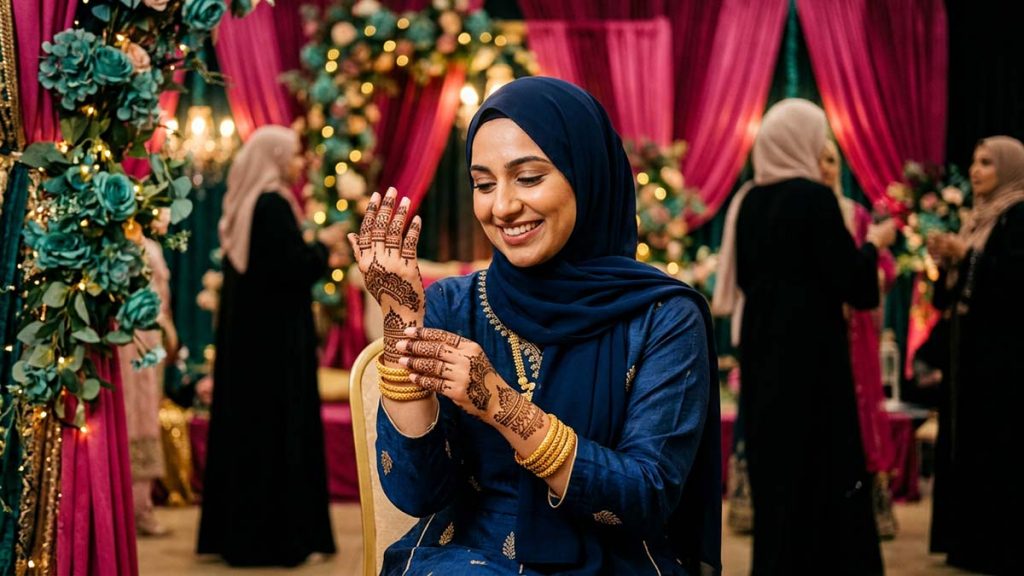
Few things capture the joy of a Muslim celebration like beautifully decorated hands. At weddings, the bride’s henna is a cherished tradition, with intricate patterns adorning her hands and feet, often during a dedicated gathering full of music, laughter and family. You can read more about Islamic marriage in our guide to marriage in Islam.
The two Eids bring the same delight, as women and girls decorate their hands the night before to mark the festive morning. It sits naturally alongside new Eid decorations and fine clothes, adding a personal touch of beauty to the celebration of Eid al-Fitr.
Births, engagements and other happy occasions are marked in the same warm way. Across cultures, applying these designs together has become a joyful shared ritual, binding women of a family in laughter and care as a happy day approaches.
Beautiful Designs and Traditions
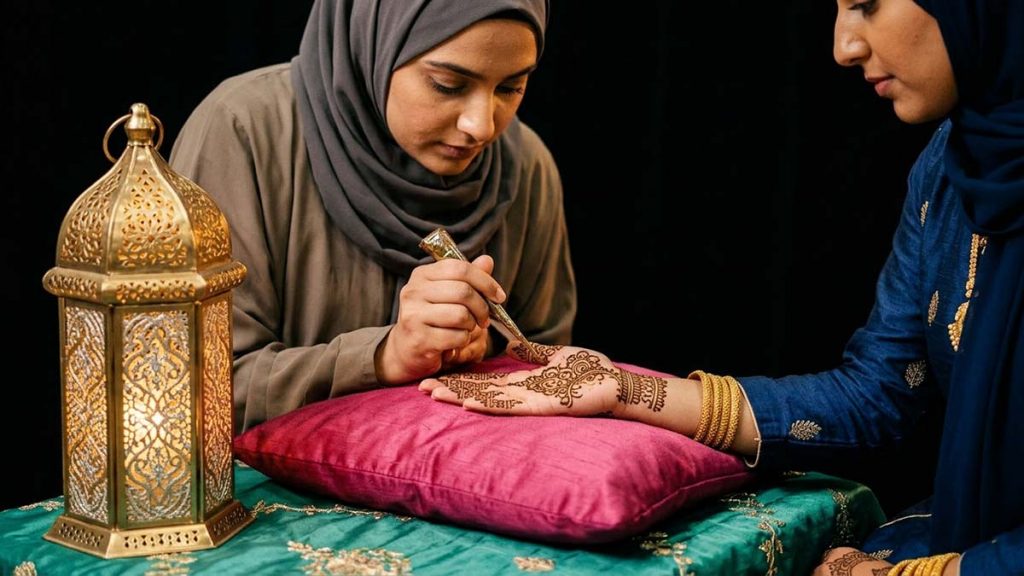
The artistry of henna is a world in itself, with styles that vary beautifully from region to region. Arabic designs tend towards bold, flowing floral and leafy patterns with open space, while South Asian or Indian styles are famously intricate, covering the hands in fine, detailed lacework right up the arms.
Moroccan and African traditions favour bolder geometric shapes and lines, each carrying its own cultural character. Within these styles, motifs of flowers, vines, paisleys and delicate dots are arranged into endlessly varied and personal patterns.
Today modern artists blend these traditions freely, creating fresh designs while keeping the timeless spirit alive. Whatever the style, the result is a temporary work of art that celebrates beauty in a way that is modest, joyful and entirely natural.
Take your adornment and look your best at every place of prayer and enjoy the good things
Natural, Safe and Skin-Friendly
A great deal of the appeal of pure henna lies in how gentle and natural it is. Made only from a powdered plant and a few simple ingredients like water and lemon juice, true henna is safe for most skin and has even been valued traditionally for its cooling and soothing qualities.
It is wise, however, to use only natural brown henna. So-called black henna, which contains an added chemical to darken and speed the stain, can cause serious skin reactions and is best avoided entirely. Genuine henna stains in shades of orange, red and brown, never jet black, and takes its time to develop.
Choosing a quality natural paste means enjoying all the beauty with none of the risk. For most people it offers a wholesome, skin-friendly way to adorn the body, in keeping with the gentle spirit in which the Prophet (pbuh) encouraged it.
A natural dye drawn from green leaves that stains the skin so gently and cools it in the heat
How to Apply and Care for It
Applying it is a calm and pleasant process. The paste, made from henna powder mixed with water and a little lemon juice or sugar, is rested for a few hours to release its colour, then piped onto clean skin through a fine cone to draw the chosen design. A natural plant like the sidr leaf is sometimes used alongside it in traditional skin and hair care.
Once applied, the secret to a deep stain is patience. The paste should be left to dry and stay on the skin for several hours, ideally overnight, then gently scraped off rather than washed, allowing the colour to keep deepening over the following day or two.
To protect the colour, avoid water on the area for the first several hours and moisturise the skin afterwards. Cared for this way, a beautiful design lasts a week or more, a small and joyful blessing from Allah, who loves beauty within what is good and pure.
From bridal designs to Eid mornings, this natural beauty brings such joy, and we share more across our channels. Find us on YouTube, TikTok and Pinterest.
Frequently Asked Questions
Henna is a natural dye made from the powdered leaves of the henna plant. Applied as a paste, it leaves a lasting reddish-brown stain on the skin for temporary designs, or colours and conditions the hair naturally.
It holds a beloved place. The Prophet (pbuh) praised it for dyeing grey hair and encouraged women to adorn their hands with it, making its use both a beautiful tradition and a gentle sunnah.
Yes. He named it among the best ways to change the colour of greying hair and encouraged believing women to colour their hands with it, so its use is rooted in his recommendation, not mere custom.
It is especially used at weddings, where the bride’s designs are a cherished tradition, and on the nights before the two Eids. It also marks births, engagements and other happy occasions across the Muslim world.
Pure, natural brown henna is safe for most people and is even valued for its cooling effect. So-called black henna contains an added chemical that can cause serious reactions and should be avoided entirely.
On the skin a design typically lasts one to three weeks, fading gradually as the skin renews. Leaving the paste on for several hours, ideally overnight, gives the deepest and longest-lasting colour.