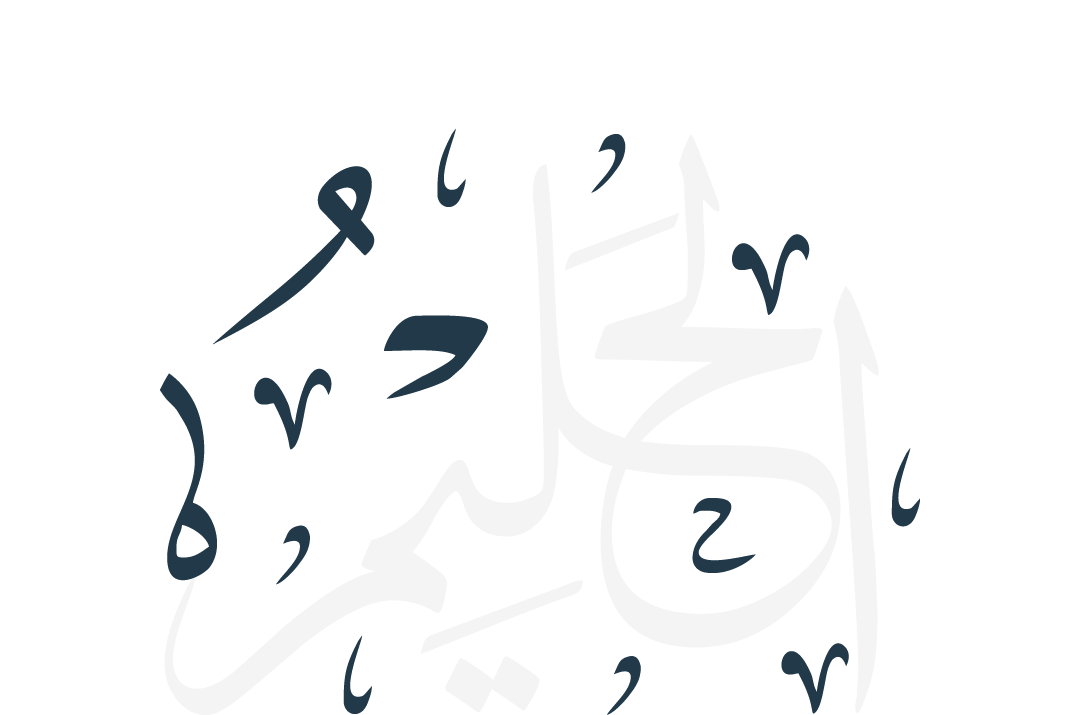
Al-Halim
The Forbearing
The Most Serene, Kind, and Gentle. He does not punish instantly, even wrongdoers. Patient and merciful, He gives time to repent, grow, and choose kindness. His forbearance reflects His unmatched grace and wisdom.
Name and Meaning
Al-Halim (ٱلْحَلِيمُ) translates to “The Most Forbearing” or “The Clement One.” This name signifies that Allah is the One who delays punishment for those who deserve it, as He may forgive them. He is the most serene, kind, and gentle—He does not punish people for every sin. He is tolerant, gracious, and merciful, always calm and deliberate, never acting hastily even with wrongdoers. He gives us opportunities to repent, learn, and show kindness.
Root and Linguistic Significance
Derived from the Arabic root ha-lam-mim (ح ل م), this root includes meanings such as:
- To be forbearing, mild, lenient, clement
- To be forgiving, gentle, deliberate
- To be calm, serene
This root highlights Allah’s attribute of forbearance, emphasizing His patience and restraint when dealing with the faults and disobedience of His creation.
Allah’s Role as Al-Halim
As Al-Halim, Allah sees the wrongdoing of people and notices disobedience, yet He does not act with haste or anger. Though He has full power to punish immediately, He withholds it, choosing instead to give people time to return to Him. His patience is limitless, and His mercy allows space for repentance and growth.
Mention in the Quran
A clear reference is found in Surah An-Nahl (16:61):
This verse highlights Allah’s immense forbearance and His decision to delay punishment, giving people a chance to reflect and change.
A Lesson for Believers
Reflecting on the name Al-Halim encourages believers to be patient and calm in their own lives. It teaches the value of not reacting with anger, of showing forgiveness, and of giving others space to learn and improve. Recognizing Allah as the Most Forbearing nurtures gentleness, humility, and a deeper understanding of divine mercy.