
Dua Upon Sighting the Ramadan Moon
5 Things to Know About the Crescent
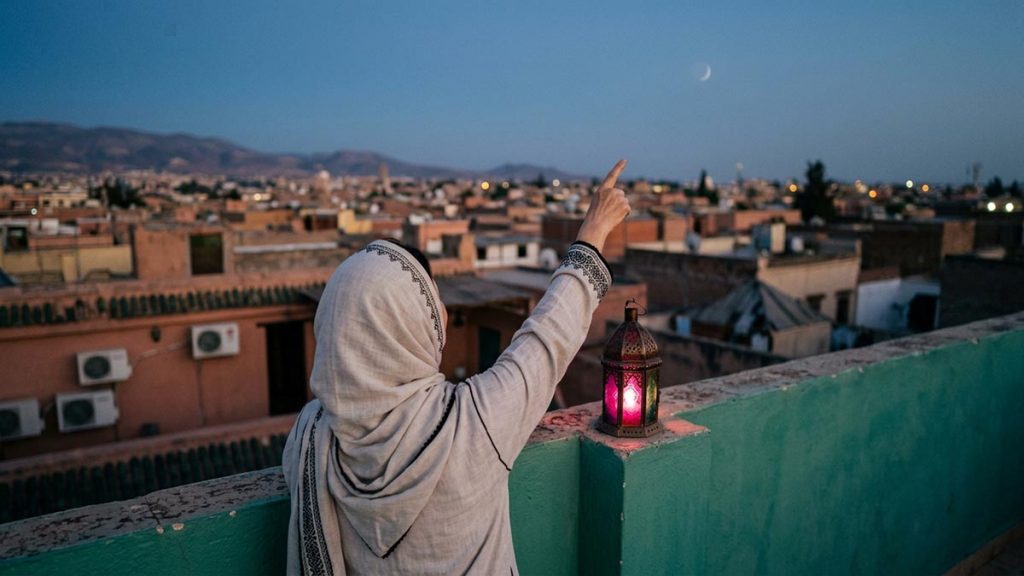
The sighting of the new crescent is the moment that begins the blessed month of Ramadan, awaited each year with eagerness by believers across the world. The Prophet Muhammad (pbuh) taught a beautiful supplication to recite upon seeing the new moon, asking Allah to bring the month over the believers with blessing, faith, peace and Islam. The dua upon sighting the Ramadan moon turns to Allah at this very moment, greeting the crescent that ushers in a month of fasting, mercy and forgiveness with hope and joy. Believers in every part of the world watch the horizon for this same crescent, united in the anticipation of a month that returns each year as a gift of renewal and forgiveness.
اللَّهُمَّ أَهِلَّهُ عَلَيْنَا بِالْيُمْنِ وَالْإِيمَانِ، وَالسَّلَامَةِ وَالْإِسْلَامِ، وَالتَّوْفِيقِ لِمَا تُحِبُّ رَبَّنَا وَتَرْضَى، رَبُّنَا وَرَبُّكَ اللَّهُ
Allāhumma ahillahu ‘alaynā bil-yumni wal-īmān, was-salāmati wal-Islām, wat-tawfīqi limā tuhibbu Rabbanā wa tardā, Rabbunā wa Rabbukal-lāh.
“O Allah, bring it over us with blessing and faith, with peace and Islam, and success in what You love and are pleased with. Our Lord and your Lord is Allah.”
The crescent moon has always held a special place in Islam, for it marks the beginning and end of the sacred months and the timing of worship. When the Prophet (pbuh) saw the new moon, he did not merely note its appearance, but turned to Allah with supplication, teaching the believers to do the same. The dua upon sighting the Ramadan moon reflects this beautiful practice, meeting the start of the month with words of devotion rather than mere observation of the sky. In this simple act, the believer turns the science of the calendar into an act of worship, greeting a new month not with indifference but with a heart full of supplication and hope.
This guide explains the dua upon sighting the Ramadan moon, its meaning, and five things to know about the crescent, so that the believer may greet the moon of Ramadan in the way the Prophet (pbuh) loved, asking Allah for the blessing and faith of the month, and entering the blessed days of fasting with a heart turned to Him in hope, gratitude and longing for His mercy.
The Supplication at the New Crescent
When the Prophet (pbuh) saw the new crescent, he would recite the beautiful supplication quoted above, asking Allah to bring the new month over the believers with blessing and faith, with peace and Islam, and with success in what Allah loves and is pleased with. This supplication greets the crescent not as a mere change in the sky, but as the beginning of a season of worship, and asks Allah to fill the coming month with goodness, guidance and His pleasure. It sets the heart in a state of hope.
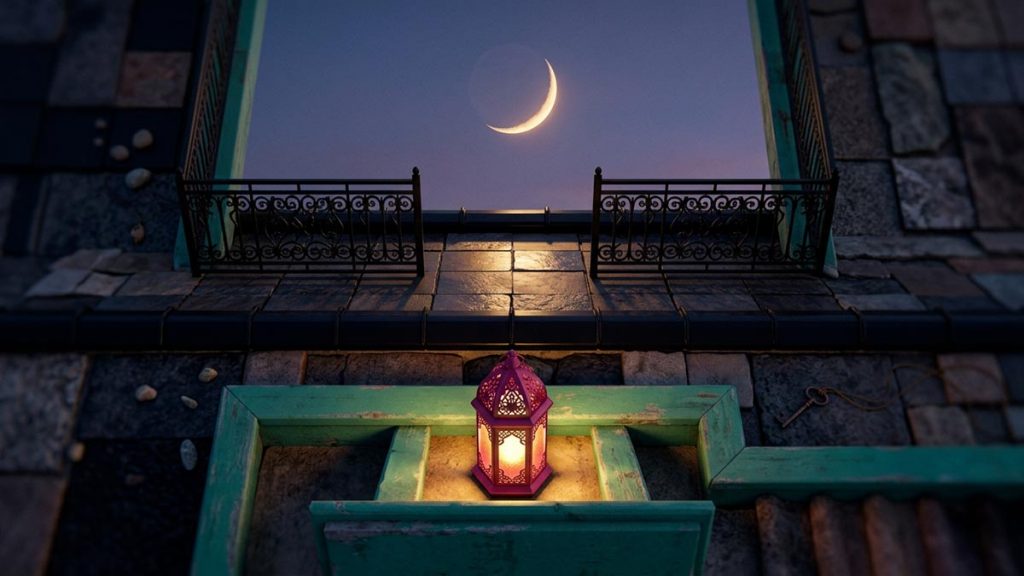
Each quality in this dua is precious. The believer asks for blessing, that the month overflow with goodness; for faith, that it strengthen their belief; for peace, that it bring safety and well-being; for Islam, that it deepen their submission; and for success in what Allah loves, that the month be spent in deeds pleasing to Him. By asking for all of these at the very sighting of the moon, the believer prepares to receive Ramadan in the best state, ready to fast and draw near to Allah. To begin the month with a request rather than mere celebration is a beautiful humility, for the believer acknowledges that even the strength to fast and the softness of heart to worship are gifts that must be sought from Allah.
اللَّهُمَّ أَهِلَّهُ عَلَيْنَا بِالْيُمْنِ وَالْإِيمَانِ
Allahumma ahillahu ‘alayna bil-yumni wal-iman
Bring it over us with blessing and with faith
The Crescent and the Timing of Worship
Allah made the crescent moons a means of measuring time for the people and for the pilgrimage, as He states in His Book that the crescents are signs to mark fixed periods of time for humankind and the Hajj. The phases of the moon mark the beginning and end of the lunar months, by which the timing of Ramadan, Eid, the Hajj and other acts of worship are determined. The sighting of the crescent therefore carries great importance, as it sets in motion the worship of an entire month. From a single thin sliver of light in the evening sky, an entire community turns toward fasting, prayer and charity, showing how the signs Allah placed in the heavens order the worship of those who submit to Him.
Because the moon governs the timing of worship, the Prophet (pbuh) tied the beginning and end of the fast to its sighting, teaching the believers to fast when they see the crescent of Ramadan and to break the fast when they see the crescent of Shawwal. This connection between the moon and worship gives the crescent a sacred significance, and the believer greets it with the supplication that honours the One who created it and appointed it as a measure of time. Rather than seeing the moon merely as a body in the sky, the believer sees in it a sign of the wisdom of Allah, who made its phases a clock for the worship of humankind across every land and age.
قُلْ هِيَ مَوَاقِيتُ لِلنَّاسِ وَالْحَجِّ
Qul hiya mawaqitu lin-nasi wal-hajj
The crescents are signs to mark fixed times
The Practice of the Prophet
The companions reported that whenever the Prophet (pbuh) saw the new crescent, he would turn to Allah with supplication, teaching by his example how the believer should greet the new month. He did not treat the appearance of the moon as an ordinary event, but as a moment to remember Allah and seek His blessing. This beautiful practice shows the constant awareness of Allah that filled the life of the Prophet (pbuh), turning even the sight of the moon into an occasion for worship. This is the mark of a heart fully alive to Allah, one that does not let any moment pass without remembering Him, finding in the ordinary turning of the sky a reason to praise and supplicate the One who set it in motion.
By following this practice, the believer connects with a beautiful Sunnah and begins the month in remembrance of Allah. The dua upon sighting the Ramadan moon transforms the start of the month from a mere date on the calendar into a conscious turning to Allah, asking Him to make the month blessed. It reminds the believer that Ramadan is not simply a routine that returns each year, but a precious gift to be received with gratitude and supplication. Each Ramadan that a believer is granted to witness is a mercy not promised to anyone, for many who fasted the year before have since passed away, and so the one who greets the crescent does so with thankfulness for being given the month once more.
Five Things to Know About the Crescent
The crescent of Ramadan begins a blessed month of worship and mercy. These five things help the believer greet the new crescent of the month well.
- Recite the dua of the new moon, asking Allah for blessing, faith, peace and His pleasure.
- The crescent marks the start of the fast, for the believer fasts when the moon of Ramadan is seen.
- The moon measures the timing of worship, marking Ramadan, Eid and the Hajj for humankind.
- Greeting the moon with dua is a Sunnah, following the practice of the Prophet (pbuh).
- The crescent is a gift, beginning a month of mercy to be received with gratitude and longing.
وَالتَّوْفِيقَ لِمَا تُحِبُّ وَتَرْضَىٰ
Wat-tawfiqa lima tuhibbu wa tarda
And success in what You love and are pleased with
Greeting the Moon of Ramadan
The dua upon sighting the Ramadan moon greets the crescent that begins the blessed month with blessing, faith and hope. By reciting the supplication of the new moon, knowing that the crescent marks the start of the fast and measures the timing of worship, following the Sunnah of greeting the moon with dua, and receiving the crescent as a gift, the believer welcomes Ramadan in the best way. The Prophet (pbuh) met the new moon with supplication rather than mere observation, and the believer follows him, entering the month with a heart turned to Allah. There is a quiet joy in this moment that the believer treasures, for the long-awaited month has finally arrived, and the heart that loves Allah rejoices at the coming of a season made for drawing near to Him.
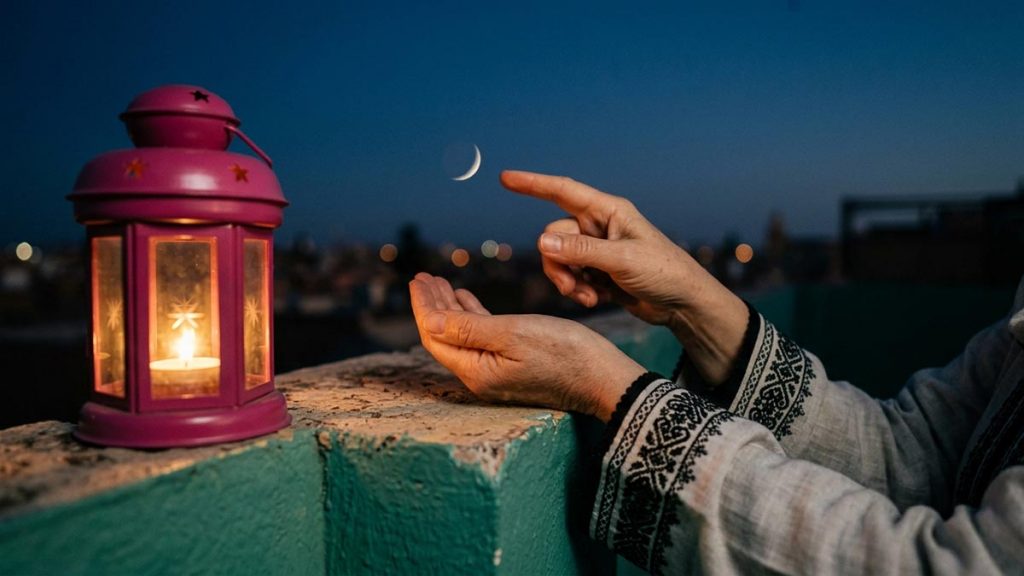
This supplication pairs naturally with the dua for Ramadan and the dua upon sighting the Eid moon. Together they help the believer mark the beginning and end of the blessed month with the remembrance of Allah.
When the Prophet (pbuh) saw the new crescent, he asked Allah to bring the month over us with blessing and faith. Learn the duas of Ramadan with us on YouTube, where the supplications are recited aloud, on Threads for a reminder to greet the crescent with dua, and on LinkedIn where readers share how they welcome the moon of Ramadan.
Frequently Asked Questions
The dua upon sighting the Ramadan moon is the supplication of the new crescent: Allahumma ahillahu alayna bil-yumni wal-iman, was-salamati wal-Islam, O Allah bring it over us with blessing and faith, with peace and Islam, and success in what You love.
It is recited upon seeing the new crescent, especially the crescent of Ramadan that begins the fast. The Prophet (pbuh) recited it whenever he saw the new moon, greeting the new month with supplication.
Because Allah made the crescent moons a measure of time for humankind and the Hajj, marking the beginning and end of the lunar months. The timing of Ramadan, Eid and the pilgrimage is determined by the sighting of the moon.
Recite the dua of the new moon asking Allah for blessing, faith, peace and His pleasure, knowing that the crescent marks the start of the fast. Greeting the moon with supplication follows the Sunnah of the Prophet (pbuh).
Yes, the Prophet (pbuh) would turn to Allah with supplication whenever he saw the new crescent, teaching the believers to do the same. Following this practice connects the believer with a beautiful Sunnah of remembrance.
The fast of Ramadan begins with the sighting of its crescent, for the Prophet (pbuh) taught the believers to fast when they see the moon of Ramadan and to break the fast when they see the moon of Shawwal.