
Dua for Justice
3 Things to Know About Avoiding Oppression

Justice is beloved to Allah, who commands it and forbids oppression, and the believer prays both to be protected from being wronged and from wronging others. The Prophet Muhammad (pbuh) taught a beautiful refuge seeking the protection of Allah from oppressing or being oppressed, recognising that justice means avoiding wrong in both directions. The dua for justice turns to Allah to keep the believer from oppression, whether as the one who wrongs or the one who is wronged.
اللَّهُمَّ إِنِّي أَعُوذُ بِكَ مِنْ أَنْ أَظْلِمَ أَوْ أُظْلَمَ
Allahumma inni a‘udhu bika min an azlima aw uzlam.
“O Allah, I seek refuge in You from wronging others or being wronged.”
Upholding justice means being fair in our dealings, standing for the rights of others, and never using power to wrong anyone, while trusting that Allah will requite every injustice. This guide explains the dua for justice and three things to know about avoiding oppression, so that the believer may seek the protection of Allah from all forms of injustice, commit to fairness in their own conduct, and remember that the prayer of the oppressed is answered by Allah and that He will surely bring every oppressor to account.
Refuge from Wronging or Being Wronged
The Prophet (pbuh) taught the believers to seek refuge in Allah from oppressing or being oppressed, the beautiful supplication quoted above. This refuge recognises that justice has two sides: the believer asks Allah both to keep them from wronging others and to protect them from being wronged. By seeking refuge from oppression in both directions, the believer commits to fairness in their own conduct while placing their protection from injustice in the hands of Allah.

Oppression is a grave matter in Islam, for Allah has forbidden it upon Himself and made it forbidden among His servants, and He warns that injustice will be darkness upon the Day of Judgement. The believer therefore fears to wrong anyone, even those weaker than themselves, and seeks the help of Allah to be just. The dua for justice draws on this, asking Allah to protect the believer from every form of oppression and to keep their dealings upright and fair.
أَعُوذُ بِكَ أَنْ أَظْلِمَ أَوْ أُظْلَمَ
A‘udhu bika an azlima aw uzlam
I seek refuge in You from wronging or being wronged
Three Things to Know About Avoiding Oppression
Justice is beloved to Allah, and oppression is forbidden. These three things help the believer uphold justice.
- Seek refuge in Allah from wronging others or being wronged, the two sides of justice.
- Be fair in your dealings and never use power to wrong anyone, however weak they may be.
- Trust that Allah requites every injustice, for the prayer of the oppressed is answered.
Standing for Justice
The dua for justice turns to Allah to keep the believer from oppression in both directions, as the one who wrongs and the one wronged. By seeking refuge in Allah from wronging or being wronged, being fair and never using power to wrong anyone, and trusting that Allah requites every injustice, the believer upholds justice in the best way. Justice is beloved to Allah, who commands it and forbids oppression, and the believer who fears to wrong others and trusts Allah to right every wrong stands firmly for what is just.
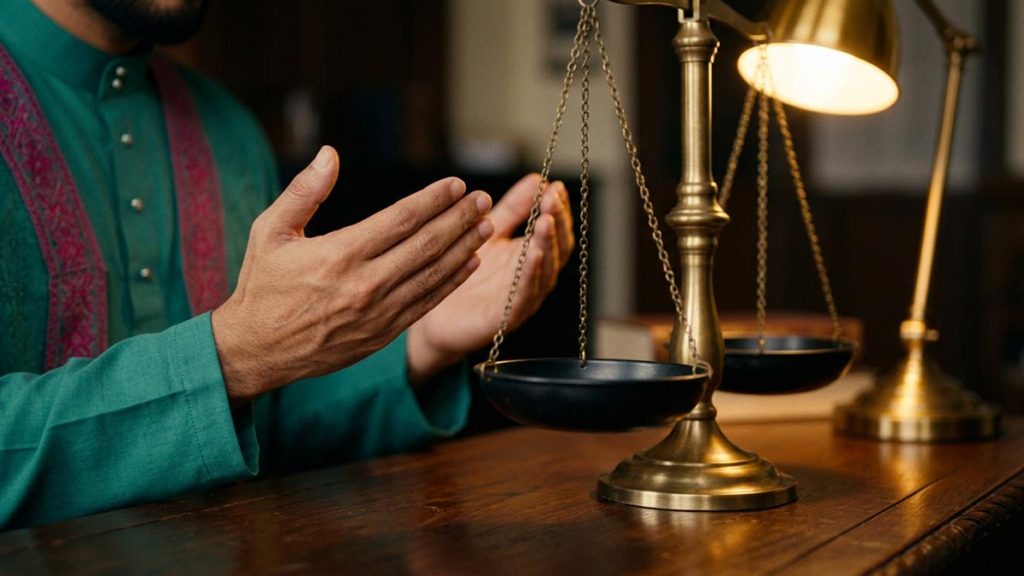
This supplication pairs naturally with the dua during court proceedings and the dua for oppressed people. Together they help the believer stand for justice and trust the perfect justice of Allah.
The Prophet (pbuh) taught the believer to seek refuge in Allah from wronging others or being wronged. Learn the duas for life with us on YouTube, where the supplications are recited aloud, on X for a reminder to uphold justice, and on Pinterest where readers share how they stand for fairness.
Frequently Asked Questions
The dua for justice is the refuge the Prophet (pbuh) taught: Allahumma inni audhu bika min an azlima aw uzlam, O Allah I seek refuge in You from wronging others or being wronged. It seeks protection from injustice in both directions.
Because justice means avoiding wrong in both directions: the believer asks Allah both to keep them from wronging others and to protect them from being wronged. Fairness in ones own conduct is as important as protection from oppression.
Oppression is a grave matter, for Allah has forbidden it upon Himself and among His servants, and warns that injustice will be darkness on the Day of Judgement. The believer fears to wrong anyone, even those weaker than themselves.
Yes, the Prophet (pbuh) warned that the prayer of the oppressed is answered by Allah and that there is no barrier between it and Allah. This is a warning to never oppress anyone, for Allah hears and answers the wronged.
Allah commands justice and good conduct and forbids injustice, declaring that He loves those who are just. The believer is commanded to be fair in all dealings, to stand for the rights of others, and to uphold justice for the sake of Allah.
If the believer has wronged someone, they return the right, make amends, and seek the pardon of the person before the Day when only good deeds can repay wrongs. They also turn to Allah in repentance and resolve to be just.