
Dua Before Breaking the Fast
3 Things to Know About Iftar
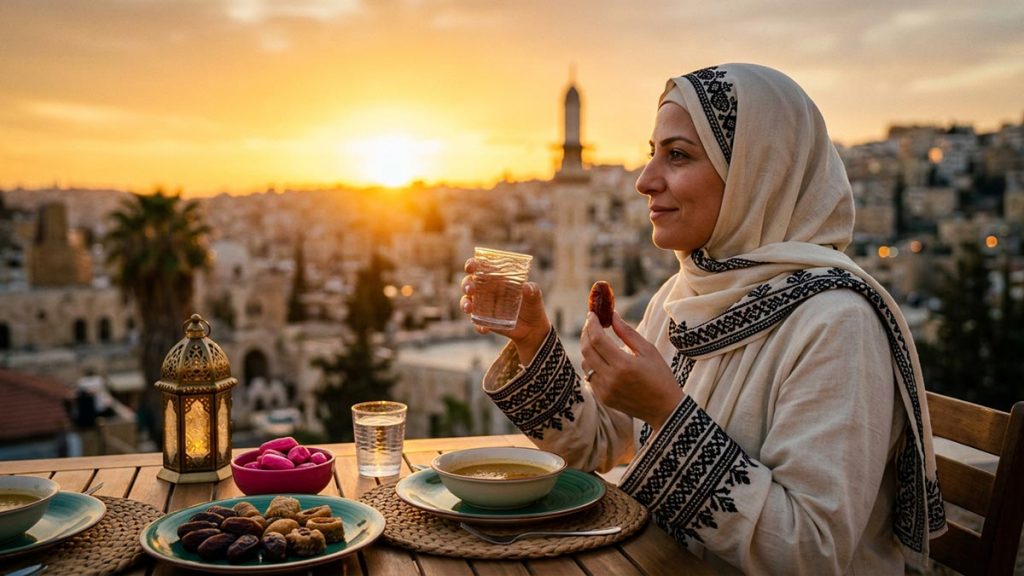
As the sun sets and the fast of Ramadan comes to an end, the moment of breaking the fast, known as iftar, is one of joy and blessing. The Prophet Muhammad (pbuh) taught that the fasting person has at the time of breaking the fast a supplication that is not rejected, making this a precious moment for dua. The dua before breaking the fast turns to Allah at this blessed time, expressing devotion to Him and gratitude for the provision with which the fast is broken.
اللَّهُمَّ لَكَ صُمْتُ وَعَلَى رِزْقِكَ أَفْطَرْتُ
Allāhumma laka sumtu wa ‘alā rizqika aftart.
“O Allah, for You I have fasted and with Your provision I break my fast.”
Hastening to break the fast once the sun has set is a beloved Sunnah, and the believer marks the moment with the remembrance of Allah. This guide explains the dua before breaking the fast and three things to know about iftar, so that the believer may seize the accepted supplication of the fasting person, breaking the fast with gratitude, devotion and a heart turned to Allah in the precious moments as the day of fasting ends.
The Accepted Dua of the Fasting Person
The Prophet (pbuh) taught that the fasting person has, at the moment of breaking the fast, a supplication that is not rejected, making iftar one of the most precious times for dua. As the believer breaks the fast, they may recite the beautiful words quoted above: O Allah, for You I have fasted and with Your provision I break my fast. This supplication expresses that the fast was kept purely for Allah, and that the provision with which it is broken comes from Him alone.

Because this moment carries an accepted dua, the wise believer does not let it pass with only food and drink, but seizes it to ask Allah for the most important needs of this life and the next. After the words of breaking the fast, the believer pours out their own supplications, asking Allah for forgiveness, mercy, and every good. The dua before breaking the fast thus turns iftar into a moment of worship, not merely a time to eat.
اللَّهُمَّ لَكَ صُمْتُ وَعَلَىٰ رِزْقِكَ أَفْطَرْتُ
Allahumma laka sumtu wa ‘ala rizqika aftart
For You I have fasted and with Your provision I break my fast
Three Things to Know About Iftar
Breaking the fast is a moment of joy and accepted dua. These three things help the believer make the most of iftar.
- The fasting person has an accepted dua at iftar, so seize the moment to ask Allah for your needs.
- Hasten to break the fast once the sun has set, following the beloved Sunnah of the Prophet (pbuh).
- Break the fast on dates or water, as the Prophet (pbuh) did, before praying the Maghrib prayer.
Seizing the Moment of Iftar
The dua before breaking the fast seizes the accepted supplication of the fasting person, turning iftar into a moment of worship and gratitude. By recognising that the fasting person has an accepted dua, hastening to break the fast once the sun has set, and following the Sunnah of breaking it on dates or water, the believer makes the most of this blessed time. As the day of fasting ends, the believer breaks the fast with devotion to Allah and gratitude for His provision, pouring out their needs at a moment when dua is answered.

This supplication pairs naturally with the dua after breaking the fast and the dua for suhoor. Together they help the believer fill the day of fasting with the remembrance and gratitude of Allah.
The fasting person has at iftar a dua that is not rejected, taught the Prophet (pbuh). Learn the duas of Ramadan with us on YouTube, where the supplications are recited aloud, on Facebook for a reminder to seize the accepted dua at iftar, and on X where readers share how they break their fast.
Frequently Asked Questions
The dua before breaking the fast is recited at iftar, such as Allahumma laka sumtu wa ala rizqika aftartu, O Allah for You I have fasted and with Your provision I break my fast. It expresses devotion to Allah and gratitude for His provision.
Yes, the Prophet (pbuh) taught that the fasting person has at the time of breaking the fast a supplication that is not rejected. Iftar is a precious moment to ask Allah for the needs of this life and the next.
It is Sunnah to hasten to break the fast as soon as the sun has set, before praying the Maghrib prayer. The Prophet (pbuh) loved that the believers hasten to break the fast at its time.
The Prophet (pbuh) would break his fast on fresh dates, or dried dates, or water if dates were not available. Breaking the fast on dates or water before the Maghrib prayer follows his Sunnah.
Because the fasting person has an accepted dua at iftar, seize the moment to ask Allah for forgiveness, mercy, and every good of this life and the next. After the words of breaking the fast, pour out your own supplications.