
Questions About Islam Non-Muslims Often Ask

Curiosity about Islam is natural, and most Muslims are happy to answer sincere questions. With around two billion followers worldwide, Islam is often in the headlines, yet much about it remains misunderstood. This guide gathers ten of the most common questions about Islam that non-Muslims ask, with clear and honest answers — covering God, the Prophet, the Quran, prayer, the hijab, women, jihad and more. The aim here is not to argue, but to explain, in the spirit of the Quran’s own call to share faith with wisdom and kindness. You do not need any background knowledge to follow along, as each answer stands on its own.
ادْعُ إِلَىٰ سَبِيلِ رَبِّكَ بِالْحِكْمَةِ وَالْمَوْعِظَةِ الْحَسَنَةِ
“Invite to the way of your Lord with wisdom and good instruction.”
Approaching Questions About Islam With an Open Mind
Before diving into the questions about Islam that come up most often, it helps to set the right tone. Islam is the faith of roughly a quarter of humanity, practised by people of every race, language and nationality, so no single stereotype could ever capture it. A Muslim in Indonesia, Nigeria, Britain and Brazil may share the same core beliefs while living very different lives.
Much of what people absorb about Muslims comes from brief news clips rather than from Muslims themselves, which is exactly why honest conversation matters so much. Islam actually encourages its followers to answer questions about their faith with patience and good character, never with anger or arrogance.
So whether you are simply curious, have Muslim friends or colleagues, or are exploring faith for yourself, take these answers as a friendly starting point — and never hesitate to ask a Muslim directly. The ten questions below are the ones non-Muslims raise again and again. Taken together, they paint a fuller and fairer picture than any single headline ever could, and they reward the small effort of asking with a far richer understanding of a faith that shapes the lives of billions of people.
Islam is followed by nearly a quarter of humanity across every nation on earth.
Who Is Allah?

Allah is simply the Arabic word for God — the very same God worshipped by Abraham, Moses and Jesus. In fact, Arabic-speaking Christians and Jews use the word Allah too. Muslims believe in one God who is eternal, all-powerful and endlessly merciful, with no partners, no children and no equal. This belief in the absolute oneness of God, called tawhid, is the very heart of Islam.
Rather than picturing God in human form, Muslims come to know Him through His qualities, described in the beautiful 99 Names of Allah — the Most Merciful, the All-Knowing, the Most Wise, the Source of Peace. To worship Allah is to turn to the one Creator of everything that exists, the source of all life and goodness.
Understanding this single point answers many other questions about Islam, because everything Muslims do flows from their relationship with this one God. Whether it is prayer, charity, fasting or simple honesty in daily dealings, it all traces back to the desire to please the one God who created and sustains them.
Allah is the Arabic word for the one God of Abraham, Moses and Jesus.
Do Muslims Worship the Prophet Muhammad?
No. This is one of the most common misunderstandings about Islam. Muslims deeply love and respect the Prophet Muhammad (pbuh), but they do not worship him. He is regarded as the final prophet and messenger of God, a human being chosen to deliver God’s message — not as divine in any way.
Worship in Islam belongs to God alone. Muslims follow the Prophet’s (pbuh) teachings and try to imitate his kindness, honesty and patience, in the same way that people of other faiths look up to their own role models and teachers.
To call a Muslim a Muhammadan is therefore a mistake; Muslims simply call themselves Muslims, meaning those who submit to God. The Prophet (pbuh) himself warned his followers never to praise him excessively or place him above his human station. In Islam, directing worship to anyone or anything besides God is the gravest error, so the line between loving the Prophet (pbuh) and worshipping him is one Muslims guard very carefully.
What Do Muslims Believe About Jesus?
Many people are surprised to learn how much Islam honours Jesus, known in Arabic as Isa. Muslims believe he was one of the greatest prophets, born miraculously to the Virgin Mary, who performed miracles by God’s permission. An entire chapter of the Quran, Surah Maryam, is named after his mother.
Where Islam differs from Christianity is that Muslims do not believe Jesus was God or the son of God, but rather a beloved human messenger sent to guide his people. Mary, meanwhile, is honoured in the Quran more than in many other traditions, held up as one of the finest examples of faith for all believers.
Muslims also believe Jesus will return before the end of time, making him a figure of deep love and respect across both faiths even where they disagree. For many non-Muslims, discovering this shared reverence for Jesus is one of the most pleasant surprises about Islam, and a reminder of how much the two faiths quietly hold in common.
The Quran honours Jesus and Mary, naming a whole chapter after Mary in their honour.
Is Islam a Religion of Peace, and What Is Jihad?

The word Islam shares its root with salam, meaning peace, and the everyday Muslim greeting is peace be upon you. The vast majority of the world’s Muslims live peaceful, ordinary lives. Like any large community, Islam has at times been misused by a small minority, but their actions contradict mainstream teaching rather than represent it.
Jihad is often mistranslated as holy war. In truth it means struggle or striving, and the Prophet (pbuh) described the greatest jihad as the inner struggle to better oneself — to be patient, honest and just. Where fighting is permitted, it is strictly limited to self-defence, with firm rules protecting civilians, prisoners and even trees and crops.
The Quran teaches that taking one innocent life is like killing all of humanity, and saving one life is like saving everyone — a principle that sits at the centre of Islamic ethics. Understanding the real meaning of jihad clears up one of the most damaging myths about the faith, and helps explain why so many Muslims feel misrepresented when the word is thrown around carelessly.
The Quran is clear: there is no compulsion in religion.
Why Do Muslim Women Wear the Hijab?
For most Muslim women, the hijab is a personal act of faith and modesty, worn to please God and to be valued for who they are rather than how they look. Far from being a sign of oppression, many women describe it as freeing and empowering, a way of taking ownership of their own identity.
Modesty in Islam applies to men too, in both dress and behaviour. While head-covering is encouraged in the Quran, the lived reality varies hugely across cultures and individuals, and the decision is, at its best, a woman’s own to make.
It is worth remembering that many religious traditions include modest dress, and that a hijab no more defines a woman’s intelligence or freedom than any other item of clothing. Surveys of Muslim women in the West consistently find that the majority who cover do so by their own choice, sometimes against the wishes of those around them.
Does Islam Oppress Women?
Islam granted women rights many centuries ago that took far longer to appear elsewhere — the right to own property, to inherit, to run a business, to keep their own earnings, and to accept or refuse a marriage proposal. The Prophet’s (pbuh) first wife, Khadijah, was a successful and independent businesswoman who employed him before they married.
Sadly, some cultural practices that mistreat women are wrongly blamed on Islam, when in fact they go against its teachings. The chapter of the Quran called An-Nisa, The Women, devotes great attention to protecting women’s dignity and rights, and Islam holds marriage and the family in the highest regard.
The Prophet (pbuh) taught that the best of people are those who treat the women in their lives with the most kindness — hardly the message of a faith that despises women. Across the Muslim world today, women serve as scholars, doctors, teachers, leaders and entrepreneurs, building on a foundation their faith laid down many centuries ago.
Islam gave women the right to own property and inherit centuries before many other societies.
What Is Sharia Law?

Sharia is often imagined as a harsh penal code, but the word actually means a path to water, a way of life. For most Muslims, the great majority of Sharia is about personal worship and everyday ethics — how to pray, how to give in charity, how to treat parents, neighbours and the poor, and how to be honest in business.
Only a small part concerns law and punishment, and even that is hedged with strict conditions and heavy emphasis on mercy and forgiveness. In practice, Muslims living as minorities follow the law of the land while keeping Sharia in their personal worship and morality.
This is exactly how people of other faiths follow their own religious guidance on diet, prayer and family life while remaining law-abiding citizens of their countries. Scholars often note that Sharia aims to protect five things above all — faith, life, intellect, family and property — goals most people of any background would recognise as worthwhile.
Why Do Muslims Pray Five Times a Day?

The five daily prayers are short pauses that anchor a Muslim’s day around the remembrance of God. Spread from dawn to night, they act as regular reminders to step back from the rush of life, give thanks, and reset one’s intentions.
Each prayer takes only a few minutes and involves standing, bowing and prostrating while reciting from the Quran. Far from being a burden, many Muslims describe these moments as the most peaceful and grounding part of their day — a built-in rhythm of gratitude and calm.
The prayers also gently unite Muslims worldwide, who all turn to face the same point, the Kaaba in Makkah, five times daily no matter where on earth they happen to be. This daily discipline also builds patience, humility and self-control, qualities that spill over into the rest of a believer’s life far beyond the prayer mat.
Five short prayers a day keep the heart connected to its Creator from dawn to night.
Has the Quran Really Stayed Unchanged?

Muslims believe the Quran has been preserved word for word since it was revealed over fourteen hundred years ago. It was memorised in full by the Prophet’s (pbuh) companions and written down in his lifetime, and to this day millions of Muslims, known as huffaz, have memorised the entire text from cover to cover.
Because of this living chain of memorisation, copies of the Quran around the world are identical in their original Arabic, whether printed in Cairo, Jakarta or London. Muslims see this remarkable preservation as a fulfilment of God’s own promise to safeguard His final message.
It is one of the features of the faith that most intrigues newcomers, and a frequent topic among the deeper questions about Islam that people raise.
Allah promised: We have sent down the Reminder, and We will surely guard it.
Does Islam Respect Other Religions?
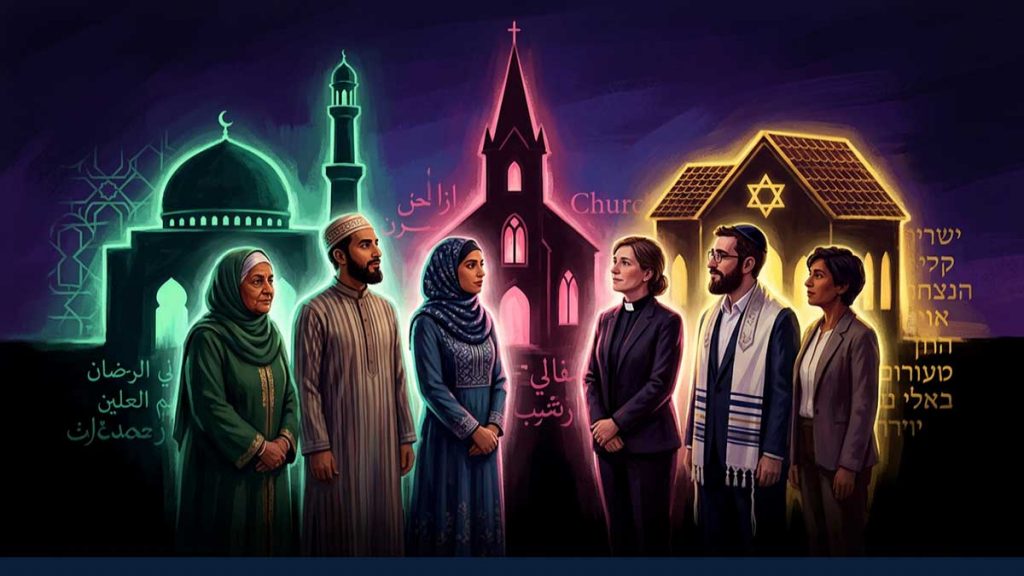
Islam teaches Muslims to believe in all of God’s earlier prophets — including Abraham, Moses and Jesus — and to treat Jews and Christians as People of the Book. The Quran insists there should be no forcing of belief, and history holds many examples of Muslims, Christians and Jews living and working side by side.
Differences of faith are acknowledged honestly rather than papered over, but the guiding principle is respect and good neighbourliness. Muslims are taught to protect places of worship and to deal justly even with those who do not share their beliefs.
As the Quran puts it simply to those of other faiths, for you your religion, and for me mine — a verse often quoted to capture Islam’s stance on peaceful coexistence. In a diverse and connected world, this principle of respectful difference is one of the faith’s most relevant teachings, and a hopeful note on which to end.
To people of other faiths the Quran says: for you your religion, and for me mine.
Finding Answers to More Questions About Islam

These ten answers only scratch the surface, and real understanding grows through conversation rather than a single article. If a particular topic sparked your interest, the best next step is to go to the source: read a translation of the Quran, visit a mosque on an open day, or talk with a Muslim friend over a cup of tea. You will almost always find people glad to help, since sharing the faith honestly and kindly is something Islam actively encourages.
It also helps to remember that Muslims themselves are still learning, and that no one expects you to absorb everything at once. Approaching questions about Islam with patience and goodwill, on both sides, is what turns curiosity into genuine understanding and strangers into neighbours. And if this piece raised as many fresh questions about Islam as it answered, that is no bad thing; it simply means the conversation has begun.
Have a question we did not cover? The best answers often come from simply asking a Muslim friend or neighbour. For more clear, friendly guidance on these questions about Islam, follow It’s About Islam — find us on YouTube, Instagram and Threads.
Frequently Asked Questions
Not at all. Most Muslims welcome sincere, respectful questions about Islam and are happy to explain their beliefs. Asking with genuine curiosity is usually seen as a sign of respect, not offence.
Reading a translation of the Quran, visiting a local mosque on an open day, or simply talking with Muslim friends are all great starting points. Look for mainstream, reputable sources rather than sensational headlines.
No. Like any global faith, Muslims vary widely in how they practise, shaped by culture, country and personal commitment. Core beliefs are shared, but daily life looks different from person to person.
In most cases, yes. Many mosques warmly welcome visitors, especially on open days, as long as guests dress modestly and remove their shoes. It is a wonderful way to ask questions about Islam in person.
Saying (pbuh), meaning peace be upon him, is a way of showing love and respect for the Prophet Muhammad whenever his name is mentioned. Muslims do the same for the other prophets too.