
What Does Allahu A’lam Mean?
Allahu A’lam is a small phrase of great humility — the way a Muslim admits, at the edge of their knowledge, that only Allah truly knows. It is said after giving an opinion, when facing uncertainty, and whenever a believer wants to leave the final word with God. But what does this phrase mean, and when is it said? This guide explains.
Admitting That Allah Knows Best

At its simplest, Allahu A’lam (اللَّهُ أَعْلَم) means “Allah knows best” or “Allah knows better.” It is a humble acknowledgement that, however much a person understands, Allah’s knowledge is complete and theirs is not.
It is a phrase of honesty and humility at once. Rather than claiming to have the final answer, a believer hands the truth back to the One who knows all things — a graceful way of saying, “this is my best understanding, but Allah knows for certain.”
Rather than claiming the final answer, a believer hands the truth back to the One who knows all things.
Breaking Down Allahu A’lam
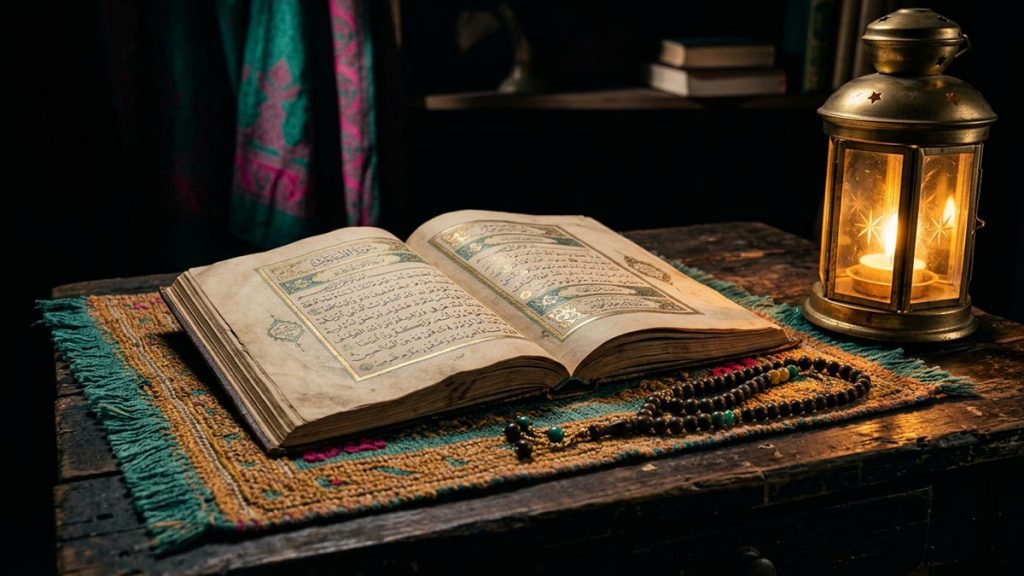
To feel the full weight of the phrase, it helps to unpack it word by word:
- Allahu — اللَّهُ — “Allah,” the One whose knowledge is complete.
- A’lam — أَعْلَم — “knows best” or “most knowing,” from alim, knowing — the highest degree of knowledge.
Together the words return all certainty to Allah — a humility rooted in His name Al-Alim, the All-Knowing.
Allahu is Allah, A’lam means knows best.
Humility Before the All-Knowing
The phrase reflects a deep truth of Islam: that human knowledge is always limited, while Allah’s is boundless. To say Allahu A’lam is to keep that truth in view, guarding a believer from the arrogance of thinking they have mastered everything.
It is especially important in matters of faith. Scholars themselves end their answers with it, admitting that the final word belongs to Allah alone. It is the natural companion of a heart that keeps asking to grow, praying Rabbi zidni ilma — and it honours Al-Alim, the One who taught humankind what it did not know.
Human knowledge is always limited, while Allah’s is boundless — so we admit it.
When Do Muslims Say Allahu A’lam?
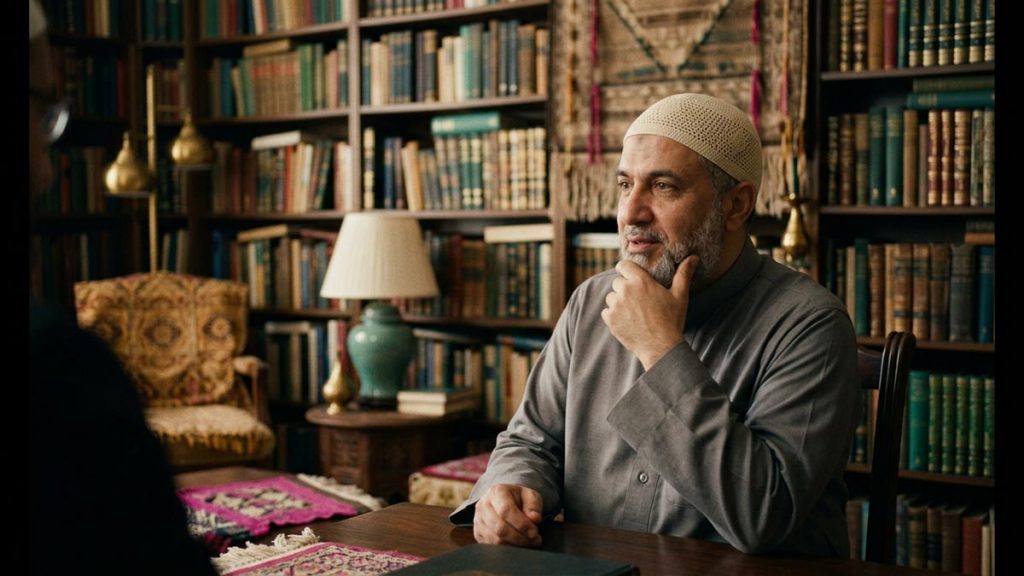
The phrase belongs to the edges of knowledge. A believer says it after offering an opinion, especially on religious matters, to show they do not claim certainty, and when facing something they simply cannot know.
It is also said to close a discussion humbly, or when speculating about the unseen — the future, the wisdom behind events, or the state of another person’s heart. Wherever certainty runs out, this is the phrase that hands it back to Allah.
Said after an opinion, on religious questions, *or when facing the unknown*.
5 Humble Times Muslims Say Allahu A’lam

The phrase fits every moment knowledge reaches its limit. Here are five:
- After giving an opinion. Sharing a view, a believer adds it to show they do not claim the final word.
- On religious questions. Even scholars end their answers with it, leaving certainty to Allah.
- When facing the unknown. About the future or the unseen, a Muslim admits that only Allah truly knows.
- To close a discussion. A debate is ended humbly by returning the truth to God.
- When speaking of others. Rather than judging what is in a heart, a believer leaves it to Al-Alim, the All-Knowing.
In each case the phrase does the same humble thing: it admits the limits of human knowledge and hands the truth to Allah.
To admit what we do not know is a mark of true wisdom.
Allahu A’lam and Related Phrases

It pairs naturally with InshaAllah, “God willing,” another phrase that leaves the future and the outcome with Allah. One admits the limits of knowledge, the other of control.
And it flows from the same love of learning as the Quranic prayer Rabbi Zidni Ilma, “my Lord, increase me in knowledge” — both keeping the believer humble before Allah’s boundless knowing.
Why This Phrase Matters

It is easy to speak as though we know everything. Allahu A’lam gently checks that impulse, reminding a believer that only Allah knows for certain and keeping the door of humility open.
In doing so it makes for honest, humble people. To admit the limits of one’s knowledge is a mark of true wisdom — and it keeps the heart teachable, always ready to learn more of what Allah alone knows in full.
If this deepened your love for the words you already say every day, come and learn with us. Follow It’s About Islam on YouTube, Threads and LinkedIn for daily reminders, Quran reflections and the beautiful meanings behind the phrases every Muslim knows by heart.
It means “Allah knows best” or “Allah knows better.” It is a humble admission that, however much a person understands, only Allah’s knowledge is complete.
After giving an opinion, especially on religious matters, when facing something they cannot know, to close a discussion humbly, or when speaking of the unseen — leaving certainty to Allah.
To show that, however learned they are, the final word belongs to Allah alone. It guards against arrogance and keeps even great scholars humble before Allah’s complete knowledge.
No — it is a sign of wisdom and honesty. Admitting the limits of one’s knowledge, rather than pretending to certainty, is respected in Islam as a mark of a humble, teachable heart.
The Quran repeatedly affirms that Allah knows and people do not, describing Him as the All-Knowing. The phrase grows directly from that truth, though as a set expression it comes from Muslim practice.