
What Does Marhaban Mean?
Marhaban is one of the warmest words in Arabic — a friendly “hello” and “welcome” rolled into one. You will hear it when guests arrive, when friends meet, and at the start of a warm reply. But what does this greeting actually mean, where does it come from, and how is it used? This guide explains.
A Warm Hello and Welcome
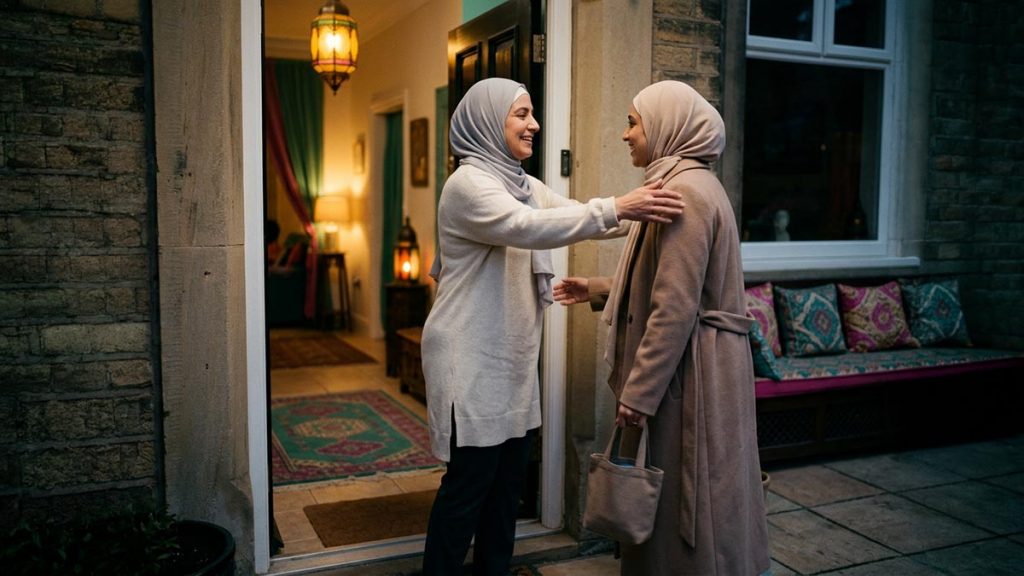
At its simplest, Marhaban (مَرْحَبًا) means “welcome” or “hello.” It is a warm, open greeting used across the Arab world to welcome a guest or greet a friend, close in feeling to a cheerful English “hello there.”
Yet it carries more warmth than a plain hello. Its roots reach into an old Arabic image of spaciousness and ease, so that greeting someone with marhaban quietly tells them: you have come to a place with room for you, where you are welcome.
More than a hello, it tells the guest you have come to a place with room for you.
Breaking Down Marhaban
To feel the full weight of the phrase, it helps to unpack it word by word:
- Marhaban — مَرْحَبًا — “welcome” or “hello,” from the root rahb, meaning wide, spacious, and roomy.
- The image — the sense is that the guest has arrived somewhere open and comfortable — there is space and welcome here for you.
Put together, the greeting throws open a wide, welcoming door with a single word — a warmth at the heart of greeting people in Islam.
Marhaban comes from rahb — wide, spacious, and roomy.
A Greeting the Prophet Used
The warmth of this greeting was part of the Prophet’s (pbuh) own manner. He is reported to have welcomed people with marhaban — greeting a visiting delegation warmly, and welcoming his beloved daughter with “marhaban” whenever she came to him.
That example turned a simple word into a sunnah of hospitality. To welcome others warmly, to make them feel wanted and at ease, reflects the generosity the Prophet (pbuh) modelled and the open-hearted spirit Islam encourages toward every guest.
The Prophet (pbuh) welcomed people with marhaban — even his beloved daughter.
When Do Muslims Say Marhaban?
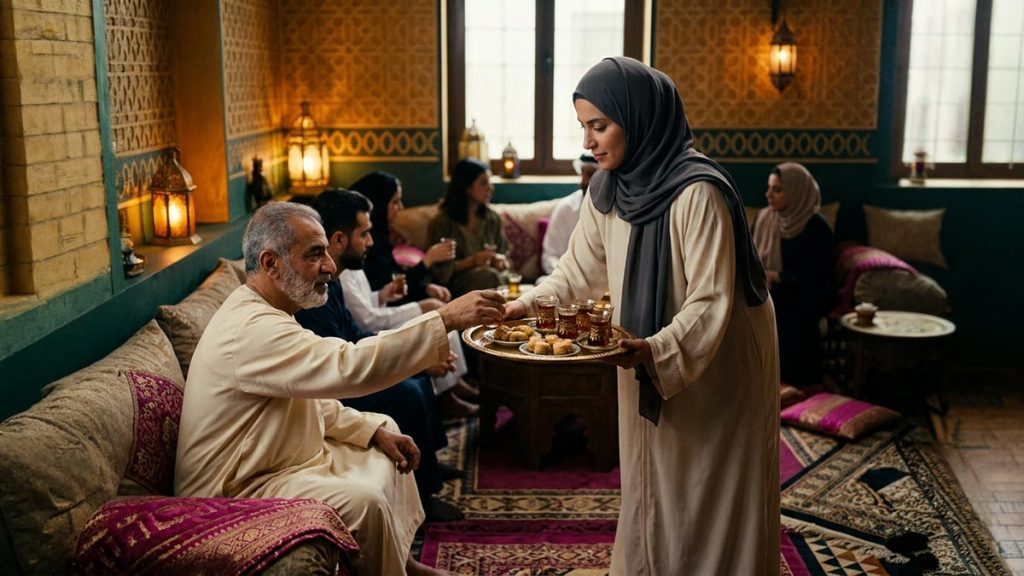
The greeting belongs to moments of welcome and meeting. It is said when a guest arrives, when friends greet each other, at the start of a message, or as a warm way to answer someone who has reached out.
It is often paired with other greetings for extra warmth — peace first, then welcome. Wherever someone is being received with a smile, marhaban is the word that says: I’m glad you’re here.
Said to a guest, a friend, *or a caller reaching out*.
5 Warm Ways Muslims Use Marhaban
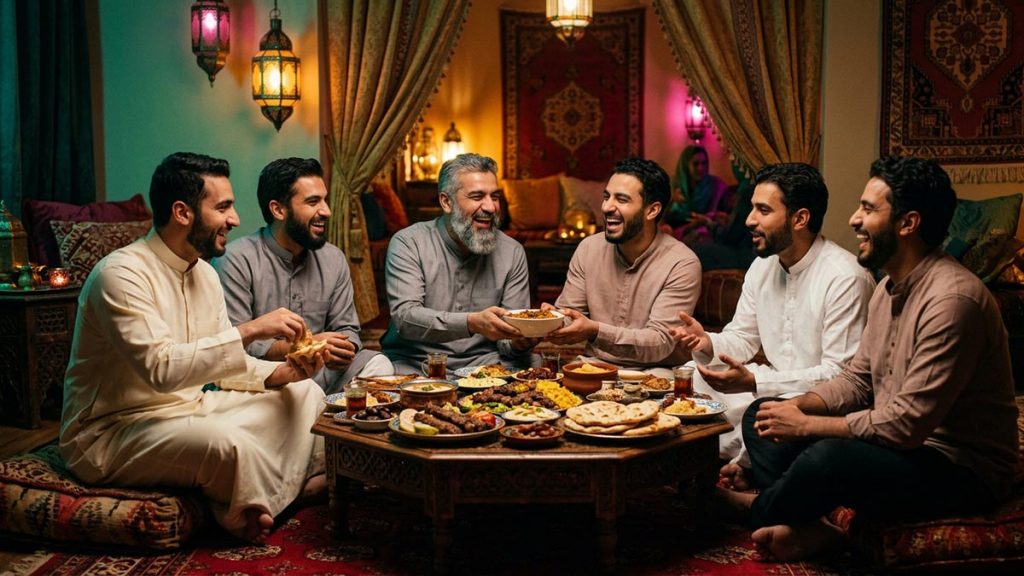
Like many friendly words, this greeting comes in several warm forms. Here are five:
- Marhaban. The simple, everyday “hello” or “welcome,” used freely among friends.
- Marhaban bik / bik. “Welcome to you” — addressed to a man or a woman, adding a personal touch.
- Ya Marhaban. A warmer, more delighted welcome, the ya adding a burst of gladness.
- Marhaban wa Ahlan. Welcomes stacked together, drawing in greeting people with double warmth.
- As a warm reply. Answering a request or a message with marhaban is a gracious way of saying “you are most welcome.”
Whichever form it takes, the greeting does the same friendly thing: it opens a wide door and welcomes the person through it.
A friendly word can put a stranger instantly at ease.
Marhaban and Related Greetings
It is a close cousin of Ahlan wa Sahlan, another warm Arabic welcome, and the two are often said together. It usually follows the greeting of peace, As-Salamu Alaikum, answered with Wa Alaikum Assalam.
Peace is offered first as a prayer; then marhaban throws the door open and welcomes the guest inside.
Why This Greeting Matters
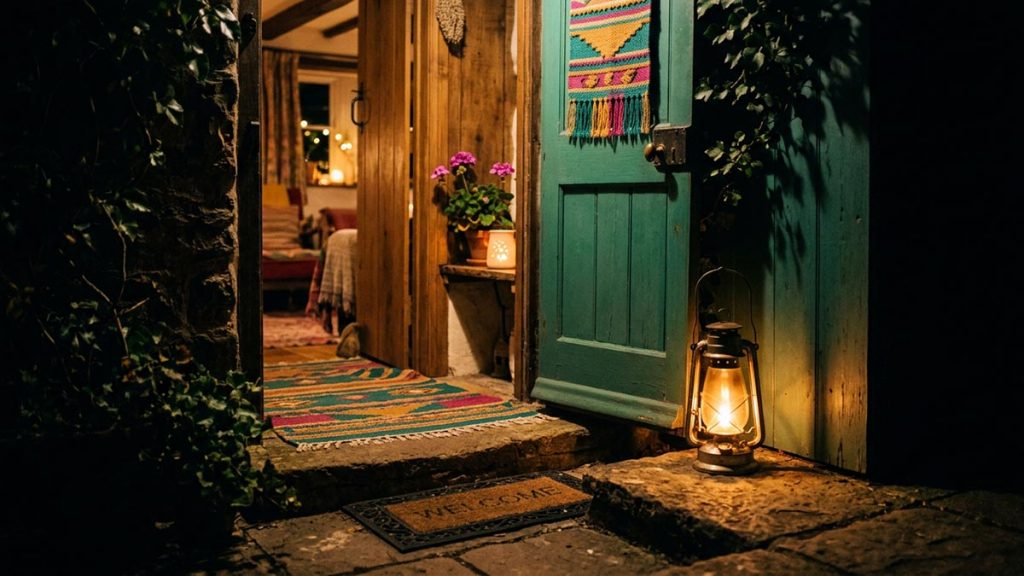
A warm welcome may seem like a small thing, yet Islam places real value on the way people meet, because a friendly word can put a stranger instantly at ease.
To greet others with marhaban is to practise the Prophet’s (pbuh) own warmth — making people feel wanted and at home. It keeps hearts open and turns every arrival into a small moment of kindness.
If this made you smile or taught you something new, come and learn with us. Follow It’s About Islam on YouTube, TikTok and Facebook for daily reminders, Quran reflections and the beautiful meanings behind the phrases every Muslim knows by heart.
It means “welcome” or “hello.” It is a warm Arabic greeting used to welcome a guest or greet a friend, telling them they have come to a welcoming place.
From the Arabic root rahb, meaning wide, spacious, and roomy. The sense is that the guest has arrived somewhere open and comfortable, with room and welcome for them.
You can reply with it bik (to a man) or this word biki (to a woman), “welcome to you too,” or simply return the warm greeting.
Both are warm Arabic welcomes. the welcome is closer to a friendly “hello,” while Ahlan wa Sahlan is a fuller welcome that tells the guest they are among family. They are often said together.
Yes. He is reported to have welcomed people with marhaban, including a visiting delegation and his daughter Fatimah, making a warm welcome part of his gentle example.